


A. Camoin & Cie
This deck was inherited from ancestors, it has has a family history surrounding it. Details of the lives of previous owners make it all so fascinating.
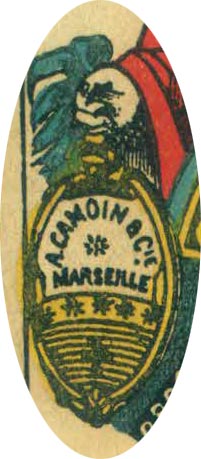
We recently received an enquiry from a gentleman in Malta as follows: “over a decade ago I inherited from my ancestors a coloured deck of cards which were printed by Camoin & Co Marseille”. The enquirer wished to know the approximate date, value, etc. We gave our opinion and assumed that the matter was finished.
However, it turned out that the enquirer’s great grandfather had owned the cards as a young man. Like his father Lorenzo, he was in the Cotton Industry and used to trade with middle east countries especially Egypt. It is interesting to discover such personal details about the previous owner, his occupation and so on. The deck was inherited from ancestors, so now it has has a family history surrounding it. This reminds us of visiting a local history museum, where in a cabinet we might see some old things like a pipe, sewing implements, photographs. Personal details about the lives of the previous owners make it all so fascinating. With a family item like this the personal memories and sentimental values add a lot more than just material value.
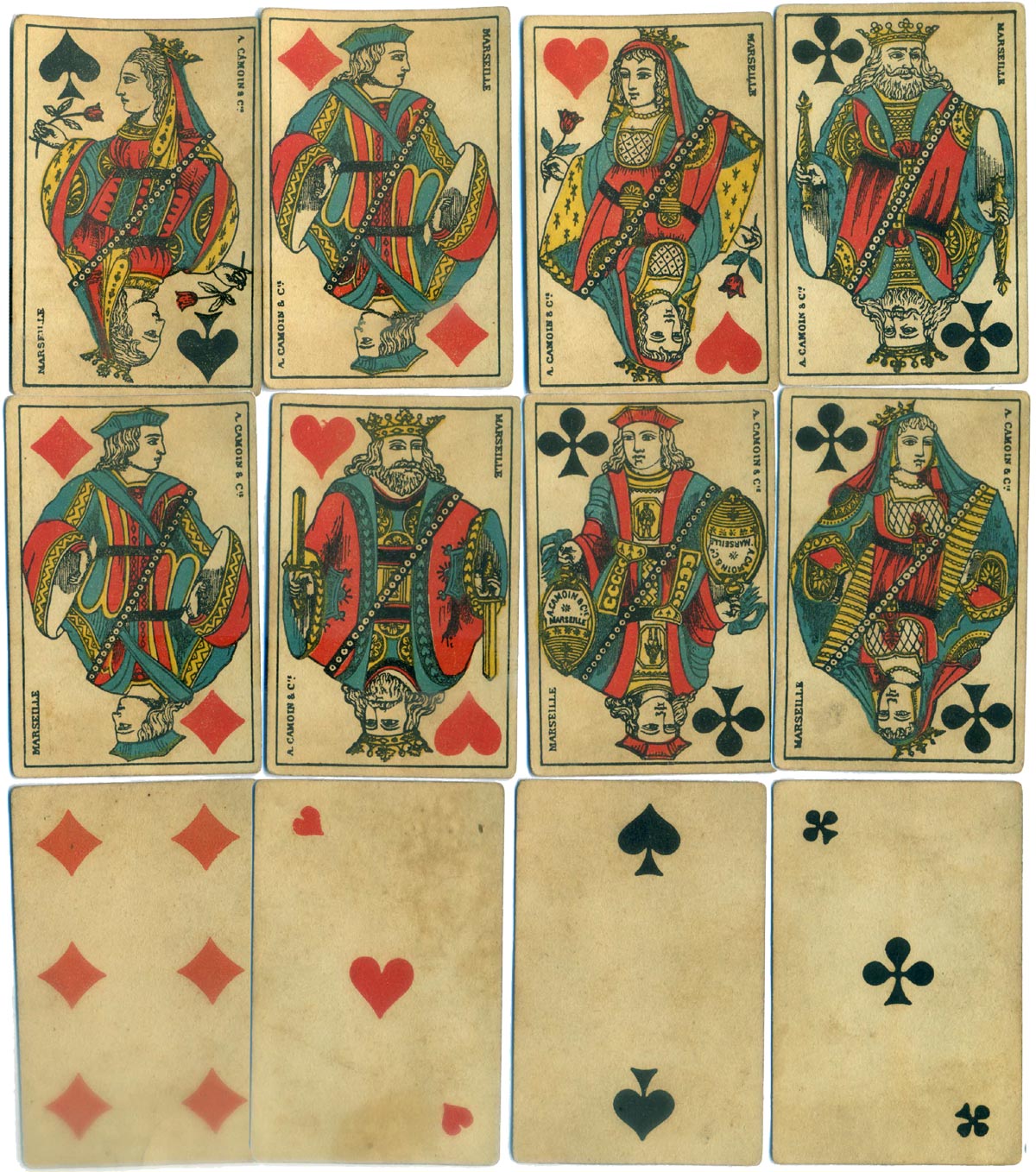
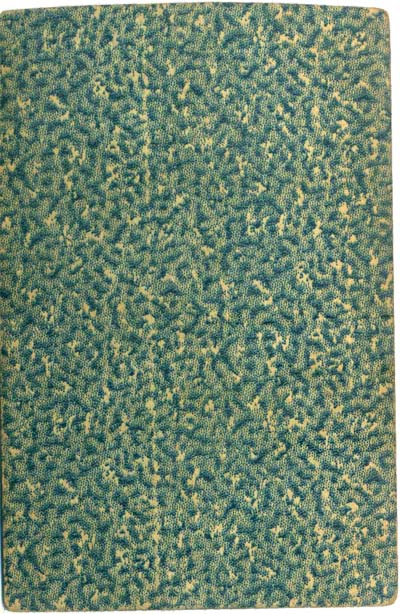
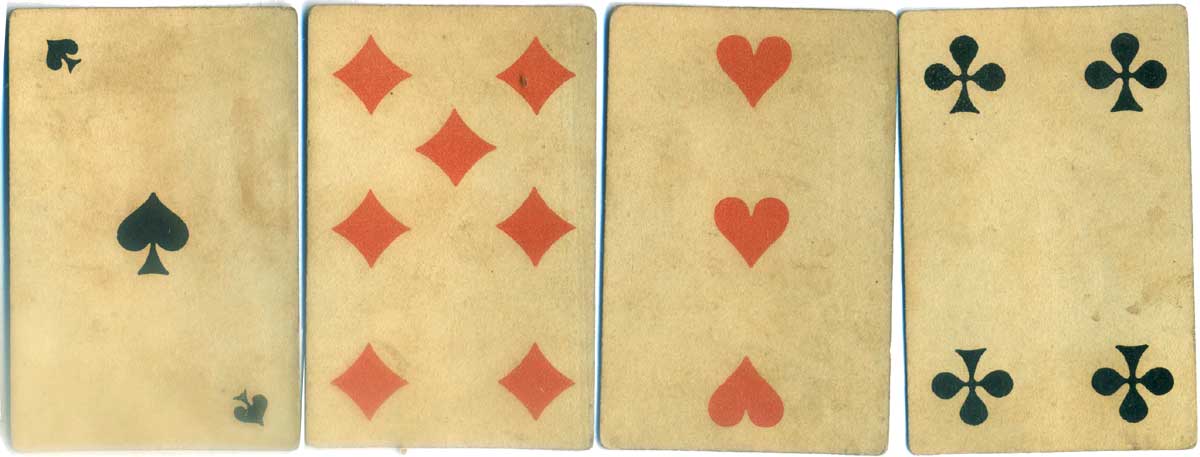
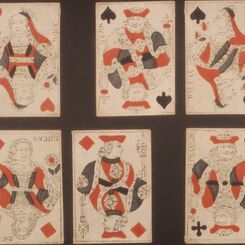
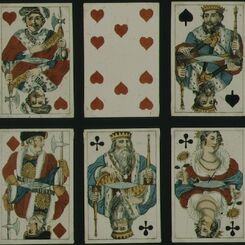
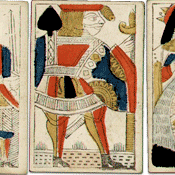
Above: cards from deck of standard double-ended 'Paris' pattern by A. Camoin & Cie, Marseille, second half of 19th century. Square corners, no index numbers. The reverse appears to be a random mechanical pattern. From the collection of Vincent Ellul.
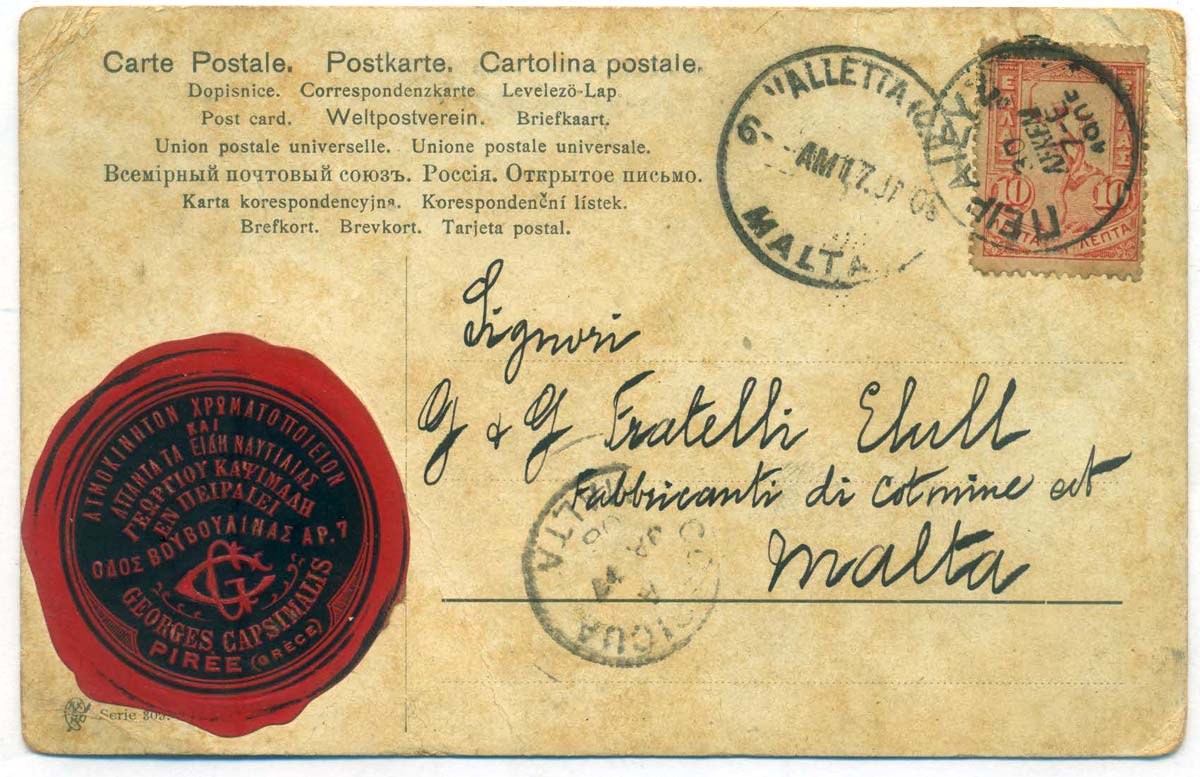
Above: reverse of a foreign postcard sent to G.G. Fratelli Elull without a proper full address, postmark date 1908. But even without the full address the postcard was duly delivered to the mentioned brothers. G.& G. refers to Giuseppe and Guglielmo who had taken over their father’s business in the Cotton Industry. These envelopes were produced and printed in Milano Italy.
It was common at different times that the surname Ellul was spelt in different ways. Originally the surname was HEYLUL. Eventually the silent H was dropped and it became EYLUL. Then there were times that it was spelt without the Y and it became Elull. Nowadays the proper known surname is ELLUL. All images and notes courtesy Vincent Ellul.

By Vincent Ellul
Malta • Member since April 21, 2023

Activity for A. Camoin & Cie
Sign in to comment or save this article.
Related Articles
Advice and General Knowledge for Newer Collectors
A little general knowledge goes a long way for newer collectors, helping you choose a focus and unde...
French Revolutionary cards by Pinaut
Seven cards from a French Revolutionary pack by Pinaut featuring characters from classical antiquity...
Rouen Pattern - Portrait Rouennais
An attractive XV century French-suited design from Rouen became the standard English & Anglo-America...
The Parisian Tarot
The “Parisian Tarot”, early 1600s, with imagery and design synthesizing several influences.
Languedoc pattern - Portrait de Languedoc
The old Languedoc pattern was known at the beginning of the seventeenth century, if not before.
Pierre Roiné Aluette
Archaic form of Aluette published by Pierre Roiné, Nantes, c.1785.
Antoine de Logiriera
Archaic Spanish-suited playing cards published in Toulouse by Antoine de Logiriera (1495-1518).
64: The descendants of the French regional patterns: 2
A continuation oF the development of the off-spring of the Paris patterns and a few examples of how ...
63: The descendants of the French regional patterns: 1
A great many regional patterns were exported from France and subsequently copied elsewhere. Some of ...
62: French regional patterns: the queens and jacks
Continuing our look at the figures from the regional patterns of France.
61: French regional patterns: the kings
On page 11 I illustrated several examples of the regional French patterns from Sylvia Mann's collect...
Pedro Varangot, 1786
Archaic Navarra pattern produced for the Pamplona General Hospital Monopoly by Pedro Varangot in 178...
Tô Tôm № 1204
Tô Tôm is played with a 120-card Chinese-style deck.
Pierre Marechal
Rouen became an important centre for card-making whose influence extended far afield. Cards from Rou...
Benoist Laius
Spanish playing cards such as these were used in those parts of France where certain games were enjo...
Lyon Pattern type iii
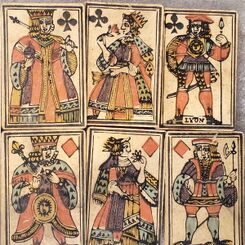
This pattern was used in various parts of eastern France but was ultimately replaced by the official...
Paris Pattern
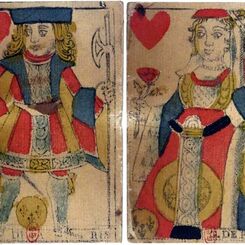
The Paris pattern was established as such around the middle of the seventeenth century (based, perha...
Early Anglo-French Cards
Cards produced in Rouen during the sixteenth century. It was cards like these which were imported to...
Moroccan pattern by Camoin & Cie.
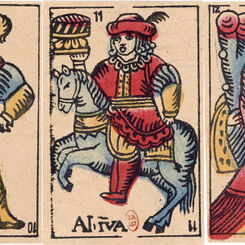
Spanish Moroccan pattern by J.B. Camoin and A. Camoin & Cie, Casablanca & Marseille.
History of Court Cards
The court cards in English packs of playing cards derive from models produced by Pierre Marechal in ...
Most Popular
Our top articles from the past 60 days


