


Bavaria pattern
Classic German-suited Bavarian pattern by Joseph Fetscher, Munich, early 19th century.
The Deuce of hearts features a blindfold cupid within an elaborate frame. The maker’s name appears on the 8 of hearts: “Joseph Fetsche b. Karten-Fabricant in Munchen” and the king of hearts supports a cartouche bearing the maker’s mark and initials. The king of bells supports a cartouche charged with the arms of Bavaria.
The deuce of bells shows a boarhound attacking a boar; the deuce of acorns shows a boy sitting on a barrel holding a tankard. The numeral cards show little vignettes depicting leisure pastimes. The designs are very old and several of the court cards resemble those from the Franconian pattern.
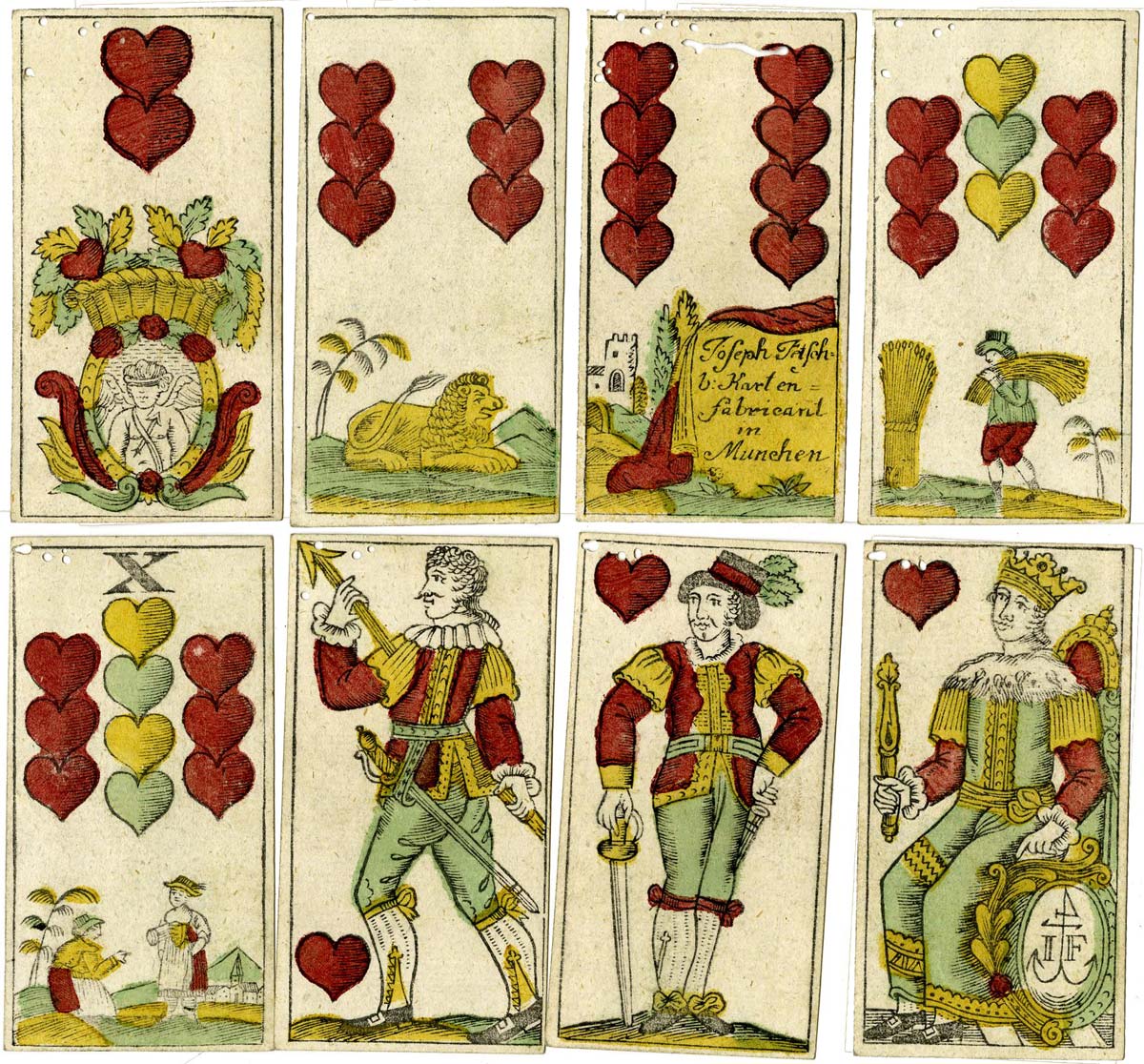
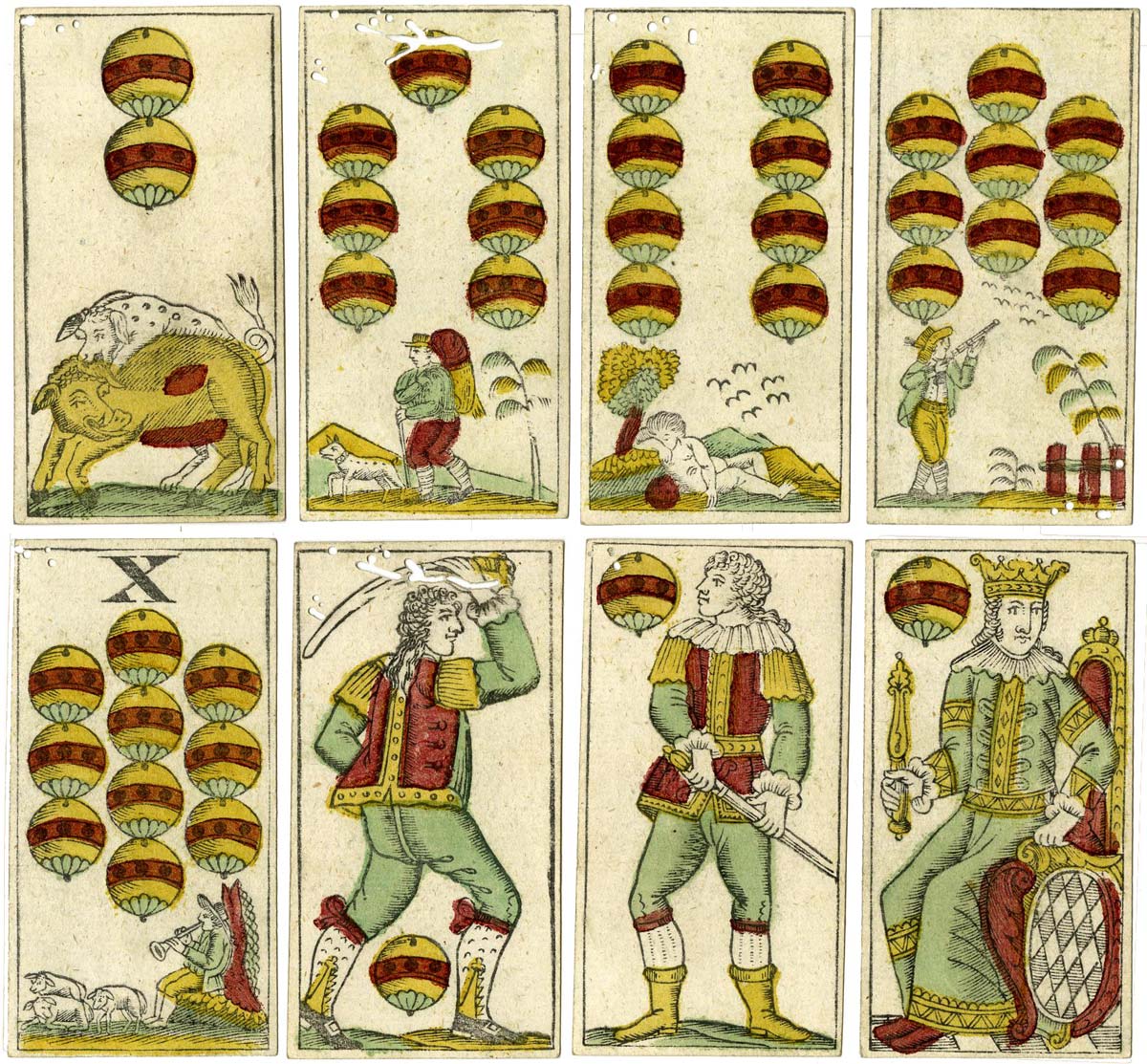
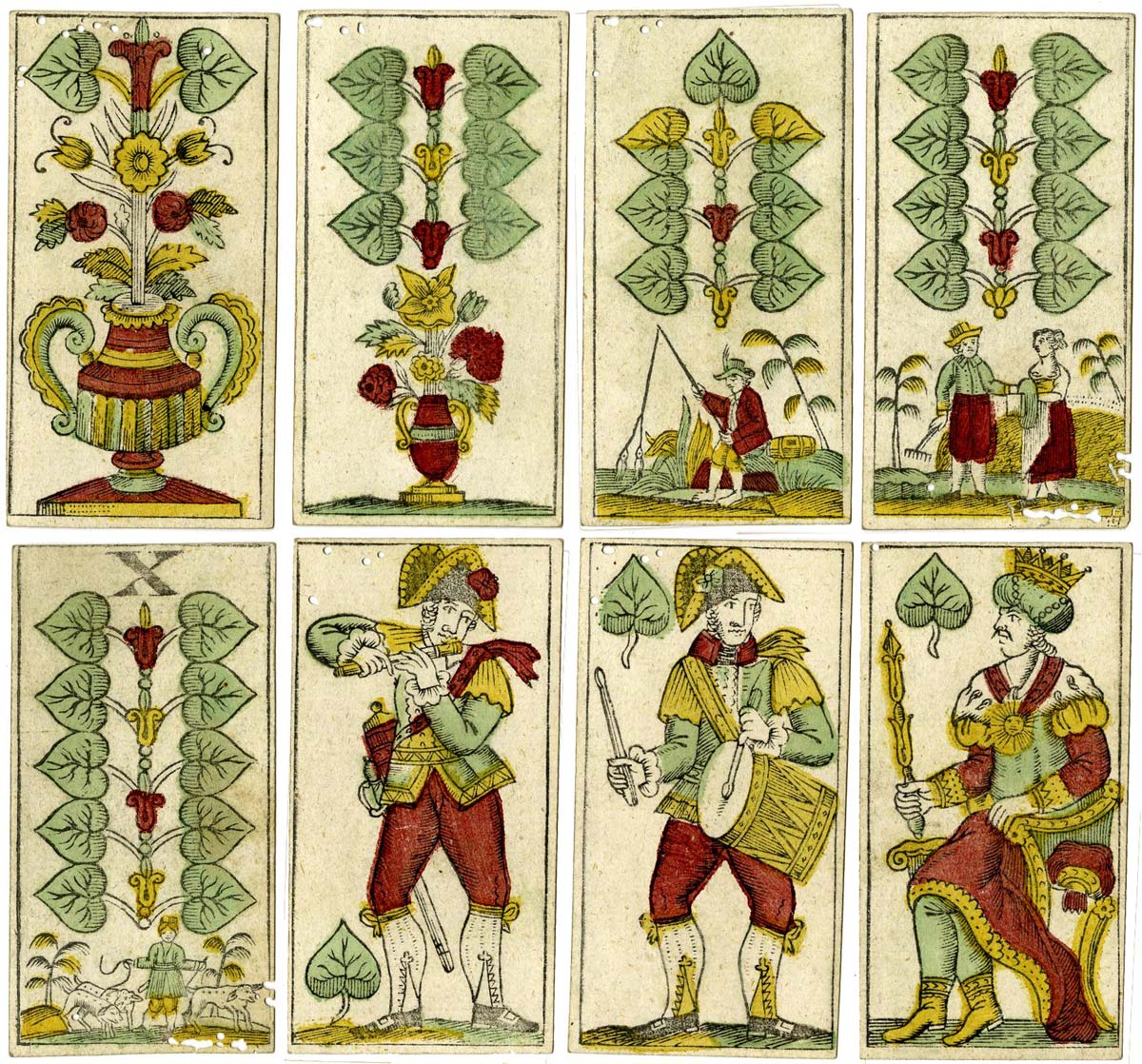
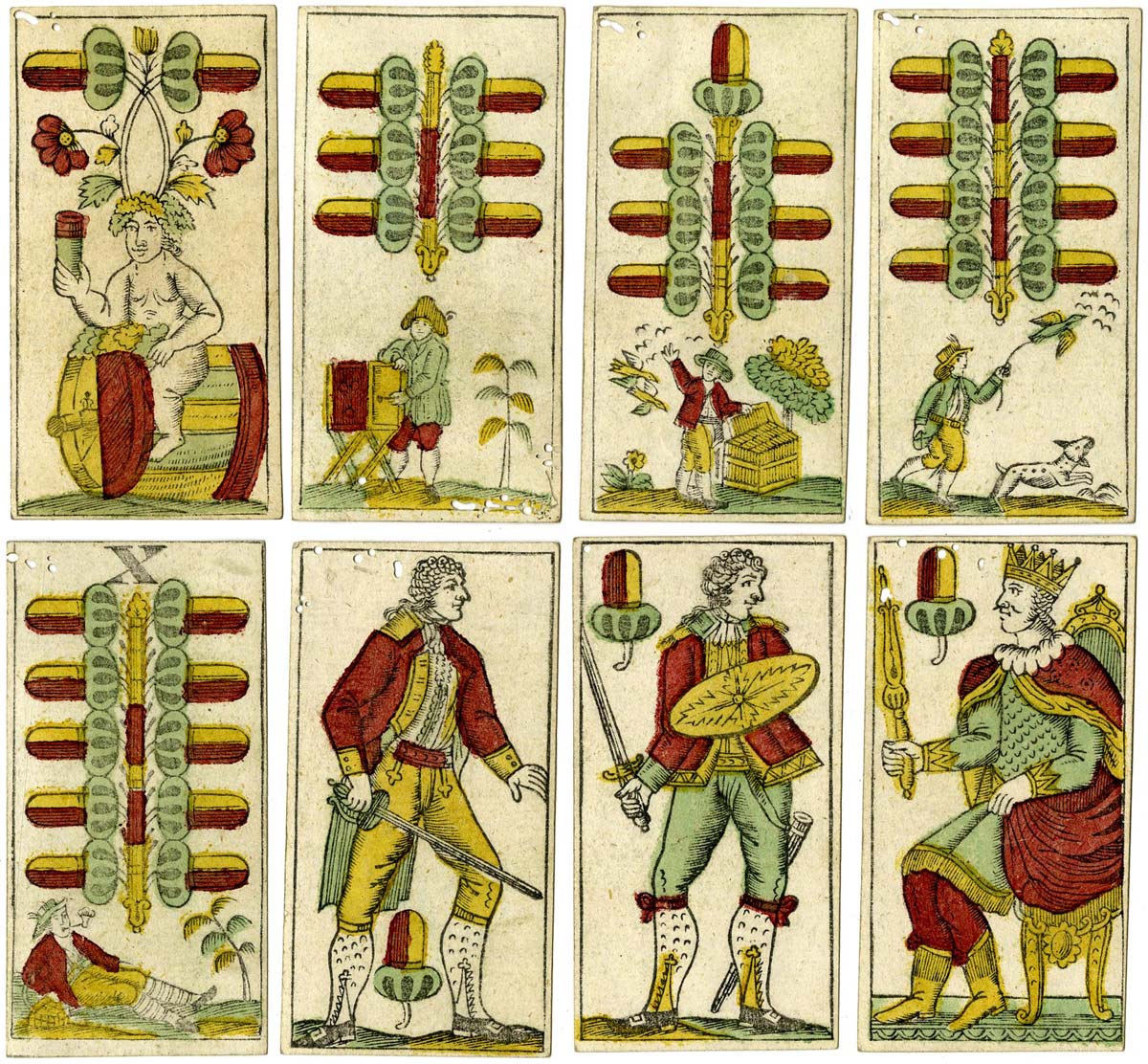
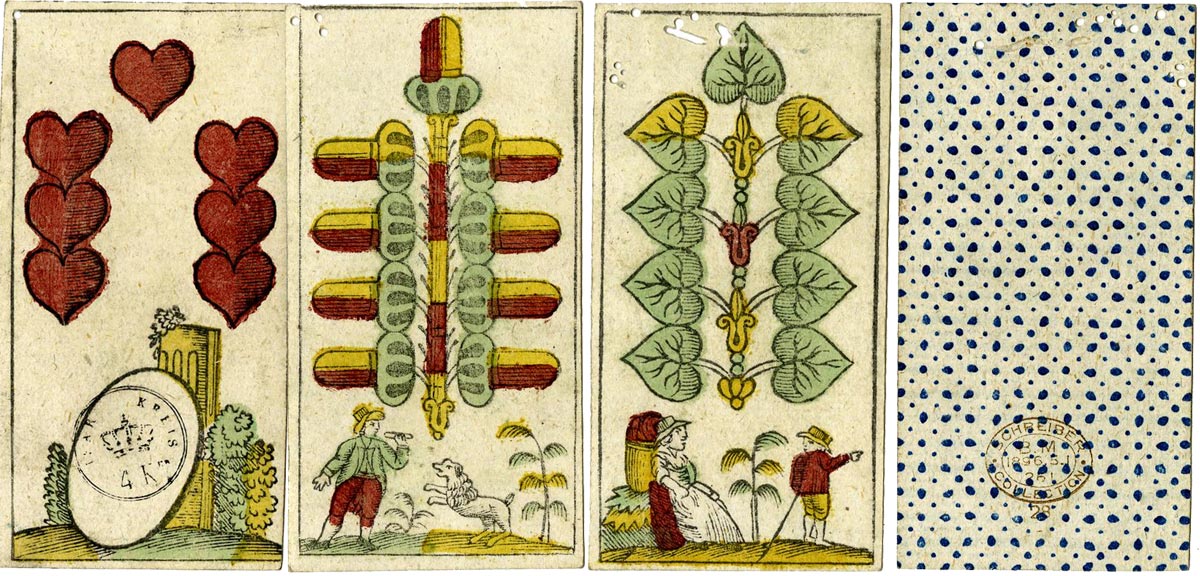
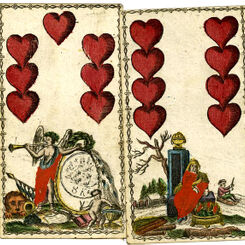
Above: Classic Bavaria pattern by Joseph Fetscher, 36 cards, hand-coloured woodcut, backs printed with a pattern of blue spots, early 19th century. The seven of hearts shows the tax stamp in use in Bayern from 1826 to c. 1837. © The Trustees of the British Museum • Museum number 1896,0501.261►
References
Endebrock, Peter: playing-card pages: Tax Stamps from German States►
Mann, Sylvia: Collecting Playing Cards, Arco Publications, 1966
Mann, Sylvia: All Cards on the Table, Jonas Verlag/Deutsches Spielkarten-Museum, Leinfelden-Echterdingen, 1990
O’Donoghue, Freeman M: Catalogue of the collection of playing cards bequeathed by Lady Charlotte Schreiber (German 24), Trustees of the British Museum, London, 1901 [digital version here]

By Simon Wintle
Spain • Member since February 01, 1996
I am the founder of The World of Playing Cards (est. 1996), a website dedicated to the history, artistry and cultural significance of playing cards and tarot. Over the years I have researched various areas of the subject, acquired and traded collections and contributed as a committee member of the IPCS and graphics editor of The Playing-Card journal. Having lived in Chile, England, Wales, and now Spain, these experiences have shaped my work and passion for playing cards. Amongst my achievements is producing a limited-edition replica of a 17th-century English pack using woodblocks and stencils—a labour of love. Today, the World of Playing Cards is a global collaborative project, with my son Adam serving as the technical driving force behind its development. His innovative efforts have helped shape the site into the thriving hub it is today. You are warmly invited to become a contributor and share your enthusiasm.

Activity for Bavaria pattern
Sign in to comment or save this article.

Related Articles
Ethnological Tarot by Joseph Fetscher
Joseph Fetscher's inventive, ethnographic tarot from Munich c.1820.
Trappola pack by Joseph Fetscher
Trappola pack published by Joseph Fetscher, Graz, 1739.
Animal Tarot by Joseph Fetscher
French-suited Natural History Tarot deck by Joseph Fetscher, Munich, c.1820.
Heathen Wars
German-suited ‘Heathen War’ playing cards published by Joseph Fetscher, Munich, c.1820.
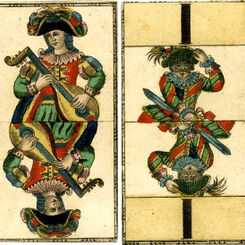
Mythological and Allegorical tarot
Mythological and Allegorical tarot produced by Peter Paul Fetscher junior, Munich.
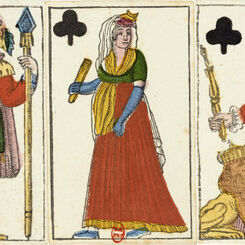
Fantasy deck by Joseph Fetscher
Fantasy French-suited pack produced by Joseph Fetscher, Munich, c.1825.
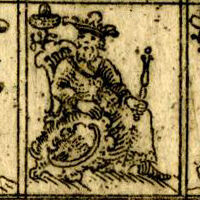
Miniature playing cards by Joseph Fetscher
Uncut sheet of miniature Bavarian playing cards by Joseph Fetscher.
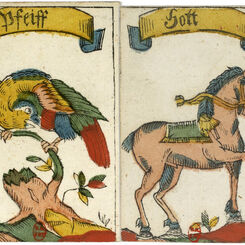
Vogelspiel
Vogelspiel, a German card game known as the “cuckoo game” also known as “Gnau”.
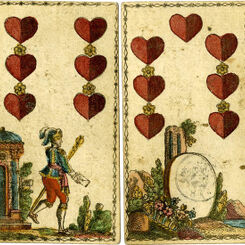
Historical playing cards by Joseph Fetscher
Historical playing cards by Joseph Fetscher, Munich, c.1820.
Most Popular
Our top articles from the past 60 days


Stephen Scharber
03 April 2026, 17:05SavedSaved this article to Stephen Scharber's Collection