


Ansbach pattern by Emil Doll
Later Ansbach or Nürnberg pattern by Emil Doll, Neustadt.
The Ansbach pattern retains features from the earliest (medieval) days of cardmaking. The designs are pleasingly simple and non-military: only the upper knave of acorns carries a weapon. The format of the later Nürnberg or Ansbach pattern, like this example, is narrower than earlier ones. The 6 of hearts has the arms of Bavaria and Nürnberg with “Emil Doll in Neustadt” in decorative scrolls, supported by a naked figure. The deuce of leaves also has the arms of Bavaria with someone writing on a tablet “Der 18 Oct. 1813” (the date of the battle of Leipzig); the deuce of acorns has the Bavarian lion supporting the arms of Nürnberg with an empty scroll at the top. There are no vignettes on any of the other pip cards. The backs are decorated with a pattern of black crosses.
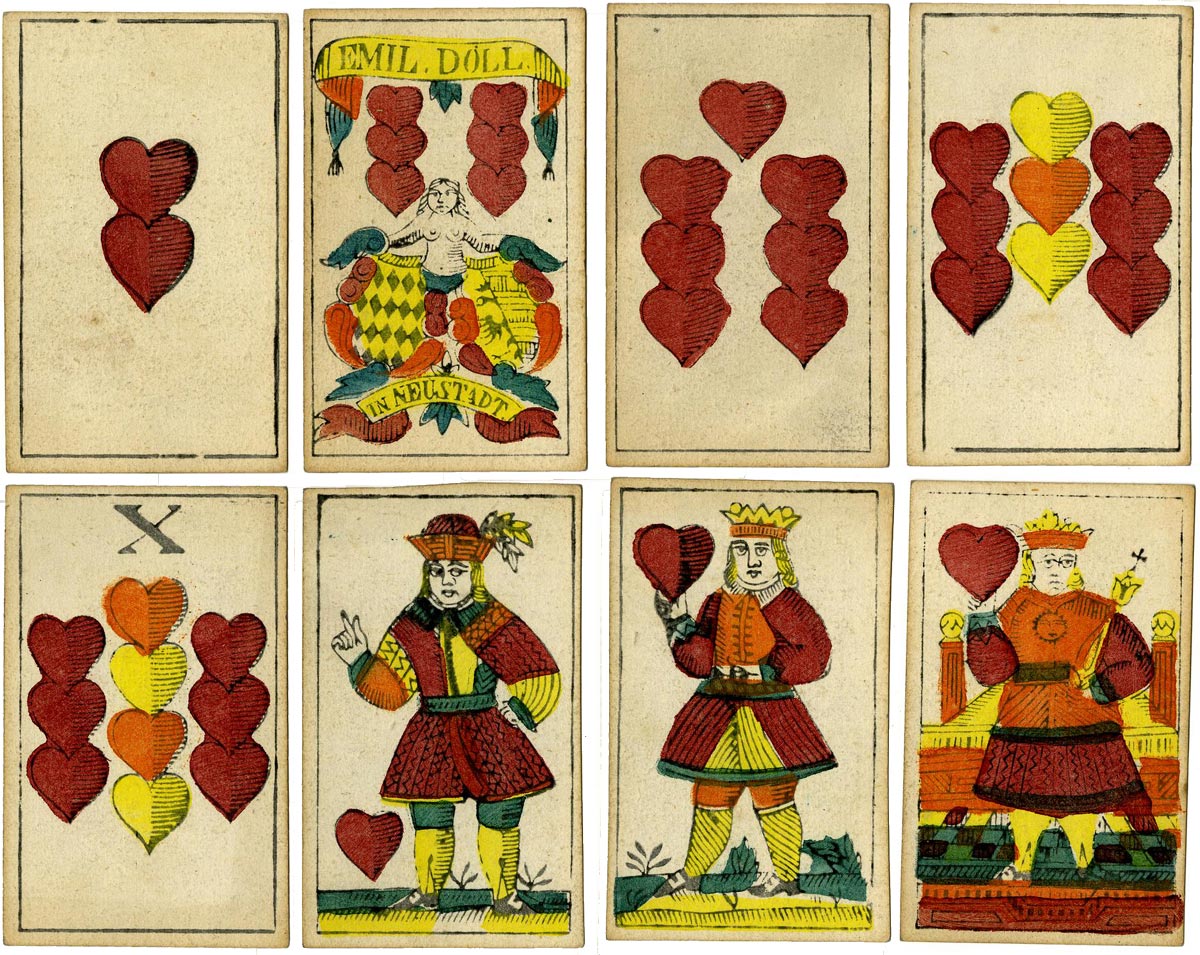
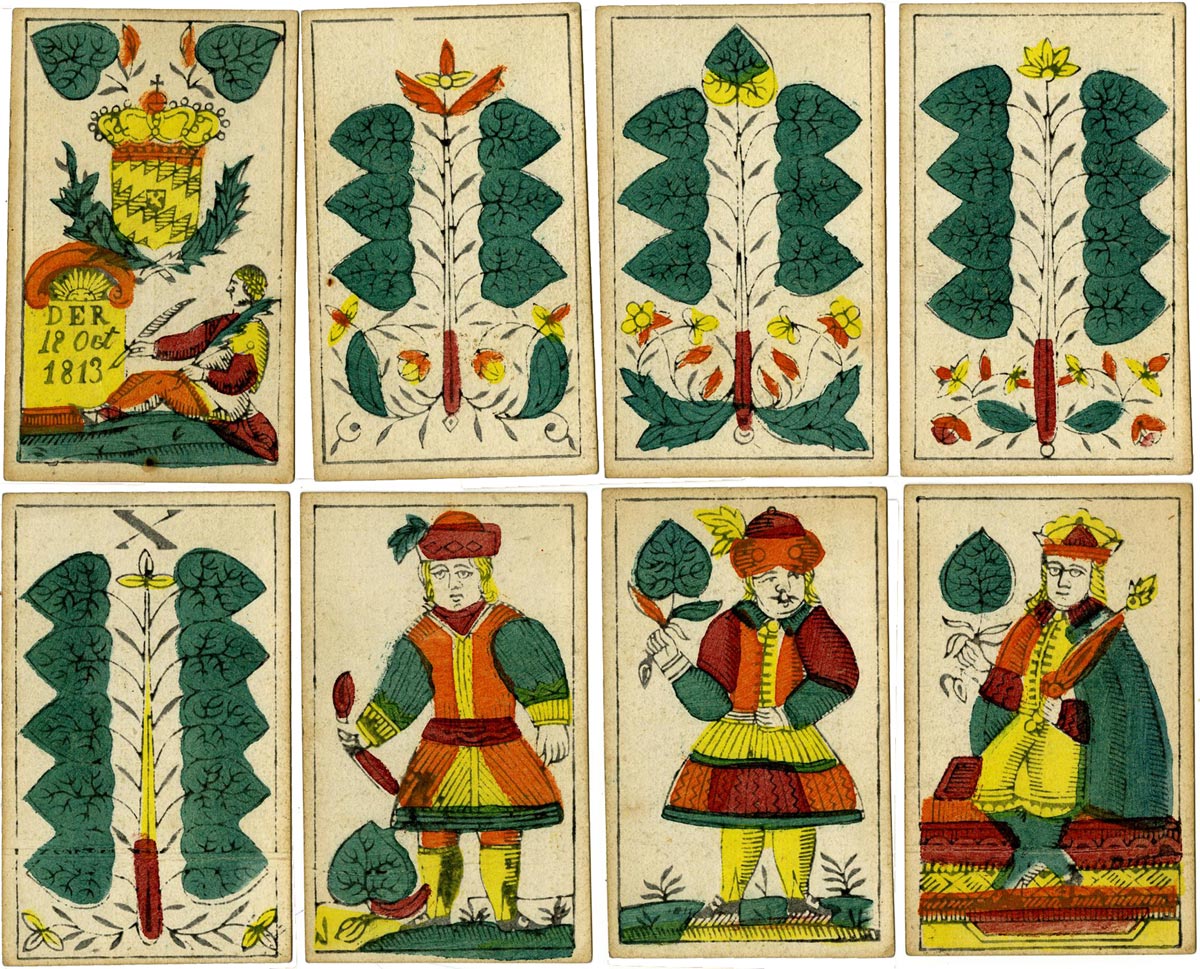
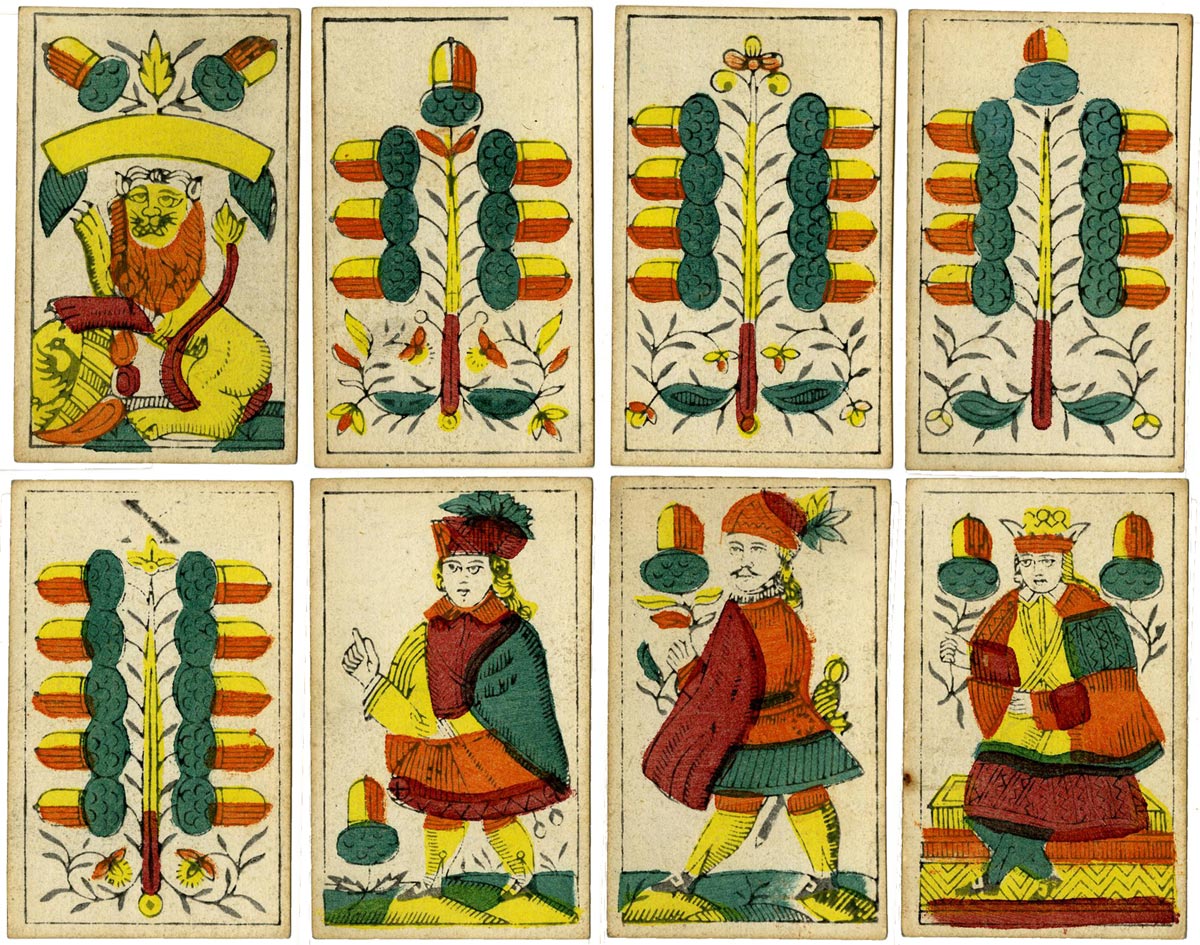
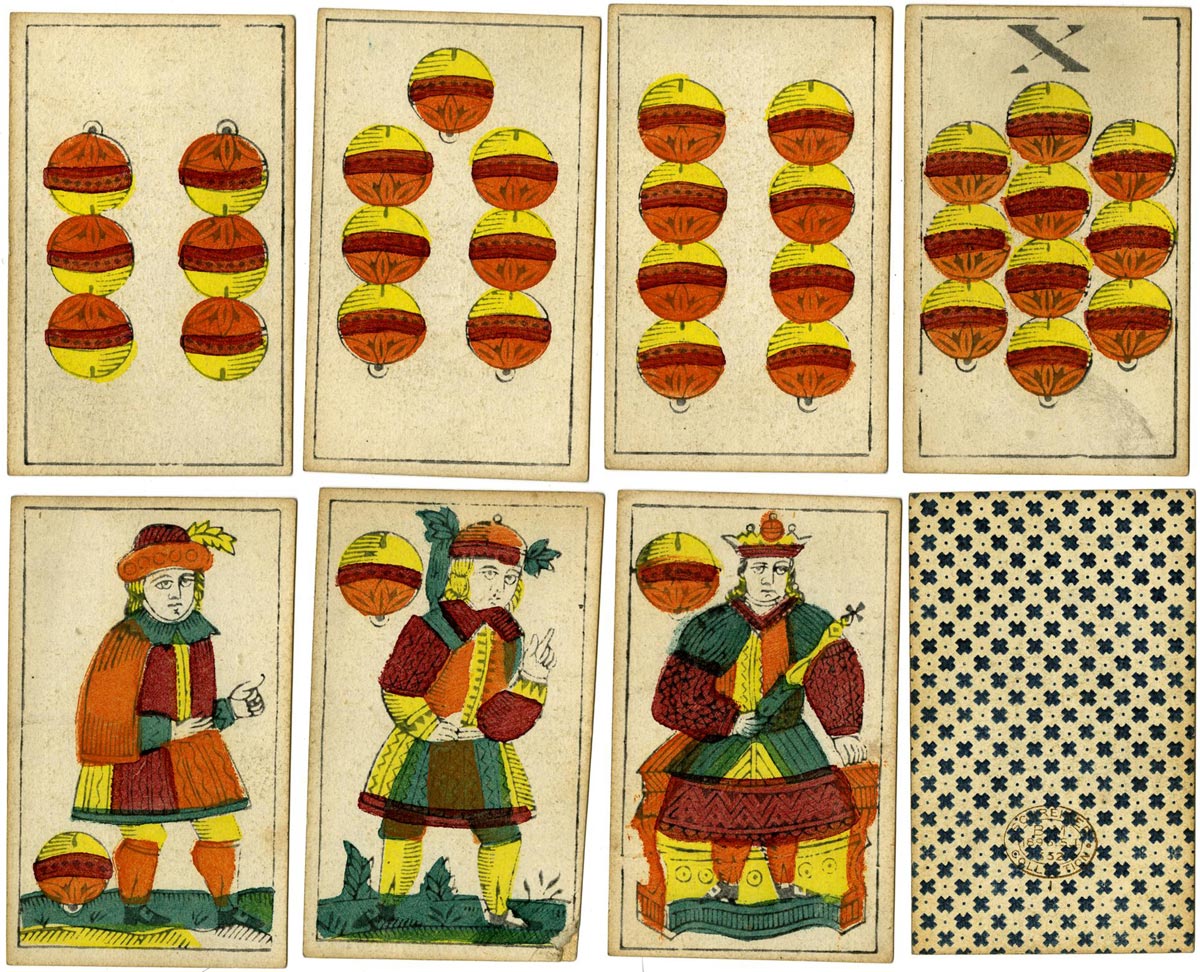
Above: cards from the later Ansbach or Nürnberg pattern produced by Emil Doll, Neuburg an der Donau, Bavaria, 1819. 36 cards, hand-coloured woodcuts. © The Trustees of the British Museum • Museum number 1896,0501.352►
References
O’Donoghue, Freeman M: Catalogue of the collection of playing cards bequeathed by Lady Charlotte Schreiber (Germany 31), Trustees of the British Museum, London, 1901 [digital version here]
NOTE: these cards can also be found on the British Museum website alongside a different pack by J E Backofen here►

By Simon Wintle
Spain • Member since February 01, 1996
I am the founder of The World of Playing Cards (est. 1996), a website dedicated to the history, artistry and cultural significance of playing cards and tarot. Over the years I have researched various areas of the subject, acquired and traded collections and contributed as a committee member of the IPCS and graphics editor of The Playing-Card journal. Having lived in Chile, England, Wales, and now Spain, these experiences have shaped my work and passion for playing cards. Amongst my achievements is producing a limited-edition replica of a 17th-century English pack using woodblocks and stencils—a labour of love. Today, the World of Playing Cards is a global collaborative project, with my son Adam serving as the technical driving force behind its development. His innovative efforts have helped shape the site into the thriving hub it is today. You are warmly invited to become a contributor and share your enthusiasm.

Activity for Ansbach pattern by Emil Doll
Sign in to comment or save this article.

Related Articles
Most Popular
Our top articles from the past 60 days


