


Ethnological Tarot by Joseph Fetscher
Joseph Fetscher's inventive, ethnographic tarot from Munich c.1820.
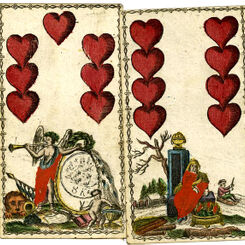
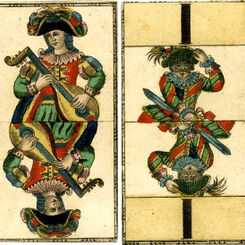
This unusual tarot, published in Munich by Joseph Fetscher around 1820, belongs to a Bavarian tradition of inventive tarot-making that had diverged from conventional Italian iconography. Like many German packs of the period, it employs the emerging double-ended ("à deux têtes") format, making the cards easier to hold in play. All the cards have a decorative border. Fetscher was a notably innovative manufacturer whose output included animal, mythological and allegorical tarots. Zoom Fetscher's details on Trump II
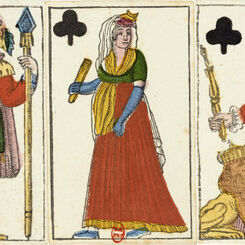
Rather than depicting traditional allegorical trumps, this deck presents a sort of ethnographic panorama of the world's peoples, continents, monuments, ruins and wonders, reflecting the contemporary European fascination with geography, ethnography and distant cultures. They include a club-bearing Wild Man from Germanic folklore, a Chinese Mandarin, a Moroccan, the Aztec deity Huitzilopochtli, together with landscapes and exotic scenes at each end, (the deck is incomplete so the rest are missing). The court cards likewise depict people from distant lands.


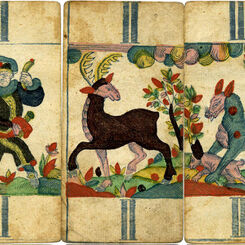
Cards from Cartes “Ethnologiques” tarot pack printed by Joseph Fetscher, Munich, c.1820, (incomplete pack). Bibliothèque nationale de France
While educational and geographical card packs were popular in Germany during the early nineteenth century, this tarot organised around ethnographic themes makes it one of the more imaginative productions from Joseph Fetscher's diverse workshop.
Bibliothèque nationale de France : Cartes d'un jeu de tarot allemand à deux têtes, dit "ethnologique ►

By Simon Wintle
Spain • Member since February 01, 1996
I am the founder of The World of Playing Cards (est. 1996), a website dedicated to the history, artistry and cultural significance of playing cards and tarot. Over the years I have researched various areas of the subject, acquired and traded collections and contributed as a committee member of the IPCS and graphics editor of The Playing-Card journal. Having lived in Chile, England, Wales, and now Spain, these experiences have shaped my work and passion for playing cards. Amongst my achievements is producing a limited-edition replica of a 17th-century English pack using woodblocks and stencils—a labour of love. Today, the World of Playing Cards is a global collaborative project, with my son Adam serving as the technical driving force behind its development. His innovative efforts have helped shape the site into the thriving hub it is today. You are warmly invited to become a contributor and share your enthusiasm.

Activity for Ethnological Tarot by Joseph Fetscher
Sign in to comment or save this article.

Related Articles
Julius Berndl and his Austrian tarock
Josef Glanz's Tarock: a classic deck with artistic innovation by Julius Berndl.
Austrian Tarock by S.D. Modiano
Modiano’s Austrian Tarock with country scenes has been in production for over 100 years.
Tarock Cards by NIL Spielkartenfabrik
A deck of tarock cards from the eastern end of the ending Austro-Hungarian Empire.
Engel-Tarot
Set of major arcana designed by Alois Hanslian depicting angels throughout.
Jeu de Tarot (Catel & Farcy)
Colourful version of a standard French (‘Bourgeois’) Tarot.
Paris 2024 Olympics 2
A standard French Tarot game pack with passing references to the Paris 2024 Summer Olympic Games.
Animal Tarot by Johann Jobst Forster
French-suited 78-card animal tarot deck of the Bavarian type.
Animal Tarot by Joseph Fetscher
French-suited Natural History Tarot deck by Joseph Fetscher, Munich, c.1820.
Heathen Wars
German-suited ‘Heathen War’ playing cards published by Joseph Fetscher, Munich, c.1820.
Mythological and Allegorical tarot
Mythological and Allegorical tarot produced by Peter Paul Fetscher junior, Munich.
Fantasy deck by Joseph Fetscher
Fantasy French-suited pack produced by Joseph Fetscher, Munich, c.1825.
Animal Tarot by Andreas Benedict Göbl
French-suited Animal Tarot deck produced by Andreas Benedict Göbl, Munich.
Morgan-Greer Tarot
Based on the knowledge, wisdom and interpretation of Paul Foster Case and Arthur Edward Waite.
Bilder zum Tarot
Detailed pen and ink drawings of the major arcana by the German artist Helmut Wonschick.
Tarock Schafkopf zum Wahlkampf 1990
Playing cards issued to mark the German federal elections held on 2 December 1990.
Animal Tarot by Johann M Backofen
French-suited ‘Bavarian Animal Tarot’ by Johann Matheus Backofen, Nürnberg, late 18th C.
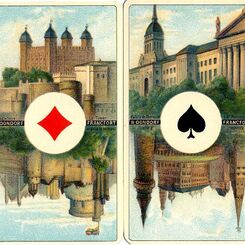
Dondorf Tarot Aces
The four suits are associated with four countries: Clubs = Germany, Diamonds = UK, Spades = Russia a...
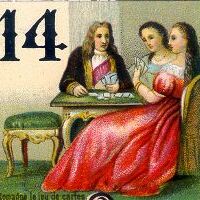
Dondorf Tarot
Dondorf's “Microscopique Tarock“ was first published in c.1870. The scenes portrayed at each end of ...
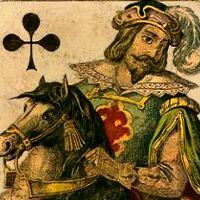
Bourgeois Tarot
Bourgeois Tarot by Vereinigte Altenburger und Stralsunder Spielkarten-Fabriken.
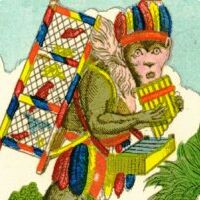
Verkehrte-Welt-Tarock
"Verkehrte-Welt-Tarock” (reverse world ?) manufactured by Christian Theodor Sutor (fl. 1823-1854), N...
Most Popular
Our top articles from the past 60 days


