


Neue Deutsche Spielkarte
Neue Deutsche Spielkarte (Reformkarte) conceived by Dr. Timon Schroeter, 1883.
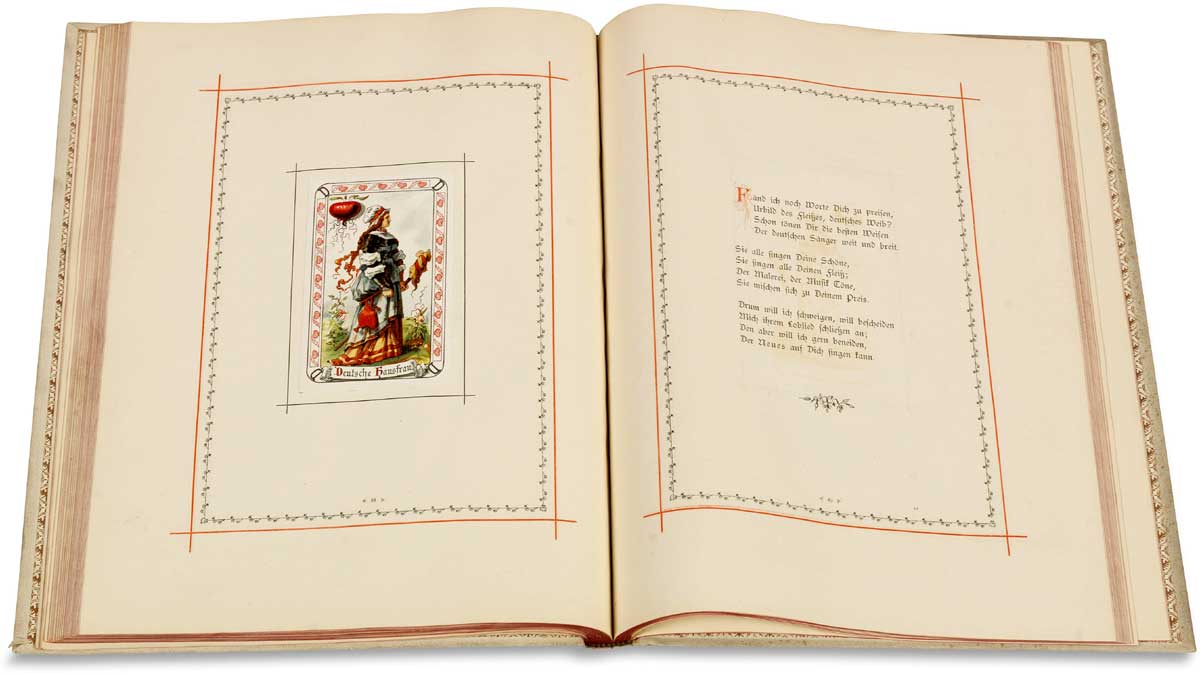
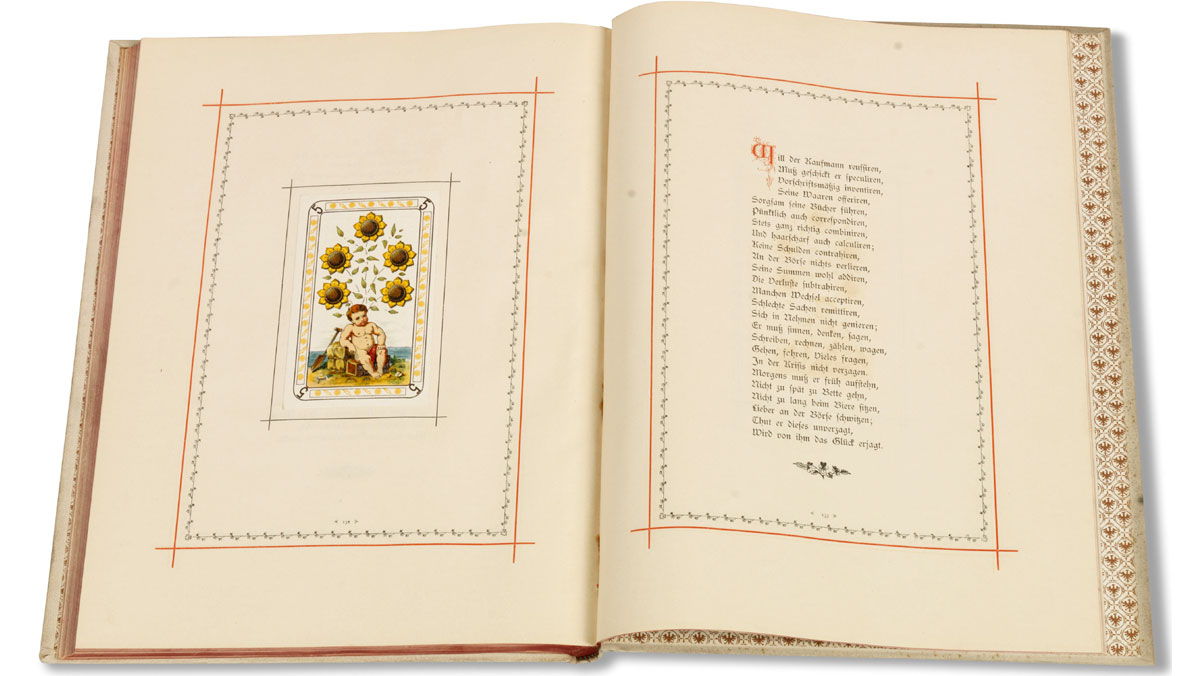
Neue Deutsche Spielkarte Nr.1 with full-length figurative designs and non-standard German suit symbols, conceived by Dr. Timon Schroeter, illustrated by Jacob Hirsch & Martin Lämmel, and printed lithographically by J. G. Fritzsche, Leipzig, 1883. The four suits represent the four most important human characteristics: Acorns = force; Ivy = loyalty; Turnips = diligence and Sunflowers = wisdom. The king of acorns depicts Charlemagne or Charles the Great with his coat of arms on the deuce. The king of ivy leaves depicts Frederick Barbarossa who was the Holy Roman Emperor from 1155 until his death in 1190. The king of sunflowers depicts Rudolf of Habsburg (1218–1291) and the king of turnips is Maximilian I, Holy Roman Emperor from 1493-1519. The obers and unters depict attendant heralds or footmen. The numeral cards feature attractive vignettes at the bottom showing allegories of industry, craft, wealth, etc.
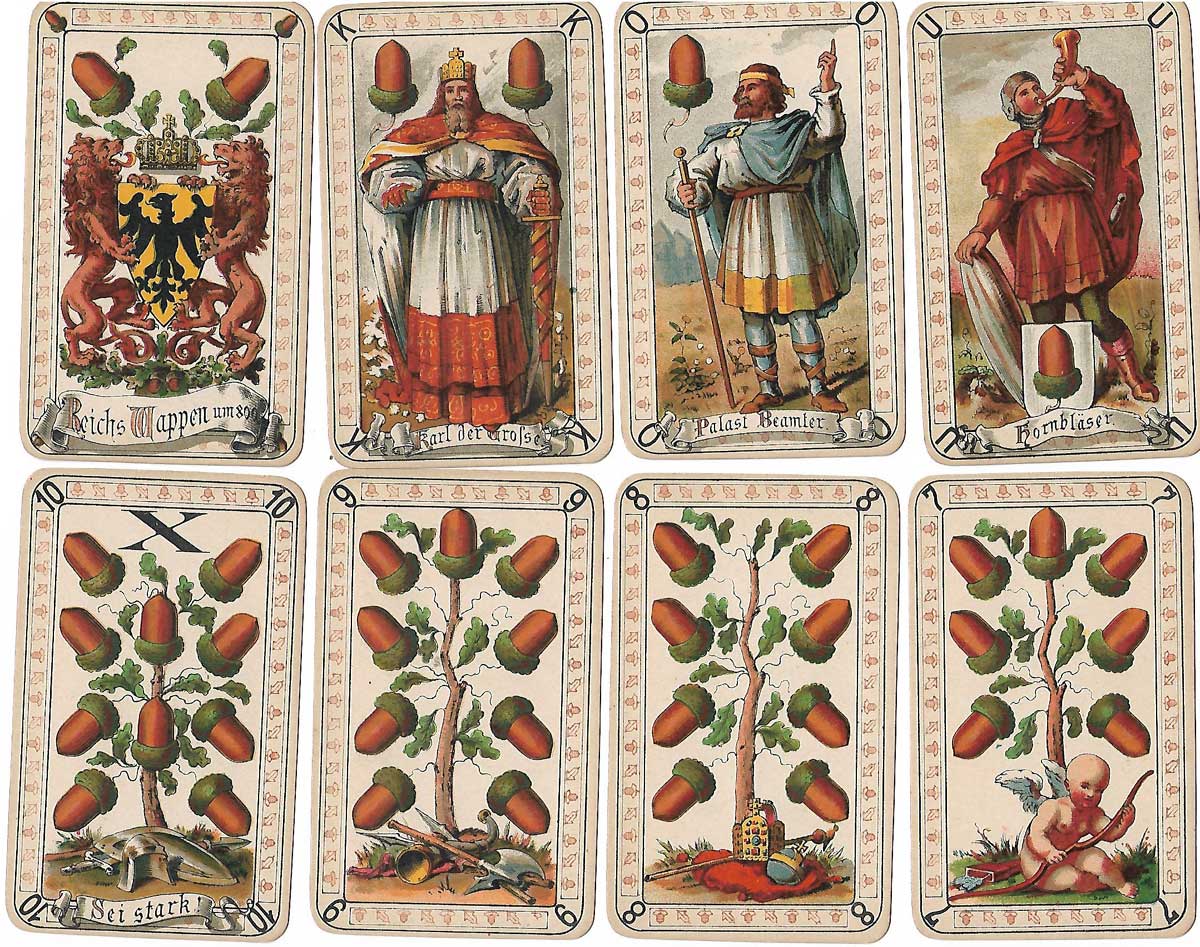
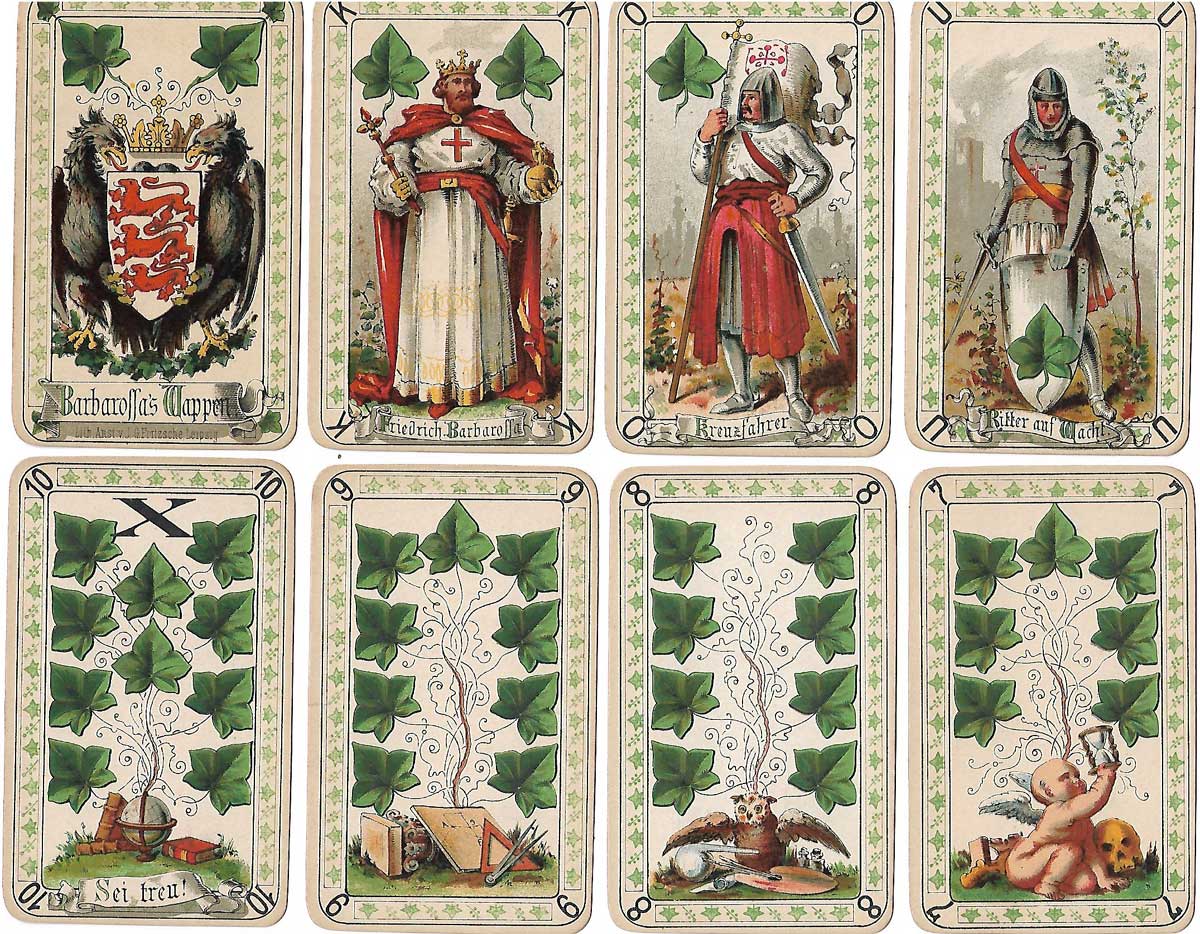
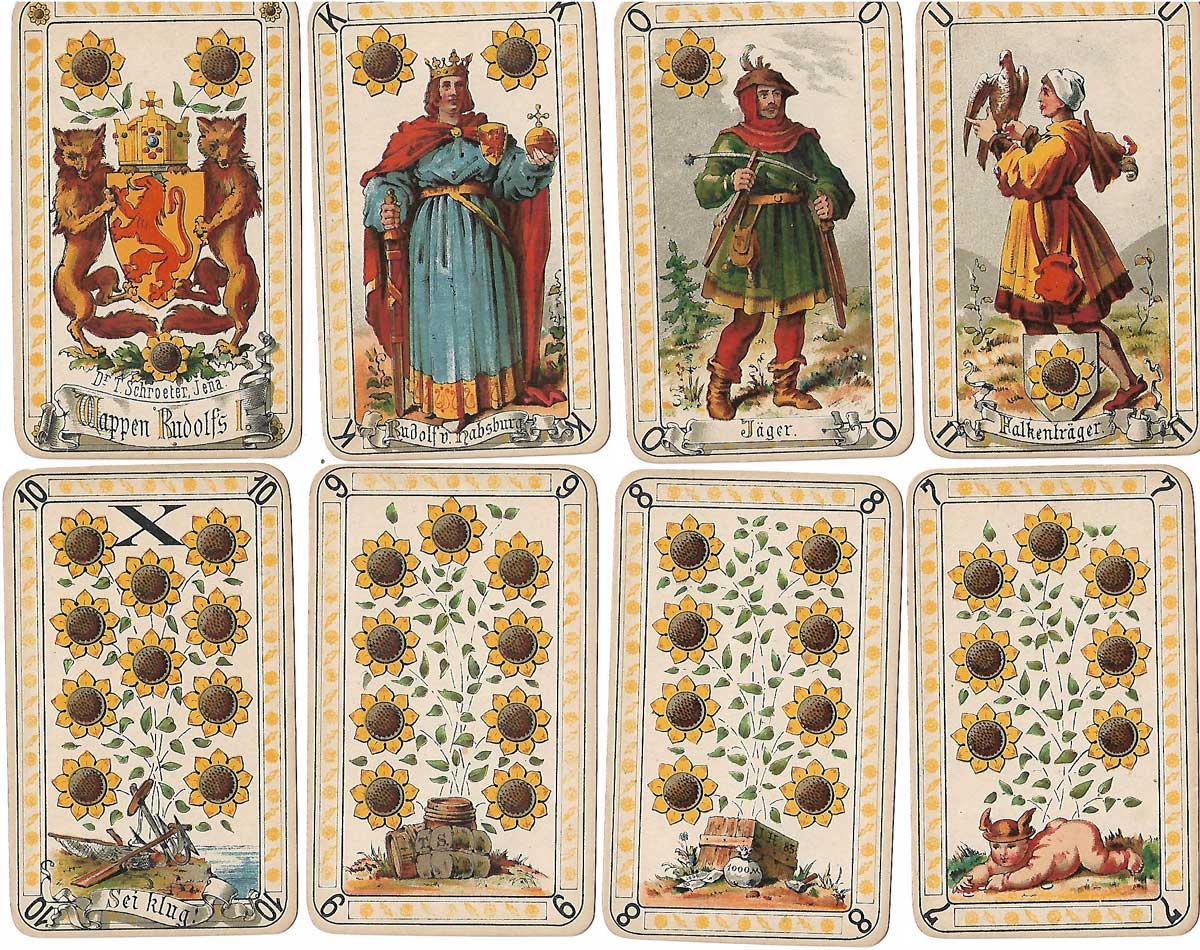
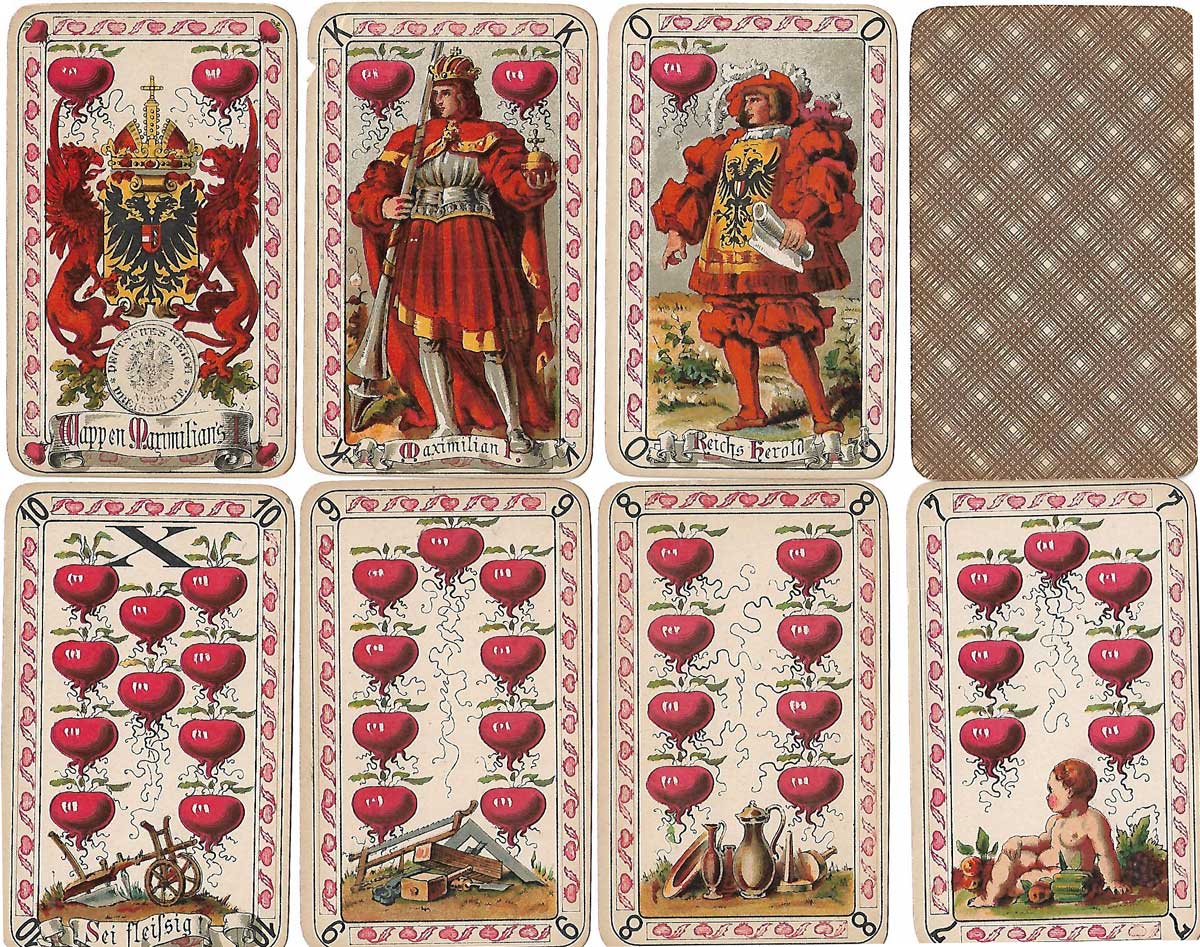
Above: Neue Deutsche Spielkarte Nr.1 (New German playing cards) conceived by Dr. Timon Schroeter, designed by Jacob Hirsch & Martin Lämmel, and printed by J. G. Fritzsche, Leipzig, 1883. 32 or 36 cards. There are several variants of the deck. Some have Queens instead of Obers, some are without index signs and some are without ornamental borders. The initials T.S. are on the nine of Sunflowers and J.H. are on the eight of Sunflowers along with “83”, no doubt referring to the year of the deck’s creation.
CREDITS & REFERENCES
All images courtesy Rod Starling.
See also: British Museum►
Extra research courtesy Rod Starling and Peter Endebrock www.endebrock.de►
The drawings were also published in book form, including four queens and all the number cards 2-10, as 56 colour lithographs accompanied by verses, printed by W. Drugulin, Leipzig, 1883 more →

By Rod Starling (1936-2023)
United States • Member since January 09, 2013
Rod Starling was one of the founding members of the 52 Plus Joker card collectors club. He authored many articles for the club's quarterly newsletter, Clear the Decks. His collection encompasses both foreign and American decks. Rod also authored a book titled The Art and Pleasures of Playing Cards.

Activity for Neue Deutsche Spielkarte
Sign in to comment or save this article.

Related Articles
Hallmark
A folksy take on playing card courts.
Munich is Trumps
Famous men and women associated with Munich on a pack with dual suits.
Heathen Wars
German-suited ‘Heathen War’ playing cards published by Joseph Fetscher, Munich, c.1820.
Historical playing cards by Joseph Fetscher
Historical playing cards by Joseph Fetscher, Munich, c.1820.
Bilder zum Tarot
Detailed pen and ink drawings of the major arcana by the German artist Helmut Wonschick.
Schweizer Trachten
Schweizer Trachten No.174 (Costumes Suisses) by Dondorf.
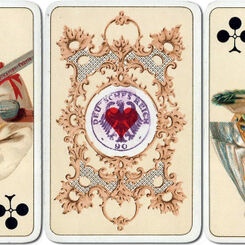
Kaiserkarte
“Kaiserkarte” first published by Schneider & Co in 1895-1897 for the Imperial Court.
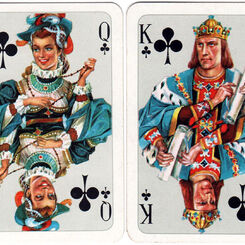
Salon-Karte No.66
Salon-Karte No.66 designed by Walter Krauss, 1970
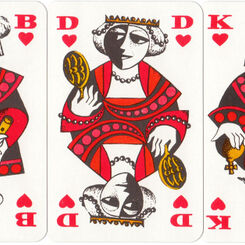
Hannelore Heise: “Essay” & “Gracia”
Two charming designs by Hannelore Heise from Germany.
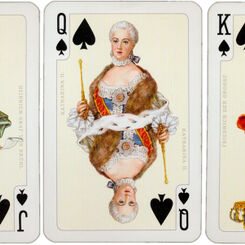
Rococo No. 2130
Piatnik: Rococo No. 2130 playing cards designed by Prof. Kuno Hock, c.1975
Carl Arnold Transformation
Transformation playing cards designed by Carl Johann Arnold (1829-1916), the court artist for King F...
Russian Opera Scenes
Russian Opera & Theatre Scenes playing cards first published by the Colour Printing Plant (USSR, Rus...
Jeu des Rois de France
This beautifully engraved and pleasing deck designed in 1856 has French Kings and consorts as the Ki...
Luxus Club Karte No.184
Another of Dondorf's masterpieces of chromolithography, the detailed artwork on these cards has mult...
14: Back Designs
A few examples of the many interesting back designs.
Gedimino Stulpai
Gedimino Stulpai playing cards made in Lithuania by Spindulys Printing Co., Kaunas, depicting Lithua...
German History by Johann Conrad Jegel
Historical Deck with characters and emblematical figures published by Johann Conrad Jegel, Nürnberg,...

Schiller deck
Schiller deck made by Conrad Ludwig Wüst, Frankfurt/Main, ca. 1834.
Dresdner Originale
‘Dresdner Originale with scenes of Dresden, designed by Günter Schmitz, 1989.
The History of Playing Cards
Playing cards appear in European records in the late 14th century, but their earlier history lies fu...
Most Popular
Our top articles from the past 60 days


