


Crimean War Deck
1854 saw the declaration of the Crimean War and this deck was published by Wüst around, or shortly after, 1856.
Commemorative deck published by Conrad Ludwig Wüst in which the 4 aces have views of battles in the Crimea . The court cards are portraits of royal personages and generals associated with the war. The colouring and design of some of the court cards are different at each end. There are two unidentified stamps on the ace of clubs, and one on the 7 of clubs
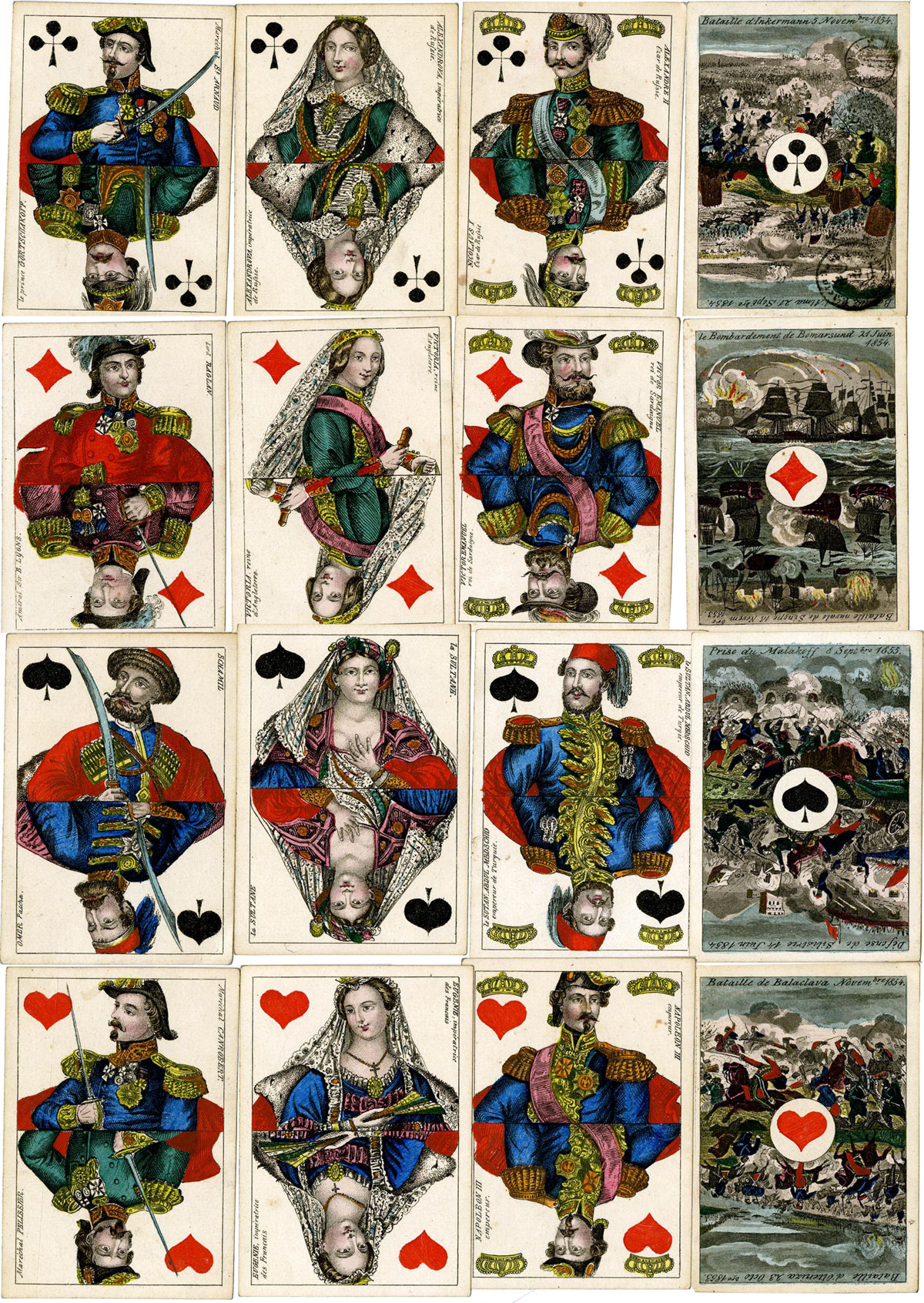
Above: Crimean War Deck published by Conrad Ludwig Wüst c.1856. 52 double-ended cards, hand-coloured etching, square corners, no indices, backs printed in red with a small pattern. © The Trustees of the British Museum
The Crimean War was fought from October 1853 to February 1856 between the Russian Empire and an ultimately victorious alliance of the Ottoman Empire, France, the United Kingdom and Sardinia-Piedmont • Wikipedia►
The more recent annexation of Crimea (2014) also highlights Crimea’s strategic significance for dominance in the Black Sea area and Russia’s desires for expansion and control. Both conflicts were influenced by competing nationalist narratives.
References
British Museum: number 1896,0501.670►
O’Donoghue, Freeman M: Catalogue of the collection of playing cards bequeathed by Lady Charlotte Schreiber (German 228), Trustees of the British Museum, London, 1901 [digital version here]

By Simon Wintle
Spain • Member since February 01, 1996
I am the founder of The World of Playing Cards (est. 1996), a website dedicated to the history, artistry and cultural significance of playing cards and tarot. Over the years I have researched various areas of the subject, acquired and traded collections and contributed as a committee member of the IPCS and graphics editor of The Playing-Card journal. Having lived in Chile, England, Wales, and now Spain, these experiences have shaped my work and passion for playing cards. Amongst my achievements is producing a limited-edition replica of a 17th-century English pack using woodblocks and stencils—a labour of love. Today, the World of Playing Cards is a global collaborative project, with my son Adam serving as the technical driving force behind its development. His innovative efforts have helped shape the site into the thriving hub it is today. You are warmly invited to become a contributor and share your enthusiasm.

Activity for Crimean War Deck
Sign in to comment or save this article.

Related Articles
The Modern Württemberg Pattern
Early 2000s modernization based on designs from 1865 and 1926.
Battles in Mexico, 1847
Uncut proof sheet with Mexican Battle scenes on the aces and portraits of American generals on the c...
Belgian Souvenir playing cards
made in Germany by C.L. Wüst
-playing-cards-with-wüst-courts/images/rijks-1.f6075e41.jpg "Oude Kunst (Old Art) playing cards with Wüst courts")
Oude Kunst (Old Art) playing cards with Wüst courts
made for export to the Netherlands.
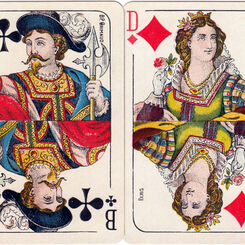
Grimaud copy of Wüst playing cards
A copy of Wüst house pattern 3
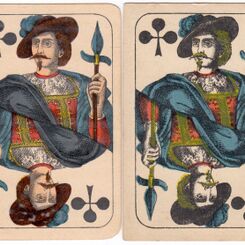
Copies of Wüst House pattern playing cards
both by Christian Heinrich Reuter of Nuremberg, Germany
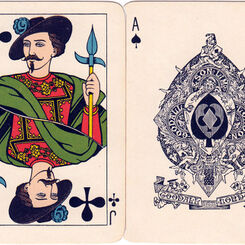
Goodall’s modernised Wüst House pattern playing cards
A remodelled version of the first Wüst house pattern.
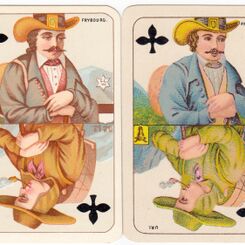
Wüst Costumes Suisses No.93
Two version of a Swiss souvenir pack by C.L.Wúst
Wüst Oval Patience Playing Cards No.240
A review of all three known versions
Renaissance Playing cards made by C.L.Wüst
Rococo style playing cards from Frankfurt.
Unnamed Scenic aces of Rio de Janeiro
Cards made by C.L.Wüst of Germany for Brazil
Decorated pip cards from C.L.Wüst
Several Wüst patience packs with special pip cards
Miniature Theatre playing cards
Miniature playing cards, possibly for children, with a romantic theatrical theme. C.L. Wüst c.1890. ...
Wüst Lenormand deck, c.1860
Wüst Lenormand deck, c.1860
C.L. Wüst, 1811 - 1927
SPIELKARTENFABRIEK VON C.L. WÜST, 1811 - 1927. A short history of the Wüst factory by Martin Shaw & ...
Nationaal Speelkaart Nº 165
Wüst: Nationaal Speelkaart Nº 165 issued for the Dutch market
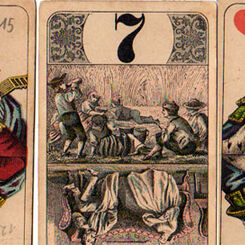
Wüst “Encyclopedic Tarot”
“Encyclopedic Tarot” by C. L. Wüst with “bourgeois” views of life on the Trumps.
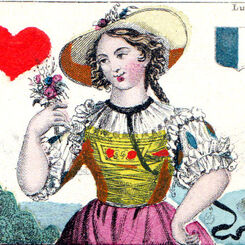
Swiss Costumes
Wüst's Swiss Cantons souvenir deck was published in Frankfurt in c.1875 for the emerging tourist mar...
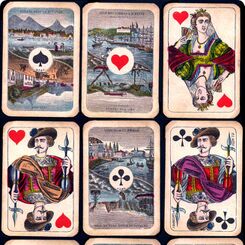
Brazil Scenic Aces
C. L. Wüst Scenic Aces for Brazil.
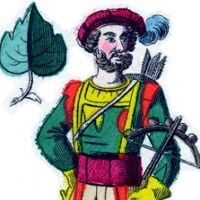
Schiller deck
Schiller deck made by Conrad Ludwig Wüst, Frankfurt/Main, ca. 1834.
Most Popular
Our top articles from the past 60 days


