Goodall c.1845-60
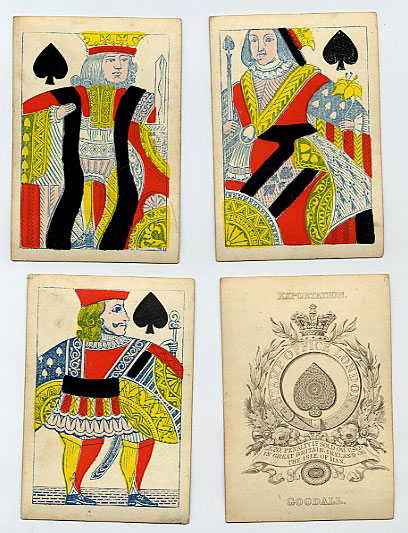
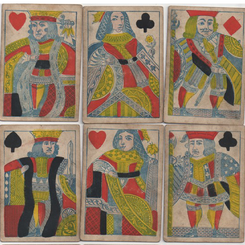
Goodall’s earliest cards were traditional in appearance but in around 1845 ‘modernised’ courts were designed
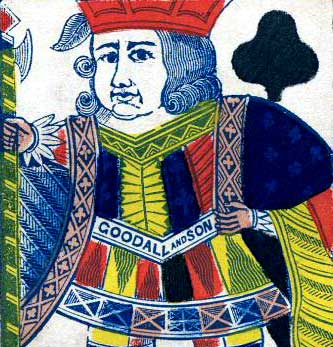
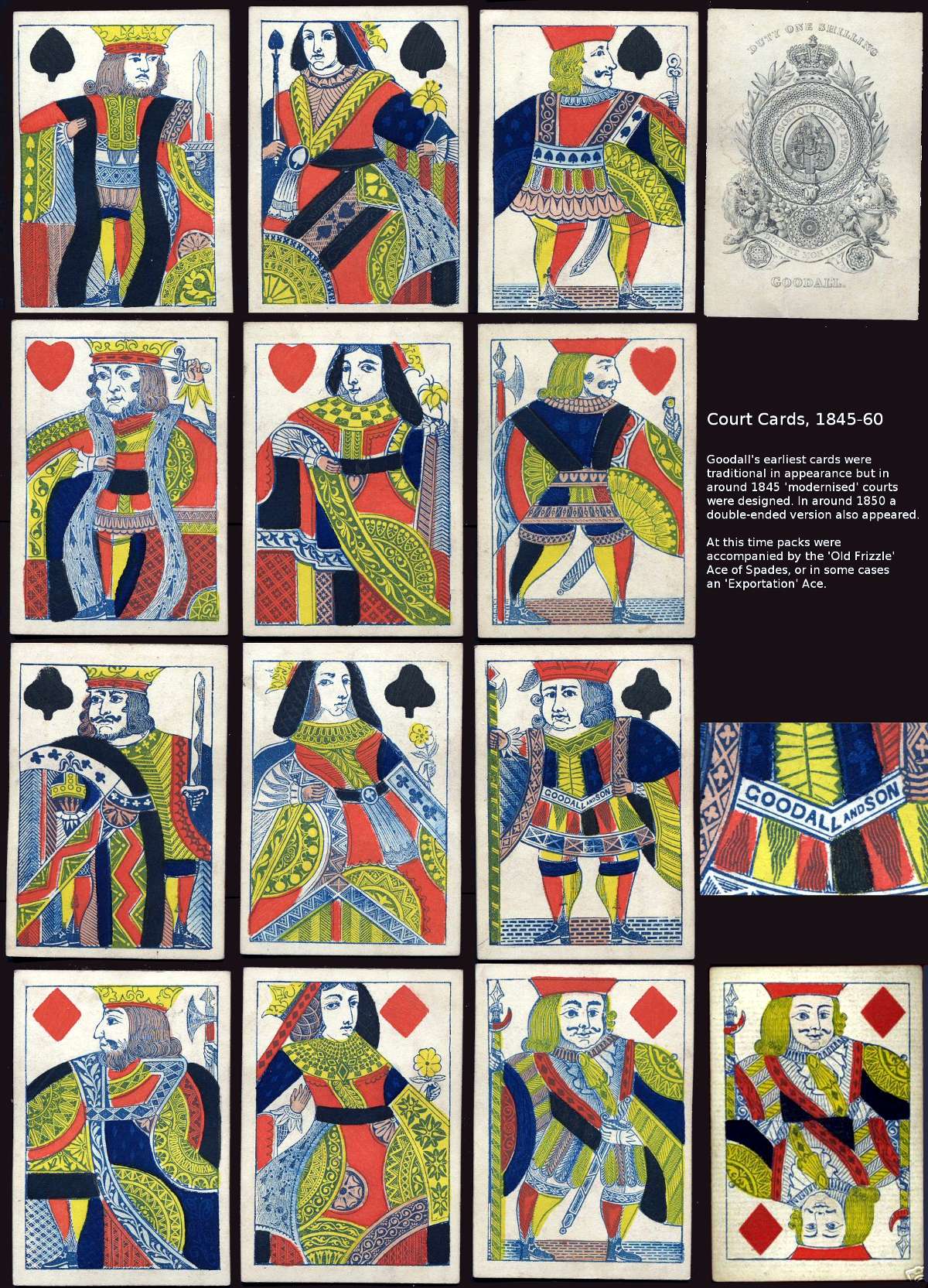
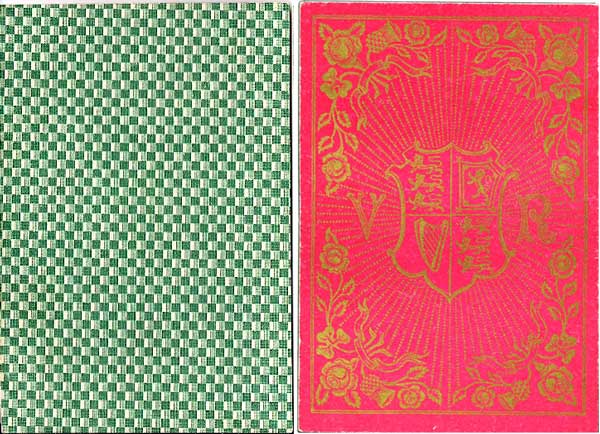
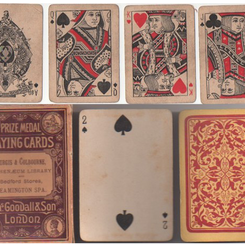
Goodall’s earliest cards, produced using woodblock and stencil techniques, were traditional in appearance but as technology and fashions moved forwards, in around 1845 ‘modernised’ courts were designed. These still contained full-length figures, but double-ended ones were soon to follow. At the same time, the plain white backs were now produced with an all-over pattern of spirals, dots or a simple repeating pattern. Shortly after this led to pictorial back designs and very soon, in the 1860s, these evolved into multicolour designs, commemorative backs, oriental designs and so on, often including gold on better quality cards. This particular court card design also happens to be the only Goodall deck to carry that name on any court card.
At this time packs were accompanied by the ‘Old Frizzle’ duty Ace of Spades, or in some cases an ‘Exportation’ Ace.
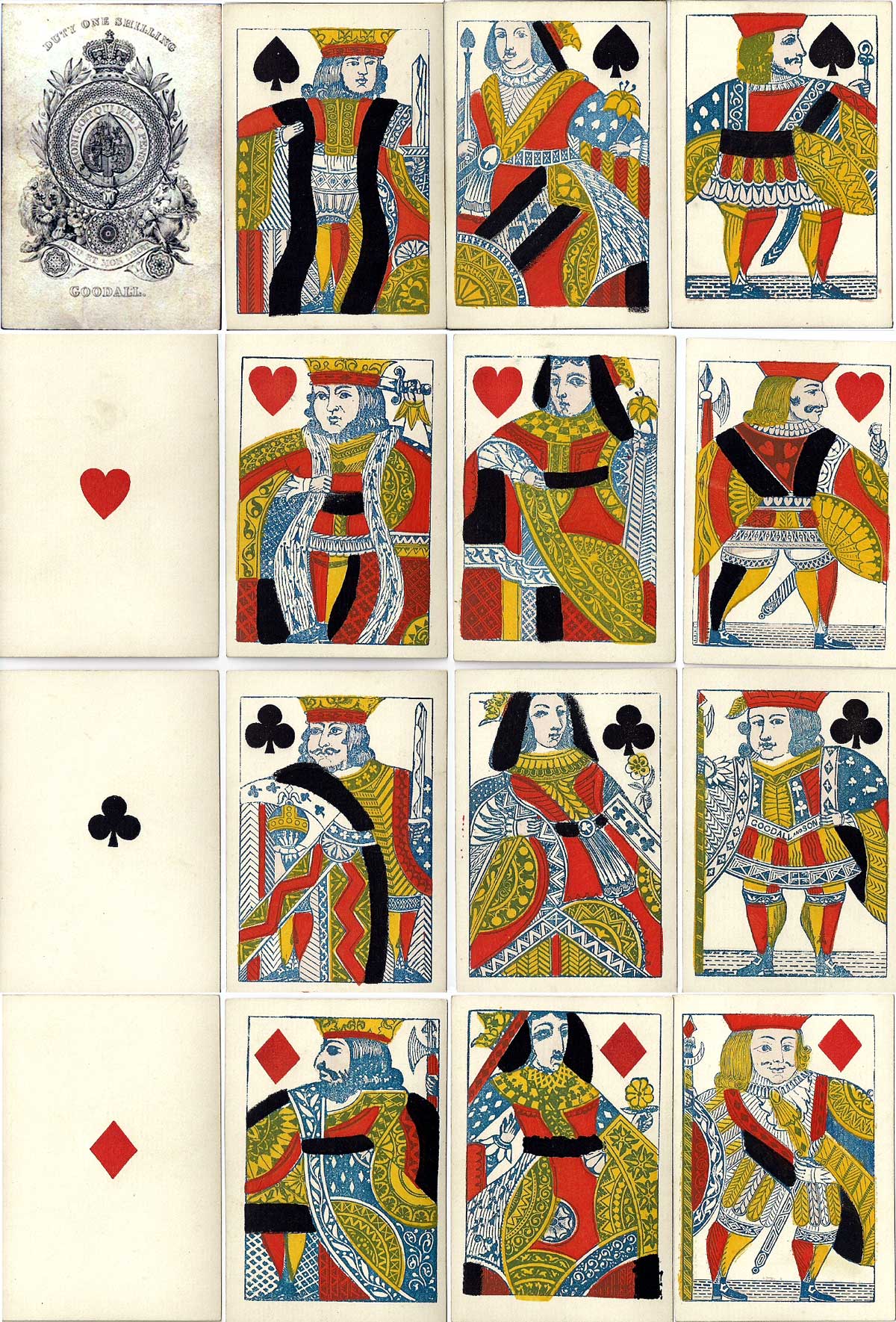
Above: Goodall's new designs were an attempt to 'modernize' the courts. There was also a double-ended version (1850-60). Two different sets of blocks are known, with various colour variants. The King of Diamonds has no hand. Shortly after this (c.1860) Goodall made another attempt to 'modernize' the courts, which were re-drawn and decorated in a more ornamental style. These developments were probably to keep in step with De la Rue's innovations.
Right: backs began to be produced with an all-over pattern of spirals, dots or a simple repeating pattern. By the 1860s these evolved into multicolour designs, commemorative backs, oriental designs and so on, often including gold on better quality cards.
REFERENCES
Goodall, Michael H: Chas Goodall & Son: The Family and The Firm 1820-1922, Woking, 2000. This is The best source of information on Charles Goodall & Son.
Lodge, Ken: The Standard English Pattern (second revised and enlarged edition), Bungay, Suffolk, 2010

By Rod Starling (1936-2023)
United States • Member since January 09, 2013
Rod Starling was one of the founding members of the 52 Plus Joker card collectors club. He authored many articles for the club's quarterly newsletter, Clear the Decks. His collection encompasses both foreign and American decks. Rod also authored a book titled The Art and Pleasures of Playing Cards.

Activity for Goodall c.1845-60
Sign in to comment or save this article.

Related Articles
Quaterne
A Victorian quartet-style children’s card game by Goodall & Son.
Double Dummy Bridge
In the early 20th century several firms began to promote whist or bridge as a game for two.
Pastime Playing Cards for the Blind
The “Pastime” Playing Cards for the Blind manufactured by Goodall & Son Limd., c.1910.
Jockey Club de Buenos Aires
Spanish-suited pack by Chas Goodall & Son Ltd for the Jockey Club, Buenos Aires.
Goodall 1916 Rockleigh Sample Book
Complete contents of a sample book by Goodall
Whist marker boxes
The Camden Whist marker was being advertised by Goodall and son in 1872 as a new product.
Kuhn Khan and Cooncan: an update
Kuhn Khan and Cooncan are pretty much exactly the same rummy-style game, but packaged and presented ...
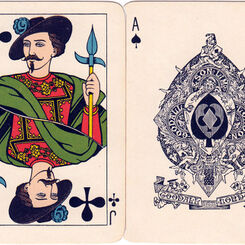
Goodall’s modernised Wüst House pattern playing cards
A remodelled version of the first Wüst house pattern.
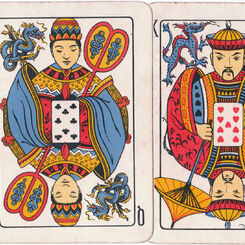
Khanhoo
Khanhoo by Charles Goodall & Son, 1895.
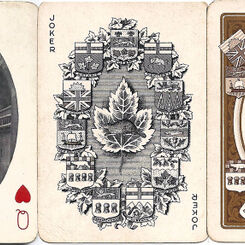
Ocean to Ocean Canada Souvenir
“Ocean to Ocean” Canadian Pictorial Souvenir packs by Chas Goodall & Son Ltd, c.1906 & 1911.
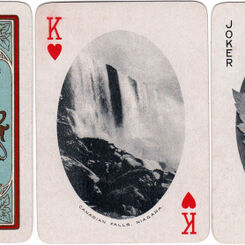
Ocean to Ocean Souvenir of Canada, c.1905
Ocean to Ocean Souvenir of Canada by Chas Goodall & Son Ltd, c.1905.
1893 Worshipful Company Pack
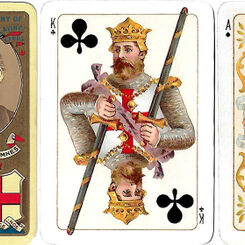
Worshipful Company Pack manufactured by Chas Goodall & Son, 1893.
Woolley & Co: “Second Harrys”
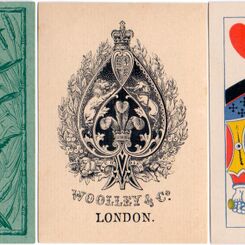
Woolley & Co produced a range of different quality playing cards, and these “Second Harrys” are towa...
Moods & Faces
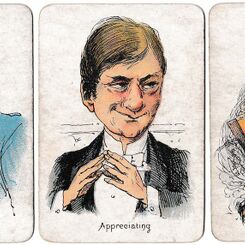
“Moods & Faces” round game by Thos de la Rue & Co Ltd,. c.1900.
District Messenger
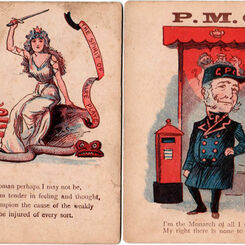
District Messengers were uniformed young men wearing little pill-box hats and mounted on bicycles wh...
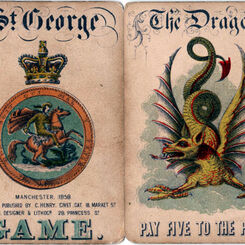
St George Game
St George Game, 1858, depicting St George and other saints engaged in battle slaying the dragon to s...
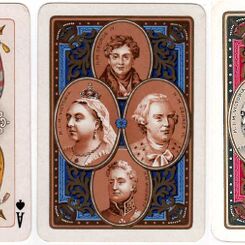
Nineteenth Century Pack
A magnificent example of Goodall & Son’s range of chromolithographed Commemorative playing cards fro...
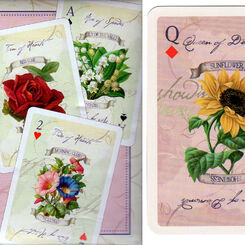
Language of Flowers
Language of Flowers by Past Times, c.1999.
Most Popular
Our top articles from the past 60 days