


Math Stack
“Math Stack” playing cards designed by Diana Stanciulescu, illustrating and explaining 36 important mathematical constants, published by EduStack in India
Mathematical constants and equations represent more than just numbers and are inherent in the hidden laws of the universe... mathematics is everywhere. The exquisite visual design of these playing cards enables an intuitive insight into the language of mathematics.
“I always wanted to be a math genius. So when I was commissioned to design a deck of cards based on math constants I was so ready.” Diana Stanciulescu, Illustration.
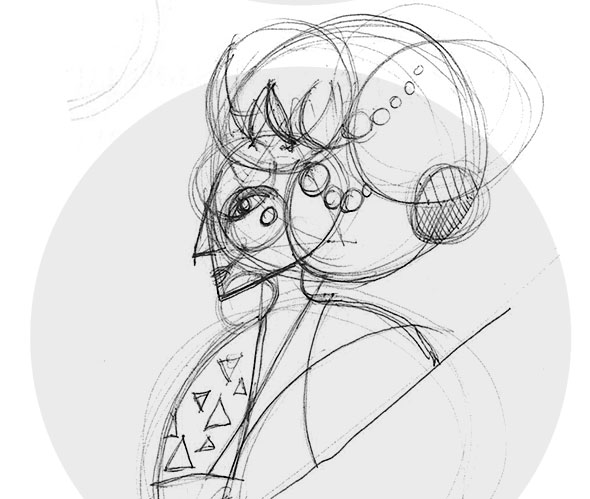
Right: a glimpse into the design process of face cards→
Math Stack contains 54 cards (including 2 jokers), illustrating and explaining 36 important mathematical constants.
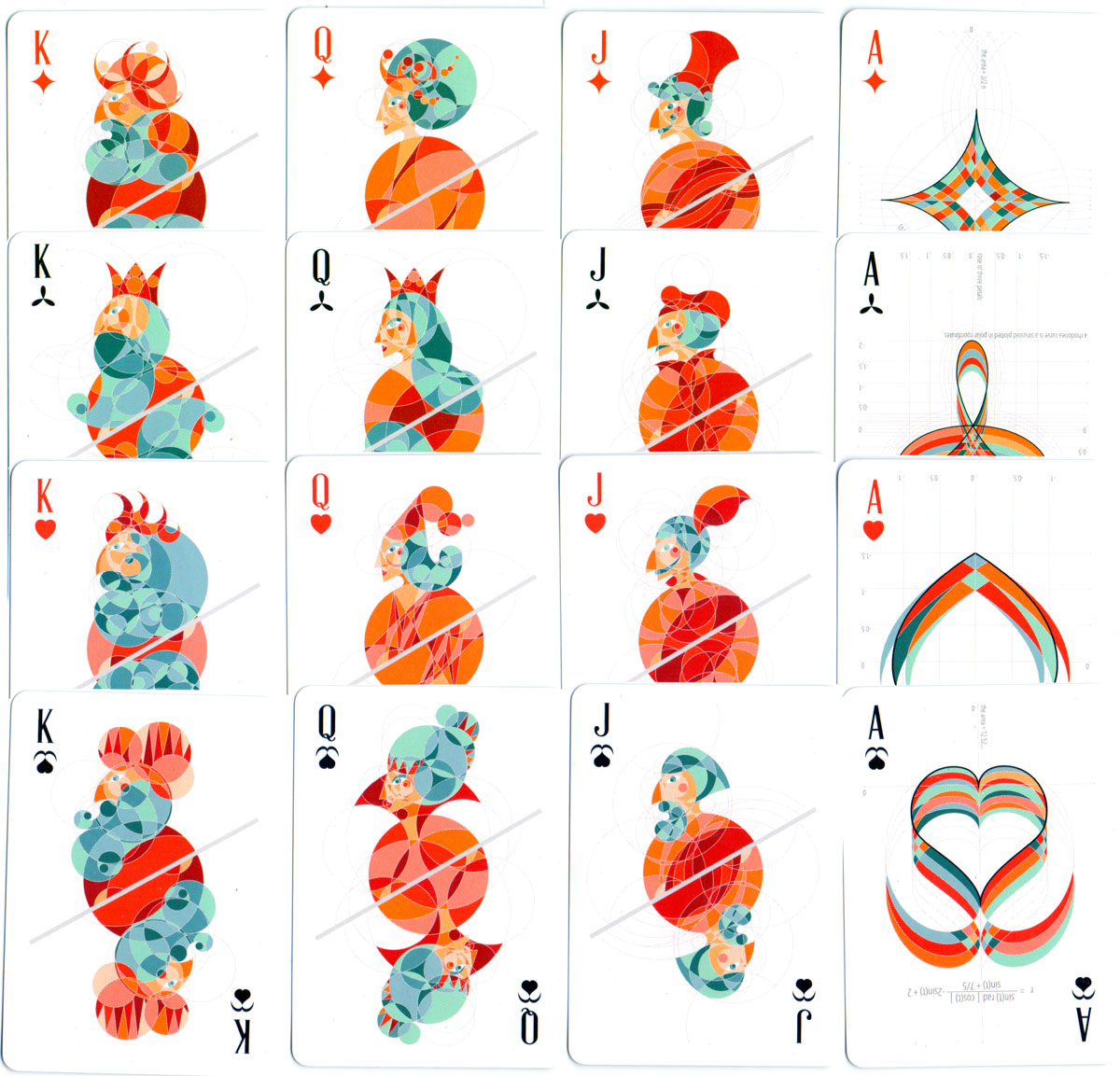
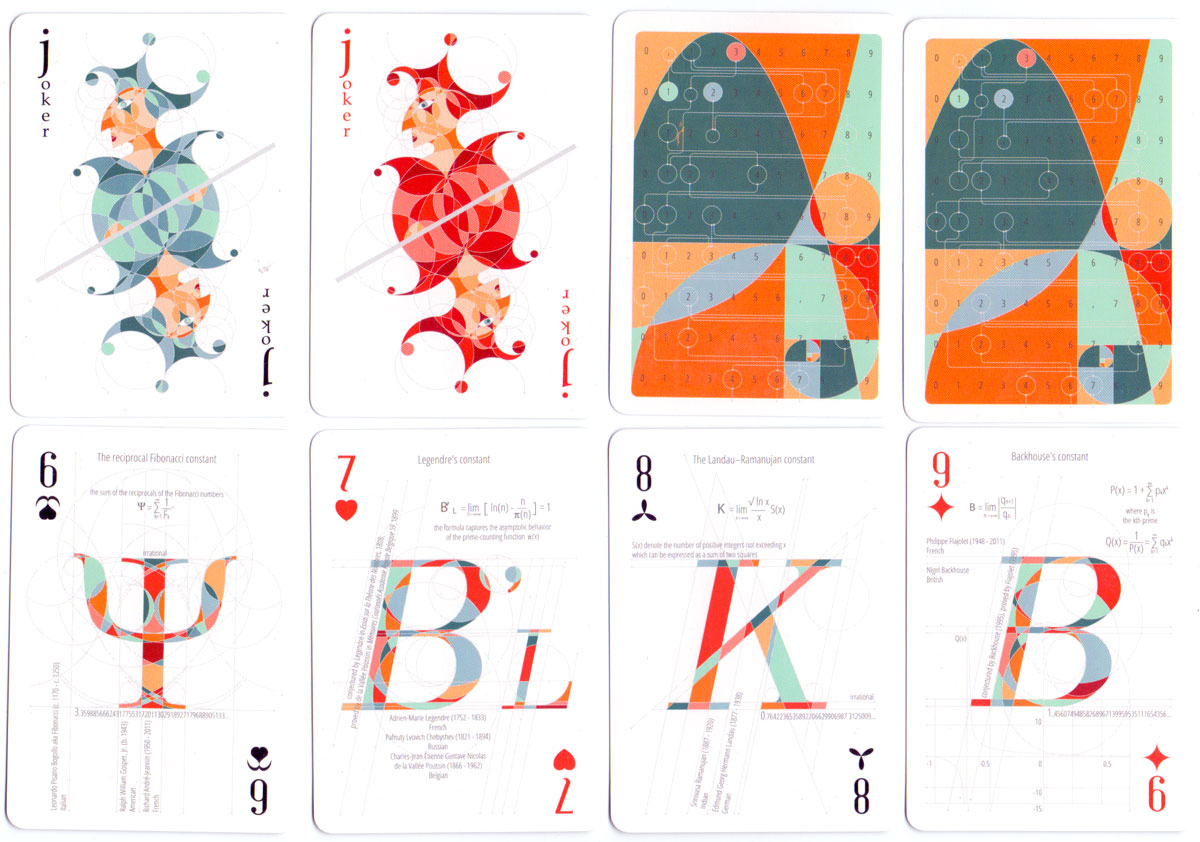
Above: “Math Stack” playing cards designed by Diana Stanciulescu illustrating and explaining 36 important mathematical constants, published by EduStack, made in India by TM Cards, 2015.
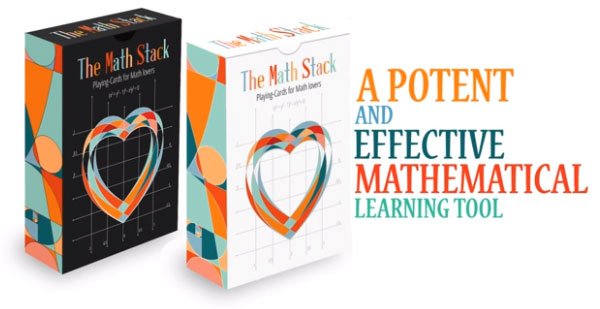
More details: EduStack: Playing Cards for Math & Astronomy►

By Simon Wintle
Spain • Member since February 01, 1996
I am the founder of The World of Playing Cards (est. 1996), a website dedicated to the history, artistry and cultural significance of playing cards and tarot. Over the years I have researched various areas of the subject, acquired and traded collections and contributed as a committee member of the IPCS and graphics editor of The Playing-Card journal. Having lived in Chile, England, Wales, and now Spain, these experiences have shaped my work and passion for playing cards. Amongst my achievements is producing a limited-edition replica of a 17th-century English pack using woodblocks and stencils—a labour of love. Today, the World of Playing Cards is a global collaborative project, with my son Adam serving as the technical driving force behind its development. His innovative efforts have helped shape the site into the thriving hub it is today. You are warmly invited to become a contributor and share your enthusiasm.

Activity for Math Stack
Sign in to comment or save this article.

Related Articles
Les Chevaliers de la Toison d’Or
Medieval manuscript art at its finest.
Learning to play Cribbage
I learned to pay cribbage when I was very young, aged around six or seven.
Historic Shakespeare
“Historic Shakespeare” playing cards featuring Shakespearean characters by Chas Goodall & Son.
ORIENT The Queen of Cards
A unique Art creation of Subho Tagore
SI Units Revision playing cards
SI Units revision playing cards, United Kingdom.
Roman Empire
Roman Empire playing cards designed by G. Wyatt for Green Board Game Co Ltd.,
Virginie Houdet
Virginie Houdet “Cartes à Jouer” limited edition, 2017.
SiRen International
“SiRen International” playing cards based on traditional style of Indian miniature painting, 1998
Star Stack
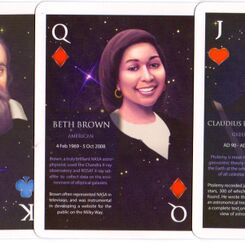
Star Stack playing cards feature illustrations of famous astronomers and important astronomical cons...
EduStack — Playing Cards for Math & Astronomy
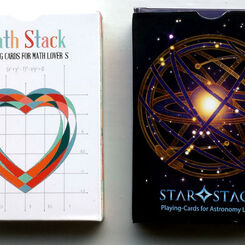
EduStack is a team from India passionate about gaming and education that has created two sets of cus...
Lingo Pix
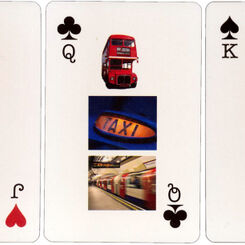
Lingo Pix Tourist Picture Cards by TM Cards, India, 2006
De la Rue for export
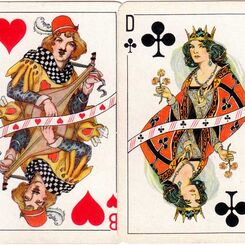
Non-standard playing cards produced by De la Rue & Co. (London), c.1930s
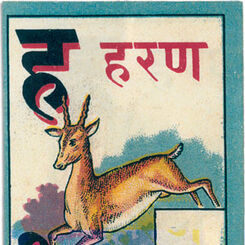
Chitrashala Press
Chitrashala Press produced some charming children's pictorial alphabet cards for early learning purp...
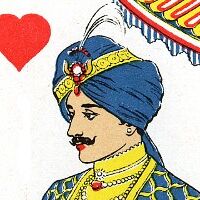
Dilkhus playing cards for India
Van Genechten was one of the most competent cardmakers in Turnhout and they produced almost every ki...
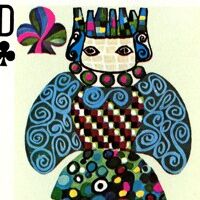
Geneviève Lirola
Stylish modern designs by the painter, decorator and ceramist Geneviève Lirola, featuring unity of c...
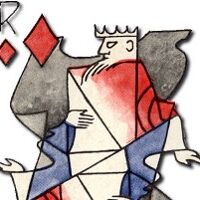
Renée Sturbelle
Artistic playing cards with abstract designs by Renée Sturbelle, first published by Brepols S.A., Tu...
Karl Gerich
Karl Gerich's interest in playing-card production came to the fore while studying at Bath Academy of...

The 52 Club
The London College of Printing '52 Club' Designers and Artists playing cards, 1984.
Prof. Franciszek Bunsch
Prof. Franciszek Bunsch, Polish playing-card designer.

Anna Gaber
Anna Gaber playing cards from Poland.
Most Popular
Our top articles from the past 60 days


