

Florentine Pattern
Originally one of several designs which emerged during the nineteenth century, the Florentine pattern has several distinctive features.
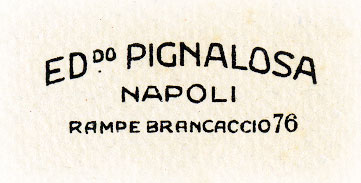
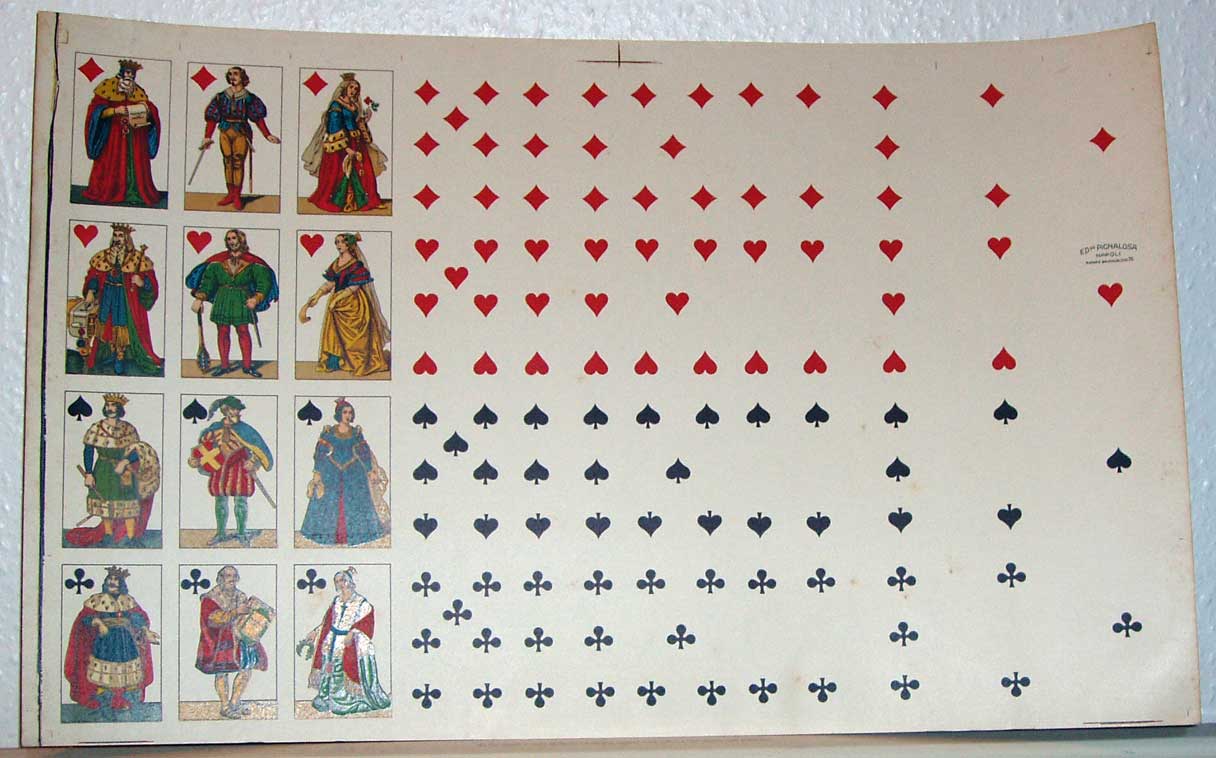
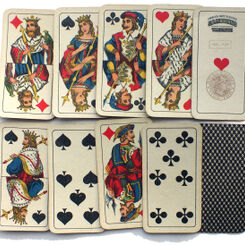
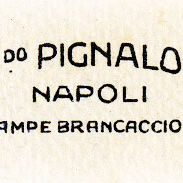
One of several similar designs which emerged during the nineteenth century, the French-suited, single-figured, large-format Florentine pattern has several distinctive features. The courts are realistically drawn without formalised style, and are dressed in Renaissance costume. The king of diamonds is reading a scroll; the jack of clubs is holding a large book; the queen of hearts is holding a letter, or about to drop it. There are no indices, usually 40 cards. The example shown below is from an uncut sheet by Edoardo Pignalosa, Rampe Brancaccio 76, Napoli, c.1946.
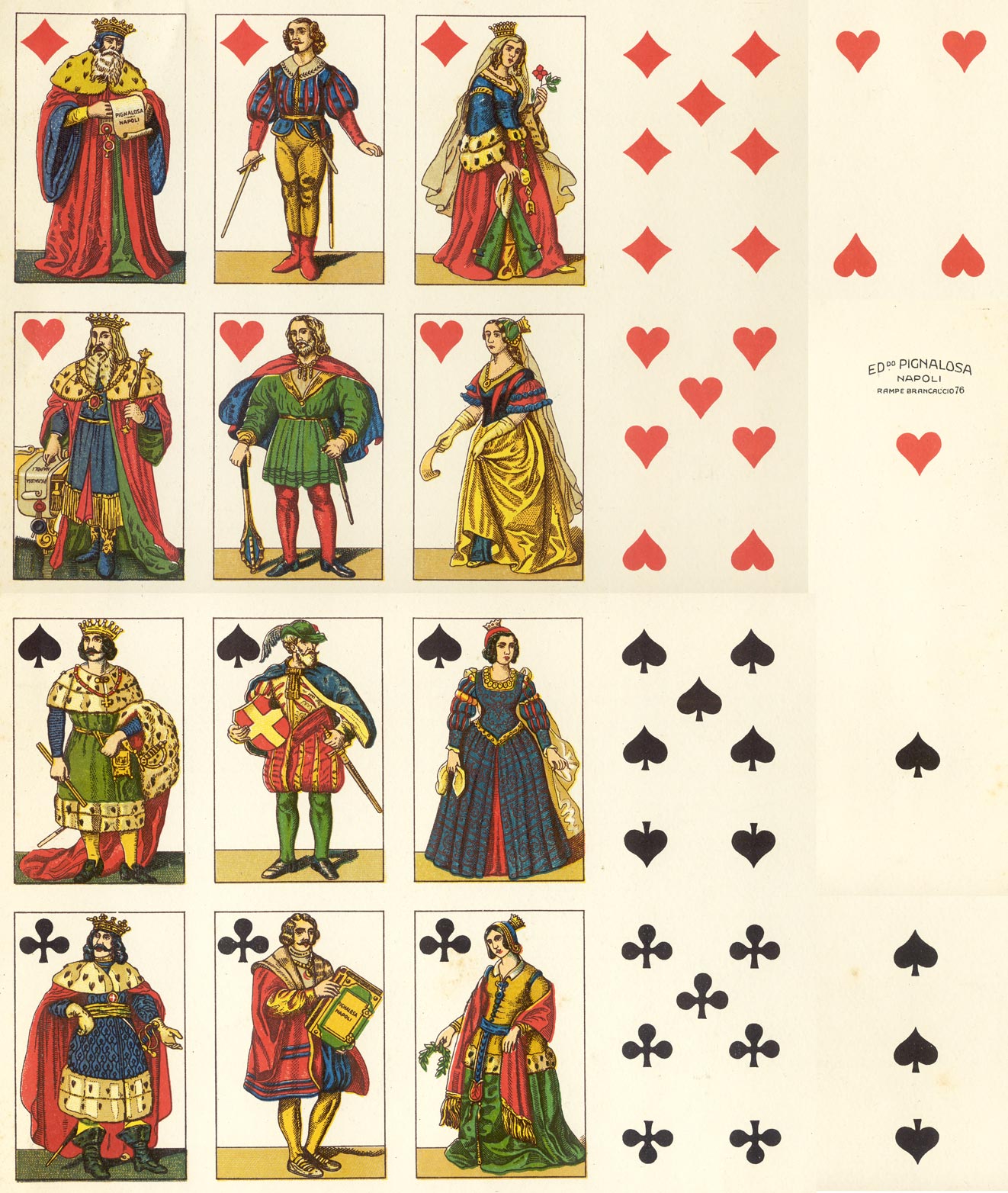
Above: detail from an uncut sheet by Edoardo Pignalosa, Rampe Brancaccio 76, Napoli, c.1946. The complete sheet can be seen here►
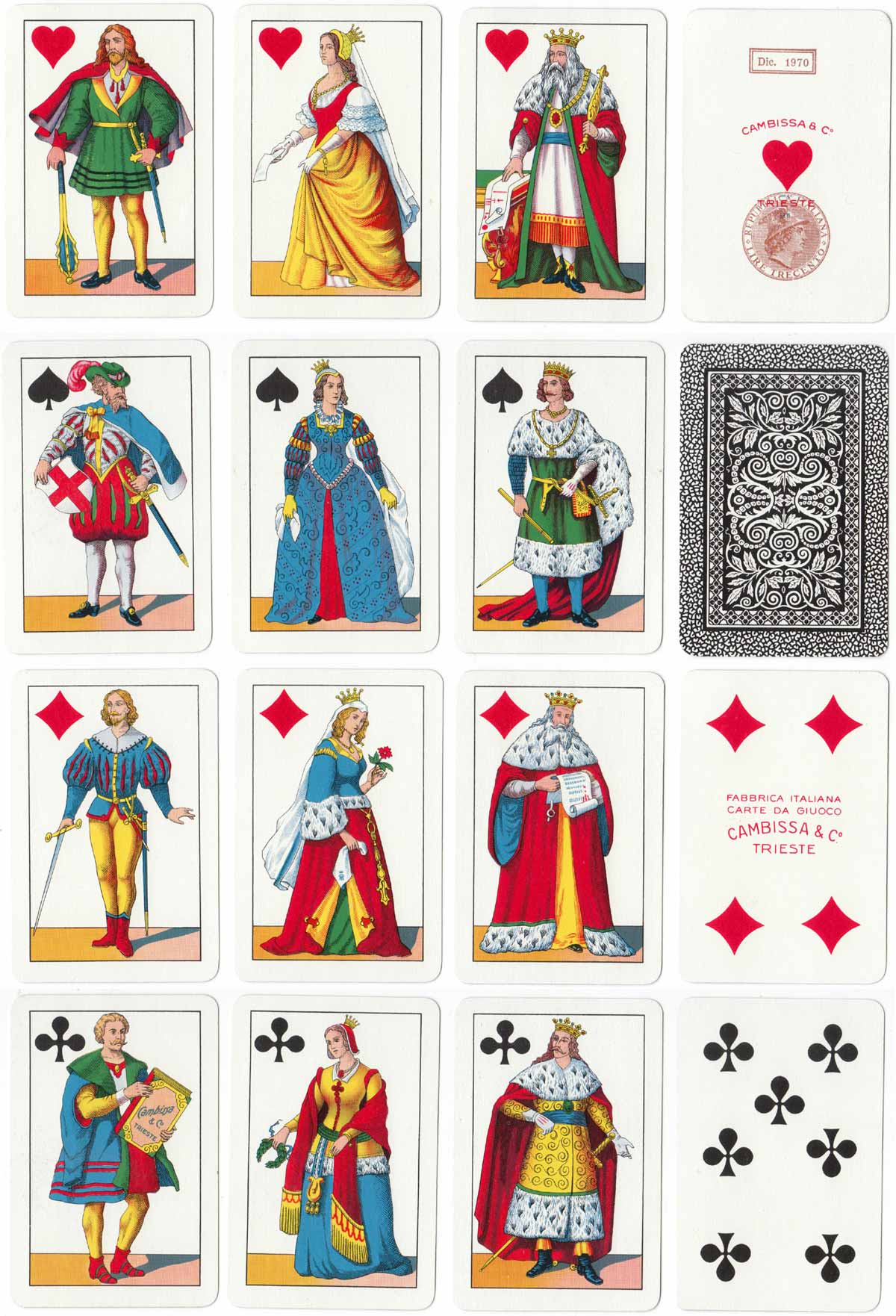
Above: Florentine pattern by Cambissa & Co., Trieste, 1970. Images courtesy Rex Pitts.
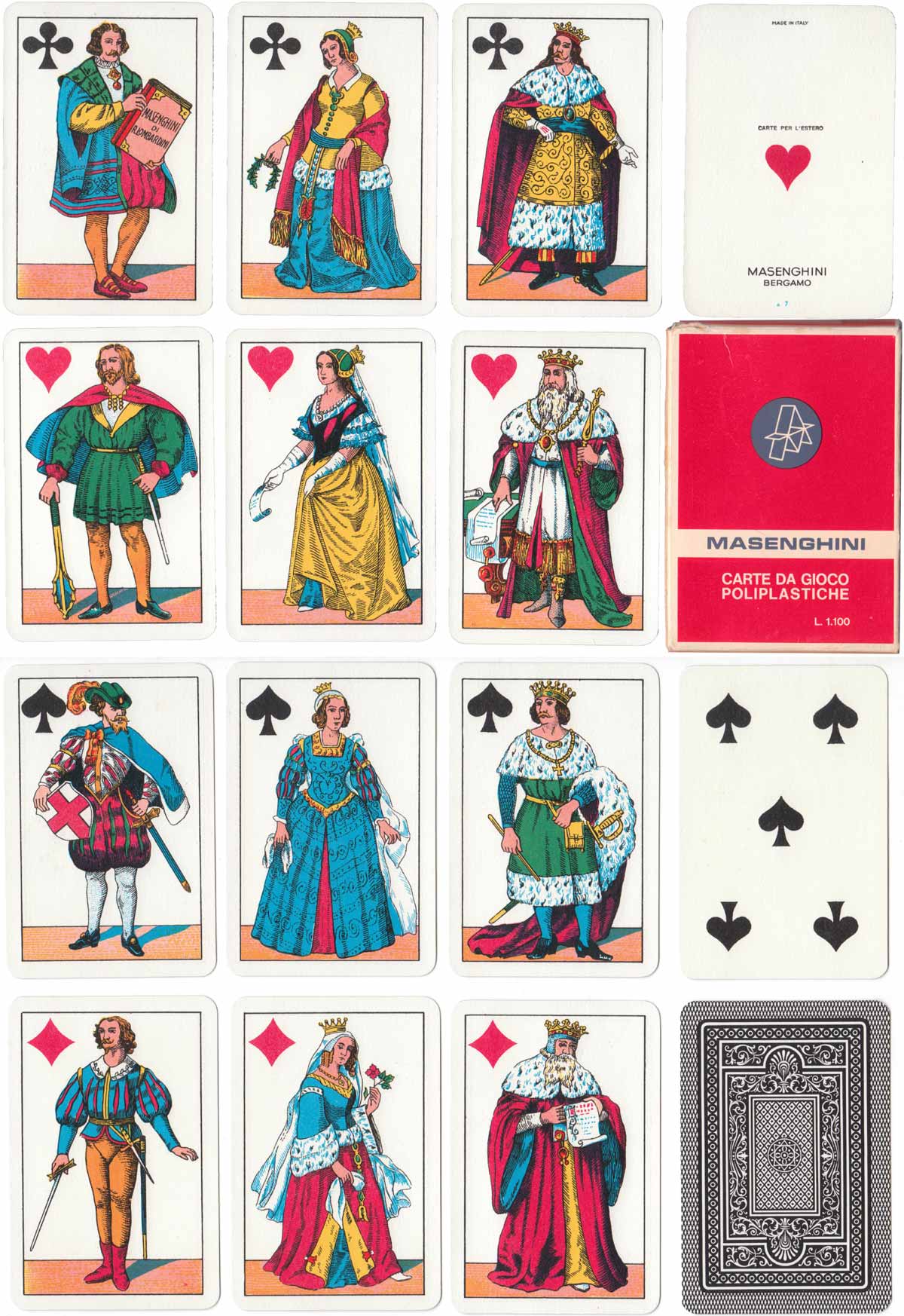
Above: Florentine pattern by Masenghini, Bergamo. Images courtesy Rex Pitts.
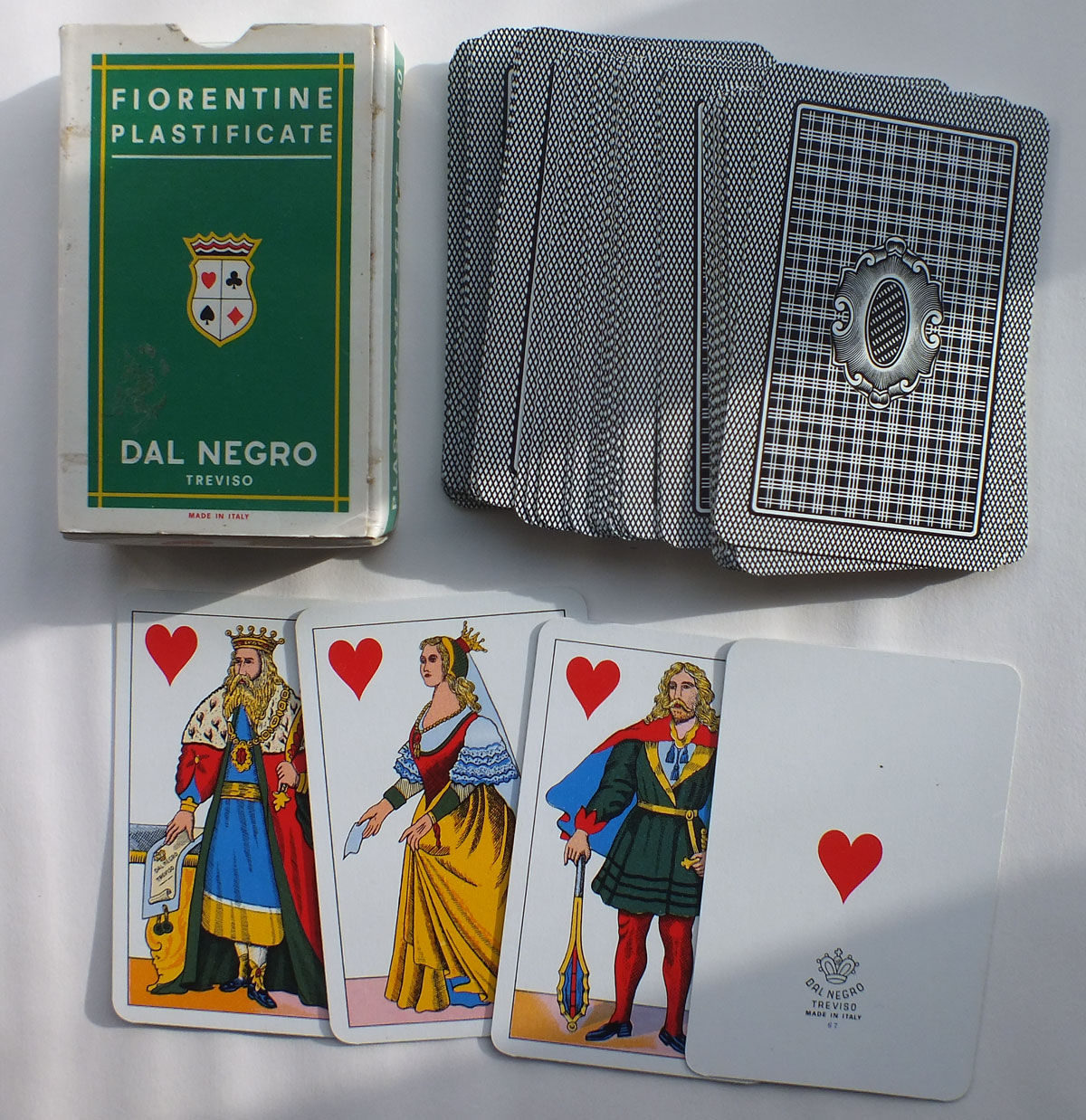
Above: Florentine pattern by Dal Negro.

By Rex Pitts (1940-2021)
United Kingdom • Member since January 30, 2009
Rex's main interest was in card games, because, he said, they were cheap and easy to get hold of in his early days of collecting. He is well known for his extensive knowledge of Pepys games and his book is on the bookshelves of many. His other interest was non-standard playing cards. He also had collections of sheet music, music CDs, models of London buses, London Transport timetables and maps and other objects that intrigued him.
Rex had a chequered career at school. He was expelled twice, on one occasion for smoking! Despite this he trained as a radio engineer and worked for the BBC in the World Service. Later he moved into sales and worked for a firm that made all kinds of packaging, a job he enjoyed until his retirement. He became an expert on boxes and would always investigate those that held his cards. He could always recognize a box made for Pepys, which were the same as those of Alf Cooke’s Universal Playing Card Company, who printed the card games. This interest changed into an ability to make and mend boxes, which he did with great dexterity. He loved this kind of handicraft work.
His dexterity of hand and eye soon led to his making card games of his own design. He spent hours and hours carefully cutting them out and colouring them by hand.

Activity for Florentine Pattern
Sign in to comment or save this article.

Related Articles
EFFEGIEFFE
Corporate gift: a non-standard "Venice Carnival" deck by Dal Negro.
79: Goodall in Italy
A survey of the influence Goodall's courts had on Italian cards.
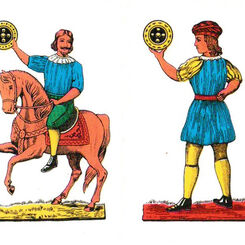
Sicilian Playing Cards
Sicilian Playing Cards by Dal Negro (Carte da Gioco).
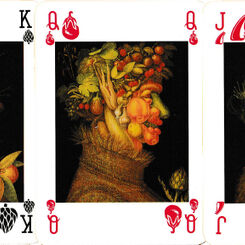
Le carte da gioco Arcimboldo
Courts and suit-signs inspired by the works of the Italian Renaissance painter, Giuseppe Arcimboldo....
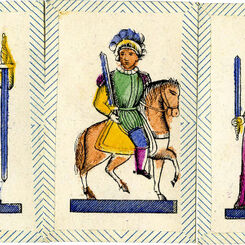
Neapolitan pattern by Luigi Pignalosa, Naples
Two versions of the Neapolitan pattern from the British Museum by Luigi Pignalosa, Naples, 1875 & 18...
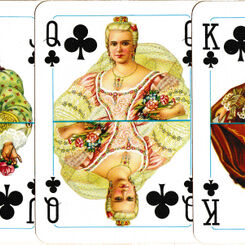
Poker Lusso
Richly costumed courts on a luxury poker pack from Masenghini.
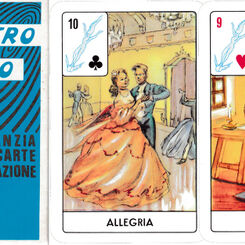
Il Vostro Destino
Italian fortune-telling pack produced by Viassone and later by Masenghini.
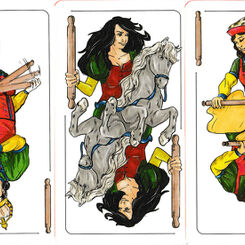
Carte Bolognesi
New designs reinforcing Bologna’s reputation as the gastronomic capital of Italy.
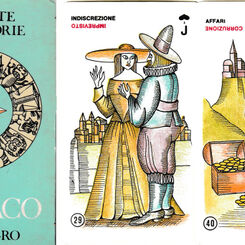
Lo Zodiaco
French-suited fortune-telling pack with distinctive designs by Italian artist Sergio Ruffolo.
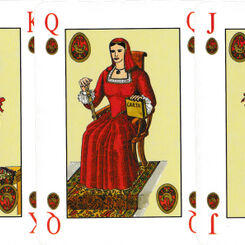
Modet Sardegna
Costumes, masks and symbols from the island of Sardinia, with designs by Luciano Dettori and Tonino ...
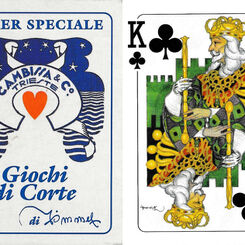
Giochi di Corte
“Giochi di Corte” designed by Vito Thümmel and published by Cambissa of Trieste in 1991.
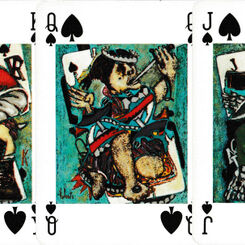
Fernando Valenti
Designs by Italian artist Fernando Valenti issued to coincide with an exhibition of his work in 1986...
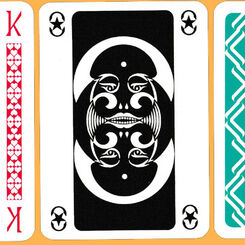
Bolzani e Spagnolo
Stylish monochrome designs by the Archinstudio of Guido Bolzani and Gian-Piero Spagnolo, printed by ...
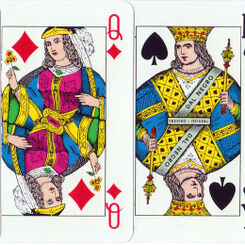
Dal Negro Bridge set
Dal Negro Bridge set featuring old Vienna pattern courts.
Lombardy (or Milanesi) pattern
The origins of the Lombardy pattern probably lie in the early 19th century when it was a full-length...
Trevisane pattern
The double-ended version of the ‘Trevisane’ pattern originated in the early 19th century.
Small Tuscan Pattern
Small Tuscan Pattern
Sicilian Pattern
The Sicilian pack has a similar composition to the Neapolitan pack, and is small and squat in appear...
Brescia pattern
The Brescia pattern contains elements which come from a past age.
Most Popular
Our top articles from the past 60 days