


Llombart pattern playing cards from Spain
also known as the Plumed Hat pattern.
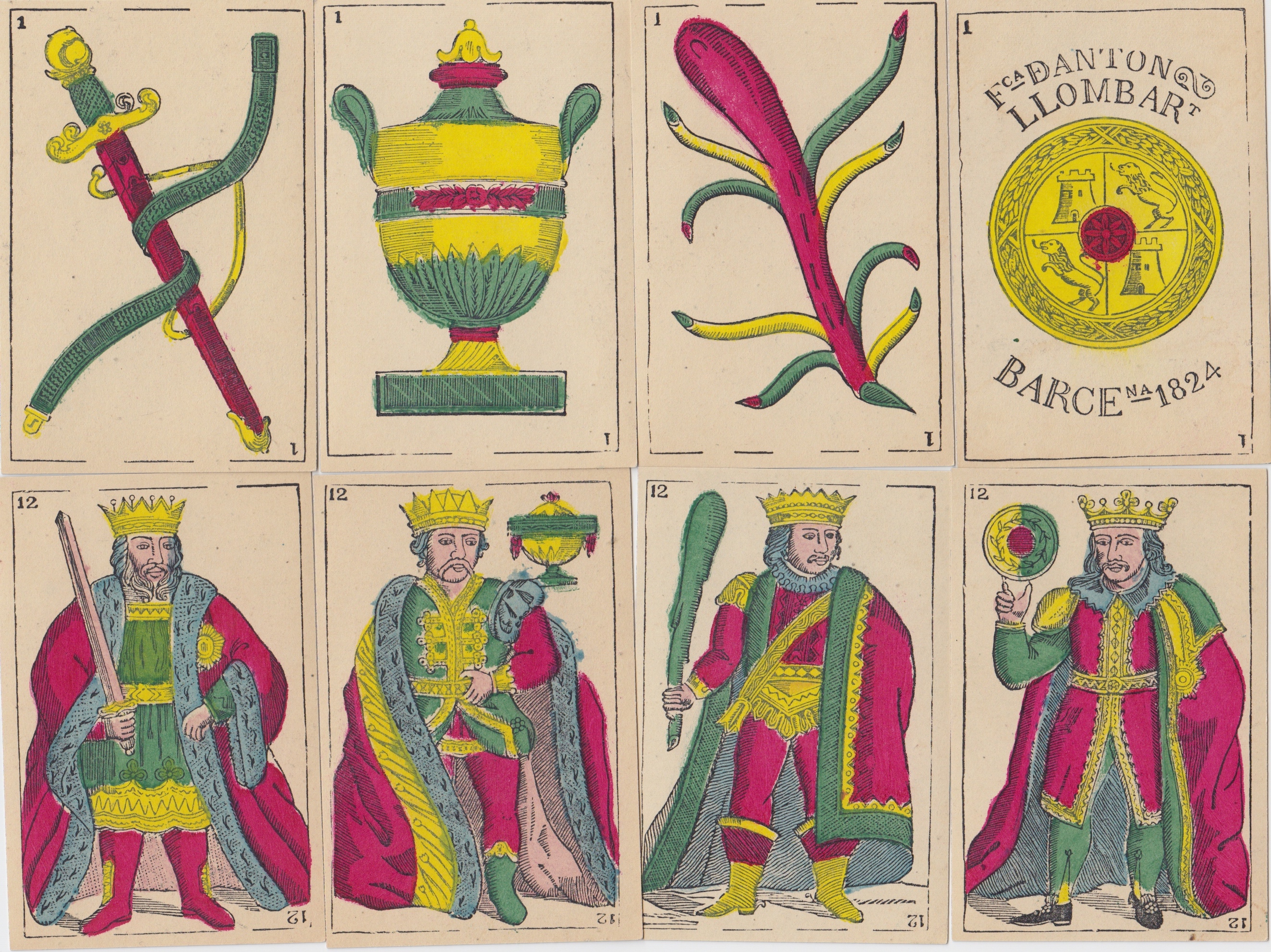
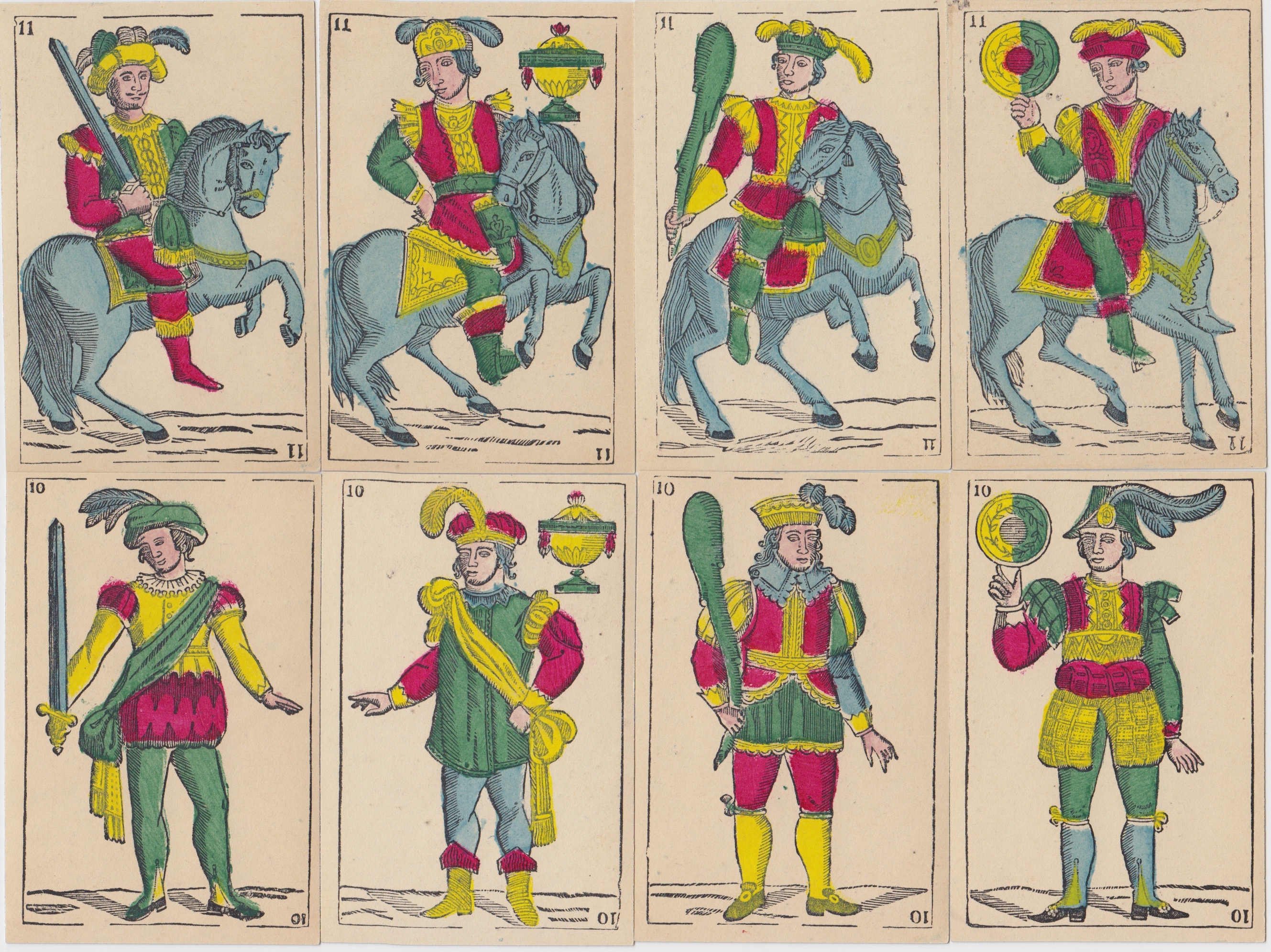
Shown here is a Spanish suited pack of playing cards made Anton Llombart of Barcelona, Spain in 1824. This type of cards is often referred to as the 'Plumed Hat' pattern due to the distinctive feathered hats featured on the cavaliers and sotas in the pack. Its origins are not clear, but the cards by Llombart are maybe the earliest type known which prompted Sylvia Mann to name it the Llombart pattern in her book "All cards on the Table". The pack of 48 cards was printed from woodblocks and are stencil coloured.
The literature tells us that the original Llombart woodblocks were eventually sold to the Camoin factory in Marseille, France who continued to print the cards for some time. Other factories in France, Germany and Belgium have also produced versions of the pattern which eventually fell into disuse in the latter part of the 19th century. You can see an early version from Mexico here and an early version from Germany here.
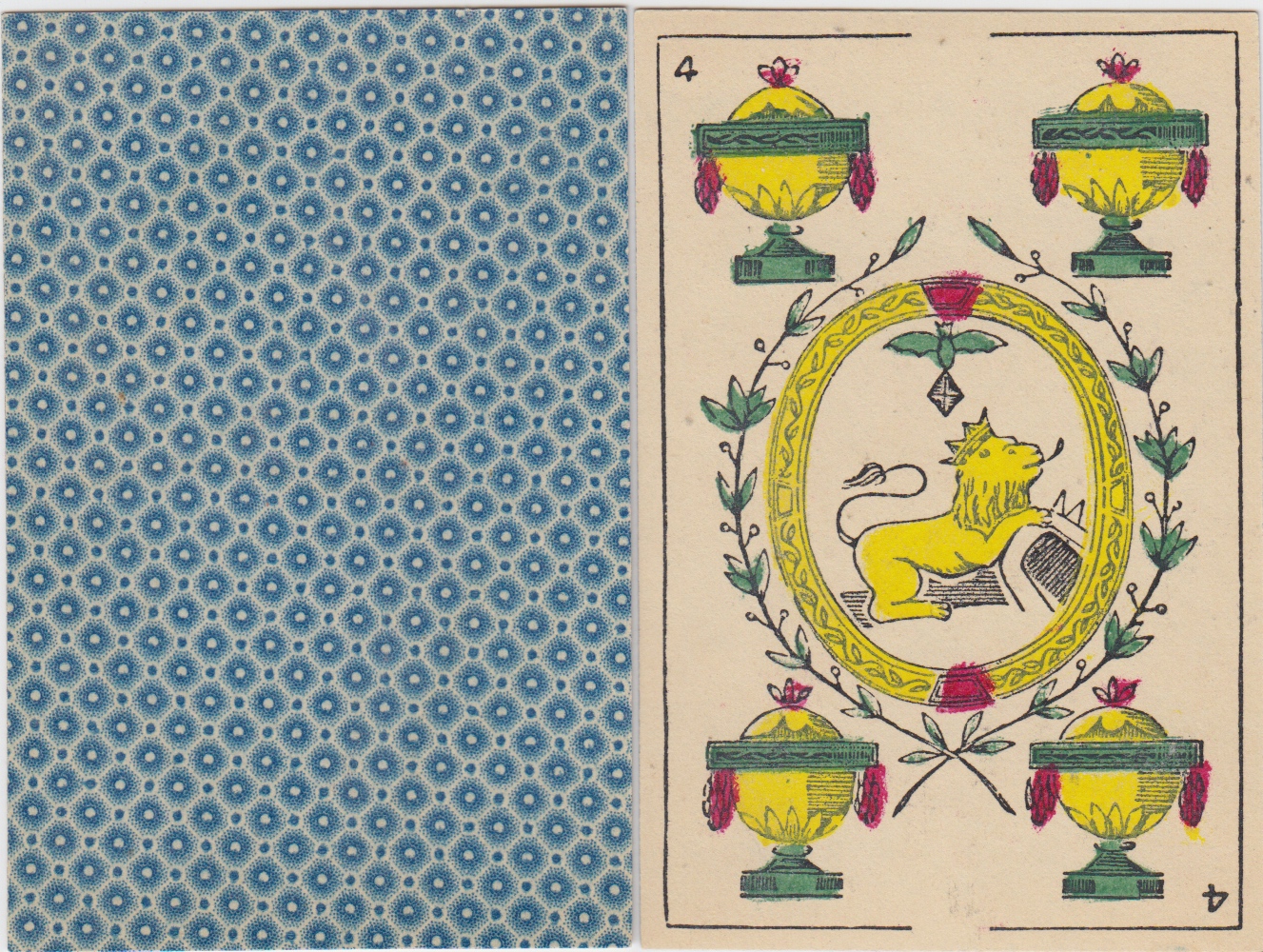
Below: The reverse of the cards and the 4 of cups.
References:
- The Playing Cards of Spain, Trevor Denning, 1996. Page 74-75
- All cards on the Table, Syvia Mann, 1990. No.47
All cards shown are from the collection of Paul Symons ©

By Paul Symons
Netherlands • Member since February 01, 2016
I'm British but I have now lived in the Netherlands for more than 50 years and am still enjoying every minute of it. I started collecting playing cards in the early 1980’s after speaking with my neighbour who was at that time a croupier in a casino. I started with just collecting jokers, but that soon led me to complete packs of cards and eventually to specialising in old and antique playing cards, particularly those of C.L. Wüst of Frankfurt, Germany. I am presently the Dutch representative of the I.P.C.S. and the auctioneer at the IPCS conventions.

Activity for Llombart pattern playing cards from Spain
Sign in to comment or save this article.

Related Articles

Llombart Costume Pack
Military-style costume pack made by Anton Llombart, Barcelona, 1815.
Llombart pattern
The Llombart pattern originated in Spain during the early 19th century.
Most Popular
Our top articles from the past 60 days


