Baraja Artistas del Cine Mudo
Baraja Artistas del Cine Mudo, c.1926.
Baraja Artistas del Cine Mudo, c.1926
 |
 |
 |
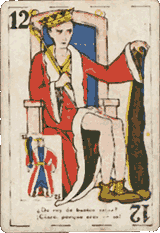 |
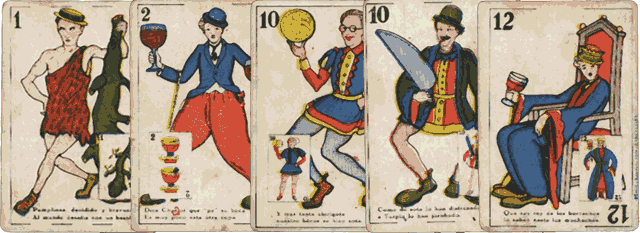
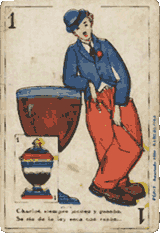
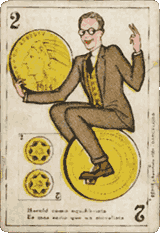
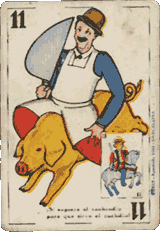
Above: nine cards from a 48-card pack featuring caricatures of four film comedians: Chaplin, Lloyd, Keaton and Turpin. A rhyming couplet describes each scene and a miniature playing-card appears somewhere in the design. On the reverse a blank panel could be overprinted with publicity material. A number of different chocolate makers from Barcelona and Valencia availed themselves of this pack at different times. Published under the name of Fénix of Barcelona. Images courtesy José Manuel Murcia.
See also: Baraja Cinematografica, c.1925 • Comic Animals (Argentina) • Spanish Historical Characters, c.1896 • Carreras Playing Cards and Dominoes, 1929 • Zoo Comics, 1968 • “El Perú” Fabrica de Cigarrillos Roldan y Cia.

By Simon Wintle
Spain • Member since February 01, 1996
I am the founder of The World of Playing Cards (est. 1996), a website dedicated to the history, artistry and cultural significance of playing cards and tarot. Over the years I have researched various areas of the subject, acquired and traded collections and contributed as a committee member of the IPCS and graphics editor of The Playing-Card journal. Having lived in Chile, England, Wales, and now Spain, these experiences have shaped my work and passion for playing cards. Amongst my achievements is producing a limited-edition replica of a 17th-century English pack using woodblocks and stencils—a labour of love. Today, the World of Playing Cards is a global collaborative project, with my son Adam serving as the technical driving force behind its development. His innovative efforts have helped shape the site into the thriving hub it is today. You are warmly invited to become a contributor and share your enthusiasm.

Activity for Baraja Artistas del Cine Mudo
Sign in to comment or save this article.

Related Articles
Tarot del Toro
Tomás Hijo makes Tarot del Toro from hand-painted linocut prints of characters and settings from Gui...
Disney’s Aladdin playing cards
Characters from the 1992 Disney film Aladdin.
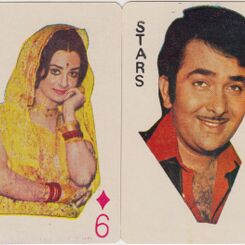
Eves Playing Cards
A pack of cards with colour photos of Indian film stars from the era
Alice in Wonderland
Alice in Wonderland collector’s edition with illustrations of characters from the film, published by...
Politicards 2008
Politicards ’08 with caricatures cast as characters from classic movies, USA.
Hollywood Greats playing cards
18 stars in black and white from the Golden Age of Hollywood.
Flickers playing cards
Stills from MGM films from the golden age of Hollywood.
101 Dalmatas
101 Dalmatas by Naipes Fournier, 1995,
Hercules
Hercules card game published by Herclio Fournier, 1997.
A Goofy Movie
A Goofy Movie card game published by Heraclio Fournier, 1996.
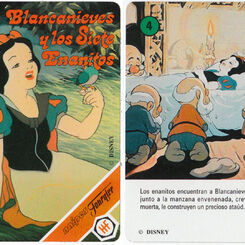
Blancanieves
Blancanieves (Snow White) card game published by Heracliio Fournier, 1992.
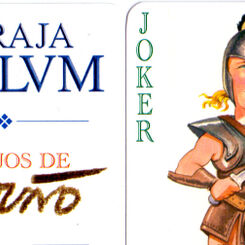
Baraja PEPLVM
Baraja PEPLVM features cartoons by Ortuño of famous actors and actresses in roles from epic Roman mo...
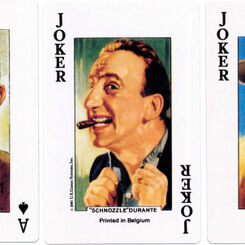
Screen Legends
‘Screen Legends’ playing cards published by U.S. Games Systems, Inc.
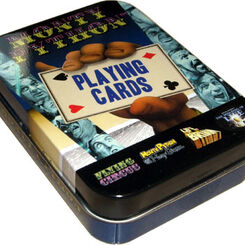
Monty Python
Monty Python playing cards marketed by ‘re:creation’ and made in China.
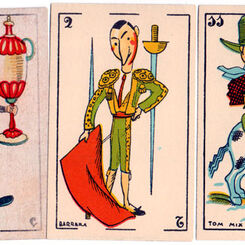
Cine Manual + Periquito
“Cine Manual” by Antonio Vercher Coll (1900-1934) and published by Reclamos Cimadevilla, Valencia, c...
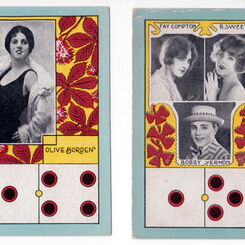
Domino Cinematográfico
“Domino Cinematográfico” published by Talleres Gráficos Irández, Barcelona, c.1925.
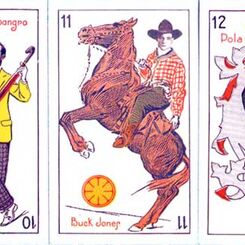
Artistas del Cine
Advertising pack designed by J. Passos and first printed by Cromografía Irández, Barcelona, c.1926. ...
Jurassic Park
Jurassic Park card game made in Argentina, 2004.
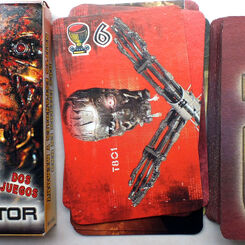
T3 Terminator
T3 Terminator playing cards based on the popular movie, 2003.
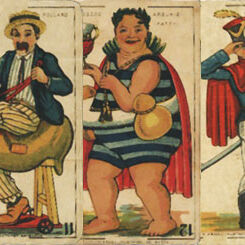
Baraja Cinematográfica, c.1925
Baraja Cinematográfica printed by J. M. Arnau, Barcelona, 1925-26.
Most Popular
Our top articles from the past 60 days