


Llombart pattern
The Llombart pattern originated in Spain during the early 19th century.
The Llombart pattern originated in Spain
During the early 19th century several Spanish manufacturers were producing finely engraved packs (Clemente Roxas, Josef Monjardín, Martínez de Castro) and Anton Llombart was also in this group, producing several fancy costume packs. This particular design has become known as the “Llombart pattern” as it was copied by manufacturers in several other countries (Belgium, France, Germany, Mexico). As can be seen, all the cavaliers and sotas (Jacks) wear hats with conspicuous feathers and many of the figures wear white breeches.
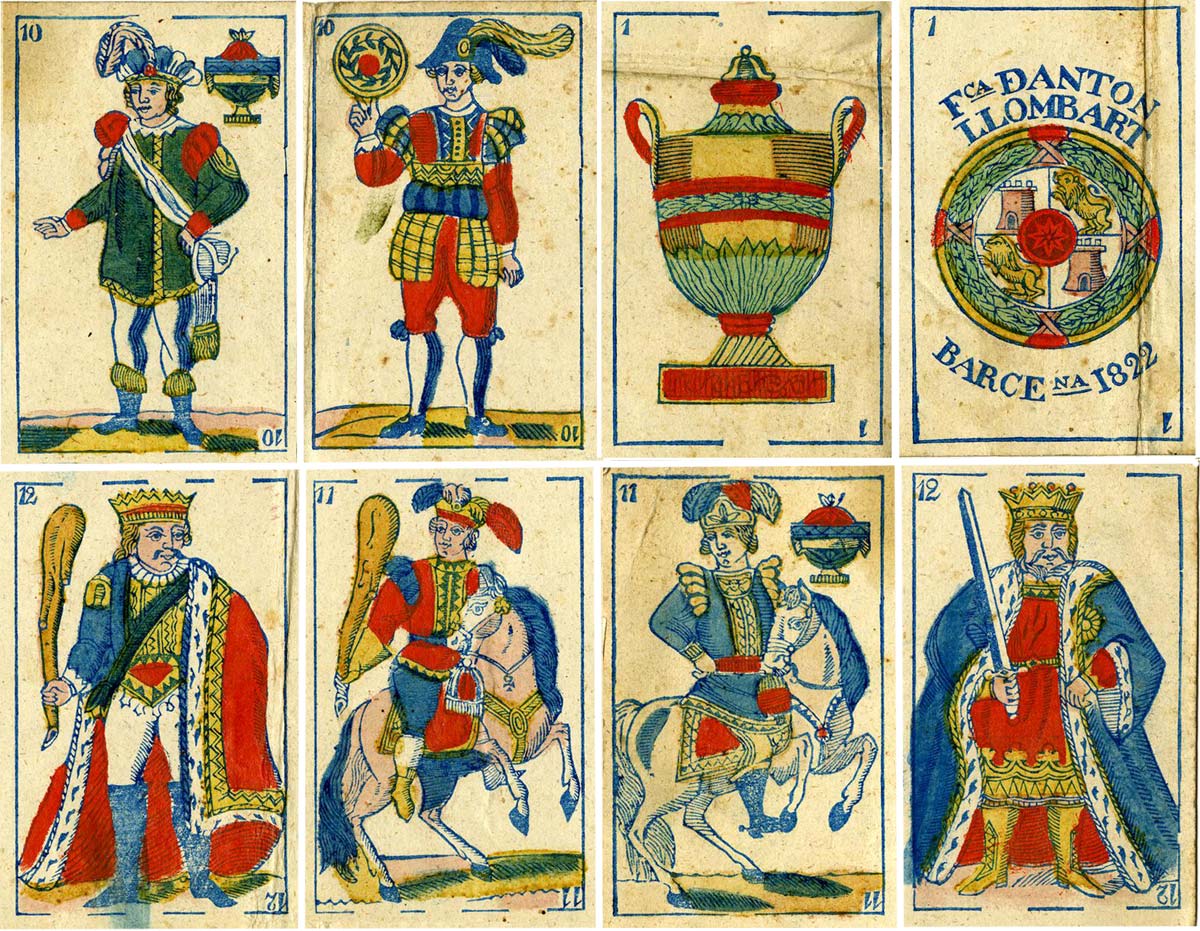
Above: cards from a pack made by Anton Llombart, Barcelona, dated 1822. © The Trustees of the British Museum number 1896,0501.1343►
Anonymous versions of the Llombart pattern.
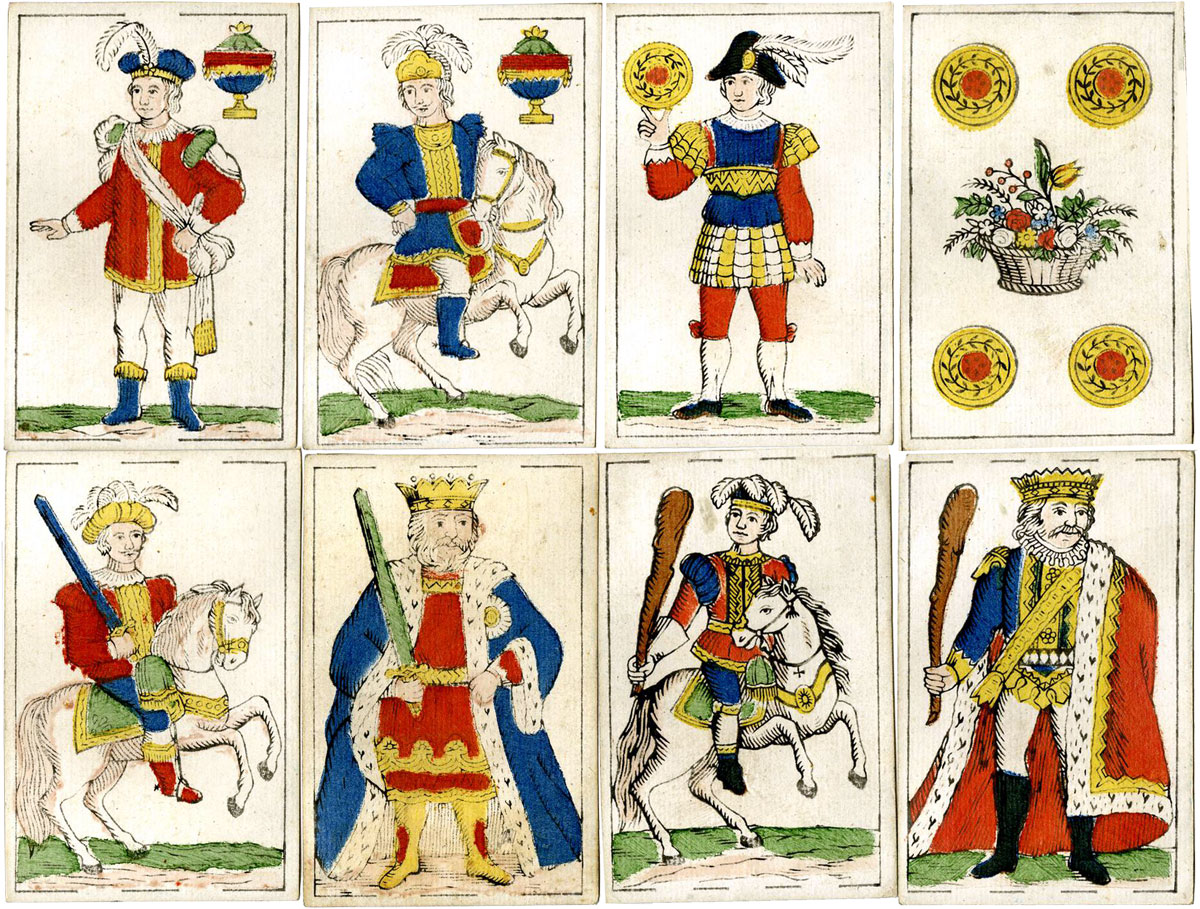
Above: cards from a Llombart pattern which is very similar to the Mexican pack (shown below) by an anonymous manufacturer. 48 cards, hand-coloured lithograph, backs printed in blue with a diagonal pattern of small circles formed of dots. © The Trustees of the British Museum • Museum number 1938,0905.1.1-48►
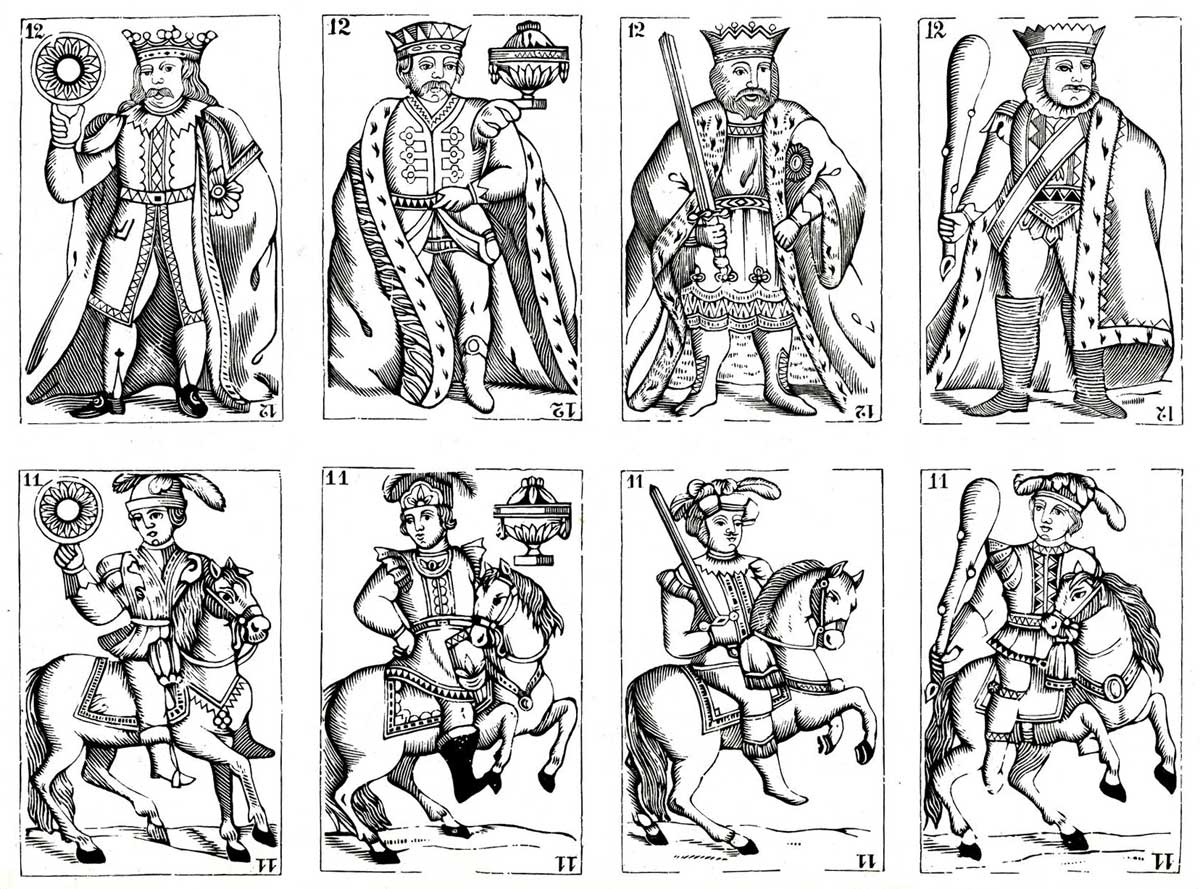
Above: an uncut sheet of 8 playing-cards which correspond with the Llombart pattern executed at Frankfurt for the Spanish market, 19th century. © The Trustees of the British Museum • Museum number 1896,0501.1220►
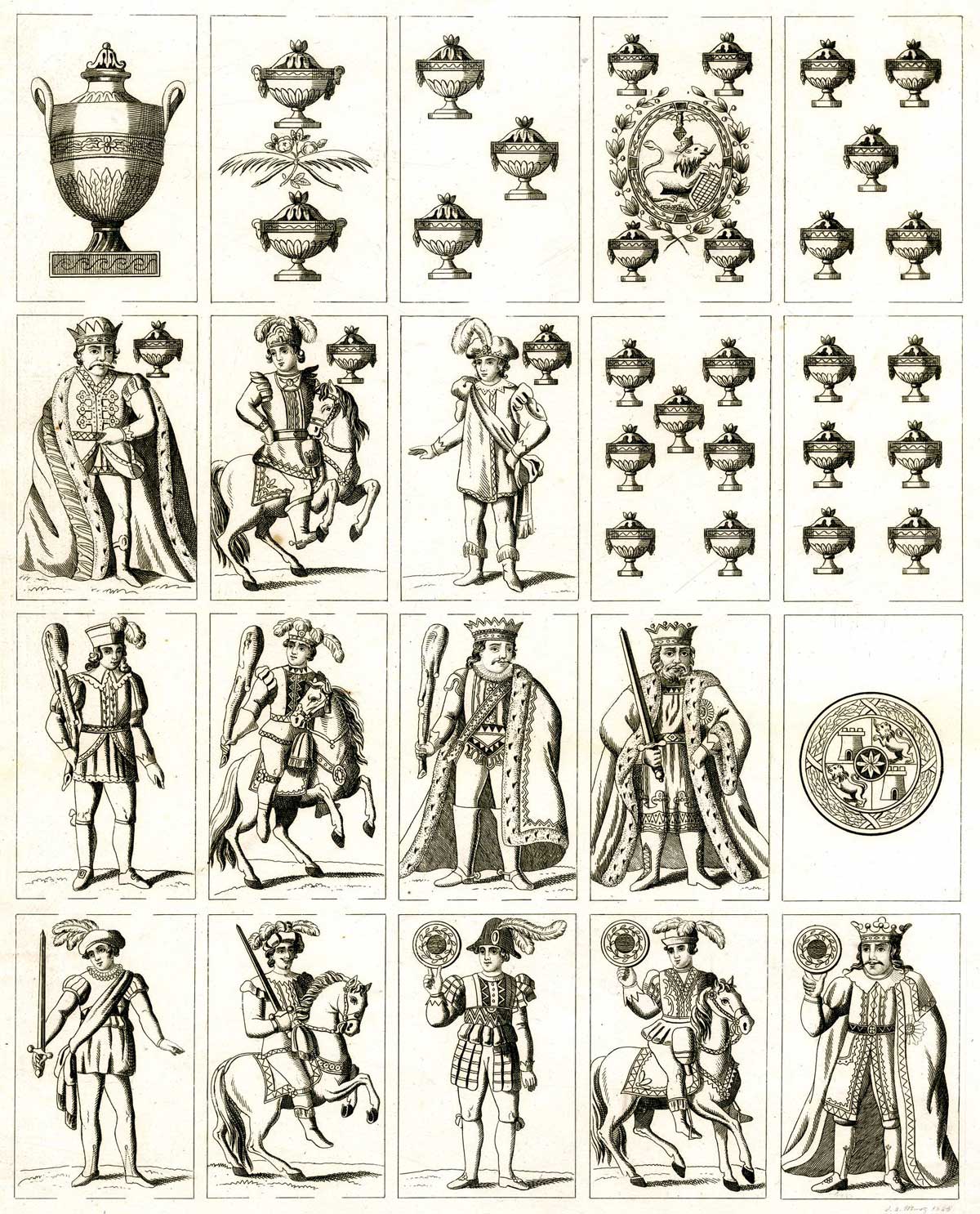
Above: an anonymous uncut sheet of 20 playing-cards which correspond with the Llombart pattern, 19th century. © The Trustees of the British Museum • Museum number 1883,1110.135►
Cards from a Mexican pack c.1835; maker unknown
These cards are of the 'Plumed Hat' or 'Llombart' pattern and were issued in support of the Mexican Federation. Mexico gained independence from Spain in 1821. One year earlier, a popularist revolution overthrew the newly established Mexican Empire for a federated republic. Numerous civil wars ensued followed by a war against the USA in 1846-8 in which Mexico lost much territory. The particular event, if any, that gave rise to these cards is not known.
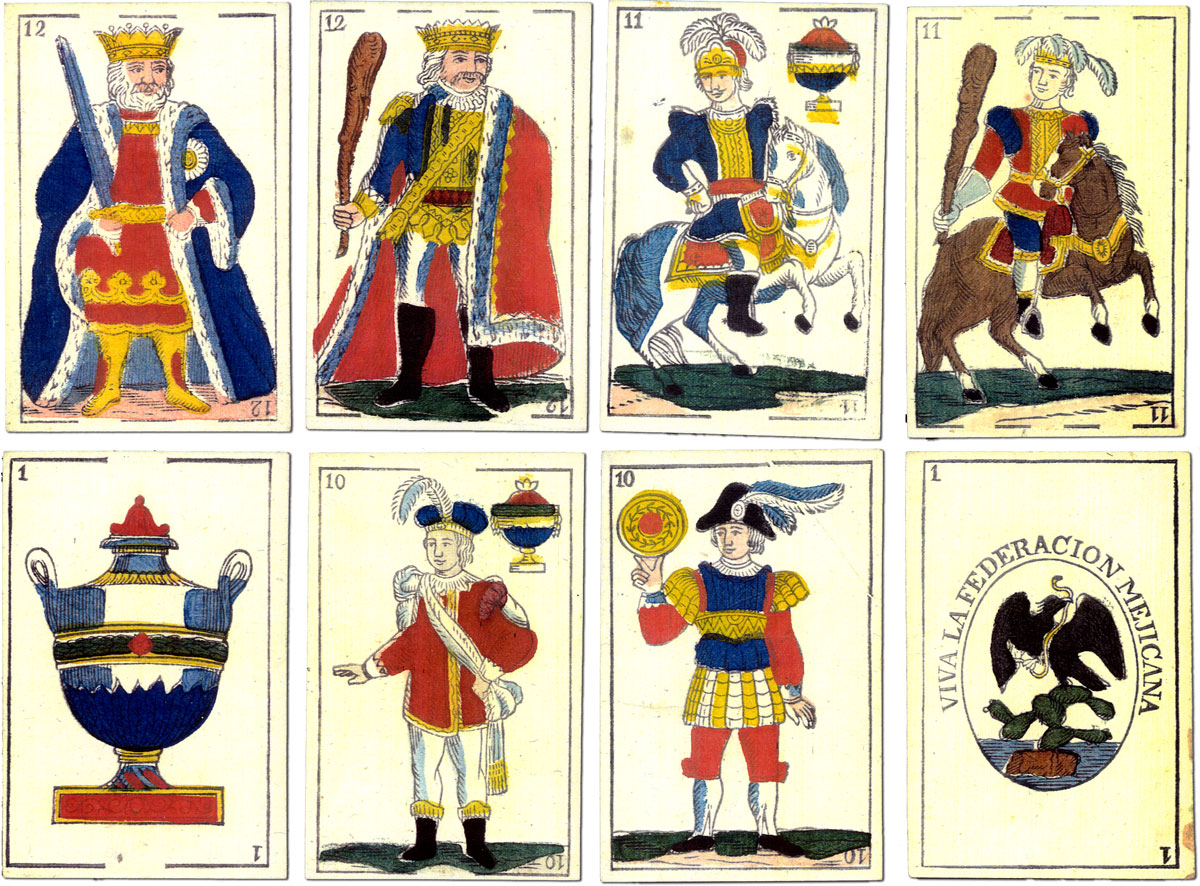
Image credit: Dudley Ollis.

By Simon Wintle
Spain • Member since February 01, 1996
I am the founder of The World of Playing Cards (est. 1996), a website dedicated to the history, artistry and cultural significance of playing cards and tarot. Over the years I have researched various areas of the subject, acquired and traded collections and contributed as a committee member of the IPCS and graphics editor of The Playing-Card journal. Having lived in Chile, England, Wales, and now Spain, these experiences have shaped my work and passion for playing cards. Amongst my achievements is producing a limited-edition replica of a 17th-century English pack using woodblocks and stencils—a labour of love. Today, the World of Playing Cards is a global collaborative project, with my son Adam serving as the technical driving force behind its development. His innovative efforts have helped shape the site into the thriving hub it is today. You are warmly invited to become a contributor and share your enthusiasm.

Activity for Llombart pattern
Sign in to comment or save this article.

Related Articles
Llombart Costume Pack
Military-style costume pack made by Anton Llombart, Barcelona, 1815.
Llombart pattern playing cards from Spain
also known as the Plumed Hat pattern.
Most Popular
Our top articles from the past 60 days


