


Simultané
Simple geometric forms with an inner life and poetry emanating from the richness of colour, the musicality of rhythm, the vibrant breath of the execution...
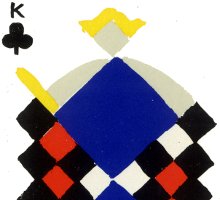
SIMULTANÉ PLAYING CARDS
by Sonia Delaunay, 1964
" … She brought order and lyricism together: colour, geometry and rhythm"
The original edition was produced by Bielefelder Spielkarten Fabrik GmbH. This edition is by Altenburger und Stralsunder Spielkarten.
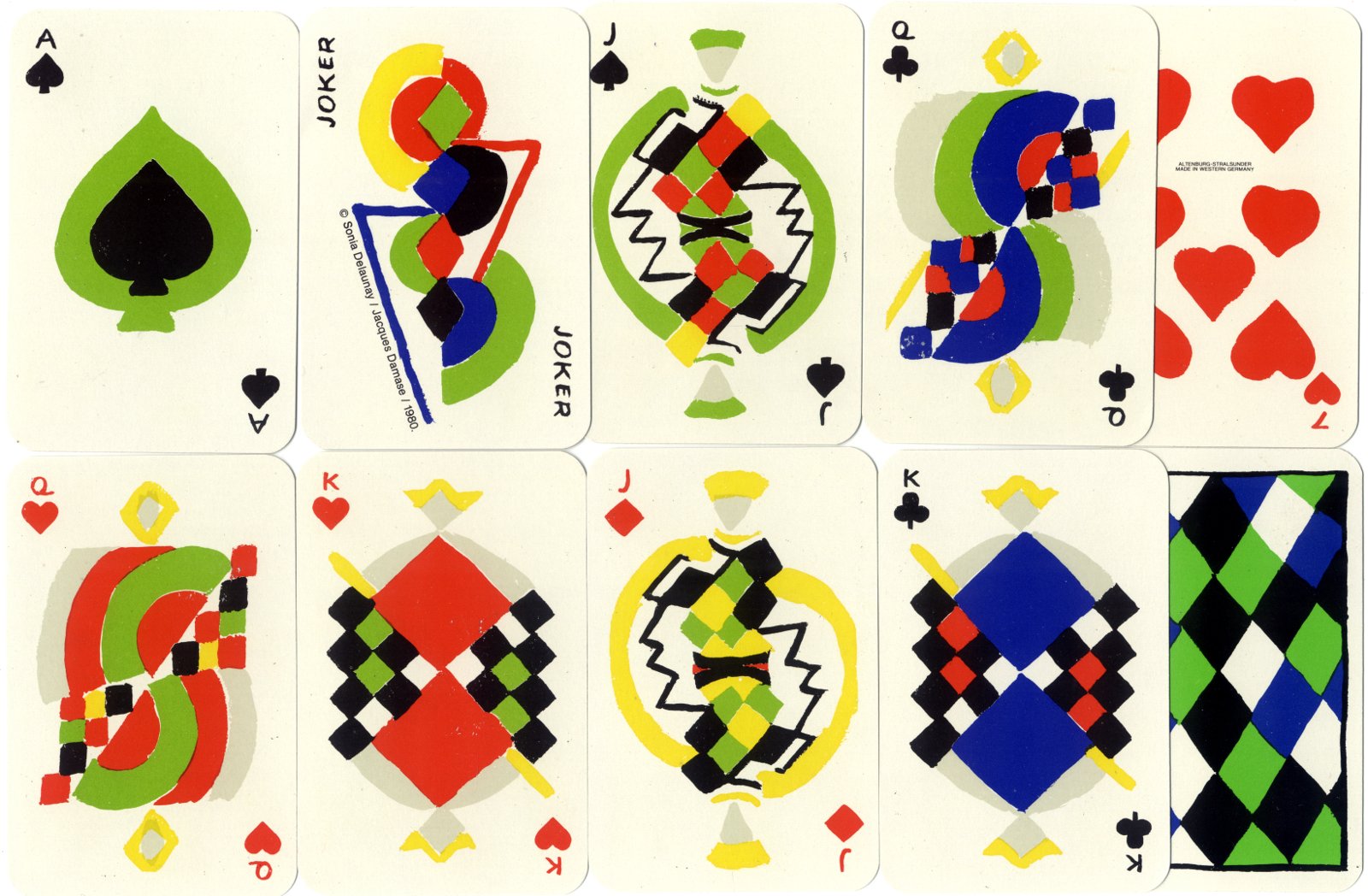
The back design is a variation on the traditional harlequin pattern; there are two versions, one in red and blue and the other in green and blue. The figures of the king, queen and jack are identical in each of the four suits of the pack. To facilitate the use of the cards, the artist developed a supplementary system of colours; the same colours are used for the twelve cards, but each suit has a different dominant colour : blue for clubs, green for spades, red for hearts and yellow for diamonds. There is nothing cold or calculating about these ‘simultaneous’ cards. Sonia Delaunay disciplined her vitality to create a seemingly straight-forward composition of forms and colours; nonetheless their essential lyricism shows through. A second edition was published in 1980.
Sonia Delaunay was born in Russia in 1885. Her art was one of the first expressions of abstract painting, and she influenced Paul Klee and preceded Mondrian and Matisse. Her 'Simultané' playing cards were completed in 1964. The court cards were conceived to express the essential nature of the figure represented rather than its meaning, traditionally conveyed by ornaments, emblems and symbols. Thus the figure of the king expresses virility by means of large, static rhomboidal forms; the femininity of the queen is characterised by rounded, mobile forms; the jack is distinguished by its restlessness, playful agility and boyishness. The headgear is the only traditional emblem maintained, deliberately so, for the pack of cards is an object intended for use, and not simply to satisfy the eye. As for the two jokers, Sonia Delaunay used as a basic design, but in a more abstract fashion, her Jazz compositions from 1952.

By Simon Wintle
Spain • Member since February 01, 1996
I am the founder of The World of Playing Cards (est. 1996), a website dedicated to the history, artistry and cultural significance of playing cards and tarot. Over the years I have researched various areas of the subject, acquired and traded collections and contributed as a committee member of the IPCS and graphics editor of The Playing-Card journal. Having lived in Chile, England, Wales, and now Spain, these experiences have shaped my work and passion for playing cards. Amongst my achievements is producing a limited-edition replica of a 17th-century English pack using woodblocks and stencils—a labour of love. Today, the World of Playing Cards is a global collaborative project, with my son Adam serving as the technical driving force behind its development. His innovative efforts have helped shape the site into the thriving hub it is today. You are warmly invited to become a contributor and share your enthusiasm.

Activity for Simultané
Sign in to comment or save this article.

Related Articles
Modern F.X. Schmid Bavarian Cards
From Plastic to Premium: The legendary F.X. Schmid Tarock & Schafkopf deck, reboxed, refreshed and r...
Bayerisches Einfachbild
Sample of production by the Munich branch of VASS.
Tactics Design
Late modernist Japanese playing cards designed by Masayoshi Nakajo for Tactics Design.
New Altenburg Skat cards – German DDR Pattern
Authentic Altenburger Skat cards with German suits (Acorns, Hearts, Leaves, Bells).
Le Poker Politique
French politicians and various world leaders caricatured by the German artist Bubec.
Postillion Schafkopf
Postillion Schafkopf dedicated to the history of the German postal service.
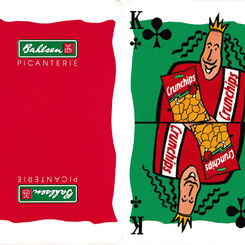
Bahlsen Skat
Publicity pack for a German food company, featuring some of their products.
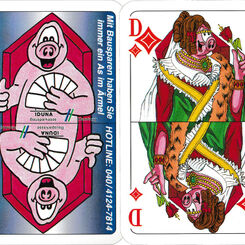
Iduna Skat
Advertising pack for a Hamburg building society featuring pigs in disguise.
-playing-cards-with-wüst-courts/images/rijks-1.f6075e41.jpg "Oude Kunst (Old Art) playing cards with Wüst courts")
Oude Kunst (Old Art) playing cards with Wüst courts
made for export to the Netherlands.
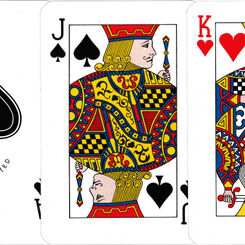
English pattern by Bielefelder Spielkarten
Standard designs by Bielefelder Spielkarten GmbH, Bielefeld, Germany, c1966.
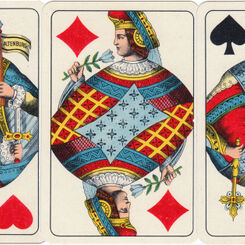
Kaffeehaus-Pikett
Kaffeehaus-Pikett featuring the old Viennese Large Crown pattern, made by ASS.
Einhorn
‘Einhorn’ designed by Richard König, c.1986.
Kaiserkarte
“Kaiserkarte” first published by Schneider & Co in 1895-1897 for the Imperial Court.
Comtesse
“Comtesse” by Bielefelder Spielkarten Fabrik GmbH, 1961.
Russian Opera Scenes
Russian Opera & Theatre Scenes playing cards first published by the Colour Printing Plant (USSR, Rus...
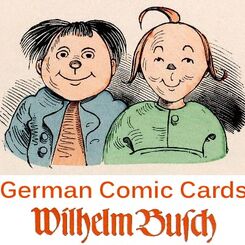
Wilhelm Busch (1832-1908)
Wilhelm Busch was a German caricaturist and humourist. Many card games made in Germany use his chara...
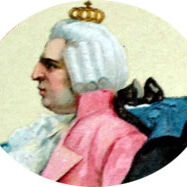
Otto Tragy Jugendstil Spielkarten
Special Jugendstil playing cards designed by Otto Tragy and first published by Altenburger Spielkart...
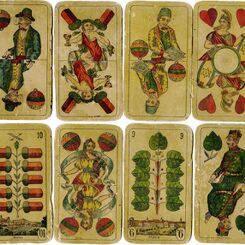
Prussian Pattern
Derived from Jagdkarten or Hunting cards with patriotic overtones and rural scenes as vignettes on t...
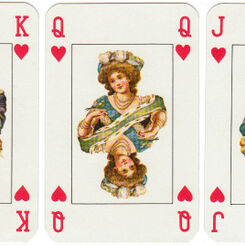
Jany Group
Deck issued to celebrate the Jany Group of Private Investors acquiring a controlling majority of Ver...
The History of Playing Cards
Playing cards appear in European records in the late 14th century, but their earlier history lies fu...
Most Popular
Our top articles from the past 60 days


Ваня Козлов (Vanya Kozlov)
19 November 2025, 09:47SavedSaved this article to Ваня Козлов's Collection