


Otto Tragy Jugendstil Spielkarten
Special Jugendstil playing cards designed by Otto Tragy and first published by Altenburger Spielkartenfabrik Schneider & Co. in c.1898.
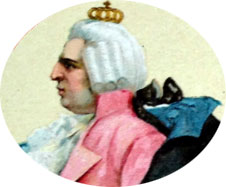
Otto Tragy Jugendstil Spielkarten Das Jugendstilspiel in Deutschland!
These special Jugendstil (‘Art Nouveau’) playing cards were designed by Otto Tragy and first published by Altenburger Spielkartenfabrik Schneider & Co. in c.1898. The cards were well received so they were produced as ‘Whist no.260’ and ‘Patience No.265’. Otto Tragy (1866-1928), son of a lawyer, studied at the academy of arts in Munich from 1886 and later he studied in Paris. In 1897 he settled near Munich and became a member of the Munich Artists' Association. He exhibited regularly in the Munich Crystal Palace. Tragy mainly made portraits, genre and still life paintings, but also bookplates, posters and sketches for decorative purposes.
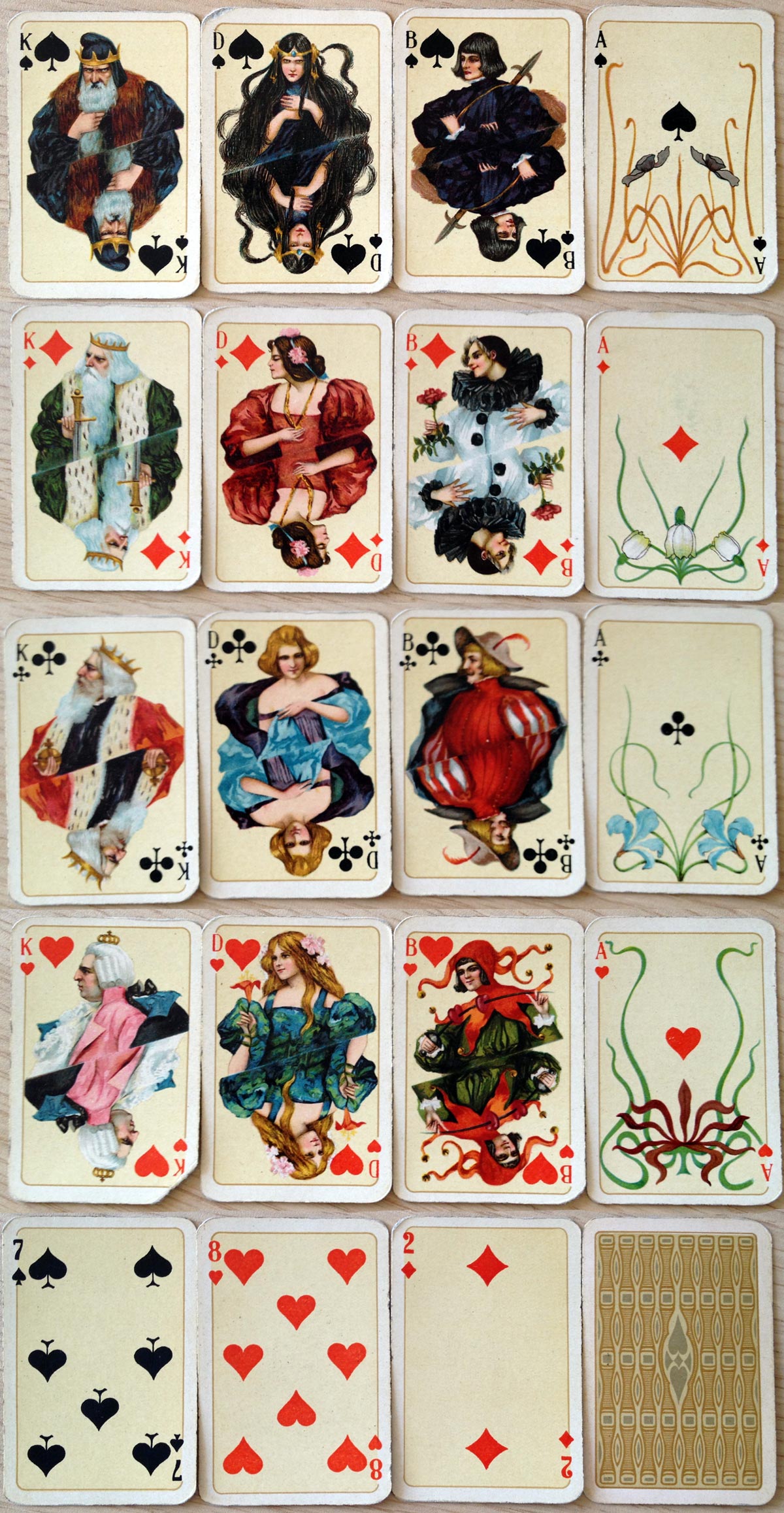
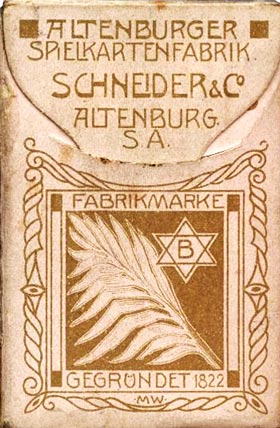

Above: Otto Tragy Jugendstil Spielkarten "Patience No.265" "c.1910. 43x66 mm; 52 cards + joker. Images courtesy Camelia Elias.
"This is a deck I use every day, so the cards show some wear. They are, however, still incredibly special and beautiful, and the colours are magnificently bright. There are 52+Joker cards in the deck. It's "Patience No. 265" (dimension 43x66 mm). This deck was popular and in production throughout 1910s. It was also re-issued again by ASS in 1978, with a different Joker and slight variation in the colouring. In my opinion the 1910 version is quite unbeatable, both in quality and spark. To my knowledge Otto Tragy designed some 4 decks in the Jugenstil manner for Vereinigte Stralsunder Spielkarten Fabrik (the Altenburg dept.), and they were all produced between 1898-1920."
← Left: book plate designed by Otto Tragy, 1898.
1979 edition by Altenburg-Stralsunder
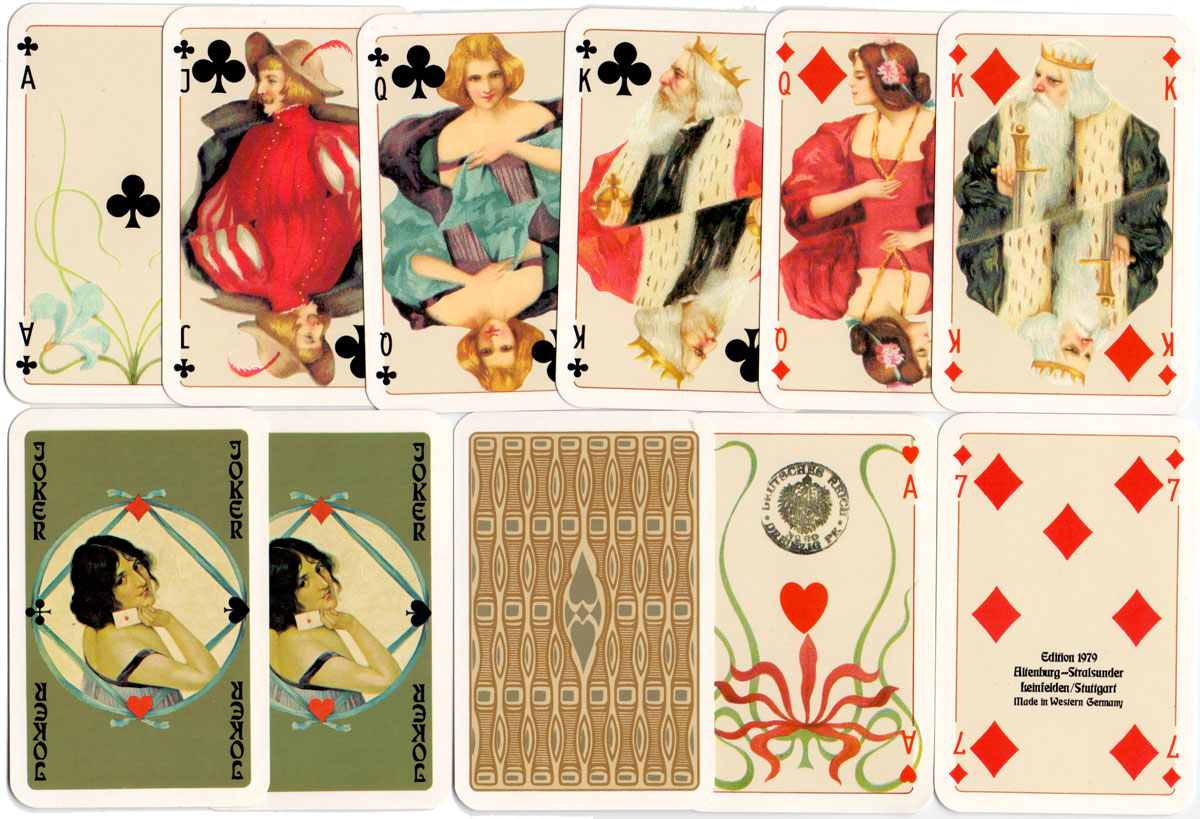
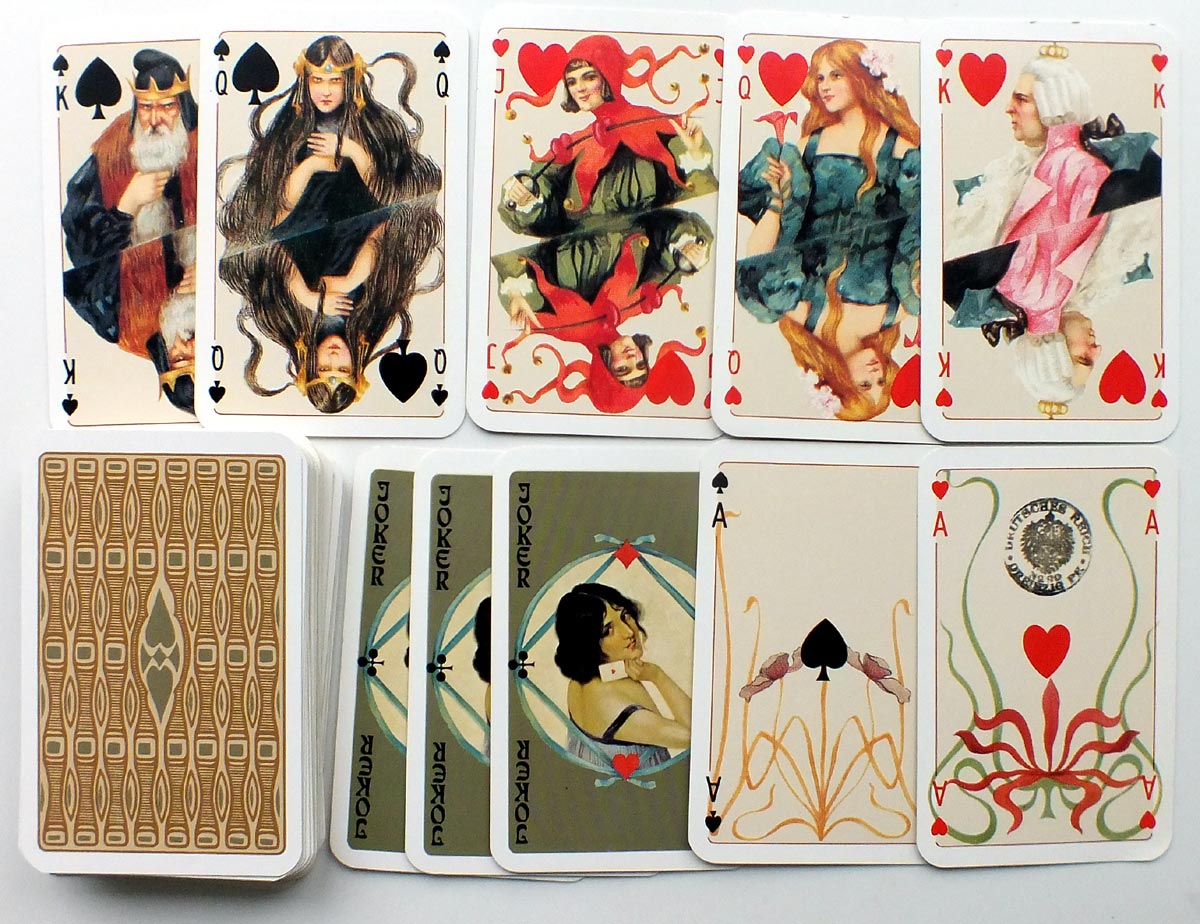
Above: Otto Tragy Jugendstil Spielkarten re-printed by Altenburg-Stralsunder, 1979. 52 cards + 3 jokers.
REFERENCES
Segeth, Uwe-Volker: Spielkarten Jugendstil und Art Déco, Edition Christian Brandstätter, Wien, 1994

By Simon Wintle
Spain • Member since February 01, 1996
I am the founder of The World of Playing Cards (est. 1996), a website dedicated to the history, artistry and cultural significance of playing cards and tarot. Over the years I have researched various areas of the subject, acquired and traded collections and contributed as a committee member of the IPCS and graphics editor of The Playing-Card journal. Having lived in Chile, England, Wales, and now Spain, these experiences have shaped my work and passion for playing cards. Amongst my achievements is producing a limited-edition replica of a 17th-century English pack using woodblocks and stencils—a labour of love. Today, the World of Playing Cards is a global collaborative project, with my son Adam serving as the technical driving force behind its development. His innovative efforts have helped shape the site into the thriving hub it is today. You are warmly invited to become a contributor and share your enthusiasm.

Activity for Otto Tragy Jugendstil Spielkarten
Sign in to comment or save this article.

Related Articles
Modern F.X. Schmid Bavarian Cards
From Plastic to Premium: The legendary F.X. Schmid Tarock & Schafkopf deck, reboxed, refreshed and r...
New Altenburg Skat cards – German DDR Pattern
Authentic Altenburger Skat cards with German suits (Acorns, Hearts, Leaves, Bells).
Bahlsen Skat
Publicity pack for a German food company, featuring some of their products.
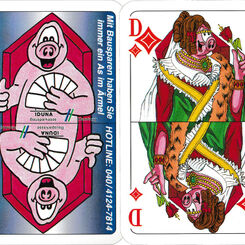
Iduna Skat
Advertising pack for a Hamburg building society featuring pigs in disguise.
-playing-cards-with-wüst-courts/images/rijks-1.f6075e41.jpg "Oude Kunst (Old Art) playing cards with Wüst courts")
Oude Kunst (Old Art) playing cards with Wüst courts
made for export to the Netherlands.
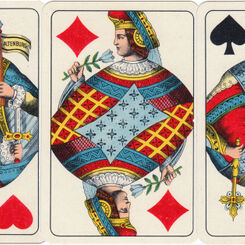
Kaffeehaus-Pikett
Kaffeehaus-Pikett featuring the old Viennese Large Crown pattern, made by ASS.
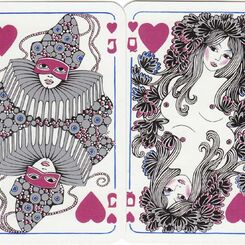
Einhorn
‘Einhorn’ designed by Richard König, c.1986.
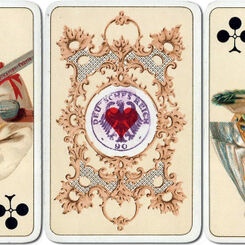
Kaiserkarte
“Kaiserkarte” first published by Schneider & Co in 1895-1897 for the Imperial Court.
Leipzig Exhibition Skat, 1897
“Leipziger Skat-Karte” depicting scenes from the Leipzig Industry and Trade Exhibition designed by A...
Berliner Originale
“Berliner Originale” designed by Manfred Bofinger, 1986.
Art Nouveau Rommé • Canasta • Bridge
Elegant gold-printed playing cards in Jugendstil style designed by Otto Benz for Renault, 1987.
C.L. Wüst, 1811 - 1927
SPIELKARTENFABRIEK VON C.L. WÜST, 1811 - 1927. A short history of the Wüst factory by Martin Shaw & ...
North German Pattern
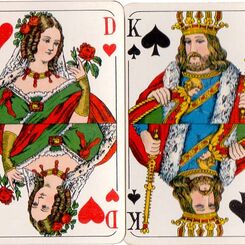
The North German pattern appeared in the mid-19th century, derived from the French ‘Paris’ pattern. ...

Luxus Skatkarten
The cards are from a facsimile edition published by F. X. Schmid, Munich, in 1981. The artist is unk...
Prussian Pattern
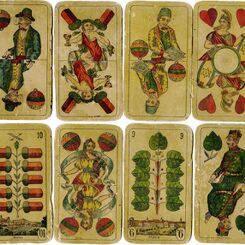
Derived from Jagdkarten or Hunting cards with patriotic overtones and rural scenes as vignettes on t...

Lenormand Cartomancy
Mlle Lenormand Cartomancy deck made by Vereinigte Stralsunder Spielkartenfabriken, Stralsund, c.1890...

Schiller deck
Schiller deck made by Conrad Ludwig Wüst, Frankfurt/Main, ca. 1834.
Jany Group
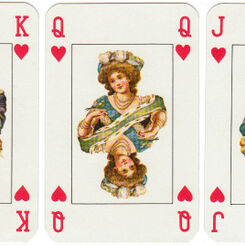
Deck issued to celebrate the Jany Group of Private Investors acquiring a controlling majority of Ver...
Simultané
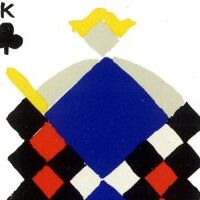
Simple geometric forms with an inner life and poetry emanating from the richness of colour, the musi...
The History of Playing Cards
Playing cards appear in European records in the late 14th century, but their earlier history lies fu...
Most Popular
Our top articles from the past 60 days


