


Kaiserkarte
“Kaiserkarte” first published by Schneider & Co in 1895-1897 for the Imperial Court.
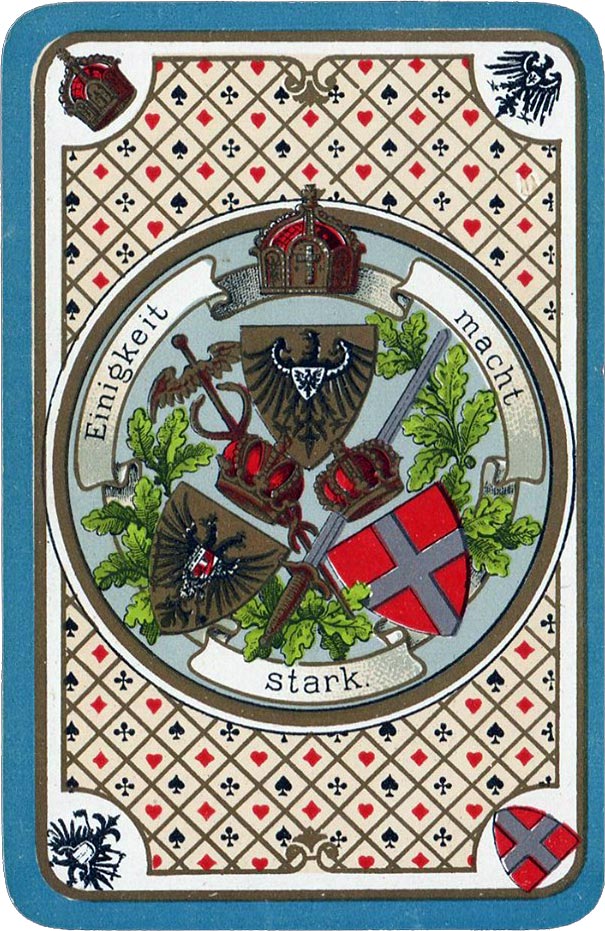
“Kaiserkarte” was published specially for the last German emperor and King of Prussia, Wilhelm II. The cards were printed at the Altenburg Card Factory (Altenburger Spielkarten Fabrik Schneider & Co) in 1895-1897. The back features a medallion surrounded by an oak wreath. In the centre are the coats of arms of Germany, Austria and Italy, with a crossed sword and caduceus. German motto: “Einigkeit macht stark” (Together we are stronger).
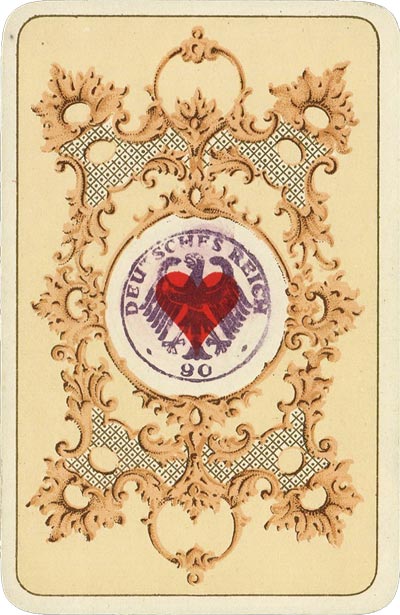
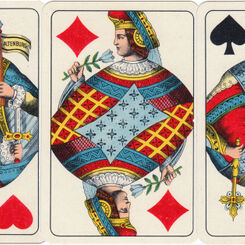
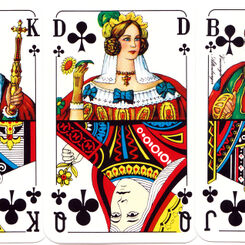
The courts depict historical figures: King of Hearts - Franz I. His Queen is a lovely woman dressed in a Renaissance style costume. Jack of Hearts – Landsknecht. The King of Clubs is Louis the Pious, Jack - Knight Templar. The King of Diamonds resembles the features of Charles VII. The Queen - His Beloved Agnes Sorel. King of Spades - Louis XIV (Sun King). Note: decks for the Royal household would have no tax stamps, but those printed for general sale do.
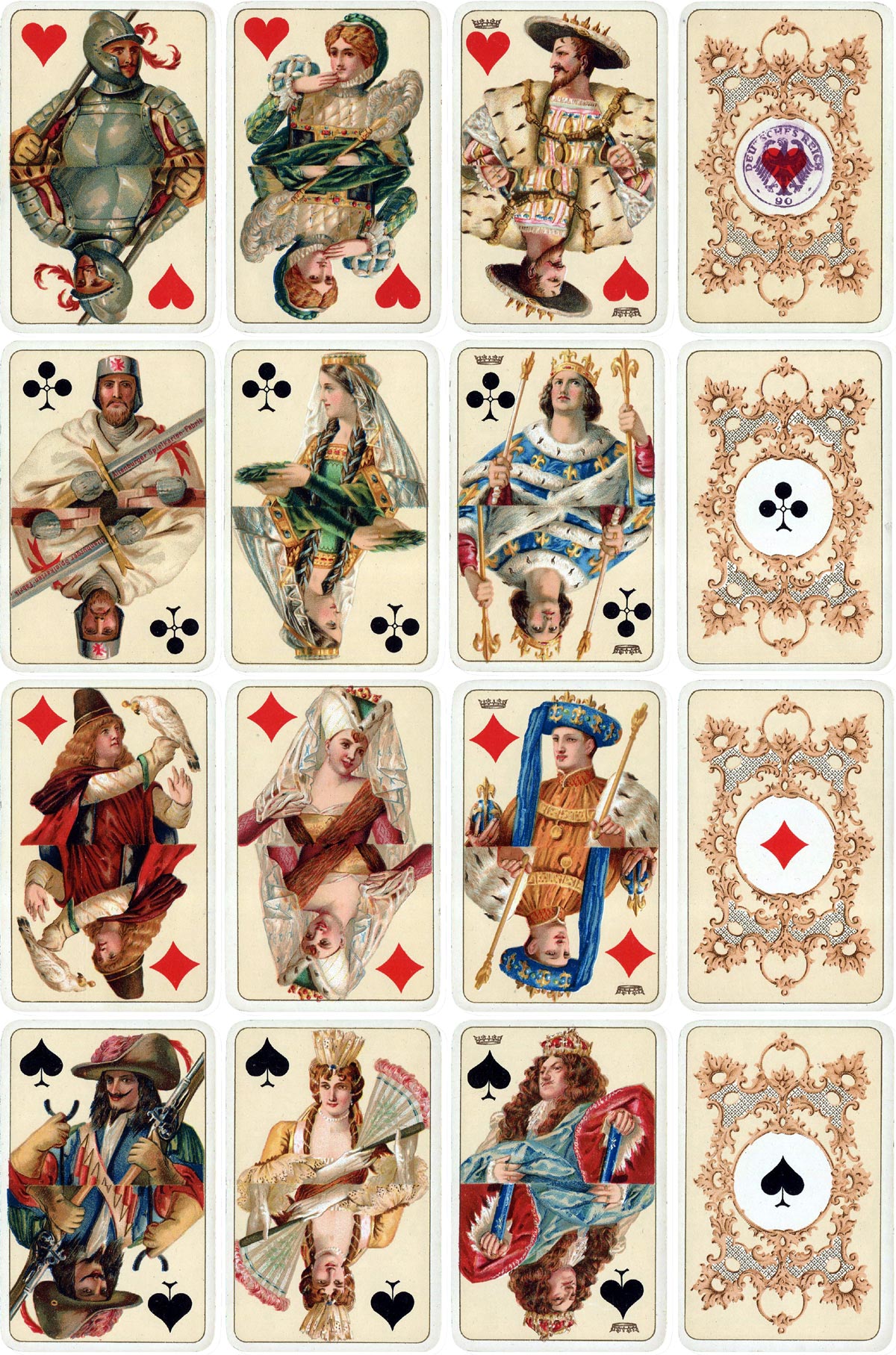
Above: “Kaiserkarte” by Schneider & Co, Altenburg, used exclusively at the Imperial Court in Berlin, first published in 1895-1897. The cards have no indices and an ornate back design. Images and historical notes courtesy Valentin Zadunaisky.
Facsimile Edition
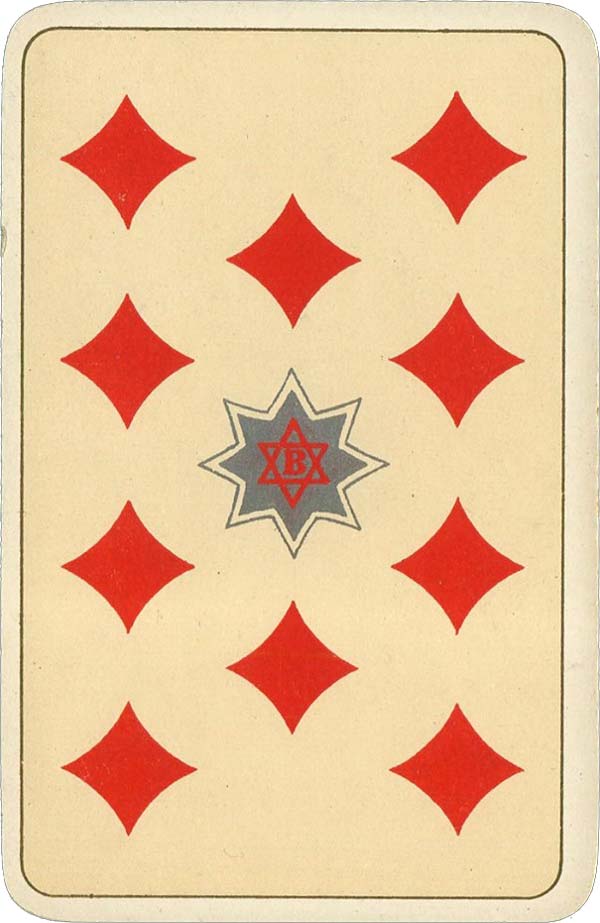
A facsimile of “Kaiserkarte” was issued by A.S.S., c.1970. The facsimile edition has indices, new aces and a new back design.
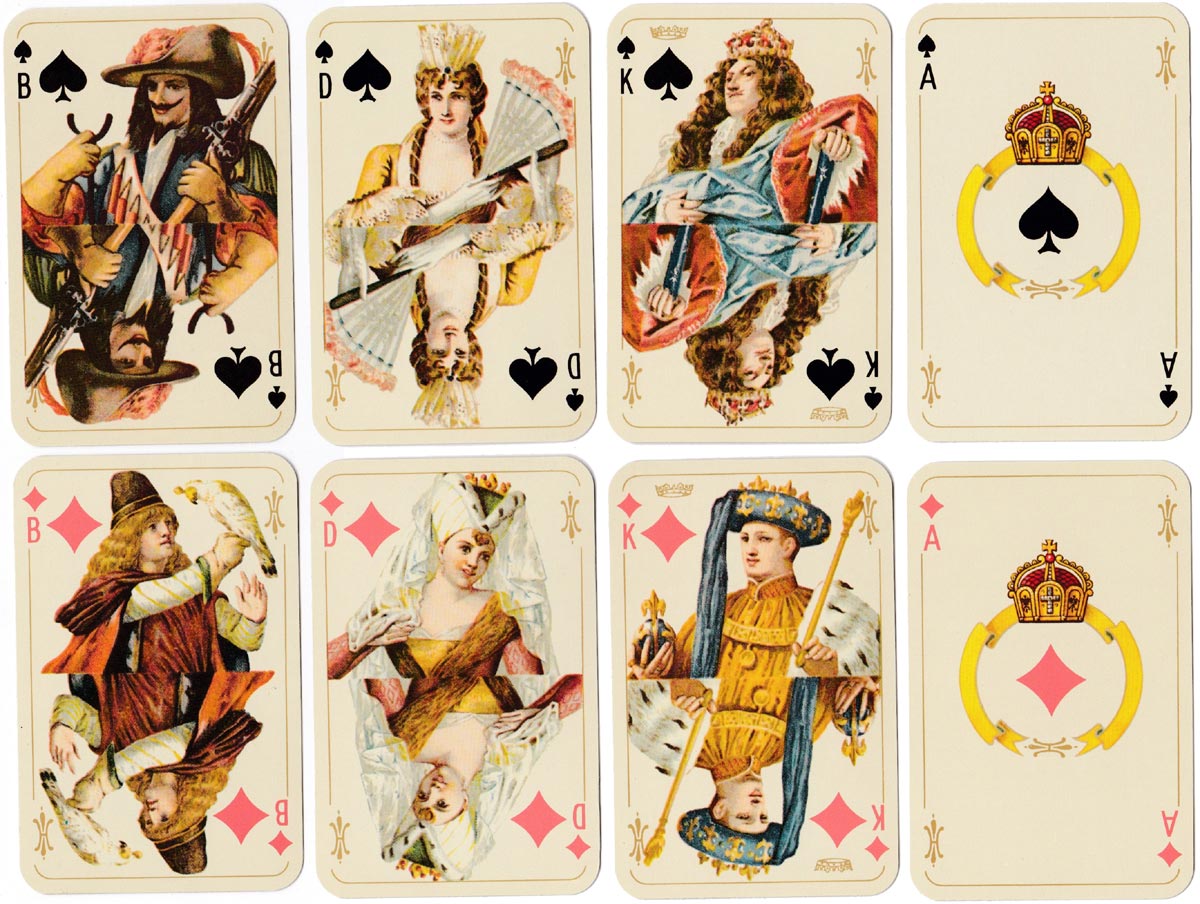
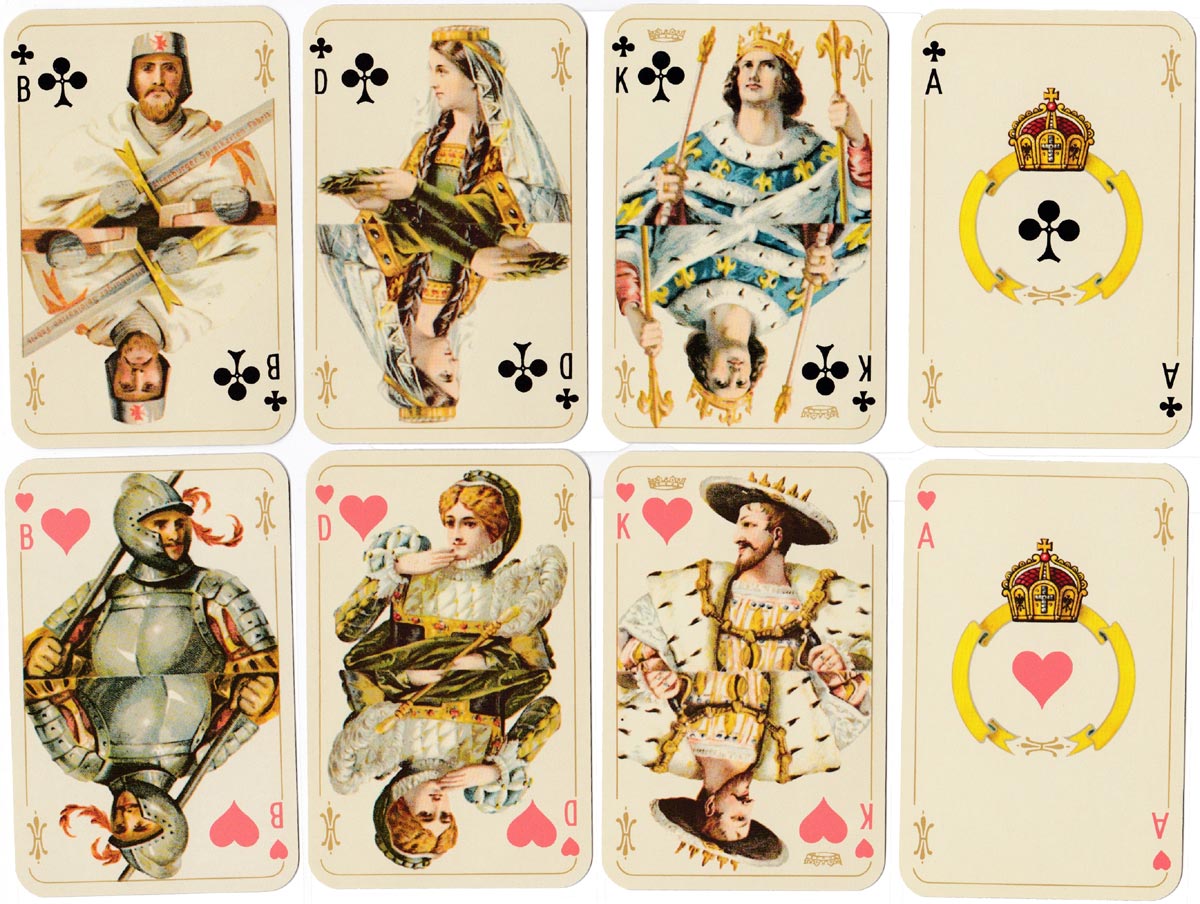
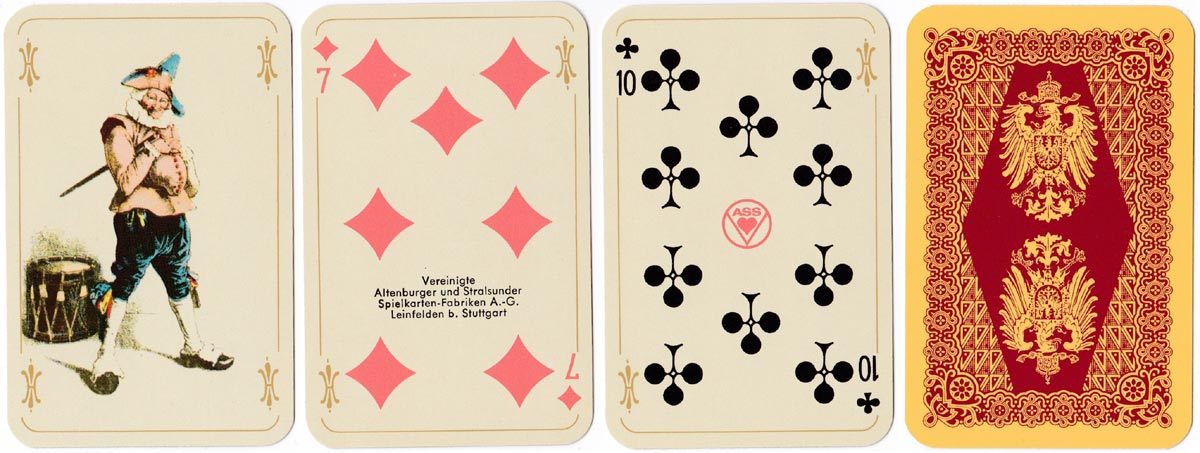
Above: facsimile of “Kaiserkarte” published by A.S.S., c.1970. The original cards did not have indices, featured a different back design and the four aces were more ornamental than in this reproduction. Contrary to the inscription on the reprint box that the original deck was first produced in 1910, the deck was first published in 1895-1897. Images courtesy Rex Pitts.

By Rex Pitts (1940-2021)
United Kingdom • Member since January 30, 2009
Rex's main interest was in card games, because, he said, they were cheap and easy to get hold of in his early days of collecting. He is well known for his extensive knowledge of Pepys games and his book is on the bookshelves of many. His other interest was non-standard playing cards. He also had collections of sheet music, music CDs, models of London buses, London Transport timetables and maps and other objects that intrigued him.
Rex had a chequered career at school. He was expelled twice, on one occasion for smoking! Despite this he trained as a radio engineer and worked for the BBC in the World Service. Later he moved into sales and worked for a firm that made all kinds of packaging, a job he enjoyed until his retirement. He became an expert on boxes and would always investigate those that held his cards. He could always recognize a box made for Pepys, which were the same as those of Alf Cooke’s Universal Playing Card Company, who printed the card games. This interest changed into an ability to make and mend boxes, which he did with great dexterity. He loved this kind of handicraft work.
His dexterity of hand and eye soon led to his making card games of his own design. He spent hours and hours carefully cutting them out and colouring them by hand.

Activity for Kaiserkarte
Sign in to comment or save this article.

Related Articles
Modern F.X. Schmid Bavarian Cards
From Plastic to Premium: The legendary F.X. Schmid Tarock & Schafkopf deck, reboxed, refreshed and r...
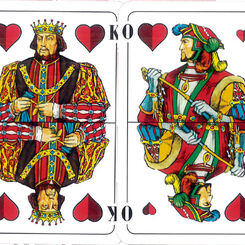
New Altenburg Skat cards – German DDR Pattern
Authentic Altenburger Skat cards with German suits (Acorns, Hearts, Leaves, Bells).
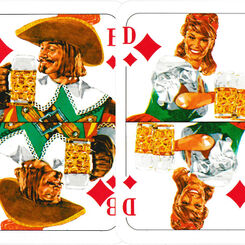
Wicküler Skat
Publicity pack for the German brewery Wicküler with courts merrily drinking beer.
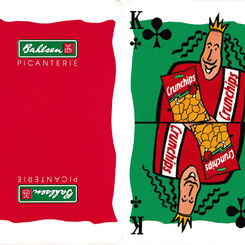
Bahlsen Skat
Publicity pack for a German food company, featuring some of their products.
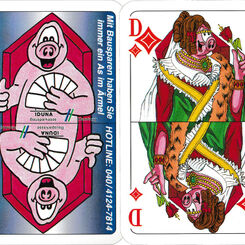
Iduna Skat
Advertising pack for a Hamburg building society featuring pigs in disguise.
Kaffeehaus-Pikett
Kaffeehaus-Pikett featuring the old Viennese Large Crown pattern, made by ASS.
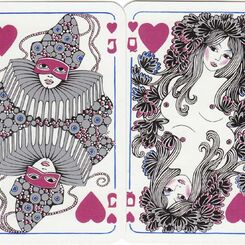
Einhorn
‘Einhorn’ designed by Richard König, c.1986.
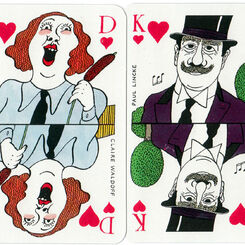
Berliner Originale
“Berliner Originale” designed by Manfred Bofinger, 1986.
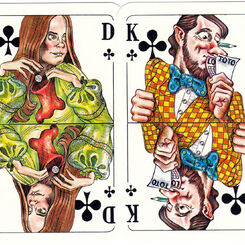
Schwäbisch Hall
Schwäbisch Hall building society publicity deck designed by Alex Kardas, c.1975.
Skat Express
One end Berlin pattern the other standard English pattern
C.L. Wüst, 1811 - 1927
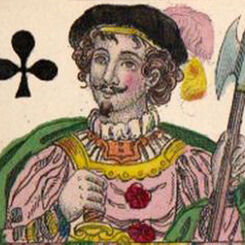
SPIELKARTENFABRIEK VON C.L. WÜST, 1811 - 1927. A short history of the Wüst factory by Martin Shaw & ...
Carl Arnold Transformation
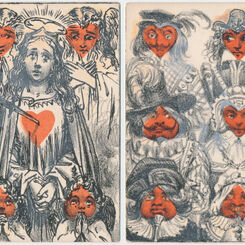
Transformation playing cards designed by Carl Johann Arnold (1829-1916), the court artist for King F...
German Saxon Pattern
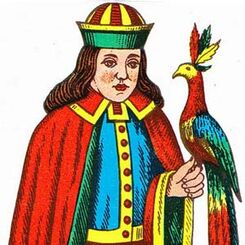
The German Saxon Pattern or “Schwerdter Karte”.
Otto Tragy Jugendstil Spielkarten
Special Jugendstil playing cards designed by Otto Tragy and first published by Altenburger Spielkart...
Osram Advertising Playing Cards
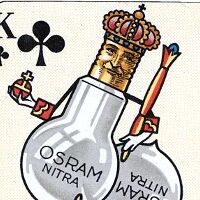
The court cards feature double-ended light-bulb people (the Kings are repeated in each suit) and the...
Luxus Club Karte No.184
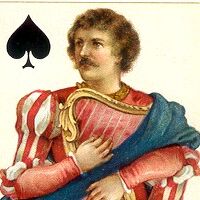
Another of Dondorf's masterpieces of chromolithography, the detailed artwork on these cards has mult...
Lenormand Cartomancy
Mlle Lenormand Cartomancy deck made by Vereinigte Stralsunder Spielkartenfabriken, Stralsund, c.1890...
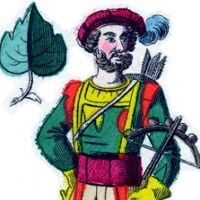
Schiller deck
Schiller deck made by Conrad Ludwig Wüst, Frankfurt/Main, ca. 1834.
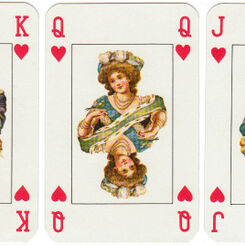
Jany Group
Deck issued to celebrate the Jany Group of Private Investors acquiring a controlling majority of Ver...
The History of Playing Cards
Playing cards appear in European records in the late 14th century, but their earlier history lies fu...
Most Popular
Our top articles from the past 60 days


