


26th Yankee Division
“26th Yankee Division Playing Cards” was designed by Alban B. Butler, Jr and printed by the Press of the Woolly Whale, New York, in 1933.

This war deck was issued to commemorate the signing of the Armistice. It is often known as “Mademoiselle from Armentiers” but the name is actually “26th Yankee Division Playing Cards”, to whom it was dedicated. The four Queens represent the four Mademoiselles made famous by the popular WW1 song “Parlez Vous” or “Mademoiselle from Gay Paree”. The Kings and Jacks are soldiers of various ranks. The deck was designed by Alban B. Butler Jr and printed by the Press of the Woolly Whale, New York, in 1933. The owner of this publishing house was Melbert B. Cary, who had belonged to 26th Yankee Division and whose collection of playing cards is now owned by Yale University. The logo of the Press of the Woolly Whale is on the ace of spades and the box
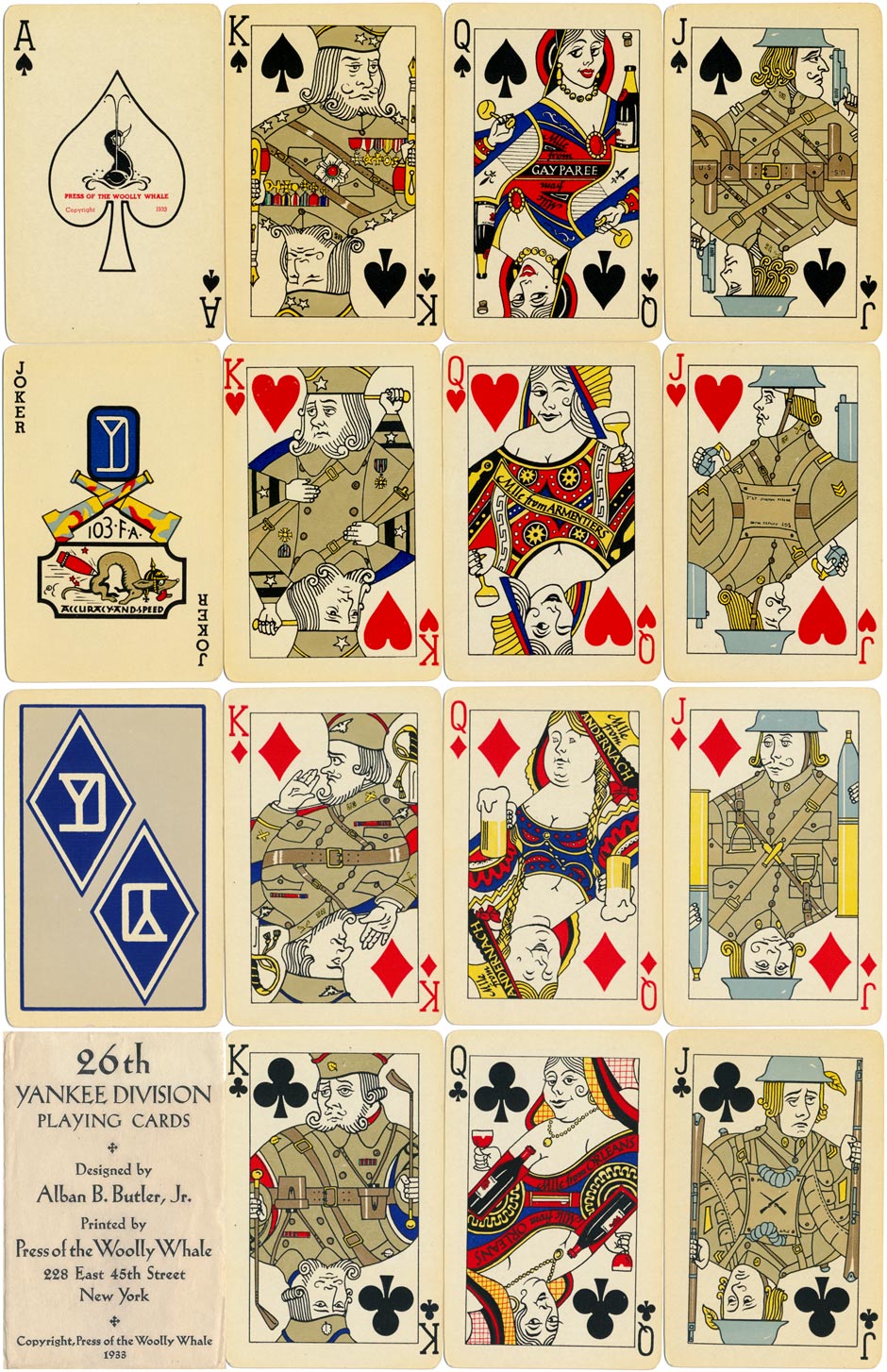
Above: “26th Yankee Division Playing Cards”, designed by Alban B. Butler, Jr and printed by the Press of the Woolly Whale, New York, 1933 in a limited edition. Images courtesy Barney Townshend.
The Press of the Woolly Whale also published the book MLLE from ARMENTIERS shortly after the first World War, which tells of the history, origin and background of the song of the same name. The original song was expanded by WWI troops to many hundreds of verses. When first published it was a requirement to prove you were an American ex-serviceman to be able to buy it.
CREDITS & REFERENCES
Image of the box courtesy Roddy Somerville.
Dawson, Tom & Judy: The Hochman Encyclopedia of American Playing Cards, U.S. Games Systems Inc., 2000
Segeth, Uwe-Volker: Spielkarten Jugendstil und Art Déco, Edition Christian Brandstätter, Wien, 1994
• Wikipedia: Melbert Cary.
• Press of the Woolly Whale Collections.

By Barney Townshend
United Kingdom • Member since October 06, 2015
Retired Airline Pilot, interested in: Transformation Playing Cards, Karl Gerich and Elaine Lewis. Secretary of the EPCS. Treasurer of the IPCS.

Activity for 26th Yankee Division
Sign in to comment or save this article.

Related Articles
US Army Aircraft Recognition Cards
Air defense combined with gameplay.
Heritage Preservation Cards : Afghanistan and Iraq
Twin decks with a noble purpose.
Fact & Fancy : a Deck of Decks
A tour of the world of playing cards featuring the incomparable art of Dick Martin.
Time Magazine
America’s classic periodical celebrates itself.
Seminole Wars deck
Seminole Wars deck by J. Y. Humphreys, Philadelphia, c.1819.
American Civil War playing cards
American Civil War playing cards with suits of stars, US flags, US shields and eagles.
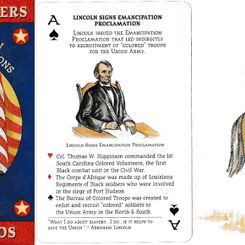
Buffalo soldiers
“Buffalo soldiers” playing cards commemorating African American military men who helped change the f...
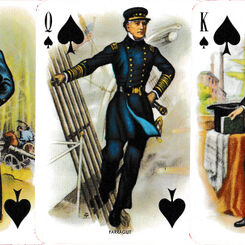
American Civil War playing cards
American Civil War centennial playing cards designed by Teodoro N. Miciano and published by Fournier...
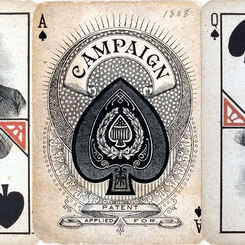
Grover Cleveland Presidential Campaign of 1888
Grover Cleveland Presidential Campaign playing cards of 1888, USA, [reprint 1980].
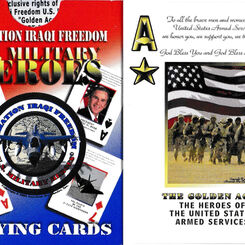
Operation Iraqi Freedom playing cards
Operation Iraqi Freedom: U.S. Military heroes playing cards, 2003.
War Party playing cards
War Party playing cards, in opposition to the Iraq War, USA, 2003.
Iraqi Most Wanted Playing Cards
Playing cards used to help troops identify the most-wanted members of Saddam Hussein's government. 2...
Anma US Armed Forces
Anma US Armed Forces, 1942.

Punch Studio: ‘Geisha Girls’
‘Geisha Girls’ playing cards published by Punch Studio, Culver City, CA., 2013
Trump 777
Trump 777 decorative playing cards by Hallmark.
Anheuser-Busch Army & Navy
This deck is commonly known as the “Anheuser-Busch Spanish-American War deck”, issued at the end of ...
Tales from the Stage
"Tales from the Stage" - an article about theatrical playing cards by Rod Starling
Pippoglyph
Pippoglyph Playing Cards by Ben Crenshaw © 2004
Ian Roth’s Unique playing cards
Ian Roth’s Unique playing cards
The History of Playing Cards
Playing cards appear in European records in the late 14th century, but their earlier history lies fu...
Most Popular
Our top articles from the past 60 days


Peter Burnett
19 November 2025, 09:47SavedSaved this article to Peter's Collection