


Fours of Cups
Over the years the company evolved, and changes in the company's name and address can be seen reflected in the information printed on the four of cups.
Justo Rodero e Hijos
Fours of Cups showing the changes in the company name, address and logo.
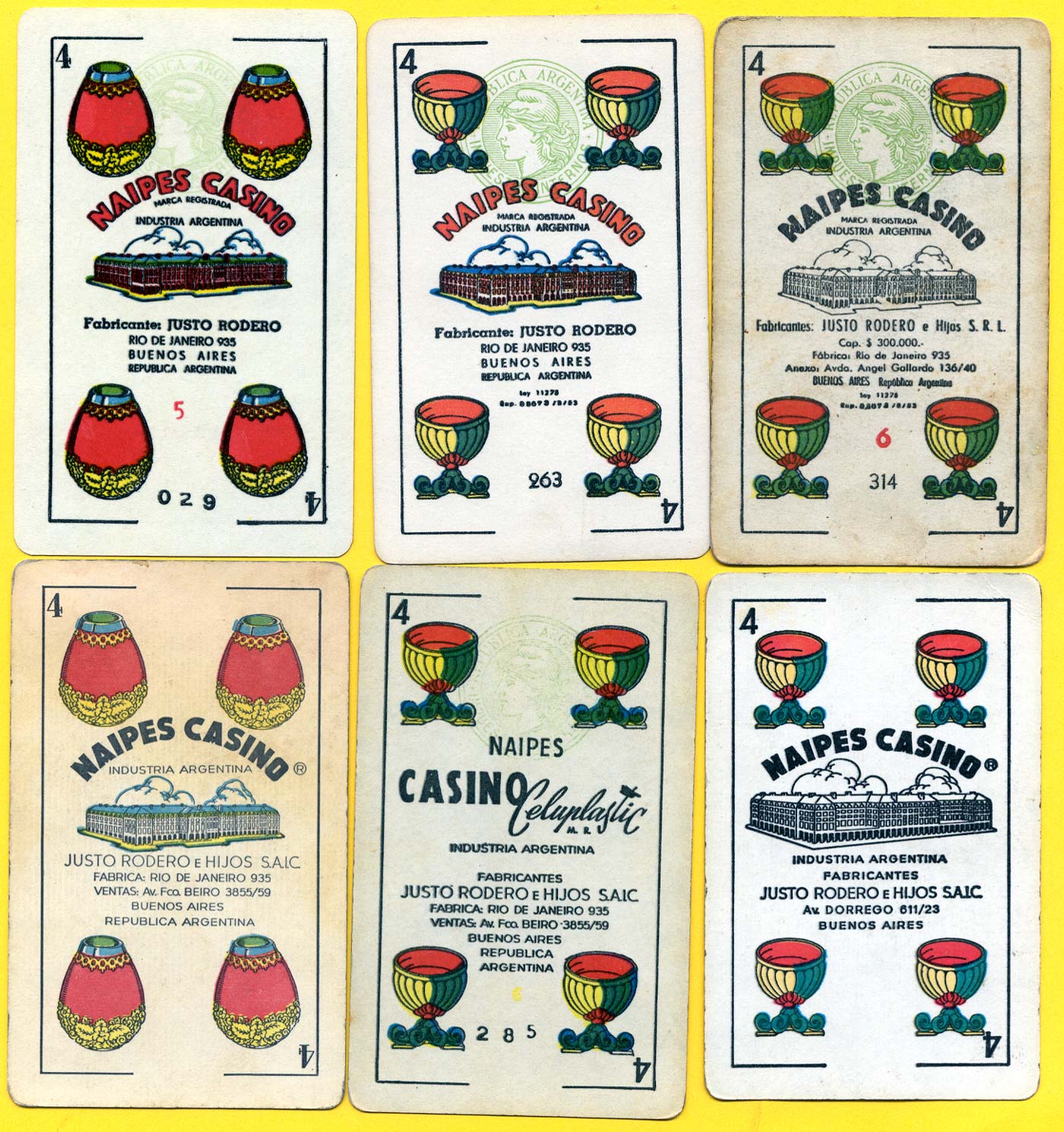
Above: over the years the company evolved, and changes in the company's name and address can be seen reflected in the information printed on the four of cups. The random numbers printed on the lower part of the fours of cups are manufacturer's control numbers and their exact meaning is unknown, but may be related to accounting of the inland revenue tax. It can be noted from the above examples that those cards without the internal revenue tax stamp do not have any control numbers.

By Simon Wintle
Spain • Member since February 01, 1996
I am the founder of The World of Playing Cards (est. 1996), a website dedicated to the history, artistry and cultural significance of playing cards and tarot. Over the years I have researched various areas of the subject, acquired and traded collections and contributed as a committee member of the IPCS and graphics editor of The Playing-Card journal. Having lived in Chile, England, Wales, and now Spain, these experiences have shaped my work and passion for playing cards. Amongst my achievements is producing a limited-edition replica of a 17th-century English pack using woodblocks and stencils—a labour of love. Today, the World of Playing Cards is a global collaborative project, with my son Adam serving as the technical driving force behind its development. His innovative efforts have helped shape the site into the thriving hub it is today. You are warmly invited to become a contributor and share your enthusiasm.

Activity for Fours of Cups
Sign in to comment or save this article.

Related Articles
Los Maffei y la marca “El León”
Mariano Maffei (Mafei) Cano, 1818-1840.

Early Cadiz pattern by Marchan
Typical early Cadiz pattern by Marchan of Cadiz, 1817.
Moguls, Highlanders and Merry Andrews
Discover the historic origins and evolution of card naming and quality designations like ‘Moguls’ an...
The Henry Hart Puzzle
Explore the intricate history and unique design variations of Henry Hart's playing cards, tracing th...
73: Fakes, forgeries and Tax Evasion
When there are official taxes to pay, people will find a way to avoid paying them - often illegally....
Russian Playing Card History - From the Beginnings to 1917
An in-depth review of the history of card-playing, gambling, legislation, manufacture and taxation o...
Russian Playing Card Monopoly
The Russian Playing Card Monopoly was established in March 1798 with all revenue going to support th...
72: The Ace of Spades
In standard English packs the Ace of Spades is associated with decorative designs. This is a histori...
66: Adverts and related material 1862-1900
Some further material relating to cards from nineteenth and twentieth century periodicals.
Australian Excise Duty
Excise Duty was introduced on Australian playing cards in 1932
Greek Heroes
Playing Cards manufactured by Aspioti Elka A.E., 1960, with ancient greek-style courts.
Naipes Casino Celuplastic
Justo Rodero produced plastic coated playing cards with the trade mark 'Celuplastic'. Apart from the...
Naipes Casino “Poker”
Justo Rodero produced standard Anglo-American style playing cards, usually with the courts printed i...
Naipes Casino Estilo Argentino
Naipes Casino Estilo Argentino by Justo Rodero with Gaucho suit symbols: the mate gourd, the sun, "f...
Naipes Habana
"Naipes Habana" Spanish-suited playing cards manufactured by Justo Rodero e Hijos S.R.L., with the d...
Naipes Casino
Naipes Casino Estilo Español Spanish suited playing cards manufactured by Justo Rodero.
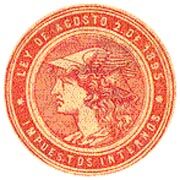
Argentina Tax Stamps on playing cards 1895-1968
Argentina Tax Stamps on playing cards 1895-1968
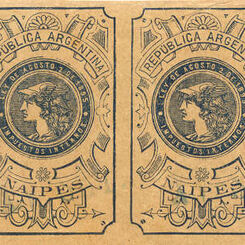
Impuestos Internos Sobre Naipes
Duty was first introduced on playing cards in Argentina in 1892, as part of the Internal Duties law,...
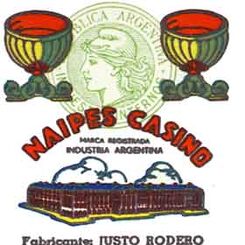
Justo Rodero e Hijos
Justo Rodero e Hijos, playing card manufacturer in Buenos Aires, Argentina.
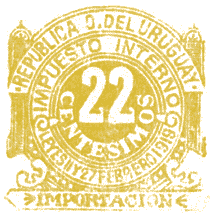
Uruguay playing card tax
In 1806 the Council of Concepción del Uruguay imposed an 8 Peso tax on card and billiard tables on a...
Most Popular
Our top articles from the past 60 days


