


Holmblad Animal Tarot
Instead of the old emblematic designs, the trump cards show illustrations of animals, which could possibly have symbolic meanings or moralizing interpretations.
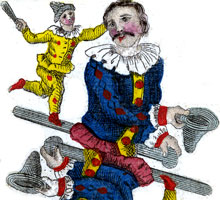
Jacob Holmblad: Animal Tarot
Jacob Holmblad's double-headed Animal Tarot was the last french-suited animal tarot produced in Denmark. Instead of the old emblematic designs, the trump cards show illustrations of animals, reflecting a difference in preference and taste amongst card players. These animals are as found in Danish school books of that time, rather than copies of foreign or imported cards, but are still in the tradition of animal tarock decks from Germany or Belgium. Most are domestic animals: cat, horse, bull, dog, etc. with some more exotic, foreign animals: elephant, lion, eagle, etc. These animal images may also refer to fables or folk songs taught at school, and could possibly have symbolic meanings or moralizing interpretations. The illustrator is not known.
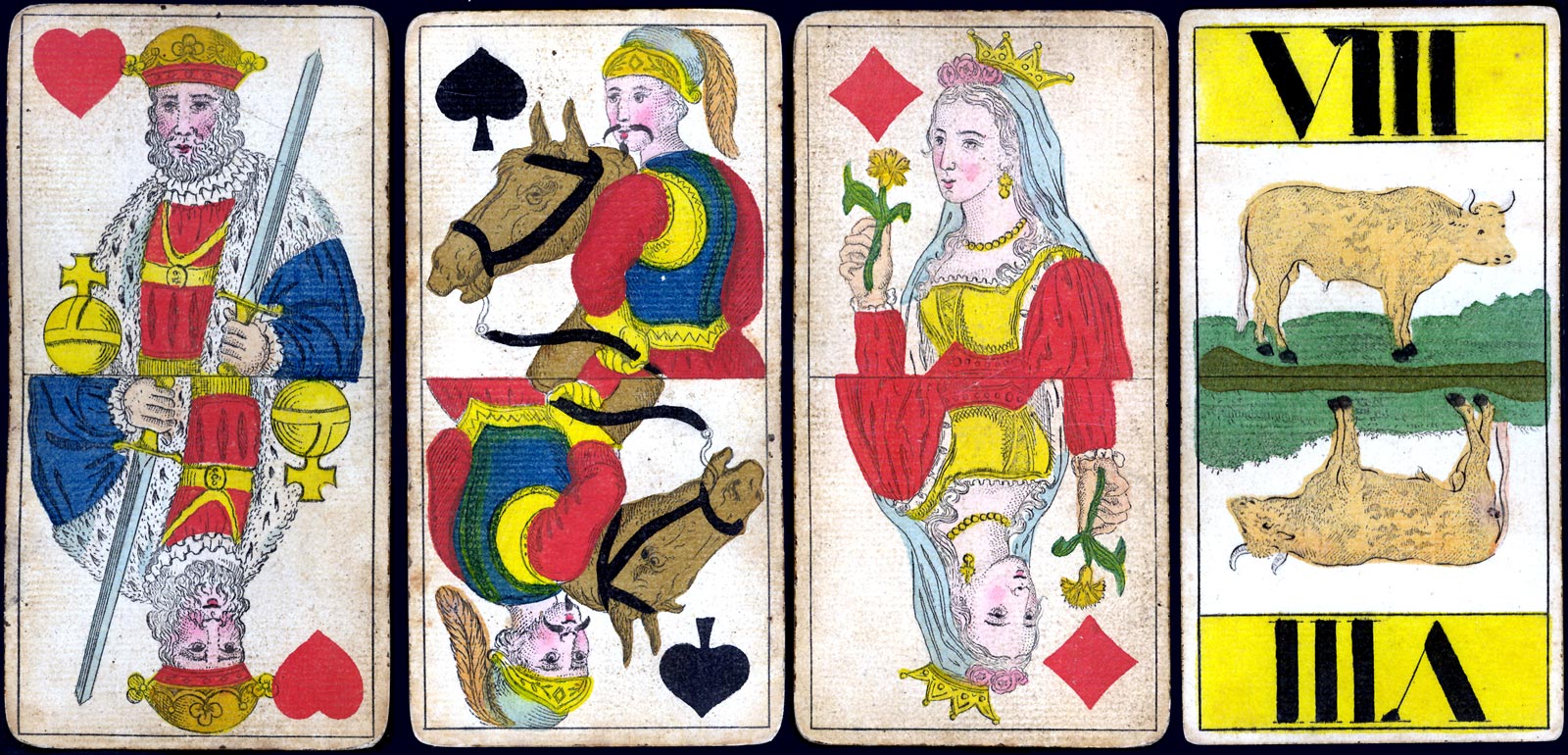
Above: four cards from an early edition of Jacob Holmblad's Animal Tarot cards printed from copperplate etchings (click image to zoom). Sometime around 1830 Holmblad changed to lithographic printing and later versions of the animal tarot deck were lithographic prints. Both versions are stencil-coloured.
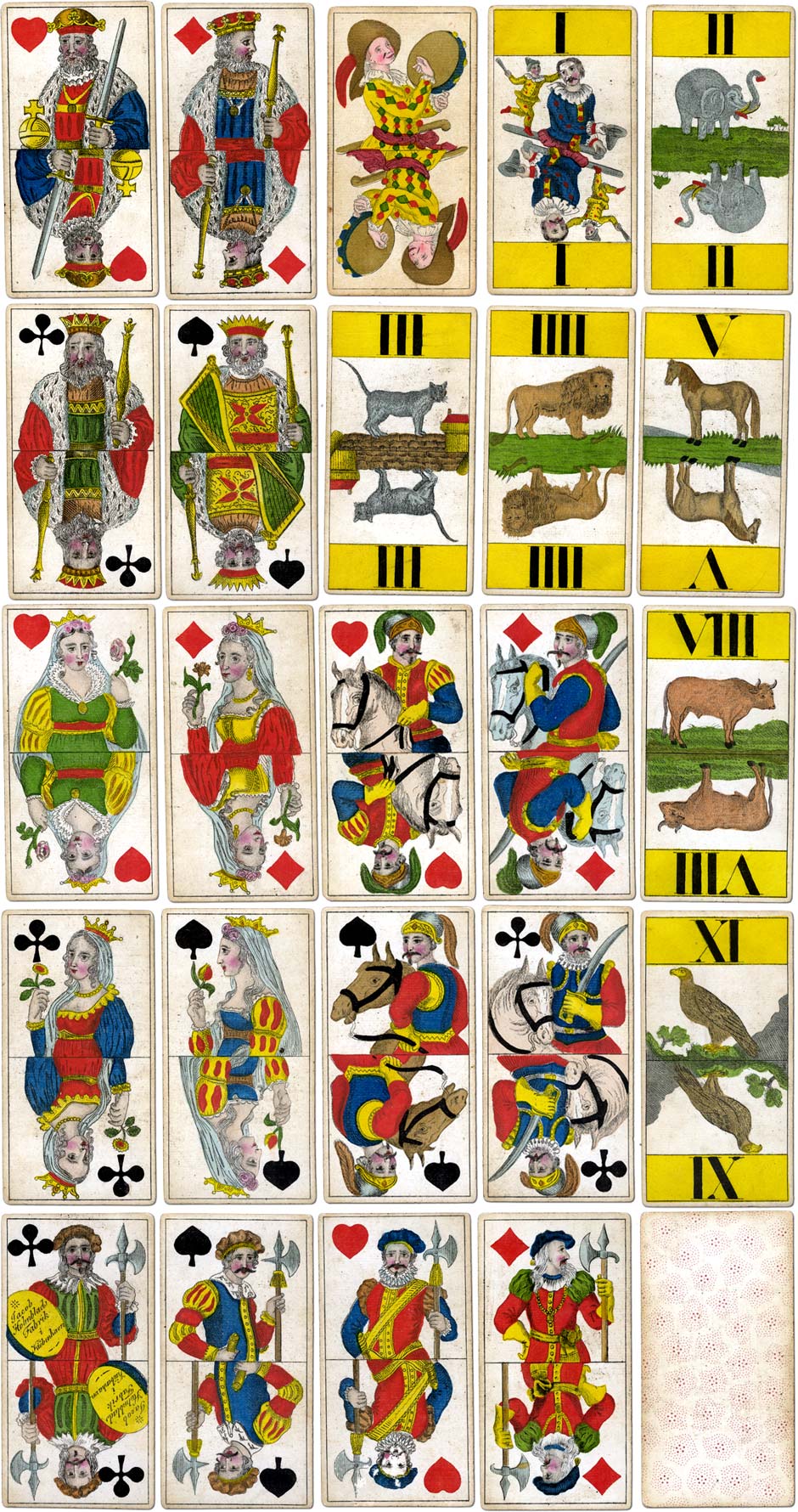
Above: cards from an edition of Jacob Holmblad's Animal Tarot cards printed by lithography and coloured with stencils, c.1835. The court cards are vaguely remiscent of French cards with the K♠ holding a harp. The Fool is a tambourine player, following after the German tradition of Fools depicted as musicians: an oboe player, a flautist or a fiddler.
When the business was taken over by his son Lauritz Peter Holmblad in 1837 the animal images were substituted by buildings from Copenhagen and the surrounding area see more →
REFERENCES
Jensen, K. Frank: French suited tarot packs in Denmark and the Jacob Holmblad Animal tarot, in "The Playing-Card" vol.36 no.3, IPCS London, Apr-June 2008. [download here].
Images courtesy K. Frank Jensen.

By Simon Wintle
Spain • Member since February 01, 1996
I am the founder of The World of Playing Cards (est. 1996), a website dedicated to the history, artistry and cultural significance of playing cards and tarot. Over the years I have researched various areas of the subject, acquired and traded collections and contributed as a committee member of the IPCS and graphics editor of The Playing-Card journal. Having lived in Chile, England, Wales, and now Spain, these experiences have shaped my work and passion for playing cards. Amongst my achievements is producing a limited-edition replica of a 17th-century English pack using woodblocks and stencils—a labour of love. Today, the World of Playing Cards is a global collaborative project, with my son Adam serving as the technical driving force behind its development. His innovative efforts have helped shape the site into the thriving hub it is today. You are warmly invited to become a contributor and share your enthusiasm.

Activity for Holmblad Animal Tarot
Sign in to comment or save this article.

Related Articles
Julius Berndl and his Austrian tarock
Josef Glanz's Tarock: a classic deck with artistic innovation by Julius Berndl.
Tarock Nr. 71 by Ferd. Piatnik & Söhne
Special tarock deck for the Tyrolean game Droggn.
Animal Tarock by J. G. Pichler
Baroque tarock cards from the late 18th century.
Austrian Tarock by S.D. Modiano
Modiano’s Austrian Tarock with country scenes has been in production for over 100 years.
Jeu de Tarot (Catel & Farcy)
Colourful version of a standard French (‘Bourgeois’) Tarot.
Johann Nejedly Tarok Cards
Johann Nejedly, a 19th-century Viennese card maker, produced Tarock cards featuring modern scenes th...
The New Game of Tarot (or Tarock)
Regional costumes and alpine flora on a French Tarot game pack marking 600 years of playing cards in...
Tarok c.1900
Piatnik & Söhne “Industrie und Glück” Tarock c.1905-1910.
Jacob Holmblad c.1830
An amazing difference can be seen between the early and the later Jacob Holmblad packs, covering a t...
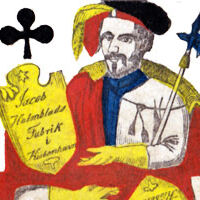
Jacob Holmblad, 1820s
The Q♥ has a butterfly net in which she has caught four hearts. Many of Holmblad's designs were repl...
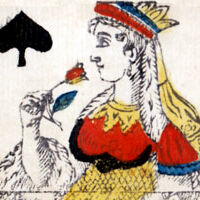
Jacob Holmblad c.1820
Standard woodblock and stencil deck produced by Jacob Holmblad with double-ended court cards in the ...
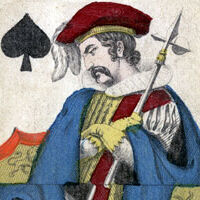
L. P. Holmblad c.1840
L. P. Holmblad's house pattern used from c.1840. The K♠ carries a harp as in the traditional French-...
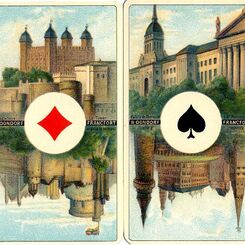
Dondorf Tarot Aces
The four suits are associated with four countries: Clubs = Germany, Diamonds = UK, Spades = Russia a...
Dondorf Tarot
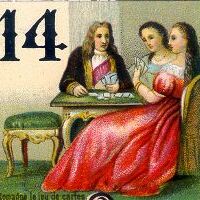
Dondorf's “Microscopique Tarock“ was first published in c.1870. The scenes portrayed at each end of ...
Verkehrte-Welt-Tarock
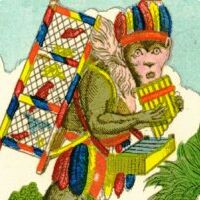
"Verkehrte-Welt-Tarock” (reverse world ?) manufactured by Christian Theodor Sutor (fl. 1823-1854), N...
Mythological Tarock by Johann Herrl
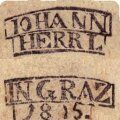
French-suited Tarock deck made by Johann Herrl in Graz 1815.
L. P. Holmblad - Denmark
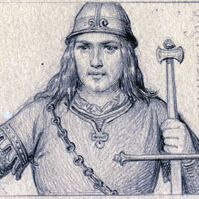
Cards from c.1850 by L. P. Holmblad showing fantasy historical Danish Kings and Queens.
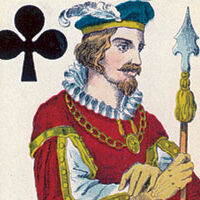
Danish Tarok Cards - Salomon & Co., c.1906
Danish Tarok cards published by S. Salomon & Co., Kjøbenhavn, c.1906.
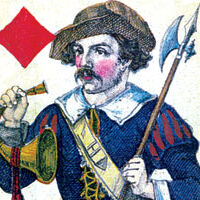
Danish Tarok Cards - Holmblad, c.1850
The traditional animal images on tarok decks are here substituted by images of buildings from Copenh...
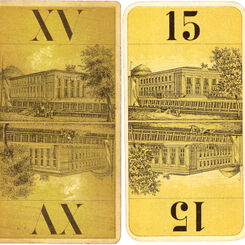
Danish playing cards - Tarock trumps
Two versions of trump no.15 depicting the Thorvaldsen Museum.
Most Popular
Our top articles from the past 60 days


