Greek Playing Cards
Greek Playing Cards.
Ancient Greece was the birthplace and cradle of European civilisation.
Greek mythology has, of course, featured in the design of playing cards and "Ancient Civilisation" games in many parts of the world since at least the seventeenth century. Card playing is not as popular in Greece as it is elsewhere and the uptake has been slower than in other parts of Europe. Greek card players today use either the Anglo-American or French National pattern, but a number of tourist souvenir packs are produced featuring Greek Mythology, Ancient Lovers or photographs of Greece. Belgian or Genoese style cards have also been used. In the 1920s the manufacturers Paignioxartopoeion e Elpis of Corfu made a pack with Venetian format and Greek mythological figures on the court cards. This pack disappeared after the Italian invasion in 1939. Grafika Teknai Aspioti-Elka of Athens introduced a national French-suited pattern, also with classical figures on the court cards, which remained in production for many decades.
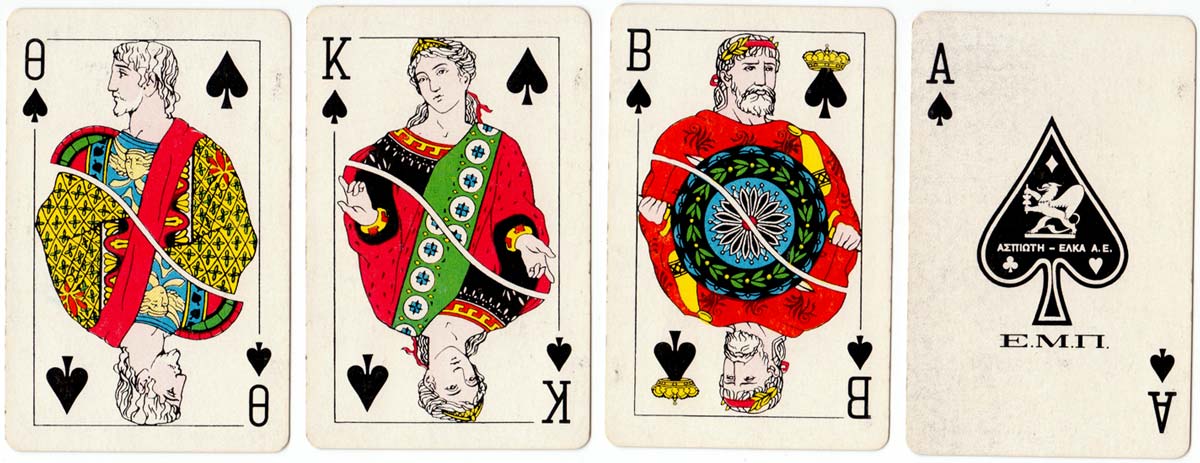
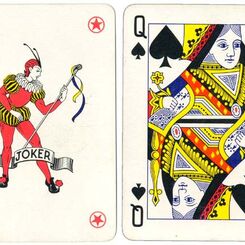
Above: deck manufactured by Aspioti Elka A.E. "Elleinikon Monopolion Paienioxarton. Klasis A Koina", 52 cards + 2 Jokers, 1960. The court cards portray ancient heroes of Greece see more►
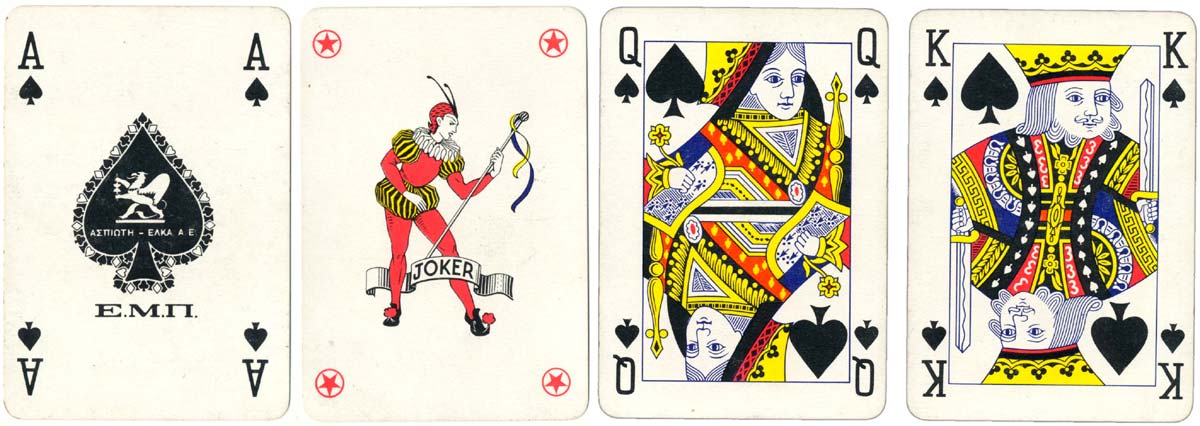
Above: standard Anglo-American playing cards manufactured by Aspioti-Elka of Athens see more►
Greece had a monopoly on the manufacture and sale of playing cards since 1884. Joining the European Community on January 1, 1981, led to the abolition of the playing card monopoly in 1986. Malikouti and Aspioti-Elka finally ceased their activities. Cards were produced by other local manufacturers or imported from elsewhere.
Greek Mythology
The myths of the early Greeks have given world literature some of its greatest inspiration, while the dramatists set the pattern on which drama has developed ever since.
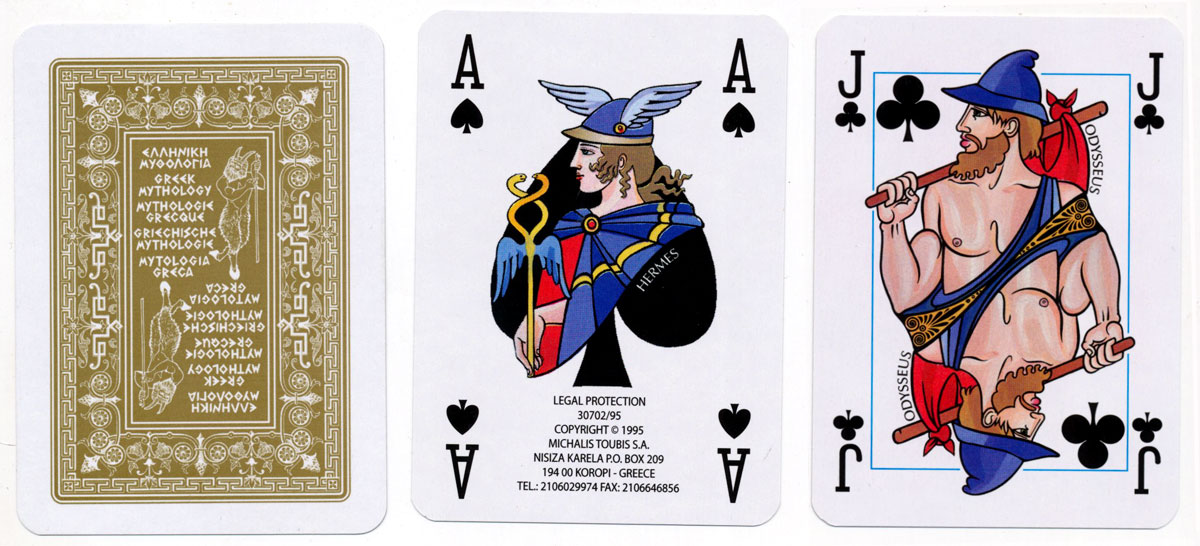
Above: Greek Mythology playing cards published by Michalis Toubis S.A., 1995. The courts show double-ended images of Greek Gods, with Anglo-American indices, 52 cards + 3 Jokers in Box. See also Cyprus Souvenir published by Michalis Toubis S.A.►
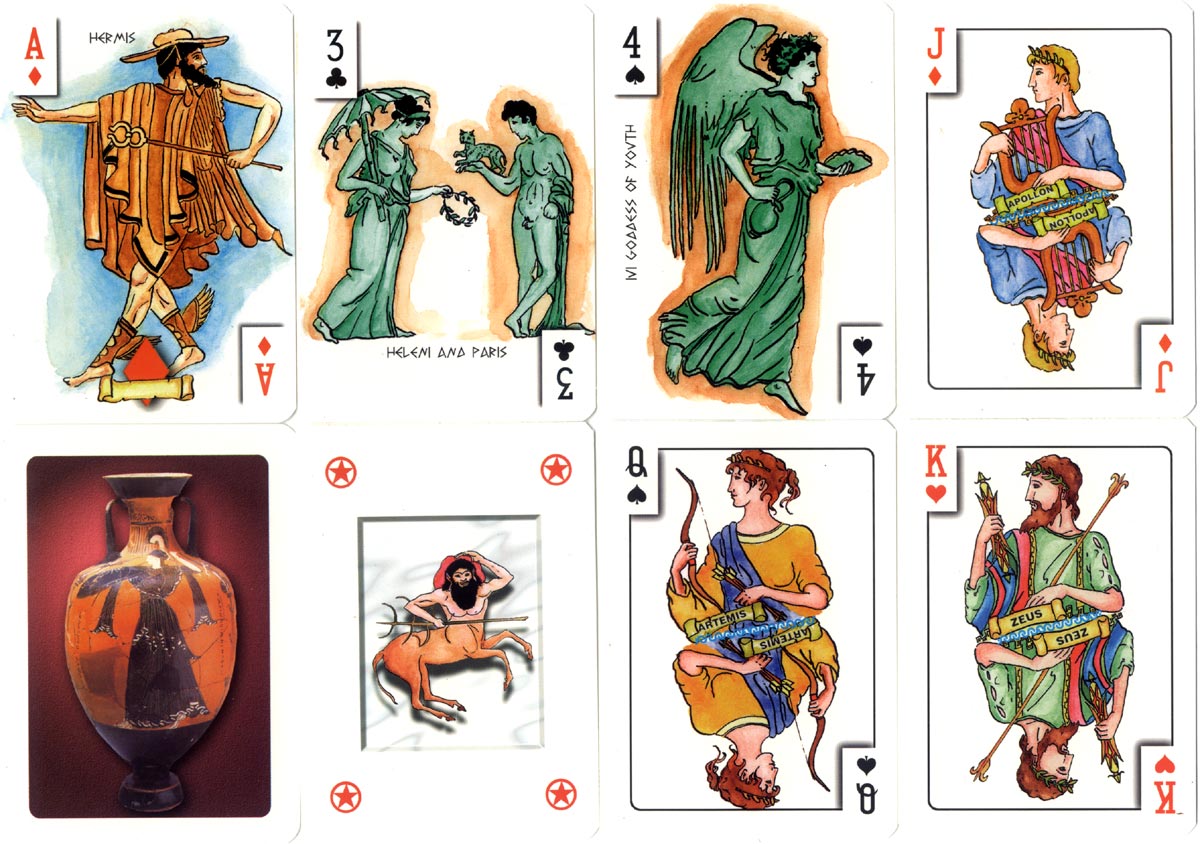
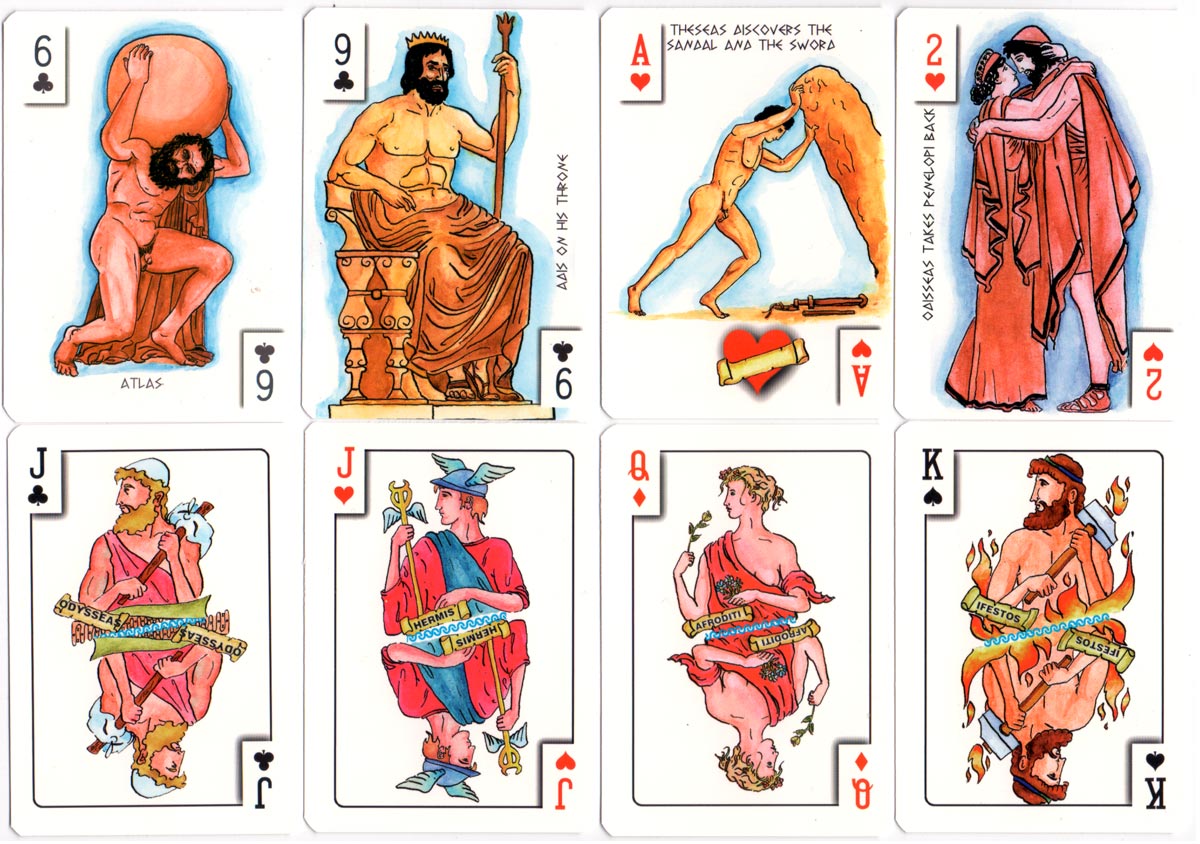
Above: Greek Mythology playing cards published by Panco-Carta Editions, 2011. Cards courtesy Sean Parry.
More Greek Mythology playing cards
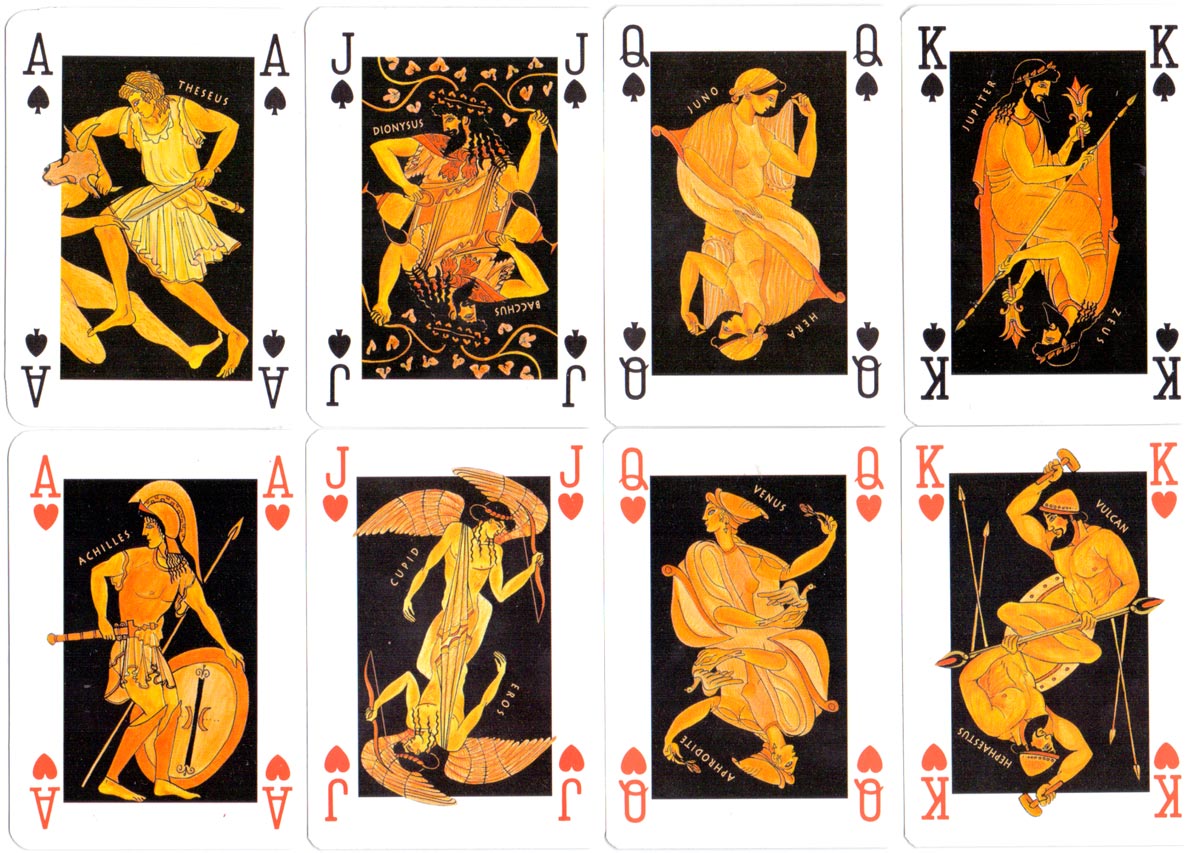
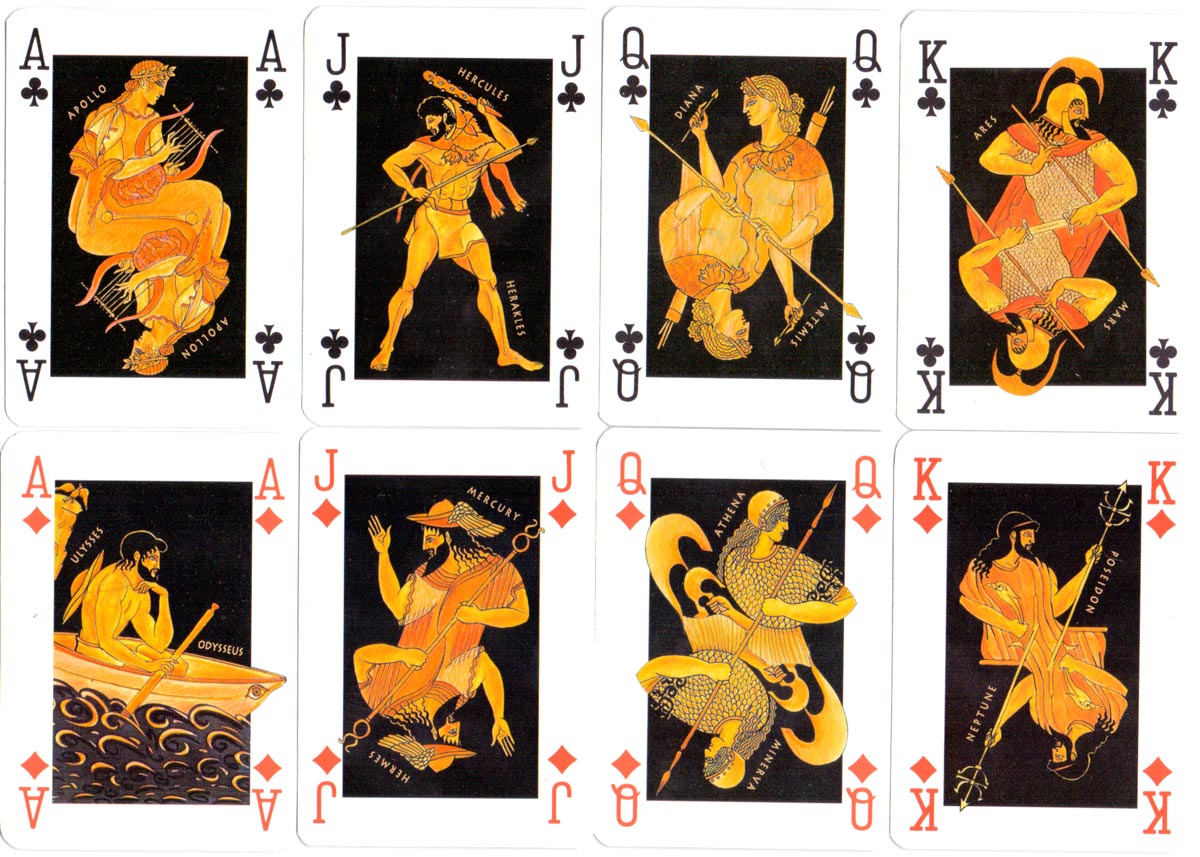
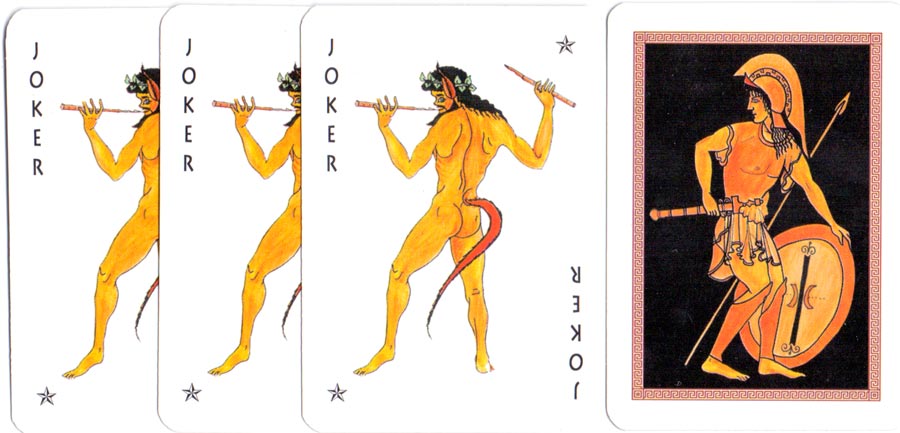
Above: Greek Mythology playing cards published by Greko Editions, Athens, c.1990. 52 cards + 3 jokers in box. The court cards show double-ended drawings of Greek gods with a Greek warrior on the reverse.
Souvenir of Greece
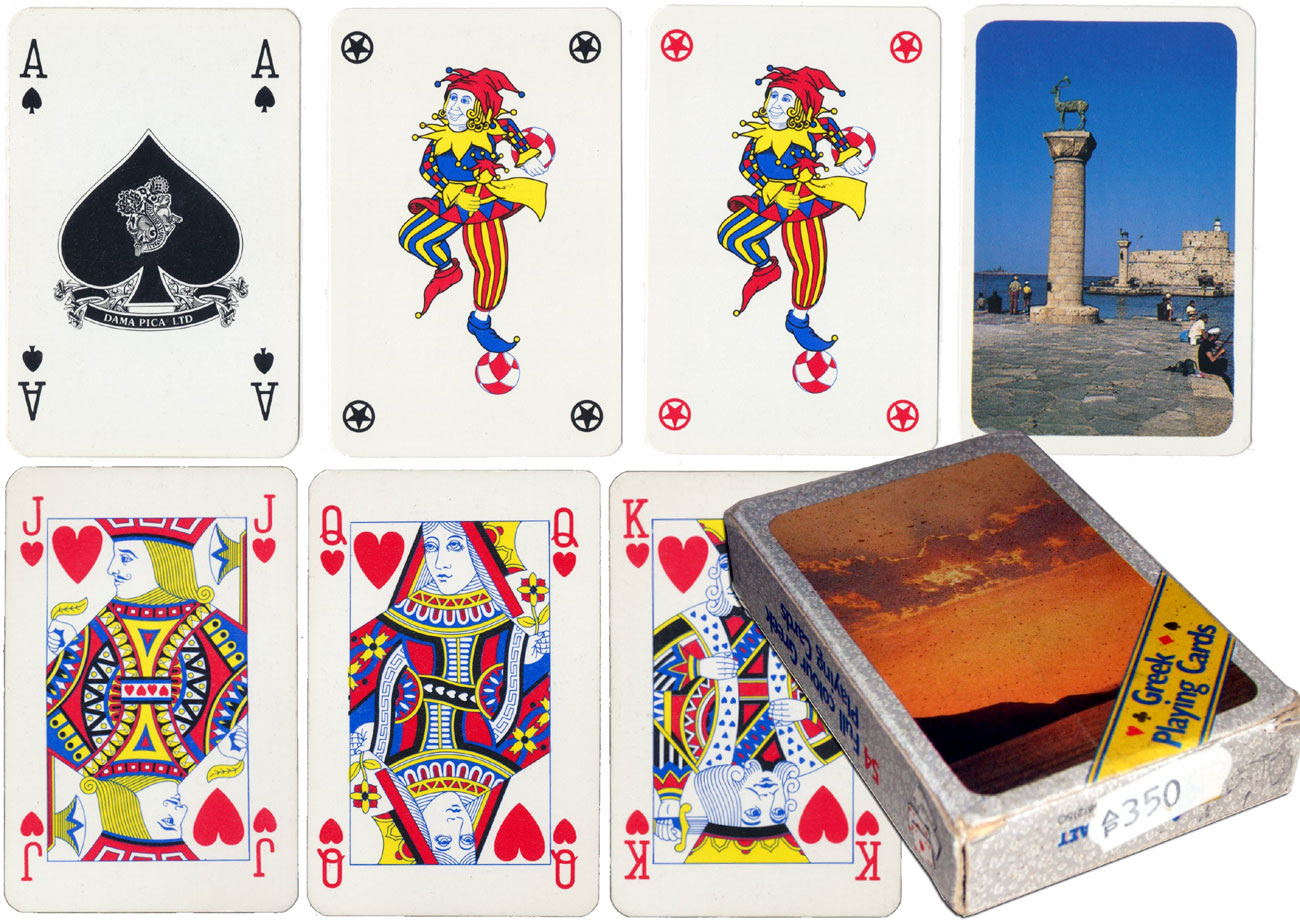
Greek Souvenir playing cards are produced in various styles, ranging from colour photos of Greek scenery to photos of artefacts in museums celebrating ancient Greek civilisation. Some editions of "Greek Playing Cards" are a standard English pattern with a cheerful colour photo of a Greek Island on the reverse, made by a local manufacturer such as Dama Pica Ltd. see example here►. Advertising decks for Greek shipping lines or other businesses are often produced by foreign manufacturers rather than national ones.
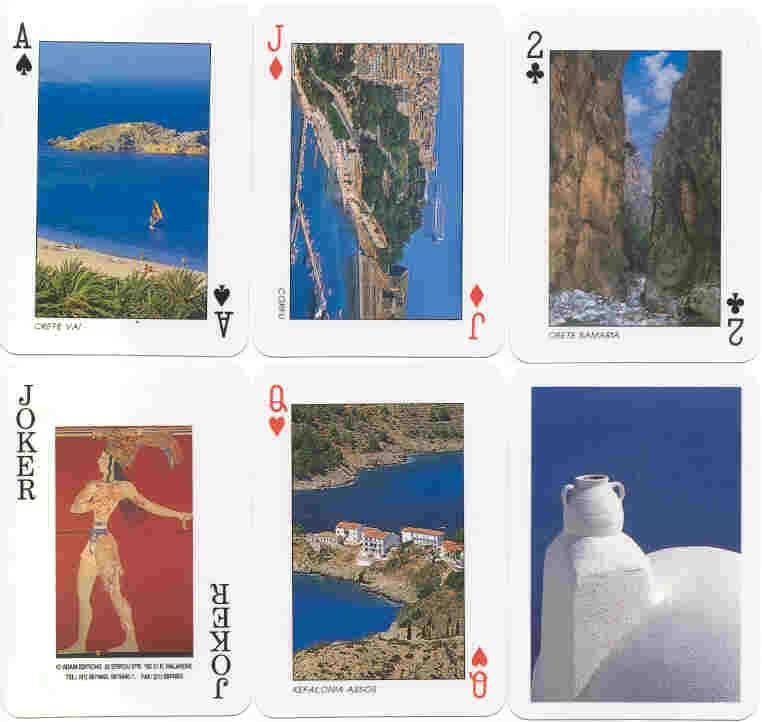
Above: Greek Souvenir playing cards with a colour photo on each card, published by Adam Editions, 1998. The reverse shows a white rooftop, chimney and blue sky. 52 cards + 2 Jokers.
Eurocard, c.1980
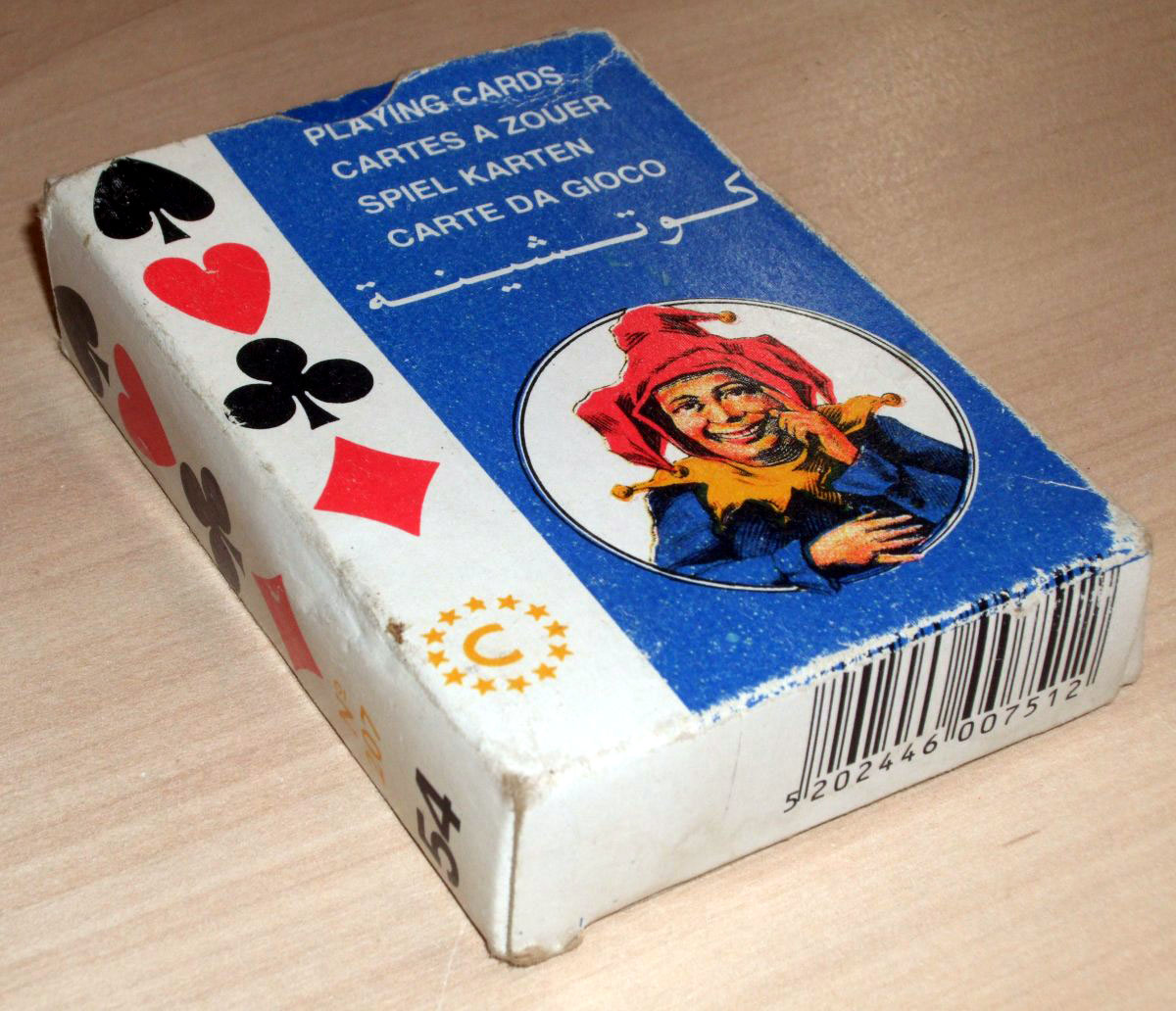
Above: Eurocard playing cards No.207, c.1980 • Souvenir of Crete • Souvenir of Kos • Souvenir from Zakynthos
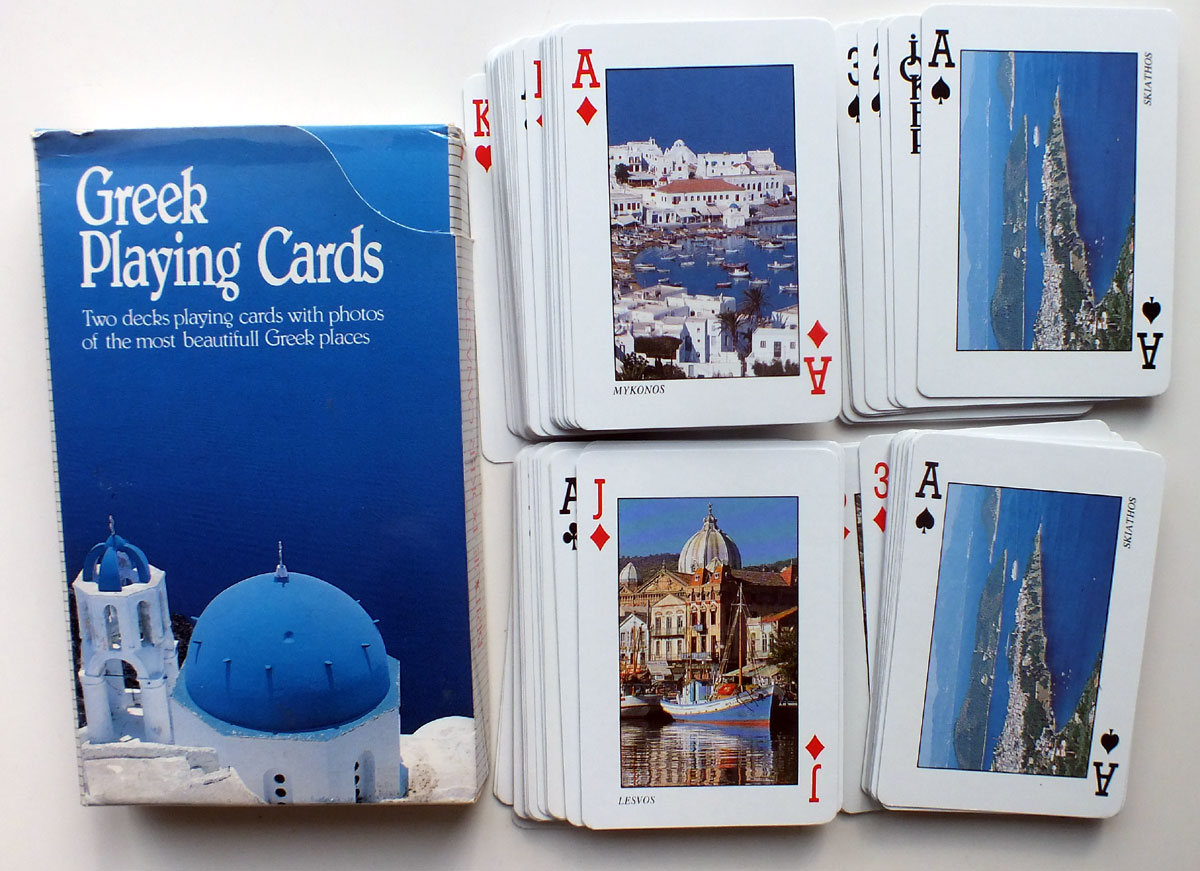
Above: cards from a double boxed set of “Greek Playing Cards with photos of the most beautiful Greek places” published by Dimitri Haïtalis, Athens, c.1980.
Eros
The ancient Greek works of art were closely related to the practical or religious purpose for which they were primarily designed. Classical Greek art is an art charged with meaning that appeals as much to the intelligence as to the sensibility. A large number of Greek painted vases have survived, and these often used the human figure as part of their ornamentation. The images are often striking in their accurate and vivid observation, taken from life. The human body was drawn at the peak of its youth and strength with explicit anatomical detail. Aphrodite was often venerated in vase painting, surrounded by Loves and Graces, beautiful nude young women and finely shaped youths.
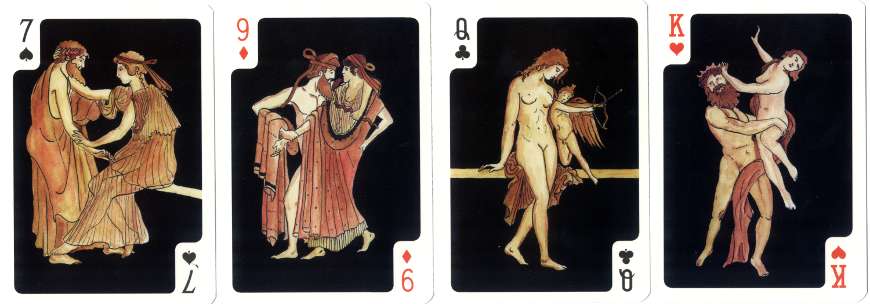
Above: four cards from "Antique Lovers" playing cards published by Editions Panco-Carta, 54 cards with images of Greek Ancient Lovers. Cards courtesy Sean Parry.
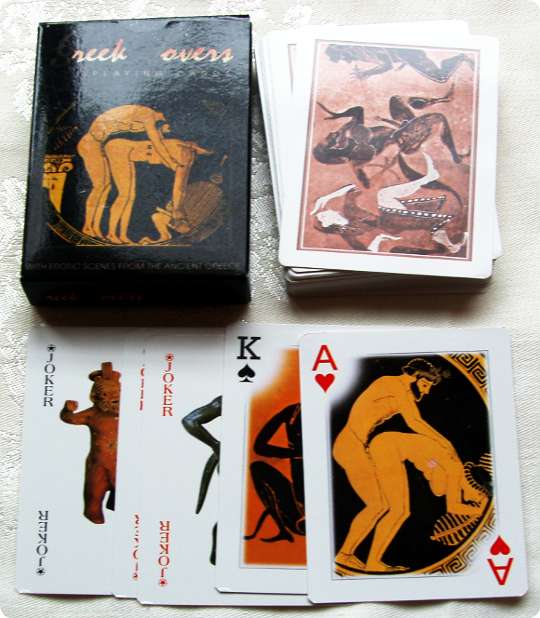
Left: Many works of art which decorated Greek pottery contained allusions to everyday life with all its delight in athletic sports and its passionate love of youth and beauty. The "Greek Lovers" playing cards shown here feature erotic scenes from Ancient Greek art on every card, published by Michalis Toubis S.A., 1995, 52+3j in Box.
Some Greek artists loved youthful bodies in slightly languid poses, often depicting the softness of flesh, engaged in carefree leisure. Other artists strove to depict idealised beauty as promoted in Platonic teachings. The many facets and phases of Greek art provide a rich source of imagery for Greek tourist souvenir playing cards.

By Simon Wintle
Spain • Member since February 01, 1996
I am the founder of The World of Playing Cards (est. 1996), a website dedicated to the history, artistry and cultural significance of playing cards and tarot. Over the years I have researched various areas of the subject, acquired and traded collections and contributed as a committee member of the IPCS and graphics editor of The Playing-Card journal. Having lived in Chile, England, Wales, and now Spain, these experiences have shaped my work and passion for playing cards. Amongst my achievements is producing a limited-edition replica of a 17th-century English pack using woodblocks and stencils—a labour of love. Today, the World of Playing Cards is a global collaborative project, with my son Adam serving as the technical driving force behind its development. His innovative efforts have helped shape the site into the thriving hub it is today. You are warmly invited to become a contributor and share your enthusiasm.

Activity for Greek Playing Cards
Sign in to comment or save this article.

Related Articles
Balearic Souvenir Cards
Mediterranean Souvenir deck by Rioba Studio, Pollença, Mallorca.
Views of Baden-Baden
Views of Baden-Baden: a Biedermeier souvenir deck by Johann Anton Steinberger.
Hispania Romana
Educational card game depicting the Roman period in Spanish history.
Papyrus Playing Cards
Papyrus playing cards distributed by Egypt Trade, c.1996.
Visite de Saint Tropez
Souvenir pack with 54 different views of Saint Tropez.
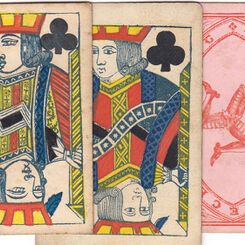
Isle of Man playing cards made by Glénisson of Turnhout
Two souvenir packs with different court cards made by Glénisson for the Isle of Man, c.1880.
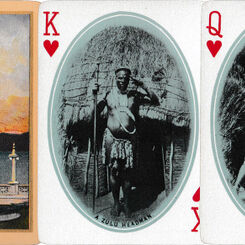
South Africa Souvenir
Photographic views of South Africa and Rhodesia.
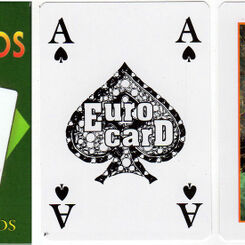
Souvenir from Zakynthos
Souvenir from Zakynthos by Euro Card.
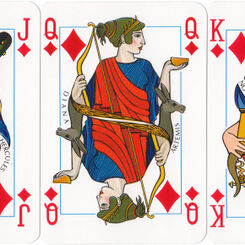
Greek Mythology
Greek Mythology playing cards published by Michalis Toubis S.A., 1995.
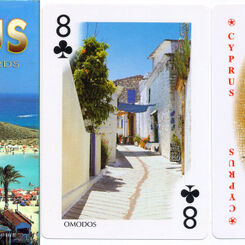
Cyprus Souvenir
Cyprus Souvenir playing cards published by Editions Michalis Toubis S.A., 1998.
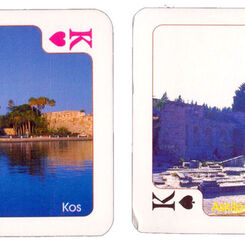
Souvenir of Kos
Souvenir playing cards from the Greek island of Kos, published by Eurocard. Each card has a differen...
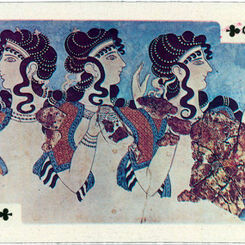
Souvenir from Crete
Souvenir from Crete - 54 full colour playing cards © Editions Eurocard.
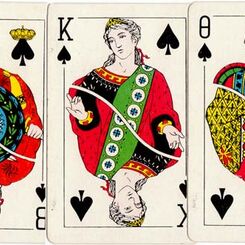
Greek Heroes
Playing Cards manufactured by Aspioti Elka A.E., 1960, with ancient greek-style courts.
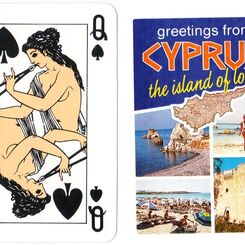
Cyprus Souvenir
Cyprus souvenir playing cards showing scenes alluding to ancient history and myths.
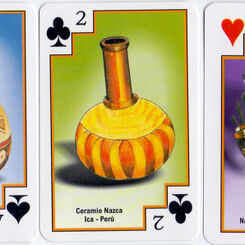
Líneas de Nazca
“Líneas de Nazca” souvenir playing cards, Peru, c.2008.
Li River Souvenir
Li River Souvenir Playing Cards from China.
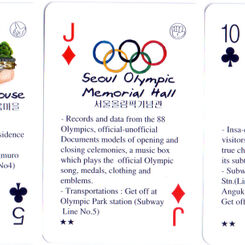
Adventures in Korea
Each card has a colour drawing of a Korean building, museum or tourist attraction with a brief descr...
Aspioti Elka A.E.
An unknown brand by Aspioti Elka A.E probably from the 1960s.
Souvenir Playing Cards
Tourist souvenir playing cards depict the aesthetic, political, social and economic conceptions of t...

Souvenir Playing Cards
Argentina publishes many tourist souvenir packs, usually with colour pictures on each card, and with...
Most Popular
Our top articles from the past 60 days