


Jeu d'aluette by Fossorier, Amar et Cie
A very distinctive 48-card Spanish-suited pack is used to play Aluette.
The game of Aluette originated in France and was known as early as 1502. It has been played continuously in a restricted area, namely the western coast from the estuary of the Gironde up to Cotentin, together with the Loire valley as far as Orleans. It continues to be cherished as a part of French cultural heritage and serves as a reminder of the rich history of card games in Europe.
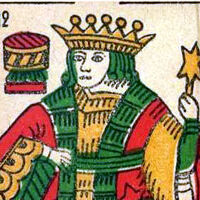
A very distinctive 48-card Spanish-suited pack is used to play Aluette. It is a trick-taking game in which eight cards have special names and have a special place in the game in that they beat all others. The 2 of cups is 'la vache', the 3 of cups is 'Madame', the 3 or coins is 'Monsieur'. Many of these idiosyncrasies can be traced to early sources, and likewise many of the court card postures and stances derive from much earlier patterns. For example the king of coins holds a battle axe which can be traced back to fifteenth century cards. However, there are no border breaks, or 'pintas' which were common in Spanish-suited packs. In the example shown here, the publisher’s name appears on the ace of coins and on the 12 court cards. The signature of the lithographer, E. Helle, can be seen at the bottom of the ace of cups. A blue tax stamp is on the two of swords.
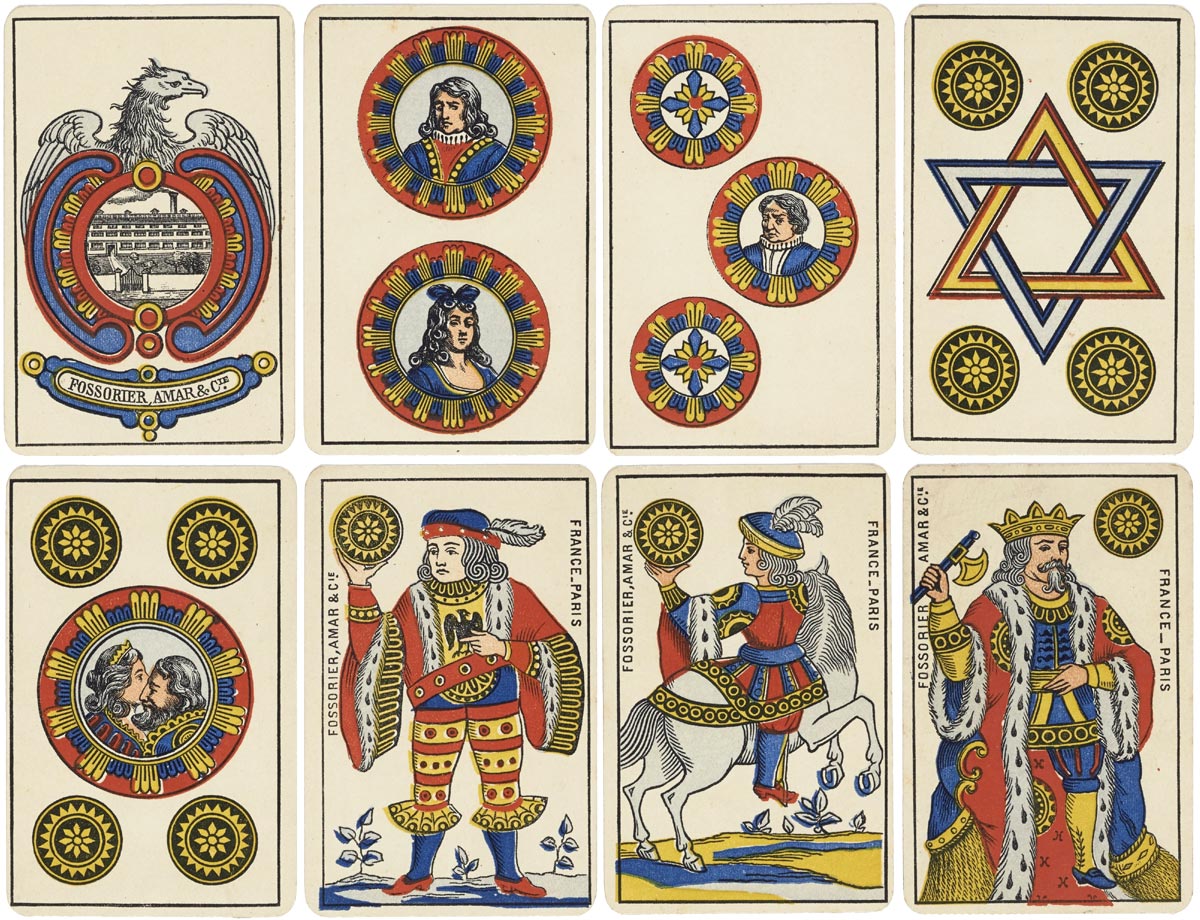
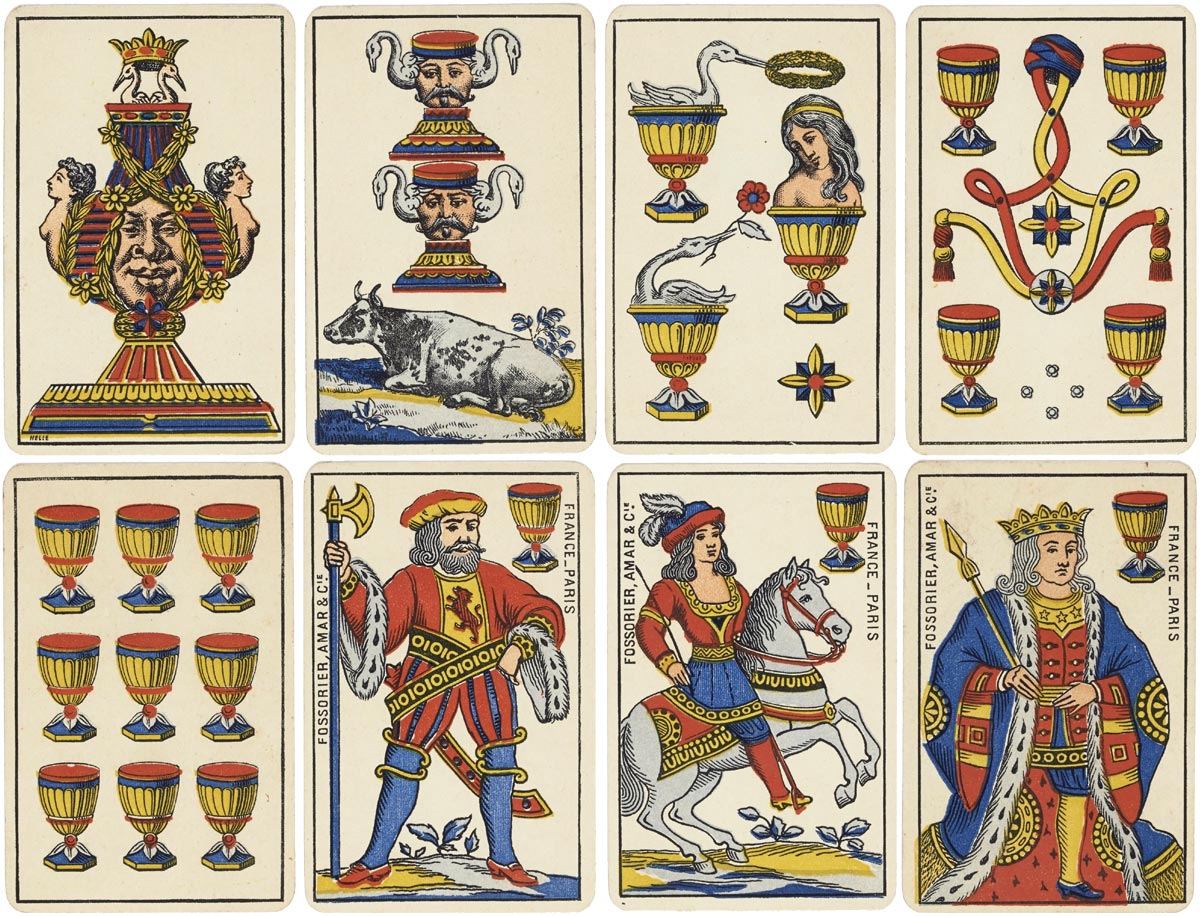
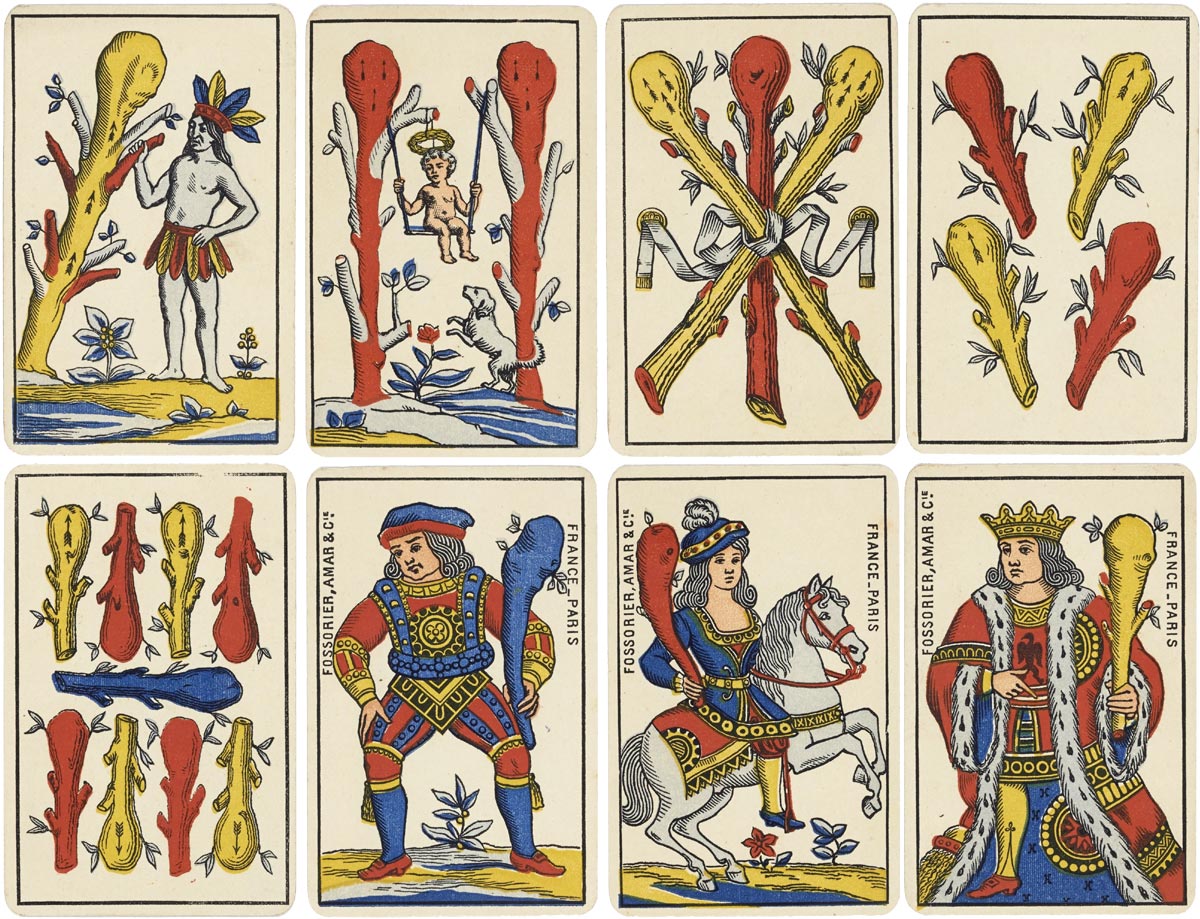
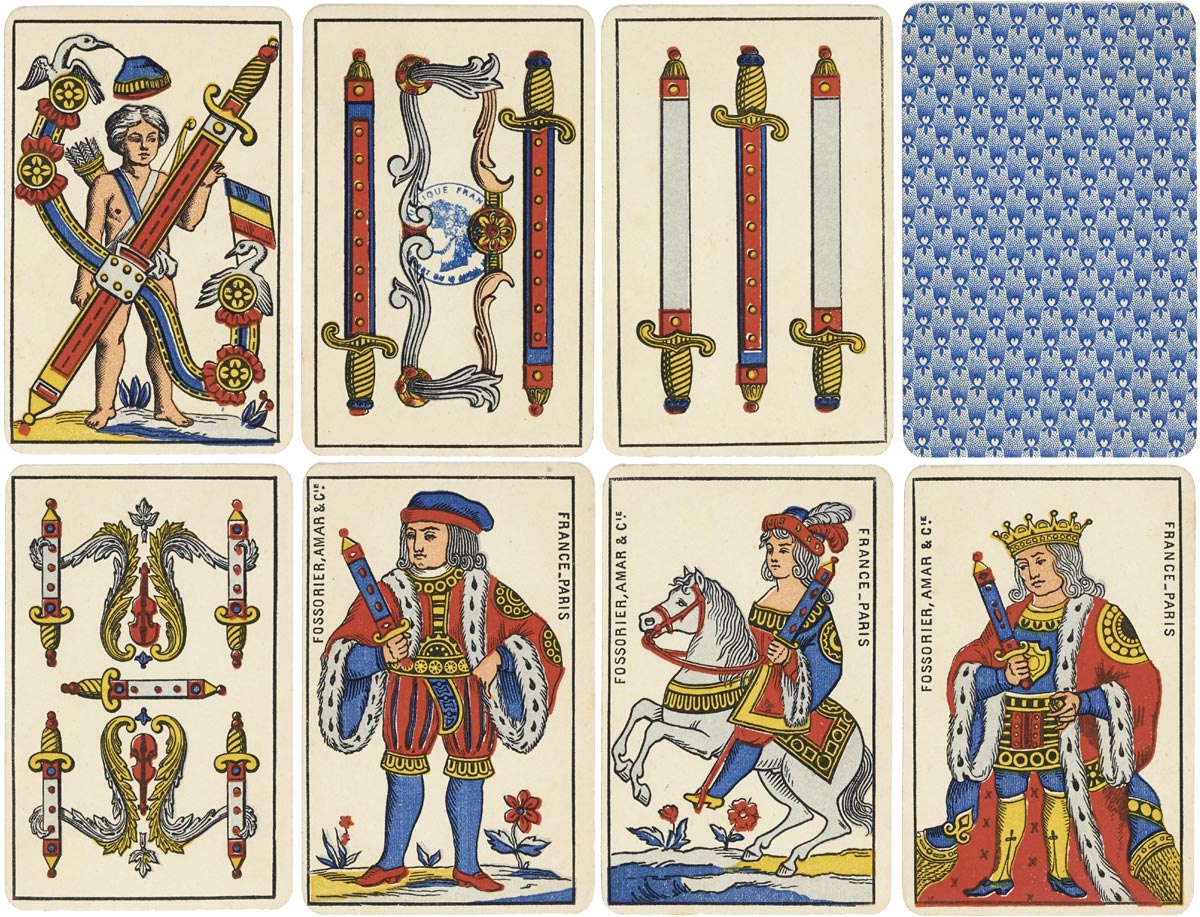
Above: Jeu d'aluette published by Fossorier, Amar et Cie, Paris, 1902. 48 cards, colour lithography by E. Helle. Source gallica.bnf.fr / Bibliothèque nationale de France • Jeu d'aluette, Helle, Lithographe►
References
Dummett, Michael: The Game of Tarot: From Ferrara to Salt Lake City, Duckworth, 1980 - see Appendix 1 Aluette, p.29.

By Simon Wintle
Spain • Member since February 01, 1996
I am the founder of The World of Playing Cards (est. 1996), a website dedicated to the history, artistry and cultural significance of playing cards and tarot. Over the years I have researched various areas of the subject, acquired and traded collections and contributed as a committee member of the IPCS and graphics editor of The Playing-Card journal. Having lived in Chile, England, Wales, and now Spain, these experiences have shaped my work and passion for playing cards. Amongst my achievements is producing a limited-edition replica of a 17th-century English pack using woodblocks and stencils—a labour of love. Today, the World of Playing Cards is a global collaborative project, with my son Adam serving as the technical driving force behind its development. His innovative efforts have helped shape the site into the thriving hub it is today. You are warmly invited to become a contributor and share your enthusiasm.

Activity for Jeu d'aluette by Fossorier, Amar et Cie
Sign in to comment or save this article.

Related Articles
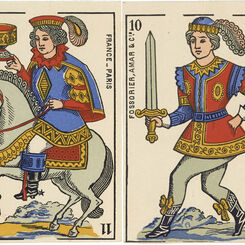
Cartes Catalanes by Fossorier, Amar et Cie
‘Cartes Catalanes’ published by Fossorier, Amar et Cie (Paris)
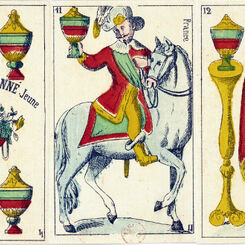
Aluette by Dieudonné Jeune, Orléans, c.1850
Aluette game by Fabrique Dieudonné Jeune, Orléans, c.1850.
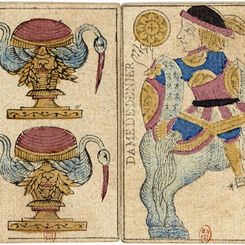
Pierre Roiné Aluette
Archaic form of Aluette published by Pierre Roiné, Nantes, c.1785.
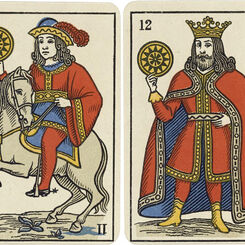
Parisian Spanish pattern by Fossorier, Amar et Cie
‘Parisian’ Spanish pattern published by Fossorier, Amar et Cie (Paris), c.1902.
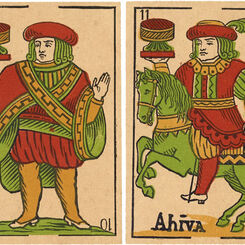
“Abd-el-Kader” by Fossorier, Amar et Cie for Algeria
Spanish National pattern produced by Fossorier, Amar et Cie (Paris) for Algeria, around 1902.
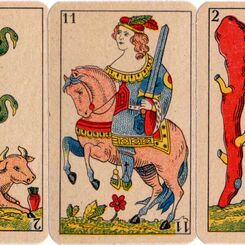
Jeu D’Aluettes - Boéchat Frères c.1950
Jeu D’Aluettes manufactured by Boéchat Frères, Bordeaux, c.1950 with archaic Spanish features mixed ...
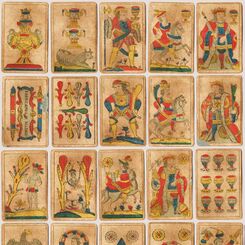
Lequart Aluette
Spanish-suited Aluette pack with 'FABRICANDO IN MADRID' printed on the Two of Swords and the legend ...
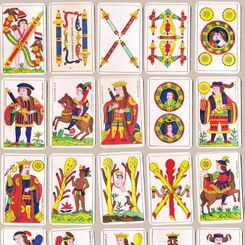
Dieudonné & Cie Aluette
Aluette playing cards manufactured by Dieudonné & Cie, Angers (France), early 20th century.
Algeria
Spanish suited playing cards produced by B. P. Grimaud (Paris) for Algeria.
Most Popular
Our top articles from the past 60 days


