


La Sibylle des Salons
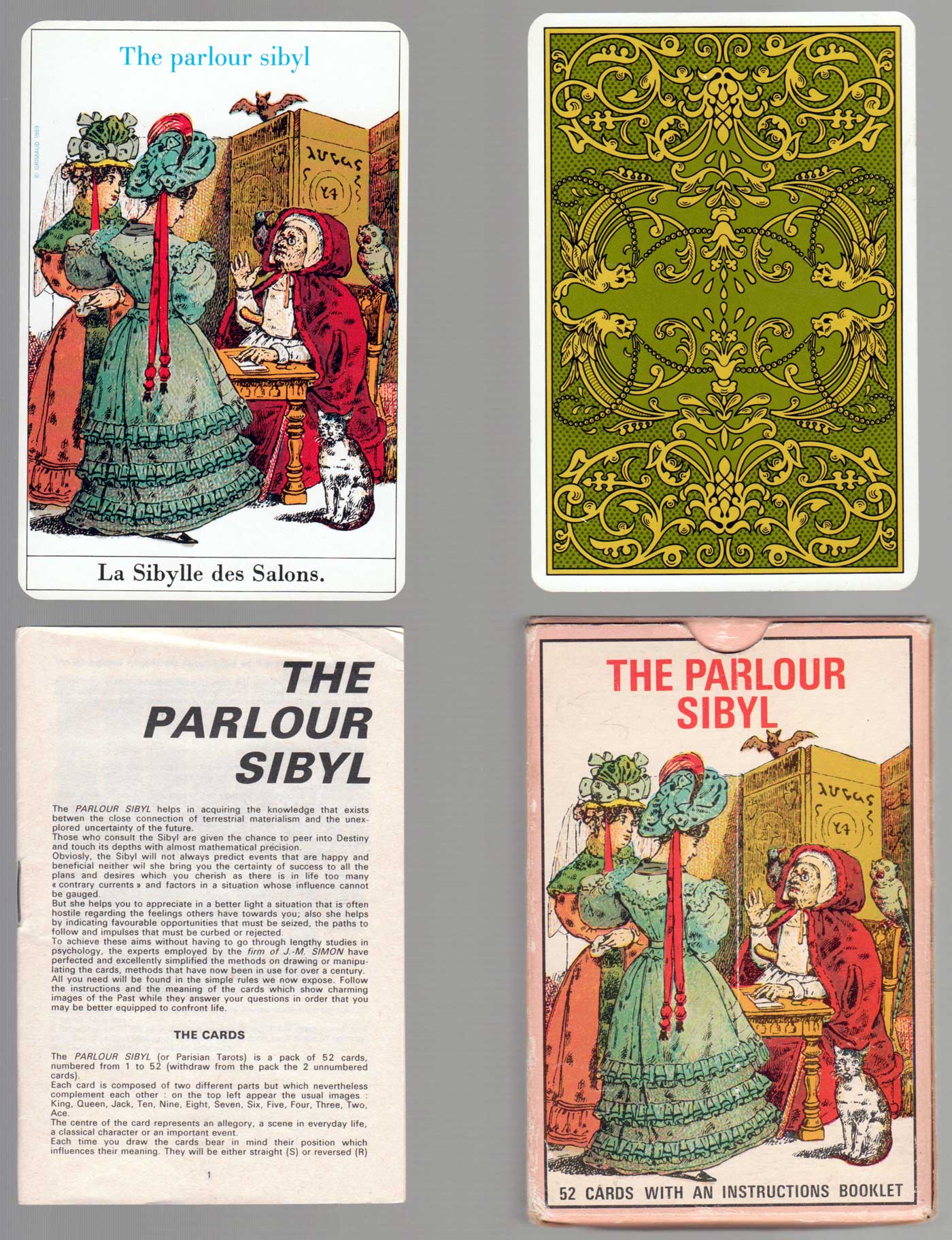
La Sibylle des Salons facsimile of 19th century deck published by J M Simon, 1979.
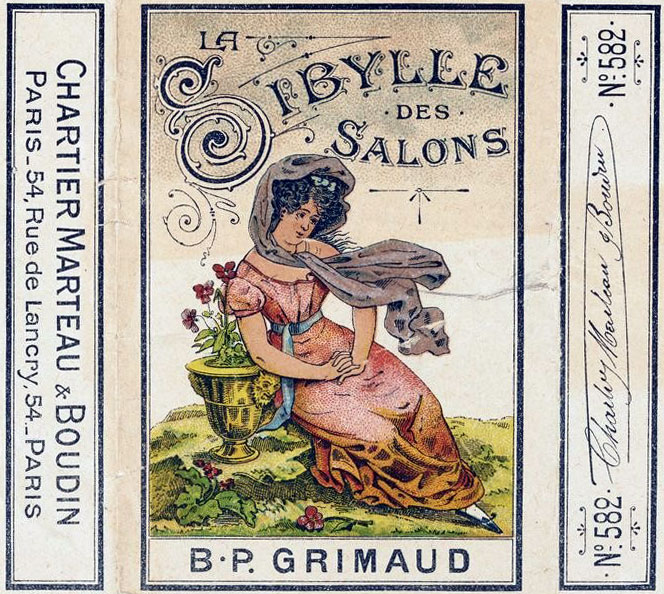
La Sibylle des Salons was originally published by H. Pussey in the 1840s as 52 hand coloured lithographs accompanied by a 24 page booklet titled “Art de Tirer Les Cartes” in a decorated slip case. Fortune-telling had entered the ladies’ sitting room. The Bibliothèque Nationale de France (online catalogue) states that it is commonly accepted that these cards, signed ‘Mansion’, pseudonym of André Léon Larue, are in fact due to his pupil, Jean-Jacques Grandville (1803-1847). The set was reproduced later that century by Grimaud, c.1890.
Right: detail of wrapper from 1890 edition →
The Grimaud edition contains 52 cards + a blank card in a paper wrapper. There was more than one edition at this time and colouring varies. The 52 illustrated cards are numbered 1-52 in the upper right corner, and in the upper left there are French standard playing card insets so that whist can also be played. At the bottom of each card is a cartomantic prediction. The subjects are all the usual fortune-telling repertoire: sucess, flattery, a lawyer, a dark young man, an old woman, delay, death, and so on. There have been several more recent facsimiles of this deck by Grimaud and France Cartes.
La Sibylle des Salons facsimile published by J M Simon / France Cartes, 1979.
Published as “The Parlour Sibyl”. See the Box►
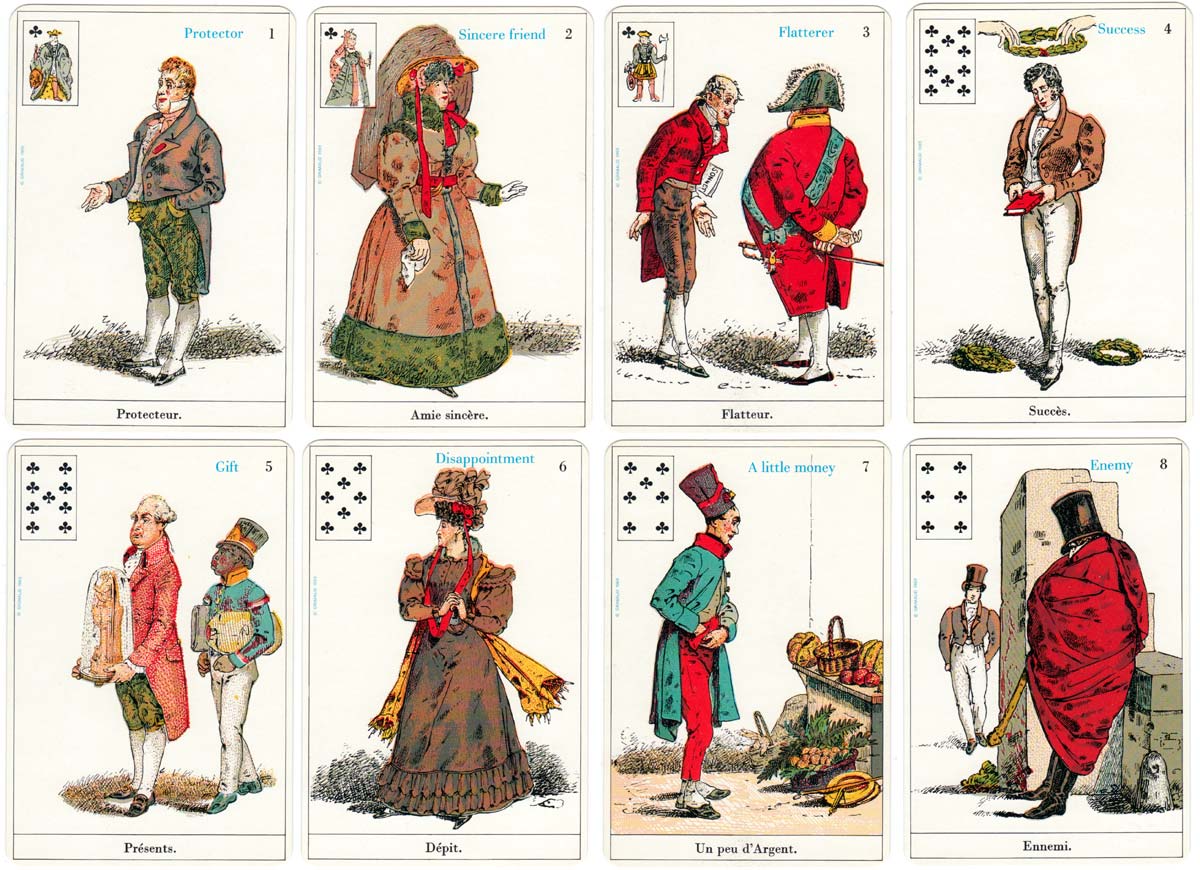
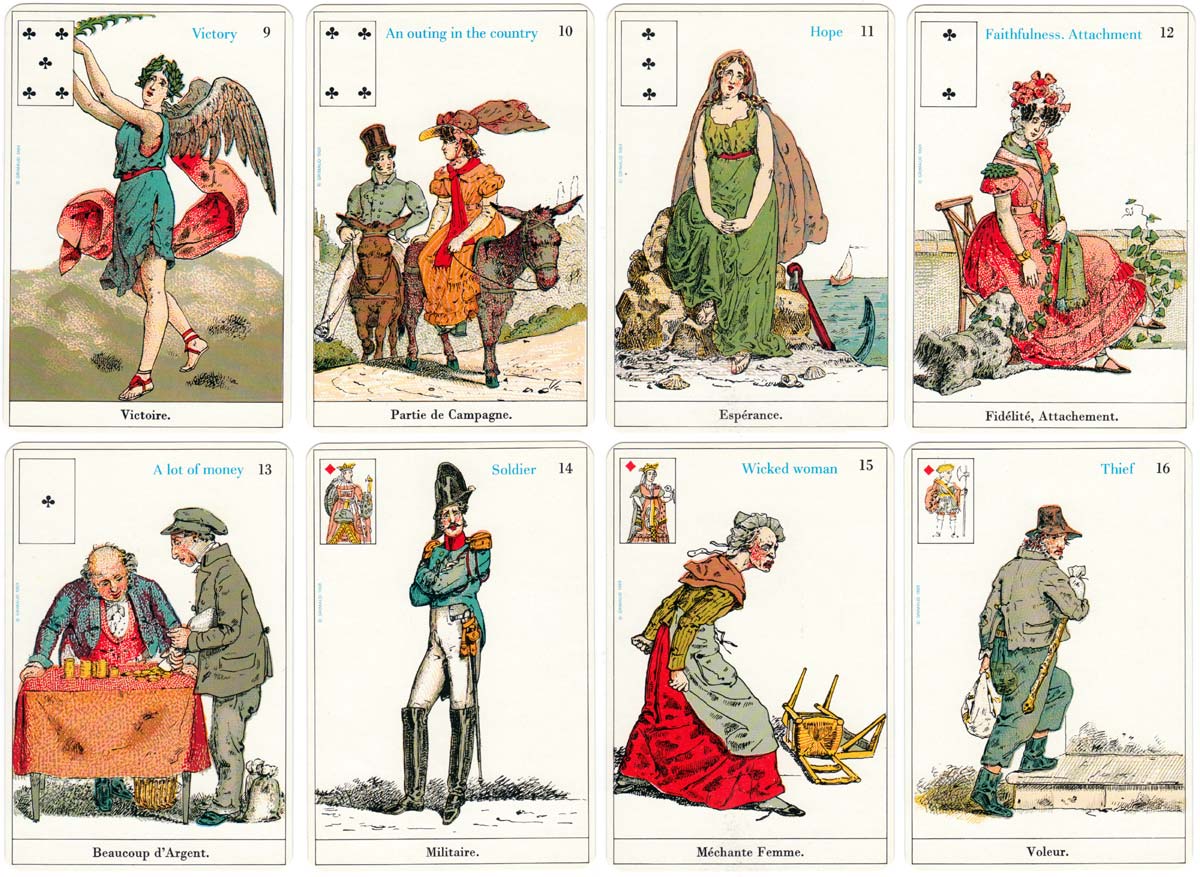
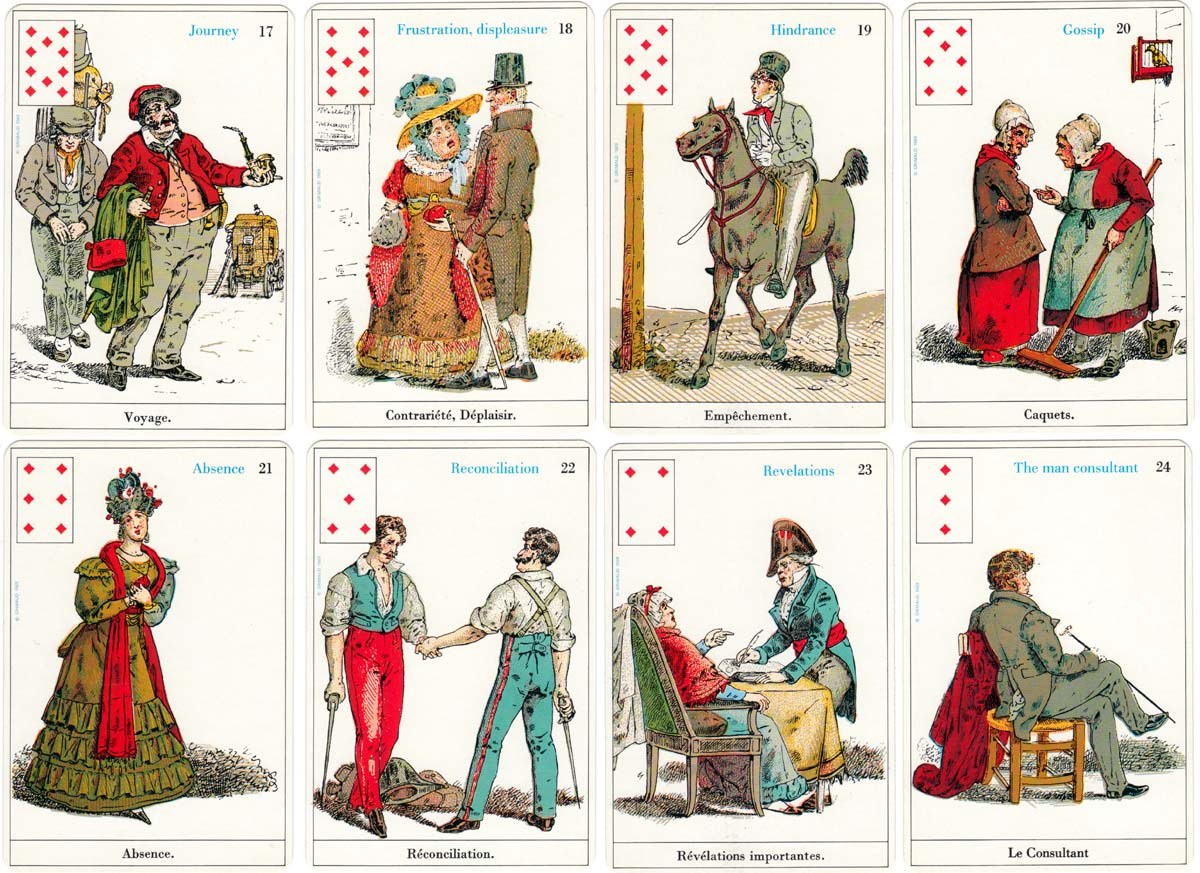
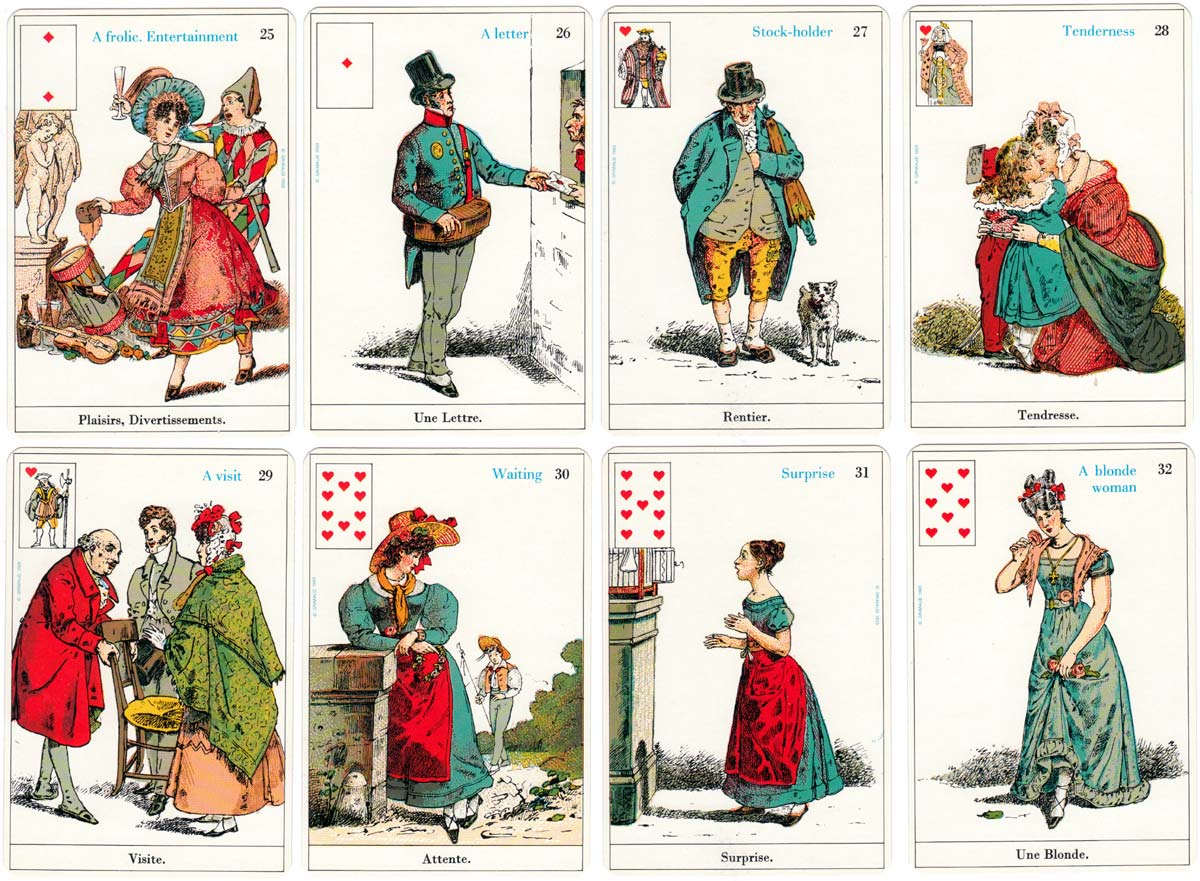
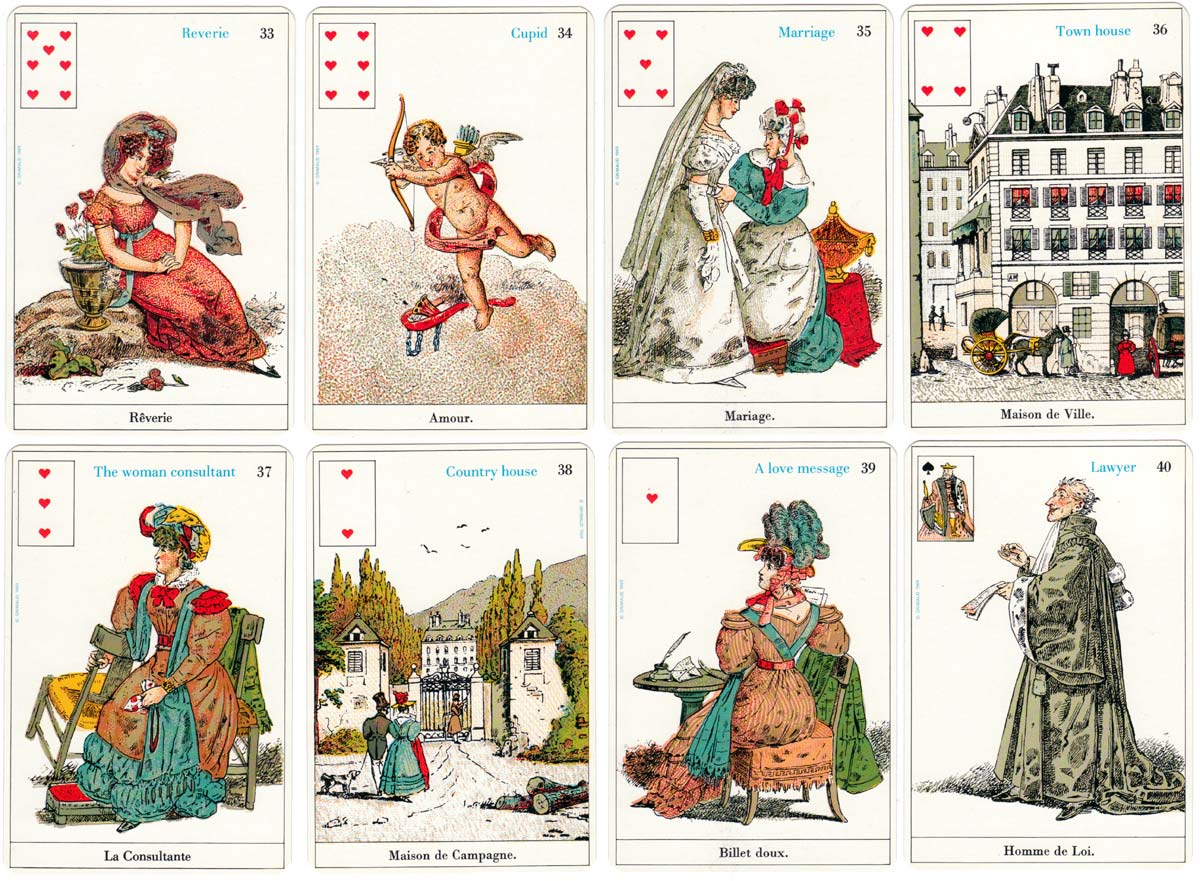
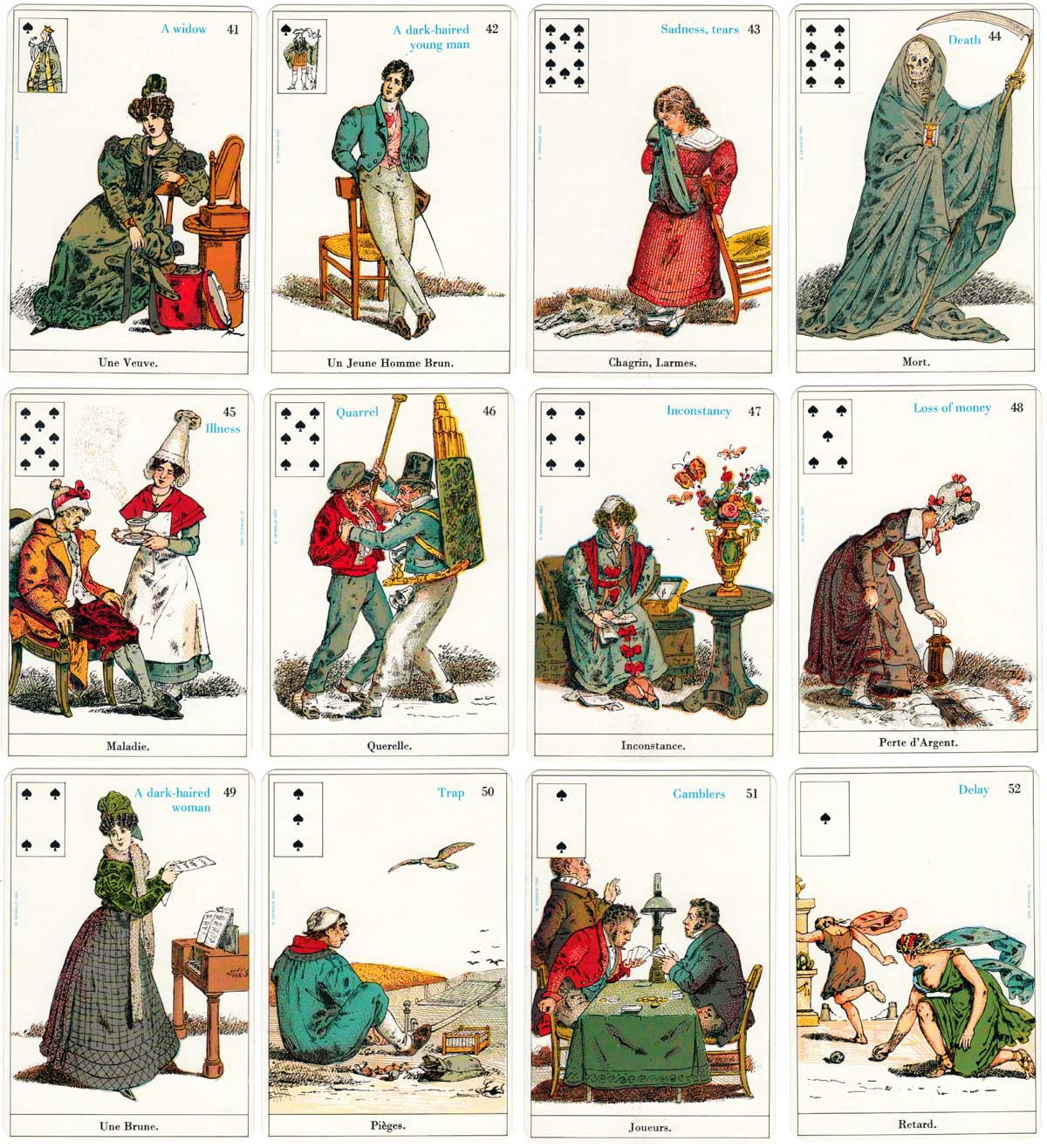
Above: La Sibylle des Salons (“The Parlour Sibyl”) facsimile published by J M Simon / France Cartes, 1979. 52 cards plus instruction book in French and English. Cards measure 75mm x 114mm.
Further References
Bibliothèque Nationale de France: La Sibylle des Salons 1890►

By Rex Pitts (1940-2021)
United Kingdom • Member since January 30, 2009
Rex's main interest was in card games, because, he said, they were cheap and easy to get hold of in his early days of collecting. He is well known for his extensive knowledge of Pepys games and his book is on the bookshelves of many. His other interest was non-standard playing cards. He also had collections of sheet music, music CDs, models of London buses, London Transport timetables and maps and other objects that intrigued him.
Rex had a chequered career at school. He was expelled twice, on one occasion for smoking! Despite this he trained as a radio engineer and worked for the BBC in the World Service. Later he moved into sales and worked for a firm that made all kinds of packaging, a job he enjoyed until his retirement. He became an expert on boxes and would always investigate those that held his cards. He could always recognize a box made for Pepys, which were the same as those of Alf Cooke’s Universal Playing Card Company, who printed the card games. This interest changed into an ability to make and mend boxes, which he did with great dexterity. He loved this kind of handicraft work.
His dexterity of hand and eye soon led to his making card games of his own design. He spent hours and hours carefully cutting them out and colouring them by hand.

Activity for La Sibylle des Salons
Sign in to comment or save this article.

Related Articles
Hector de Trois
A 1963 facsimile of a seventeenth-century Portrait of Paris pack preserved by the Bibliothèque natio...
Les Amoureux de Peynet
An iconic cartoon veers from cute to sexual with no stops in between.
Les Quatre Saisons
A lyrical cycle of the seasons woven into the language of playing cards.
Smith-Corona Marchant
Simplified yet colourful court card designs by Avoine for Smith-Corona Marchant.
Jeanne d’Arc, “La pucelle d’Orléans”
Joan of Arc and her contemporaries in a colourful pack designed by Patrice Louis.
Gibert Jeune
Publicity pack for Gibert Jeune, the famous Parisian bookshop, with designs by James Hodges.
Le Café
Four of the great coffee-producing countries represented in a commemorative pack of playing cards.
Le Destin Antique
Le Jeu du Destin Antique, originally published by Grimaud in XIX c., republished many times since......
Jeu Mythologique
“Jeu Mythologique” facsimile 18th century pack by J M Simon, 1983.
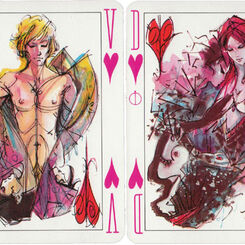
Playtex
Playtex - le jeu de la beauté et du destin, Grimaud, 1971.
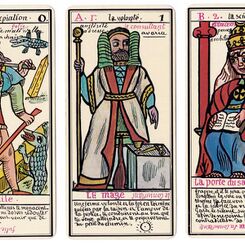
Le Grand Tarot Belline
“Le Grand Tarot Belline” after drawings by Edmond Billaudot (1829-1881).
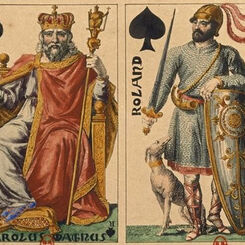
Dames de France
“Dames de France” published by J-M Simon based on originals by Armand Gustave Houbigant, Paris, c.18...
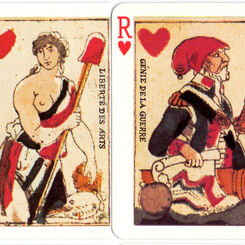
Jeu de l’an 2
“Jeu de l’an 2” by Grimaud is a facsimile of French Revolutionary cards first published by Veuve Mou...
Grand Jeu Lenormand
Chaotic Grandeur in a collage of astrology, folklore and mythology from Parisian salons.
Jeu Louis XV
B.P. Grimaud of Paris issued this very ornate costume deck called “Jeu Louis XV No.1502” in c.1895. ...

Masonic Playing Cards
A set of playing cards designed by Julien Lebleu, an original work in the history of Freemasonry. Je...
Livre du Destin
Livre du Destin / The Book of Fate, c.1900, entire deck (32 cards)
Livre du Destin
Livre du Destin or Book of Fate, printed by B.P.Grimaud, Paris, c.1900.

French Playing Cards
Some of the oldest cards still in existence come from France. During the 16th and 17th centuries Fra...
Significado de los Naipes Españoles
Cartomantic meanings of Spanish playing cards by Benita the Witch (XVI century), published by Chocol...
Most Popular
Our top articles from the past 60 days


haidong
06 July 2022, 10:42Dear Rex, I have found that La Sibylle des Salons was created in 1827, there were only 32 cards+1 sibylle card, and in 1828, it was expanded to 53 cards, See Hoffmann & Kroppenstedt 1972, no. 40. Is 1840 the date when these cards were officially published,? But this date is almost more than 12 years later since the date of completion. Also I am wondering about which deck or book did he base on to draw the cards?