


St Hubert’s Bridge
“St Hubert’s Bridge” published by Éditions Philibert, Paris, c.1956.
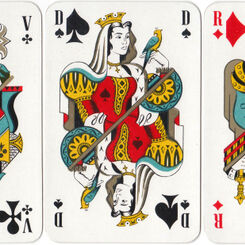
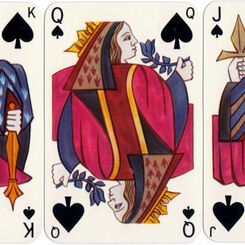
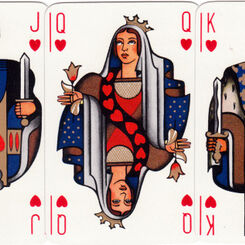
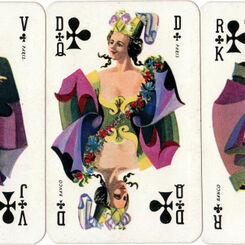
“St Hubert’s Bridge” playing cards published by Éditions Philibert, Paris, 1956, featuring original watercolour artwork by Eugène Leliepvre celebrating the Feast of St. Hubert of Liège (3rd Nov), the patron saint of hunting. The stylised scenes are as follows: spades = boar hunting in the middle ages; diamonds = fox hunting in XIX century England; clubs = falconry in the Renaissance; hearts = deer hunting in the XVIII century. (images are reversible - click to see up-side-down.)
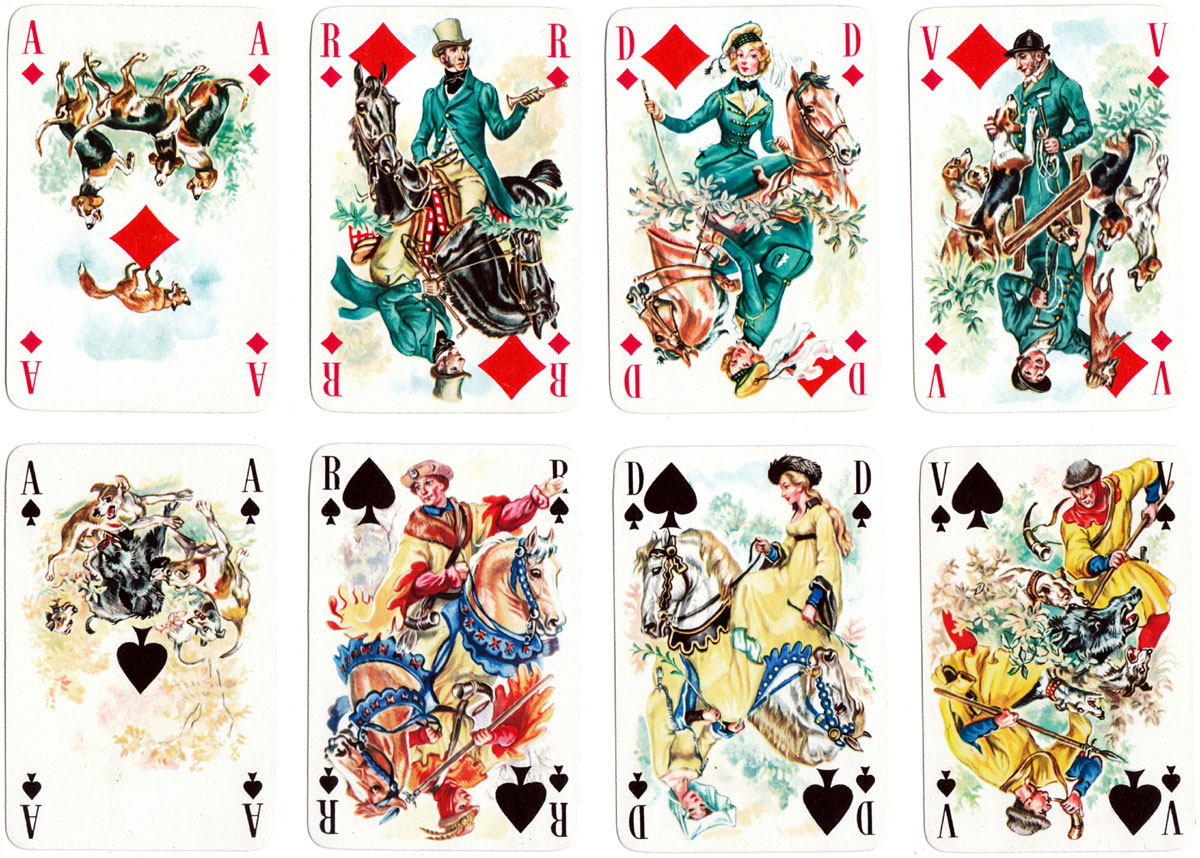
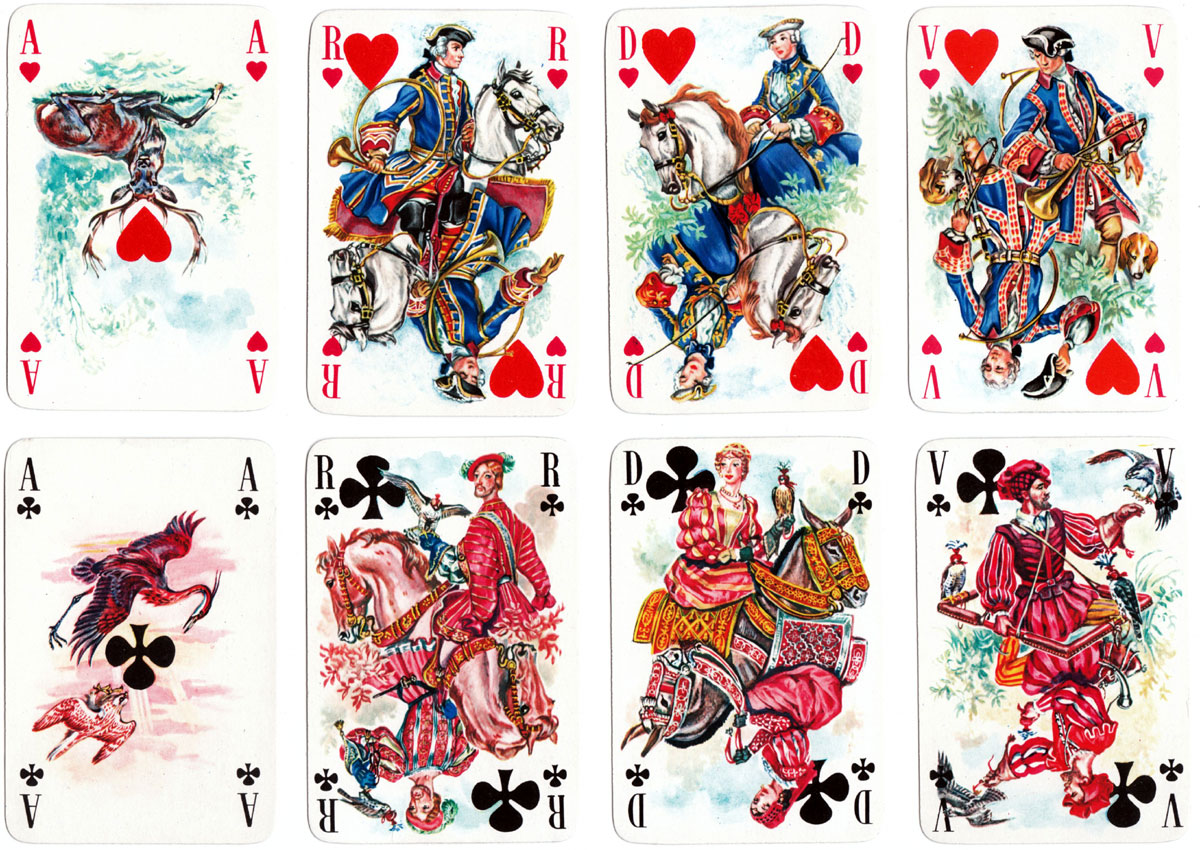
(images are reversible - click to see up-side-down)
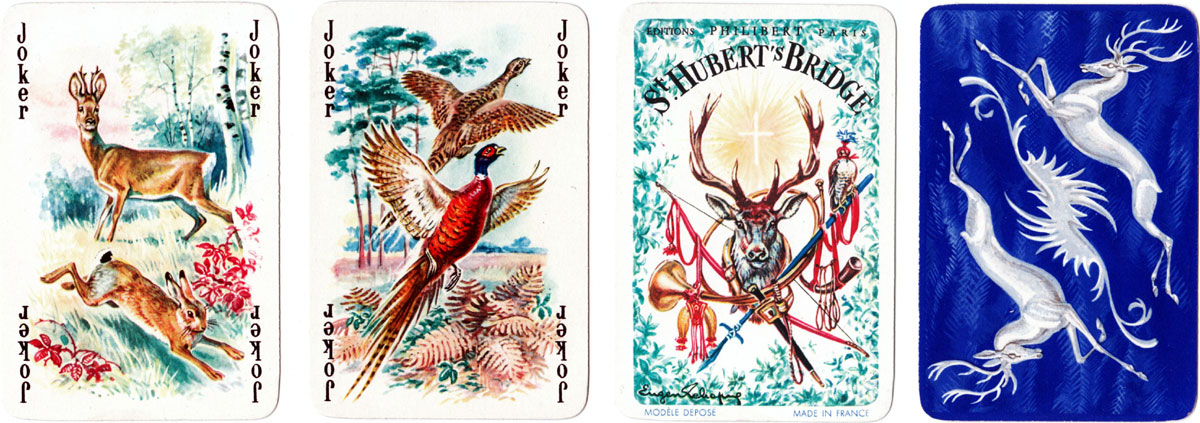
Above: “St Hubert’s Bridge” published by Éditions Philibert, printed by Draeger Frères, Paris, c.1956. 52 cards + 2 jokers + title card + extra card, gilt edges. The jokers depict a Roebuck and Royal Pheasant, the title card depicts symbols of deer hunting & falconry. Images courtesy Rex Pitts.

By Rex Pitts (1940-2021)
United Kingdom • Member since January 30, 2009
Rex's main interest was in card games, because, he said, they were cheap and easy to get hold of in his early days of collecting. He is well known for his extensive knowledge of Pepys games and his book is on the bookshelves of many. His other interest was non-standard playing cards. He also had collections of sheet music, music CDs, models of London buses, London Transport timetables and maps and other objects that intrigued him.
Rex had a chequered career at school. He was expelled twice, on one occasion for smoking! Despite this he trained as a radio engineer and worked for the BBC in the World Service. Later he moved into sales and worked for a firm that made all kinds of packaging, a job he enjoyed until his retirement. He became an expert on boxes and would always investigate those that held his cards. He could always recognize a box made for Pepys, which were the same as those of Alf Cooke’s Universal Playing Card Company, who printed the card games. This interest changed into an ability to make and mend boxes, which he did with great dexterity. He loved this kind of handicraft work.
His dexterity of hand and eye soon led to his making card games of his own design. He spent hours and hours carefully cutting them out and colouring them by hand.

Activity for St Hubert’s Bridge
Sign in to comment or save this article.

Related Articles
Pierre Cardin
Geometric designs in a futurist style by Jean Garçon for the couturier Pierre Cardin.
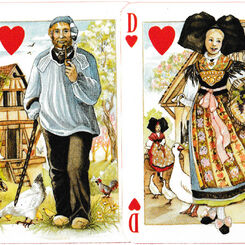
Costumes Alsaciens
Typical costumes and views of Alsace together with lists of the principal sights.
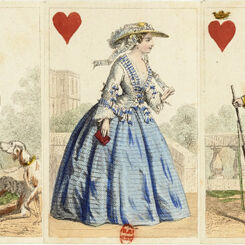
Fashion costume pack by O. Gibert
Elegant fashion costume deck published by O. Gibert, Paris c.1860.
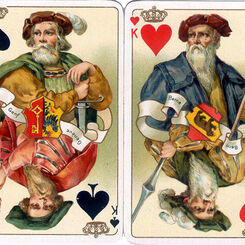
Schweizer Trachten
Schweizer Trachten No.174 (Costumes Suisses) by Dondorf.
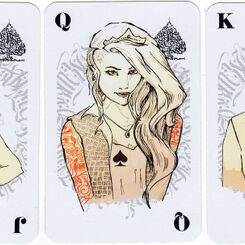
Ken McCarthy
An unknown deck by Ken McCarthy, c.2018.
Jean Borin
‘Cartes de Luxe’ with artwork by Belgian artist and designer Jean Borin (1907-1997).
Classique
“Classique” by Draeger Frères, Paris, c.1949 with designs reminiscent of early French cards.
Jacques Branger designs for Miro Company
Luxury packs published by Miro Company (Paris) featuring designs by Jacques Branger, c.1940s.
Banco for Air France, c.1952
Banco playing cards for Air France manufactured by Draeger Frères, c.1952.
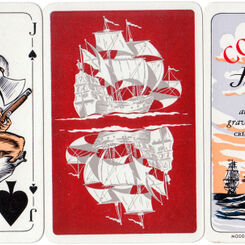
Corsaires et Flibustiers
“Corsaires et Flibustiers” playing cards created by G. Delluc and published by Éditions Philibert, P...
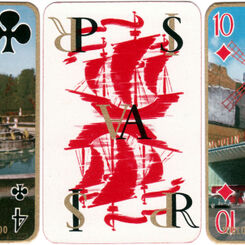
Paris Scenes
“Paris Story” playing cards published by Éditions Philibert, c.1957, showing photographic scenes of ...
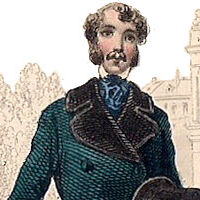
French Costumes
During the early 19th century. O. Gibert of Paris produced a series of such fashion packs, or packs ...
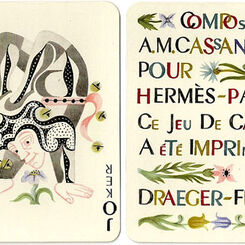
Cassandre for Hermès
Promotional playing cards created by A. M. Cassandre (pseudonym of Adolphe Jean-Marie Mouron, 1901-1...
Jeu des Rois de France
This beautifully engraved and pleasing deck designed in 1856 has French Kings and consorts as the Ki...
Les Mousquetaires
Philibert "Les Mousquetaires" Playing Cards, designed by Albert Dubout (1905-1976).

Éditions Philibert
Éditions Philibert published an outstanding series of exotic, artistic playing cards in Paris from 1...
Cancan
Lightly risqué luxury playing cards published by Éditions Philibert of Paris in 1956.
Mémoires de Casanova
Mémoires de Casanova artistic and lightly risqué playing cards with paintings by Paul-Émile Bécat, p...
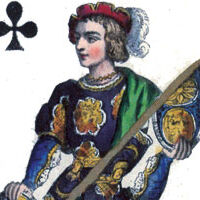
O. Gibert, Paris c.1840-60
Gibert was a master card-maker whose fashionable playing cards were of a very high standard.
The History of Playing Cards
Playing cards appear in European records in the late 14th century, but their earlier history lies fu...
Most Popular
Our top articles from the past 60 days


Peter Burnett
19 November 2025, 09:47SavedSaved this article to Peter's Collection