Tarocchini Bolognesi by Carlo Zanardi
Tarocchini Bolognesi by Carlo Zanardi, c.1850
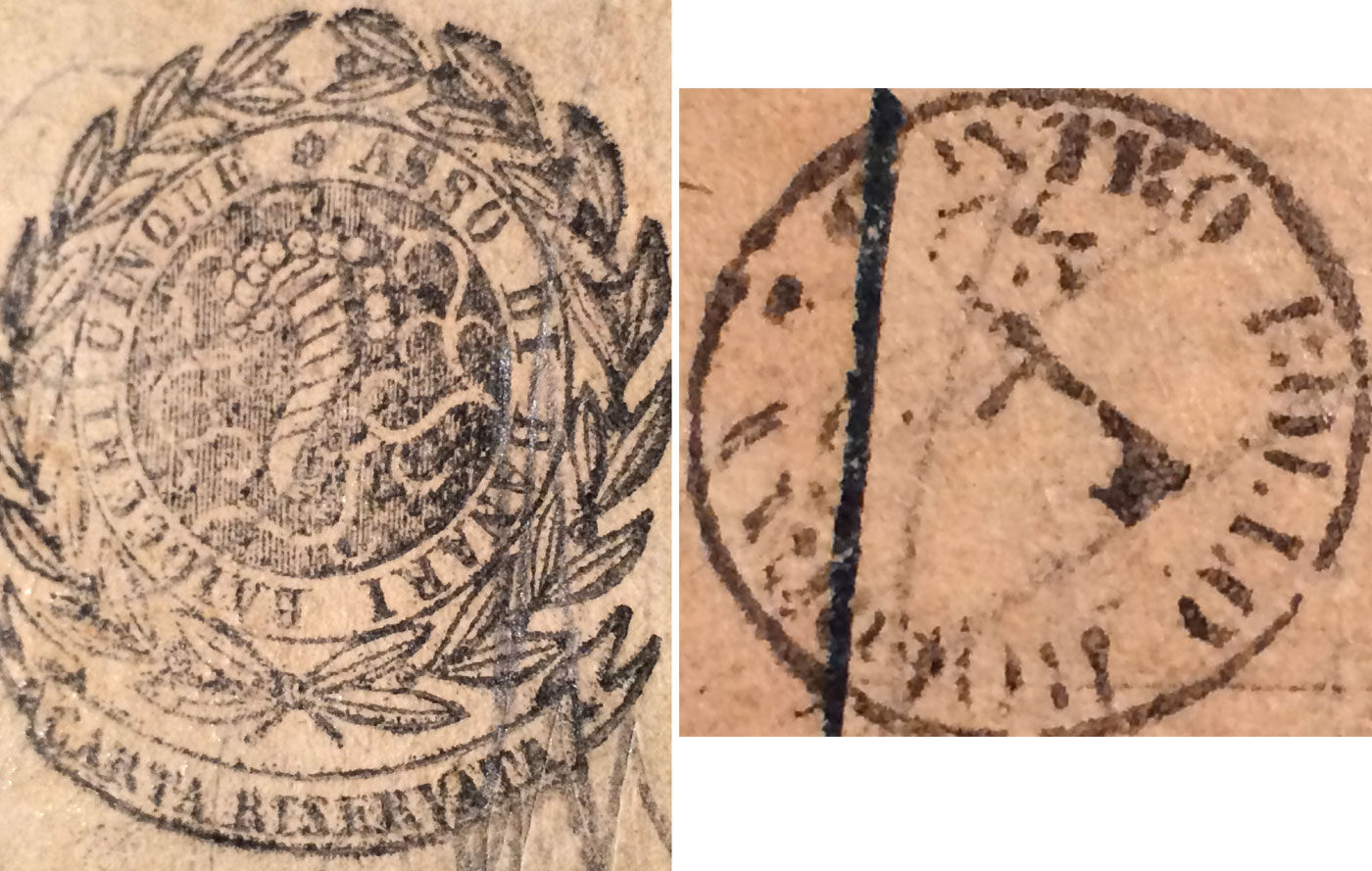
Tarocchino Bolognesi by Carlo Zanardi, Bologna, c.1850. Tarocchino is an early localised ancestor of Tarot with only 62 cards, omitting numeral cards 2-5, leaving 24 pip cards, 16 court cards and 22 trumps in a somewhat different sequence to other tarots. Another distinction is that in c.1725 the four imperial and religious trump cards were changed from the traditional ones into four Moors. Soon after this the deck was made double-ended and numbered with Arabic numberals. And in this example, instead of the ace of coins there is an empty card with two tax stamps►
Right: the back paper extends into turned over edges →
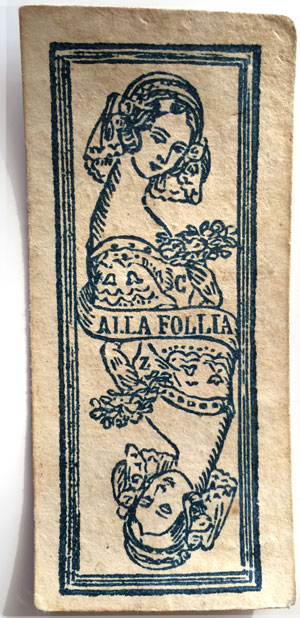
The double-ended back design, printed in blue, shows a young woman with the legend “Alla Follia” and the initials C and Z, from where we identify the maker of the deck.
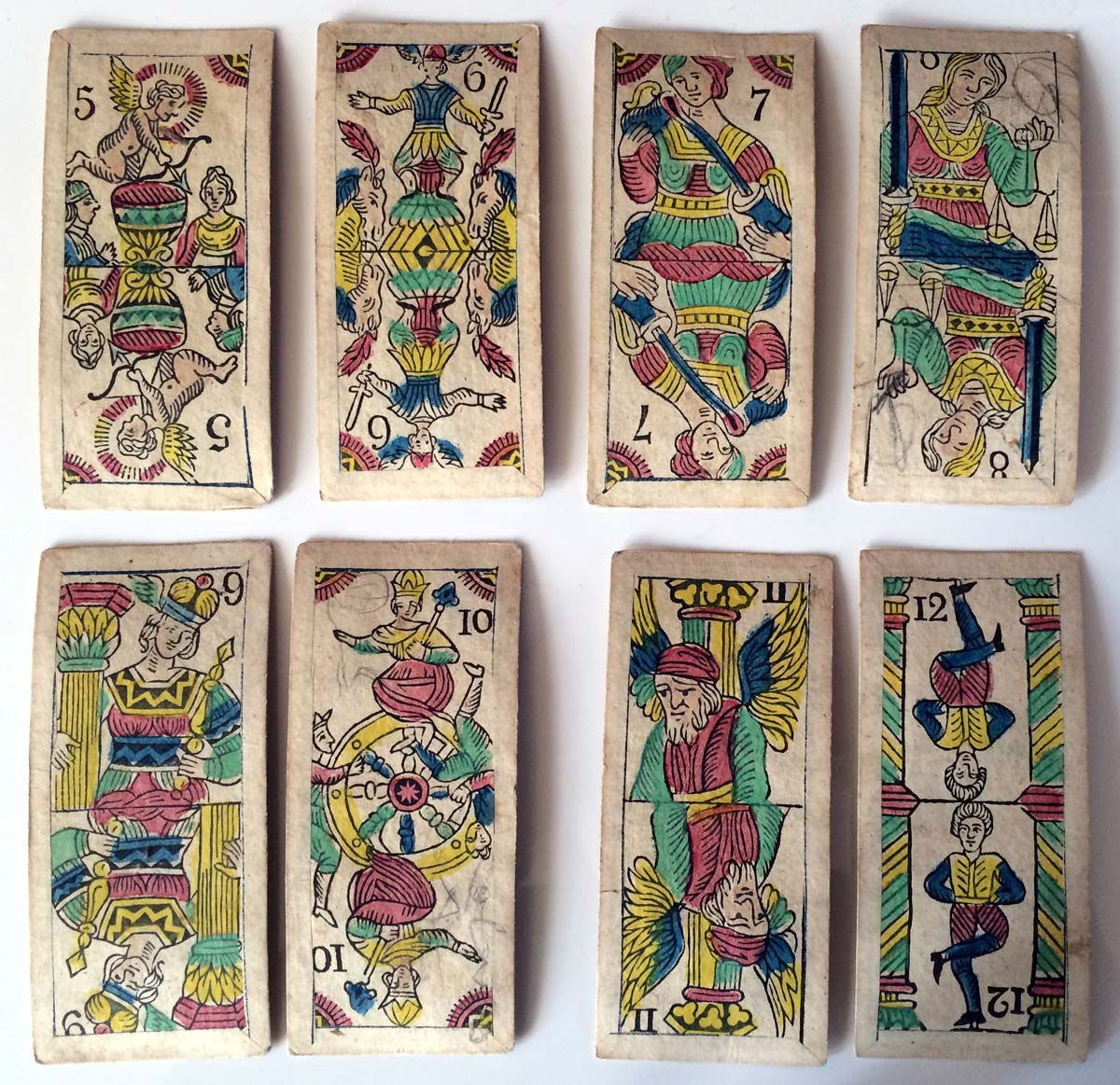
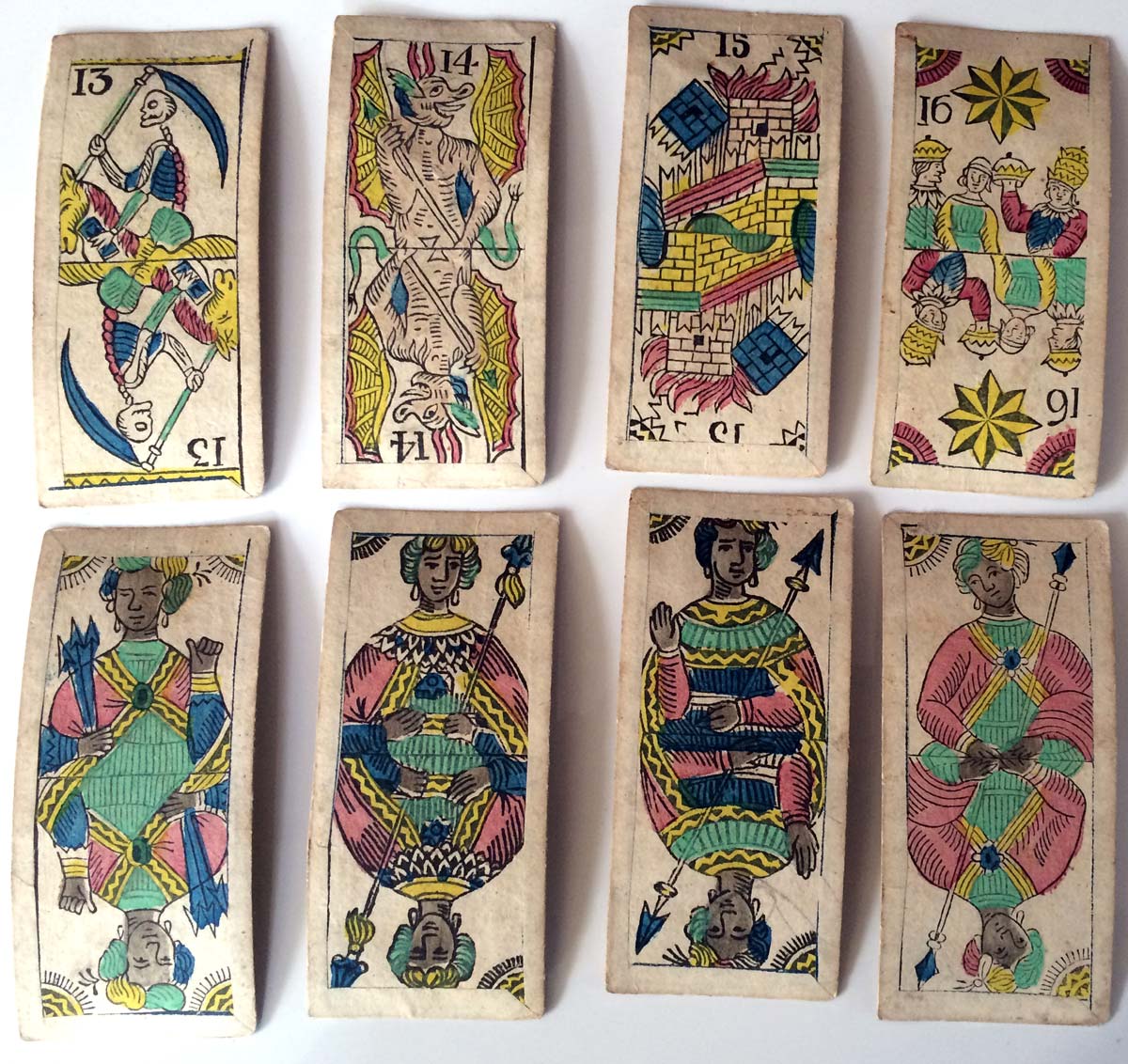
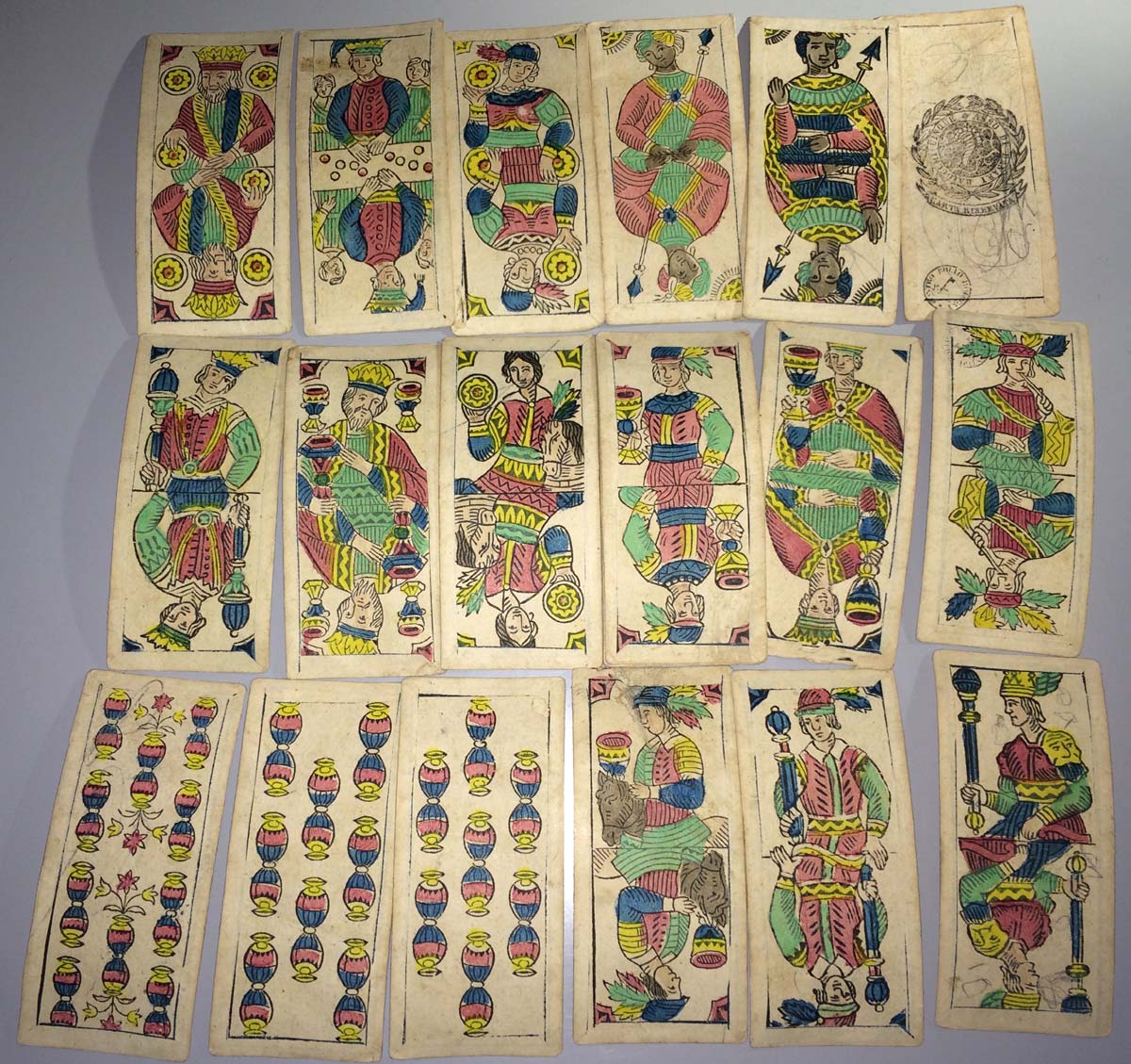
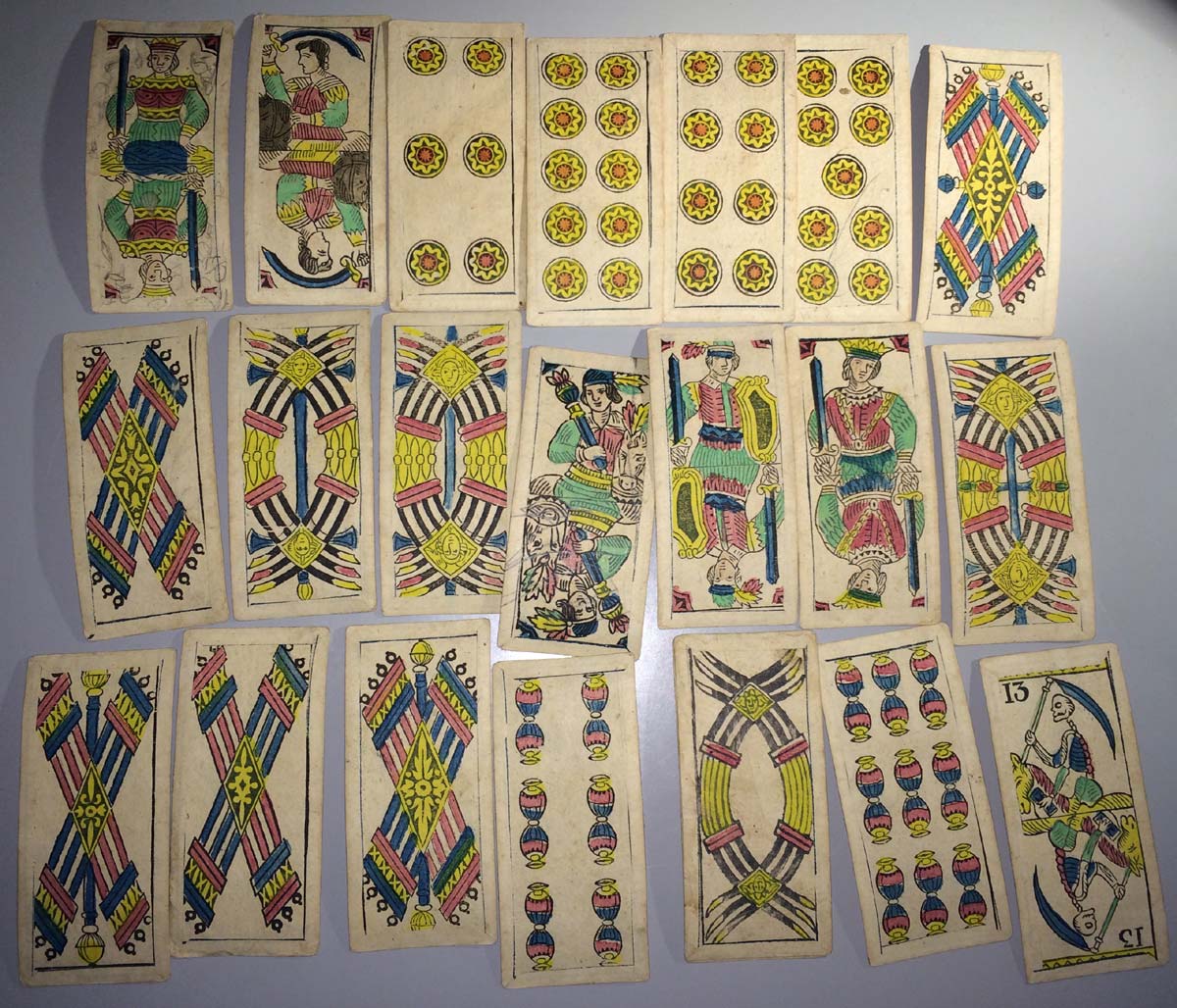
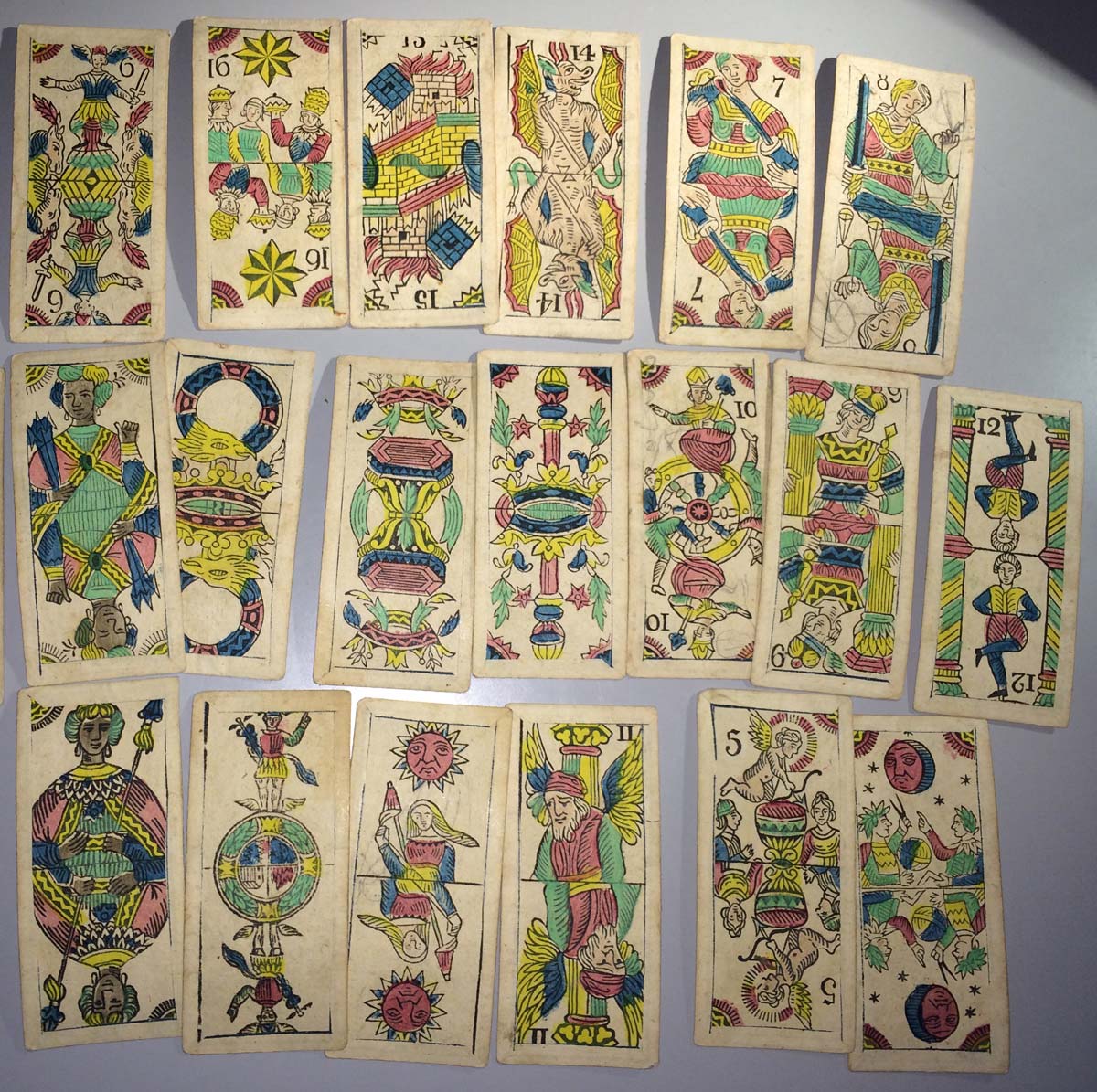
Above: Tarocchino Bolognesi printed from woodblocks and setencil-coloured by Carlo Zanardi, c.1850. All images courtesy of Maria Alessandra Umiltà.
Most likely the Bologna tarocchi originated in the 16th century. However, Detlef Hoffmann (1973: 17) quotes a legend which dates the invention of the shortened tarot pack to 1419 by Francesco Fibbi, a prince of Pisa, during an exile in Bologna.
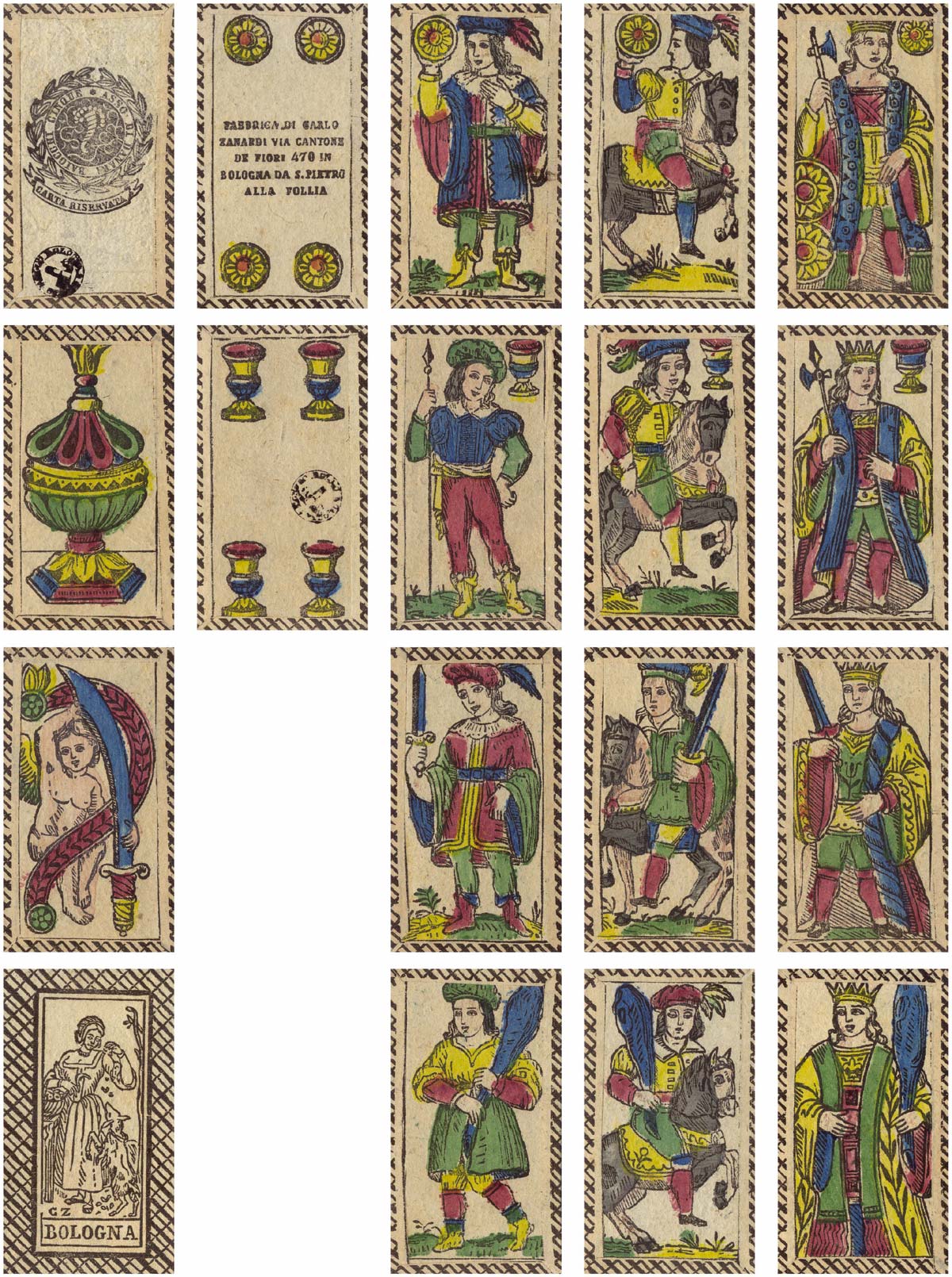
Above: incomplete deck by Carlo Zanardi with similar stamps on the ace of coins, c.1850. The colour palette is also similar. Courtesy Alberto Pérez González.
REFERENCES and CREDITS
Hoffmann, Detlef: The Playing Card, an illustrated history, Edition Leipzig, 1973
Mann, Sylvia: All Cards on the Table, Jonas Verlag/Deutsches Spielkarten-Museum, Leinfelden-Echterdingen, 1990
Joep van Loon: The Tarot Wheel
Vietti Andrea: Tarot as tarocchi

By Simon Wintle
Spain • Member since February 01, 1996
I am the founder of The World of Playing Cards (est. 1996), a website dedicated to the history, artistry and cultural significance of playing cards and tarot. Over the years I have researched various areas of the subject, acquired and traded collections and contributed as a committee member of the IPCS and graphics editor of The Playing-Card journal. Having lived in Chile, England, Wales, and now Spain, these experiences have shaped my work and passion for playing cards. Amongst my achievements is producing a limited-edition replica of a 17th-century English pack using woodblocks and stencils—a labour of love. Today, the World of Playing Cards is a global collaborative project, with my son Adam serving as the technical driving force behind its development. His innovative efforts have helped shape the site into the thriving hub it is today. You are warmly invited to become a contributor and share your enthusiasm.

Activity for Tarocchini Bolognesi by Carlo Zanardi
Sign in to comment or save this article.

Related Articles
Buffy the Vampire Slayer Tarot
A Buffy the Vampire Slayer tarot pack that replaces Swords with scythes and Wands with stakes.
Murder of Crows Tarot
Corrado Roi’s 2020 tarot pack presents a dark, watchful world of crows and ritual figures.
Austrian Tarock by S.D. Modiano
Modiano’s Austrian Tarock with country scenes has been in production for over 100 years.
Bolognese pattern
Standard Bolognese pattern pack by Murari of Bari.
Tarocco Indovino
Sergio Ruffolo’s “Tarocco Indovino” is an expanded version of his “Lo Zodiaco” cartomancy deck.
Natural History Tarocchi
Natural History Tarocchi by Ferdinando Gumppenberg, Milan.
Dungeons and Dragons Tarot
This 78-card officially licensed Dungeons & Dragons (D&D) tarot deck offers a visually appealing var...
Tarocco Piemontese by Giovanni Rossi
18th c. Piedmont Tarocchi by Giovanni Rossi, Turin.
Venetian Tarot
Scenes from the history of Venice on a set of the major arcana.
Primiera Bolognese
Primiera Bolognese by Modiano, c.1975
V. F. Solesio Tarot
V. F. Solesio Tarot, Genoa, mid-late 19th century.
Tarocchi di Mantegna, c.1465
The so-called Tarocchi di Mantegna (c.1465) reflect an ideological structure bringing to mind the so...
Rider Waite Tarot early editions
Rider Waite Tarot early editions
Stairs of Gold Tarot
Whilst the titles of the cards are in Italian, the Hebrew and Sanskrit letters on the Trump cards de...
Mitelli Tarocchini
The title refers to “a new form of Tarocchini”. Mitelli's designs are to a high standard of artistic...
XV Century Italian Playing Cards
Cards from a pack of an early form of north Italian playing cards, with the swords back-to-back and ...
The Visconti-Sforza Tarot, c.1460
This pack of tarot cards appears to have have been made in the Bembo workshop in Cremona for Bianca ...
Tarocco Milanesi by Lamperti (Milan) c.1850
Tarocco Milanesi by Lamperti (Milan) c.1850
Tarocco Bolognese
Tarocco Bolognese
Hand-Painted Tarocchi Cards
Hand-painted Tarocchi cards sometimes known as ‘Charles VI tarot’, North Italy, 1475-1500.
Most Popular
Our top articles from the past 60 days