


Minchiate Fiorentine, 17th C.
17th century Minchiate cards reprinted from the original woodblocks.
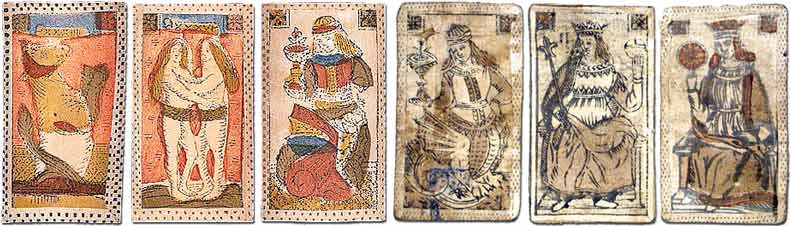
Minchiate originated in Florence in the early 16th century. It is an enlarged version of a tarot pack, containing 41 trumps instead of 22, including the twelve signs of the Zodiac, the four Elements and four Virtues. The Cavalli are either centaurs or half-human creatures. 97 cards in total.
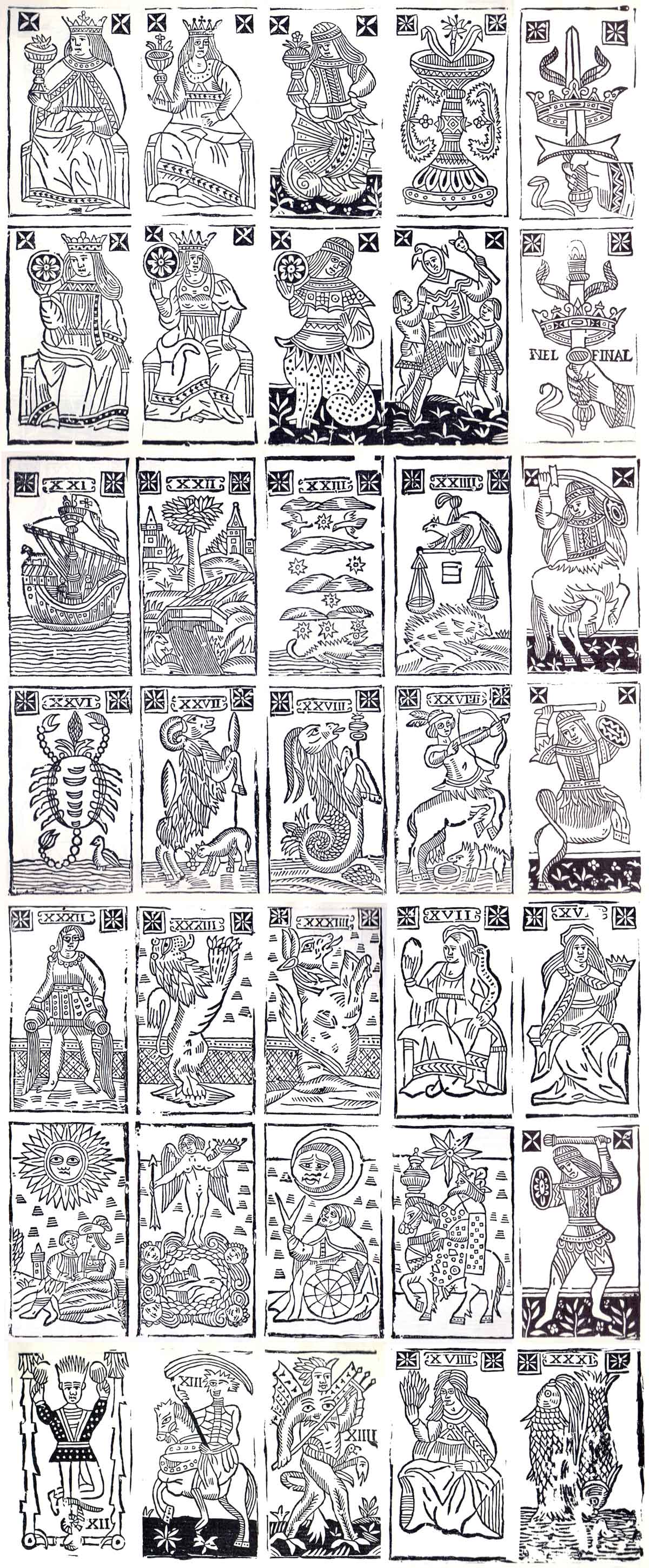
Above: cards from a 17th century set of Minchiate reprinted from the original woodblocks as a limited edition facsimile by Vito Arienti, Edizioni del Solleone, Lissone (Milan), 1969.
Two later cards
The Minchiate Fiorentine represents perhaps the most ambitious tarot variant ever made, expanding the sequence to 97 cards with the Zodiac, Elements, and Virtues. Very few Minchiate trumps survive in private hands, so even two single cards with a charming back pattern offer an unusually rare glimpse into this intellectual and artistic expansion of tarot.

Above: 2 Minchiate cards, c.1820, from the collection of Vicky Visagie.

By Simon Wintle
Spain • Member since February 01, 1996
I am the founder of The World of Playing Cards (est. 1996), a website dedicated to the history, artistry and cultural significance of playing cards and tarot. Over the years I have researched various areas of the subject, acquired and traded collections and contributed as a committee member of the IPCS and graphics editor of The Playing-Card journal. Having lived in Chile, England, Wales, and now Spain, these experiences have shaped my work and passion for playing cards. Amongst my achievements is producing a limited-edition replica of a 17th-century English pack using woodblocks and stencils—a labour of love. Today, the World of Playing Cards is a global collaborative project, with my son Adam serving as the technical driving force behind its development. His innovative efforts have helped shape the site into the thriving hub it is today. You are warmly invited to become a contributor and share your enthusiasm.

Activity for Minchiate Fiorentine, 17th C.
Sign in to comment or save this article.

Related Articles
Luigi Del Pieve Minchiate
Luigi Del Pieve and the “Alli Sorte” Minchiate of Florence.
Carte Romantiche Italiane
Scenes of life and the theatre in Milan towards the second half of the 19th century.
Schwarze Katze (or Gioco del Gatto Nero)
Reproduction of a 40-card transformation pack with designs by “WS”, adapted for the game of Black Ca...
Le Nuove Minchiate di Firenze
Costante Costantini's second Minchiate deck, “Le Nuove Minchiate di Firenze”, was published by Solle...
Minchiate Fiorentine
Minchiate Fiorentine created by Costante Costantini, published by Edizioni del Solleone.
Venus et Cupidon
“Venus et Cupidon” from Costante Costantini in his distinctive woodcut style.
Italia playing cards
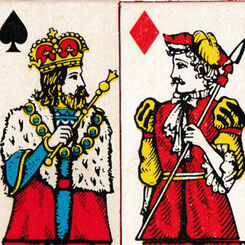
Small, narrow cards designed by Osvaldo Menegazzi, bearing a strong resemblance to a Swedish pattern...
La Cour Galante
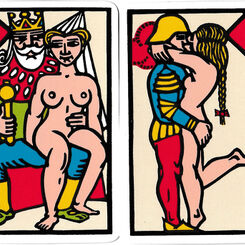
‘La Cour Galante’ playing cards with erotic images by Costante Costantini, Italy, 1979.
Le Jeu de la Guerre
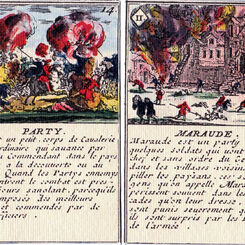
Facsimile of “Le Jeu de la Guerre” designed by Gilles de la Boissière in 1698.
70: Woodblock and stencil : the spade courts
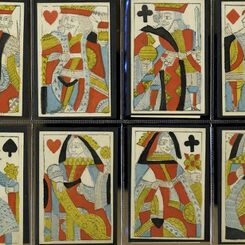
This is a presentation in a more straight forward fashion of the work done by Paul Bostock and me in...
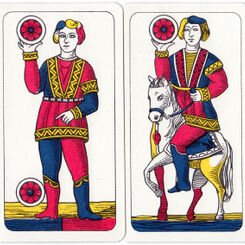
Trentine Pattern
Trentine Pattern
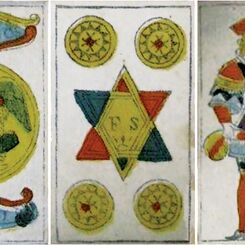
Hermanos Solesio
“Money Bag” pattern by Hermanos Solesi, late 18th c.
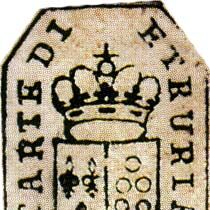
Etruria Minchiate
The Cavaliers are man/beast creatures. The Valets (or Pages) are male for clubs and swords, and fema...
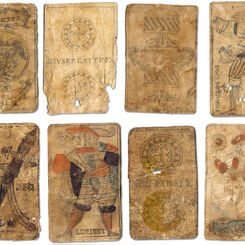
Giuseppe Cattino
Playing cards manufactured in Italy by Giuseppe Cattino and Paolo Montanar for Spanish markets.
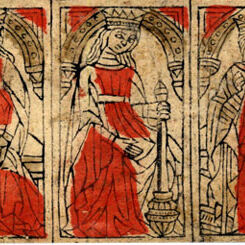
XV Century Italian Playing Cards
Cards from a pack of an early form of north Italian playing cards, with the swords back-to-back and ...
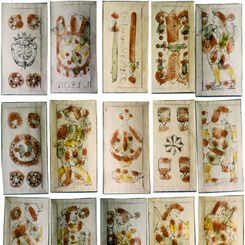
Sicilian playing cards by Antonio Monasta.
"Il Leon" Sicilian playing cards, 40-card pack based on Spanish designs, made in Sicily by Antonio M...
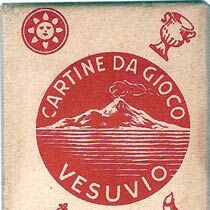
Neapolitan Pattern
Cartine da Gioco Vesuvio miniature Neapolitan pattern.
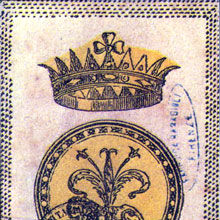
Minchiate Fiorentine
The Florentine game of Minchiate is played with a pack of 97 cards. The subjects and arrangements of...
Italian Playing Cards
The first reliable evidence that playing cards were being used in Italy is from 1376, when a game ca...
The History of Playing Cards
Playing cards appear in European records in the late 14th century, but their earlier history lies fu...
Most Popular
Our top articles from the past 60 days


