


Stefans Bercs
In 1923 a competition was announced for a new Latvian pack. The winner of this competition was Stefans Bercs.
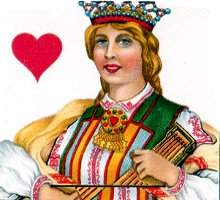
Stefans Bercs, 1923
The Latvian ‘National’ pattern
In 1923 a competition was announced for a new Latvian pack. The winner of this competition was the silversmith Stefans Bercs (1893-1961), one of the most distinguished masters of Art Deco in Latvia. This was Latvia's second pack and it became the most popular. The designs have echoes of Livonian history and folklore. It was issued in Latvia until the end of World War 2, and then again in Sweden for Latvians in exile [example].
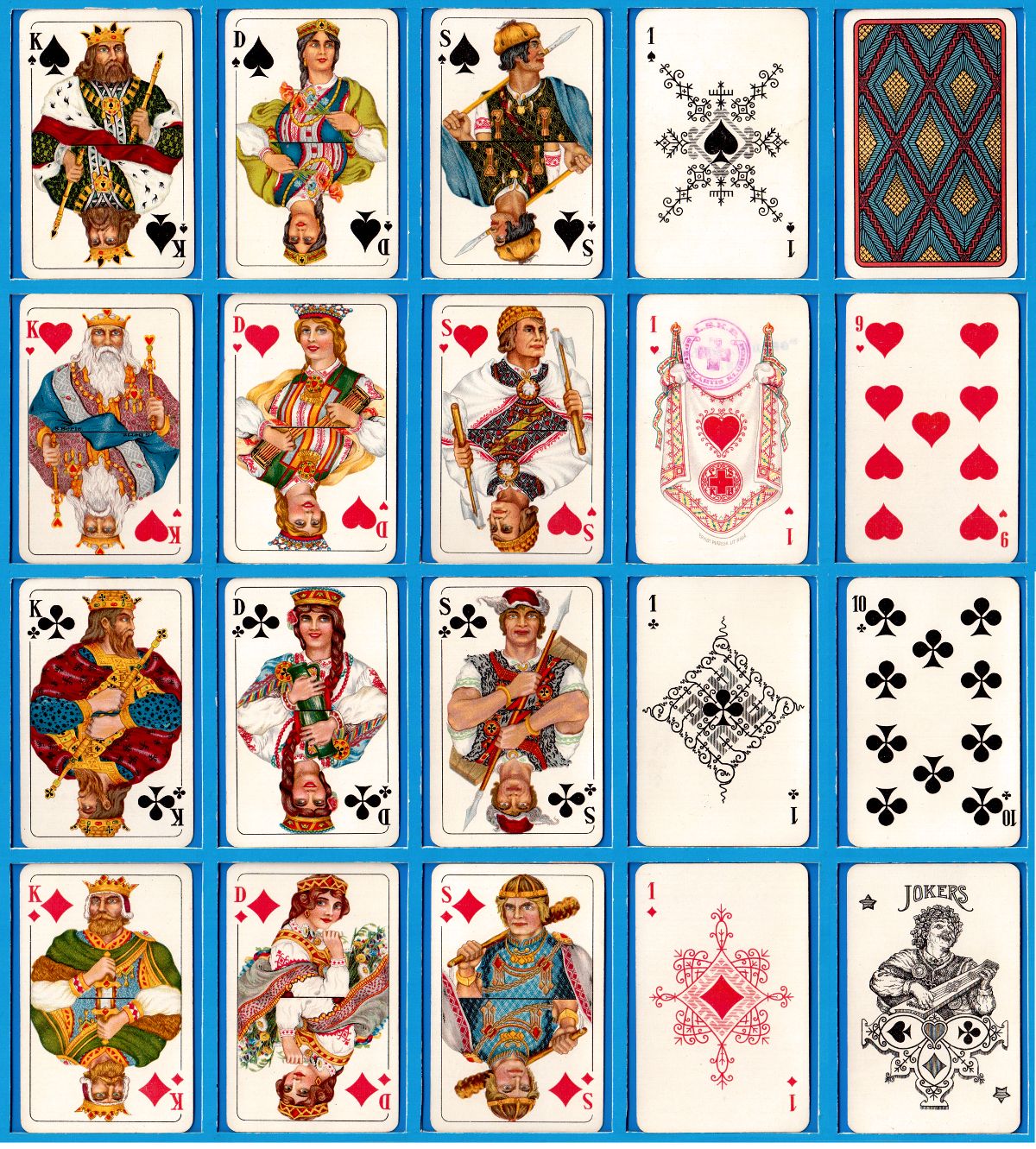
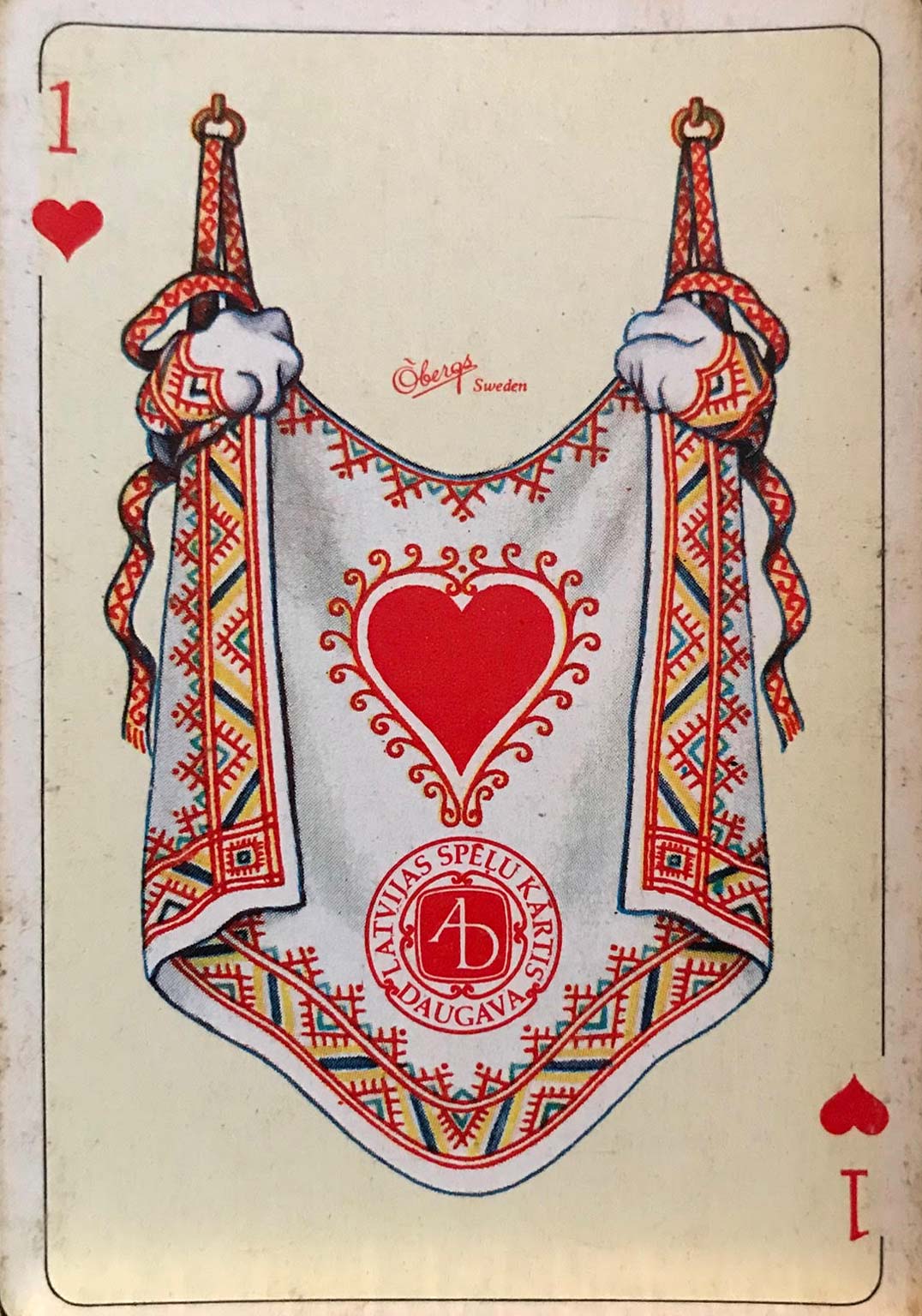
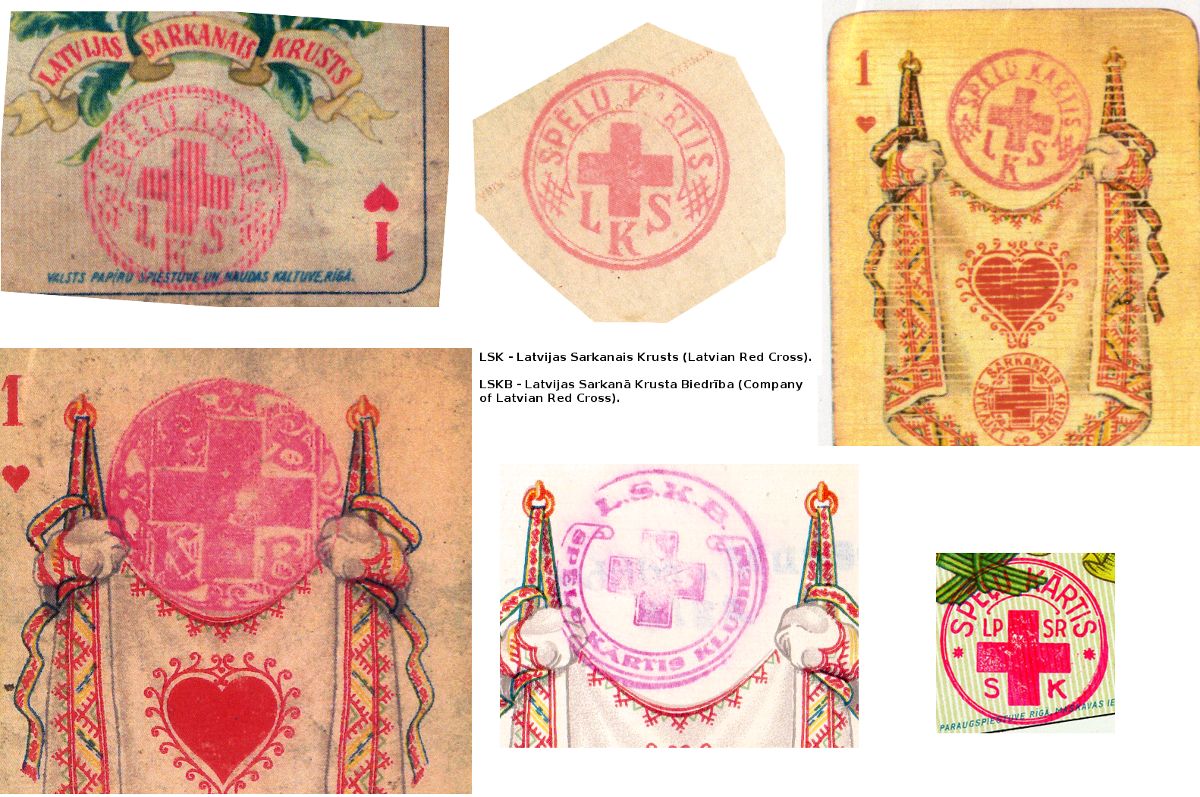
Above: Playing Cards designed in Latvia by Stefans Bercs and first issued in 1923. This particular edition was printed by Ernst Platesa Lithography, Riga, as seen printed at the bottom of the Ace of Hearts. The letters 'L.S.K.B' on the tax stamp stand for 'Latvijas Sarkanā Krusta Biedrība' (Company of Latvian Red Cross). Later editions were printed by Latvijas Vertspapiru Spiestuve. Packs were sold as No.5 (full pack) or No.6 (32 or 36 cards). The designs have echoes of Livonian history and folklore and the decorative details on the court card clothing include swastikas. Bercs was a silversmith and his pack became the most popular in the country. It was issued until the end of World War II. It was reprinted in Sweden in 1959.
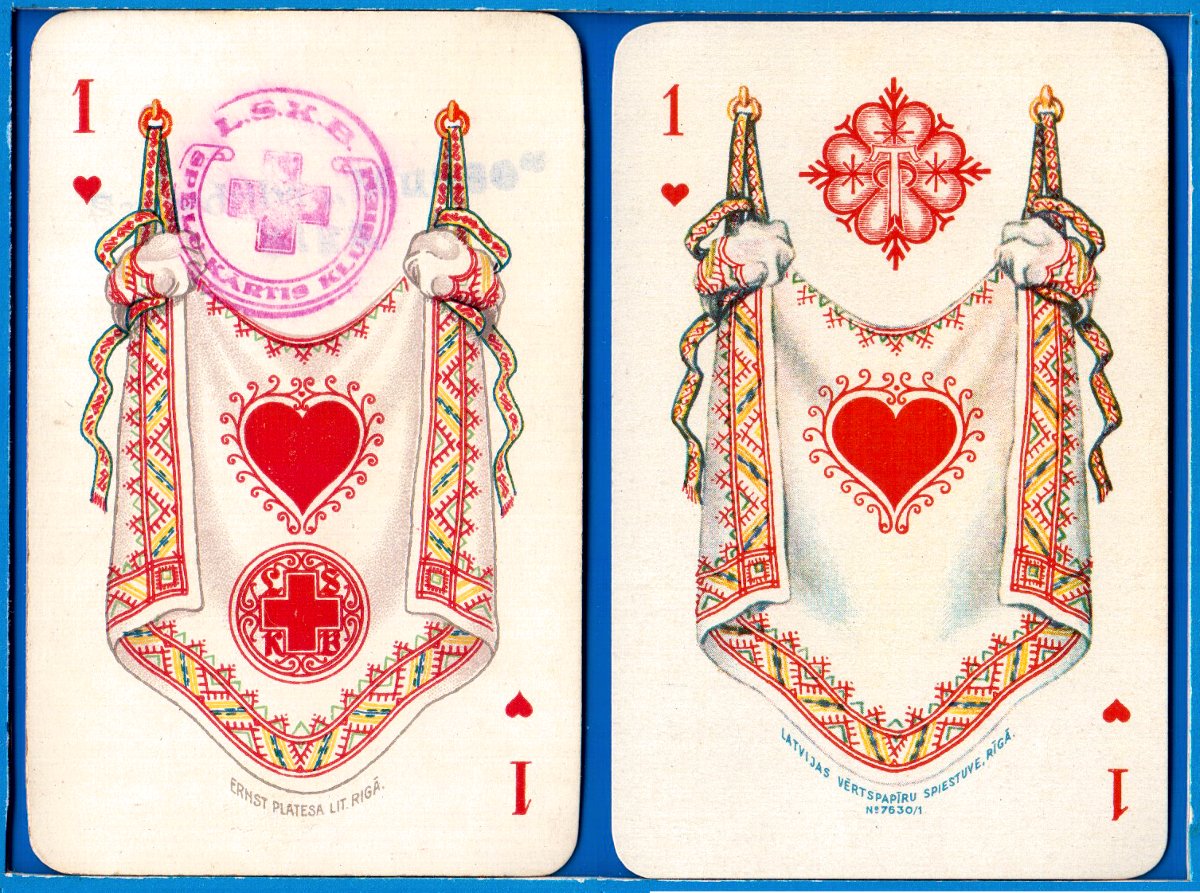
From 1919 -1921 there were no tax stamps on Latvian playing cards. In 1922, by law, the Latvian Red Cross was to receive dividends from the production and sale of playing cards and a special tax stamp was placed on the ace of hearts for this purpose. In addition to the stamp, the symbol of the Red Cross was incorporated into the design of the ace of hearts. This taxation arrangement continued until 1943.
Left: Aces of Hearts from packs designed by Stefans Bercs. The first one is printed by Ernst Platesa and the second by Latvijas Vertspapiru Spiestuve (click image to zoom).
References: Jānis Mētra in The Playing Card, vol.32, no.1, July-August 2003, and also: Latvian Playing Cards by Jānis Mētra, Riga, 2006.

By Albinas Borisevičius
Lithuania • Member since July 01, 2010
I have been collecting cards since 1968, of course, then there were no contacts with world collectors, so my collection was very small. It was only in 1991, when Lithuania declared its independence, that it was possible to have contact with the world. It was a great honor for me to attend the IPCS convention in Munich, where I found many friends-colleagues. I managed to make an agreement with the Viennese card factory to print the ancient cards of Lithuania (PILYS).
My area of collecting - classic mirror-type cards and tourist cards - with images of cities, countries, photos. Also topics Sherlock Holmes, Alexander Dumas, Discover, Chess, Basketball, postage stamps on the cards. Since I am already 75 years old, I don't work, so I can't buy old cards (I really like classic cards from the 1920-1950 period). But my opinion is that it is better to have a card copy than nothing, so I will print one set of cards in Vilnius for my collection. Of course, if anyone wants, I can print it for them too. You can see my printed cards here: Lithuania - Orija.
I have published one book in Lithuania about cards and card games (in Lithuanian, about 400 pages): Albinas Borisevicius. Pirmasis padalijimas (The first deal)

Activity for Stefans Bercs
Sign in to comment or save this article.

Related Articles
Tarot Familiars
Lisa Parker’s Tarot Familiars gives the traditional 78-card tarot a distinctly gothic world of cats,...

Latvian Mythological Cards ~ Latju Mītoloģiskās Kārtis
A loving and well-researched celebration of Latvian mythology and culture based around the four seas...
Korean Folk Painting Cards
Traditional Korean folk paintings called Minhwa, representing wishes for good fortune and longevity....
Czech Bohemian style playing cards
Czech Bohemian style playing cards with a charming aesthetic, reflecting the cultural and social lif...
Norfin® Trolls
Troll dolls with gaudy hairstyles in a multitude of different costumes.
Calon Arang • Калон Аранг - Бали
Calon Arang, a figure from 12th-century Javanese and Balinese folklore known as a witch skilled in b...
The Lovers playing cards
Reproductions of old postcards with romantic messages for Valentine’s Day.
IBUSZ folklore playing cards
Hungarian folklore pack produced by IBUSZ travel agency, c. 1965.
Matryoshka playing cards
The first nested doll set was carved in 1890.
Palekh and Kholui lacquer miniatures
Palekh and Kholui lacquer miniatures.
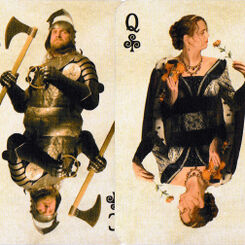
Rapalje
Promotional pack for a Dutch Celtic folk band which performs Irish, Scottish and Dutch folk music, c...
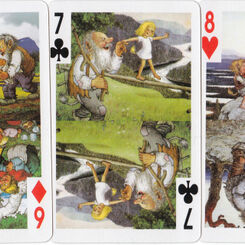
Norwegian Troll Cards
Norwegian Troll Cards published by Aune Forlag of Trondheim, c.2000.
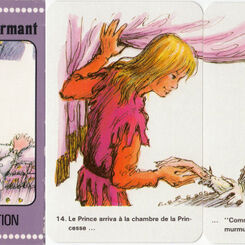
La Belle au bois dormant
Sleeping Beauty card game published in France, c.1980s.
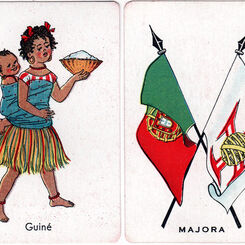
Casais Portugueses
Matching game by Majora, Lisbon, c.1970, featuring figures in national dress from Portuguese provinc...
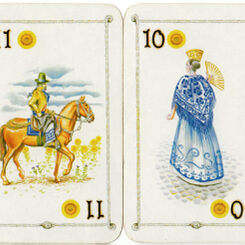
Naipes Cardón
Naipes Cardón designed by Mario Luis Rivero depicting traditional Argentine culture and identity, 20...
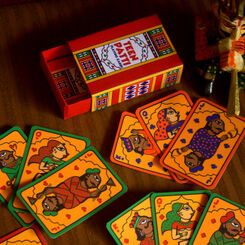
Teen Patti Playing Cards
Anjali DSouza, an illustrator from Chennai, India has designed a pack of cards using Indian truck ar...
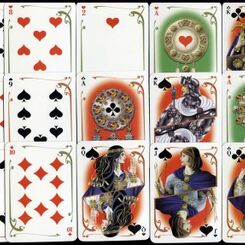
Latvia Art
Playing cards designed by artist Larisa Kovalass-Kovalevska on the theme of the Latvian folk epic “L...
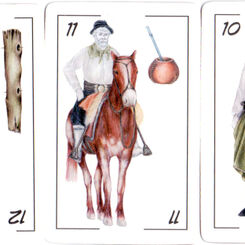
Recado de Bastos - Gaucho Scrapbook
Recado de Bastos (‘Gaucho Scrapbook’) Gaucho-themed deck from Argentina, 2006
Mayan Cards
Mayan Playing Cards from Guatemala / Baraja Maya / containing illustrations of archaeology, art, fol...
Rihards Zarinš
Playing cards designed by Rihards Zarinš, 1921. Latvian indices and with heraldic and hunting m...
Most Popular
Our top articles from the past 60 days


Gino
19 September 2024, 13:56I recently stumbled on a deck with this pattern printed on a "very" rough linen/waffle/old style? texture paper.
It did have the tax stamp and had a brown ornament card back.
Could you help identify the maker and the year of production?
Here are the pictures of it:
https://pasteboard.co/jOPB4mwDdWsu.png
https://pasteboard.co/2QhENAYI5yPc.png