


‘El Cid’ designed by E. Pastor, Valencia, Spain, c.1875
‘El Cid’ fantasy playing cards designed by E. Pastor, Valencia, Spain, c.1875.
‘El Cid’ fantasy Castilian playing cards designed by E. Pastor and manufactured by Simeon Durá, Valencia, Spain, c.1875
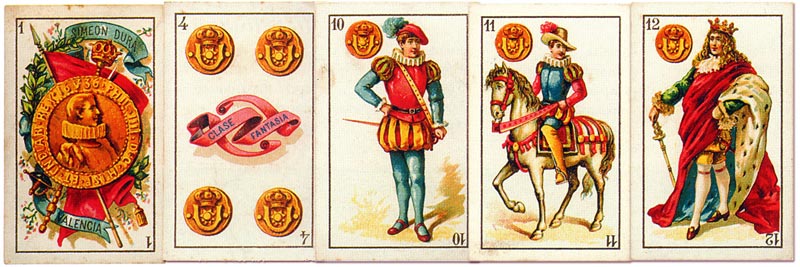
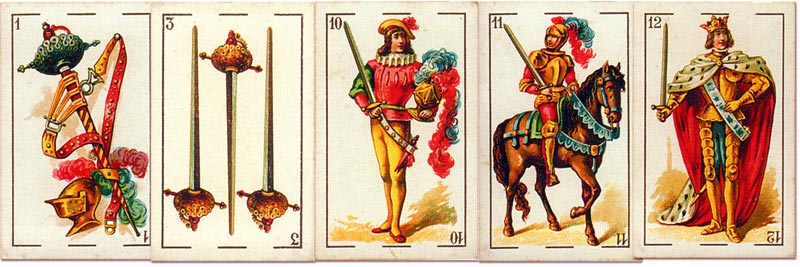
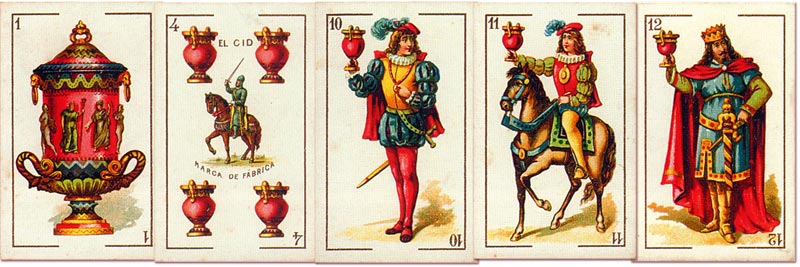
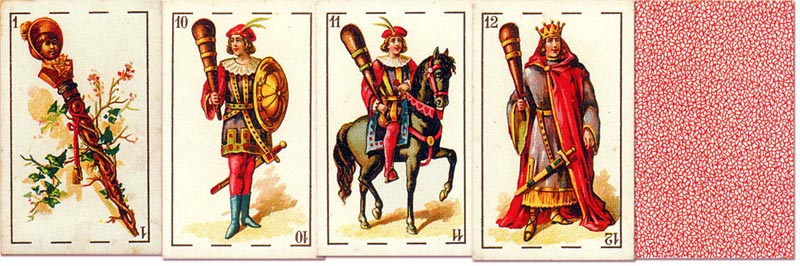
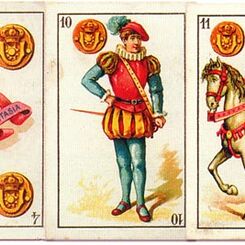
Above: E. Pastor's magnificent fantasy Spanish suited playing cards, printed by Simeon Durá, Valencia, c.1875. The king of coins is based on a painting of Louis XIV of France by the Catalan artist Jacint Rigau i Ros.
This was about the same period when Naipes Heraclio Fournier were developing their own 'Castilian' playing cards and there may have been competition between the rival manufacturers to produce new designs for the market. These designs were subsequently revised and became Durá's standard house-style for 'El Cid' Spanish-suited cards for many decades. E. Pastor also designed Simeon Durá's highly acclaimed fantasy advertising pack for Chocolates 'El Barco'. In both cases the excellence of the artwork is outstanding.

By Simon Wintle
Spain • Member since February 01, 1996
I am the founder of The World of Playing Cards (est. 1996), a website dedicated to the history, artistry and cultural significance of playing cards and tarot. Over the years I have researched various areas of the subject, acquired and traded collections and contributed as a committee member of the IPCS and graphics editor of The Playing-Card journal. Having lived in Chile, England, Wales, and now Spain, these experiences have shaped my work and passion for playing cards. Amongst my achievements is producing a limited-edition replica of a 17th-century English pack using woodblocks and stencils—a labour of love. Today, the World of Playing Cards is a global collaborative project, with my son Adam serving as the technical driving force behind its development. His innovative efforts have helped shape the site into the thriving hub it is today. You are warmly invited to become a contributor and share your enthusiasm.

Activity for ‘El Cid’ designed by E. Pastor, Valencia, Spain, c.1875
Sign in to comment or save this article.

Related Articles
Balearic Souvenir Cards
Mediterranean Souvenir deck by Rioba Studio, Pollença, Mallorca.
Tarot Familiars
Lisa Parker’s Tarot Familiars gives the traditional 78-card tarot a distinctly gothic world of cats,...
Crown Hill playing cards
Crown Hill playing cards with illustrations by Corrine Guiney, USA,

El Niño de las Pinturas
Forty-nine distinctive works by Spanish graffiti artist Raúl Ruiz.
Baraja Española de Pintores Murcianos
A Spanish-suited pack as conceived by 48 different artists from the region of Murcia.
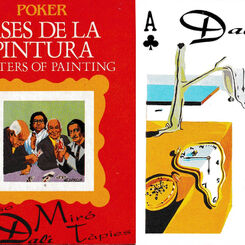
Ases de la pintura / Masters of painting
Ases de la pintura / Masters of painting playing cards made by Naipes Comas, Spain, c.1990.
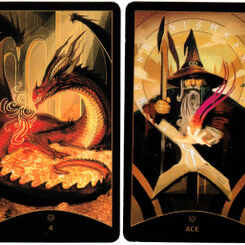
Dungeons and Dragons Tarot
This 78-card officially licensed Dungeons & Dragons (D&D) tarot deck offers a visually appealing var...
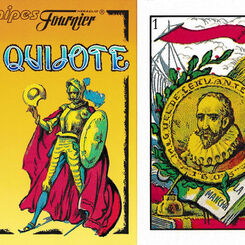
Baraja El Quijote
Baraja El Quijote, facsimile of original deck designed by E. Pastor, reprinted by Naipes Heraclio Fo...
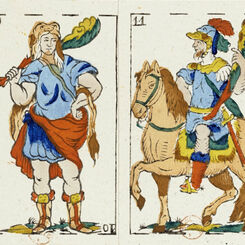
Bertschinger y Codina
Fantasy Spanish-suited playing cards by Bertschinger y Codina (Barcelona), c.1850.
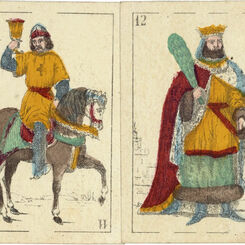
Vicente Gombau y Labad
Elegant fantasy designs by Vicente Gombau y Labad (Madrid), 1861.
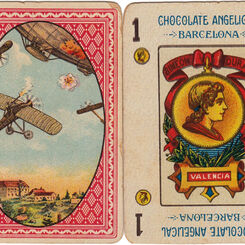
Chocolate playing cards with scenes from World War 1
An extraordinary Spanish pack of chocolate advertising playing cards dating from 1920.
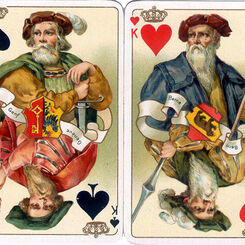
Schweizer Trachten
Schweizer Trachten No.174 (Costumes Suisses) by Dondorf.
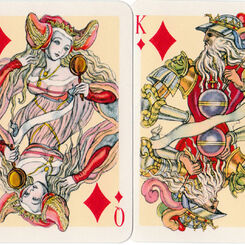
Romance Español
“Romance Español” designed by Carlos Sáenz de Tejada and published by Heraclio Fournier in various e...
Classic
“Classic” playing cards designed by Paul Mathison inspired by classical mythology, 1959.
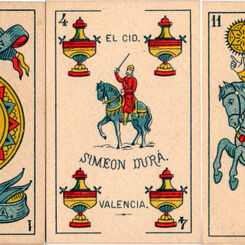
‘El Cid’ by Simeon Durá, Valencia, Spain
‘El Cid’ playing cards manufactured by Simeon Durá, Valencia, Spain.
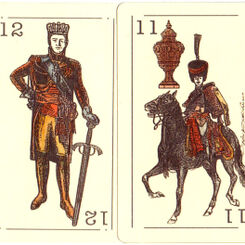
Baraja Asescoin 1998
Asescoin 1998 member’s pack designed by Josep Soriano.
Baraja Edad Media
Baraja Edad Media, fantasy Spanish-suited medieval playing cards published Mas-Reynals, Barcelona, 1...
Simeon Durá 1871-1940
Simeon Durá of Valencia was one of Spain's most distinguished playing card manufacturers, flourishin...
El Barco
El Barco playing cards designed by E. Pastor, Valencia, Spain, c.1895
The History of Playing Cards
Playing cards appear in European records in the late 14th century, but their earlier history lies fu...
Most Popular
Our top articles from the past 60 days


