


Baraja Morisca — Early XV century playing cards
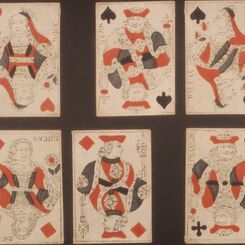
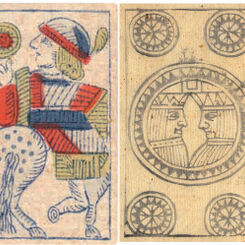
Primitive Latin suited pack, dated by paper analysis as early XV century, which makes this one of the earliest known surviving packs of playing cards.
Baraja Morisca¹ ~ an early suit system
This 48-card gothic era pack is preserved in the Fournier Museum at Vitoria-Gasteiz (Spain). It was originally classified as Italian, but this identification has been revised to “probably Catalan origin”. The estimated date has also been narrowed down to c.1400-1420.
These are popular, more democratic playing cards, rather than luxury hand-painted cards for the élite. Making cards economically from woodblocks is easier when packs have either 40 or 48 cards (2 x 24) instead of 52 cards. That's why, after the early 1400s, Spanish-suited packs typically dropped the 10s and had pip cards 1 to 9, along with three court cards (10, 11, and 12).
The cards were coloured by a technique known as 'a la morisca' which involved using the fingers dipped into the pigment. As their popularity spread, new methods of production were discovered to produce packs of playing cards more cheaply.
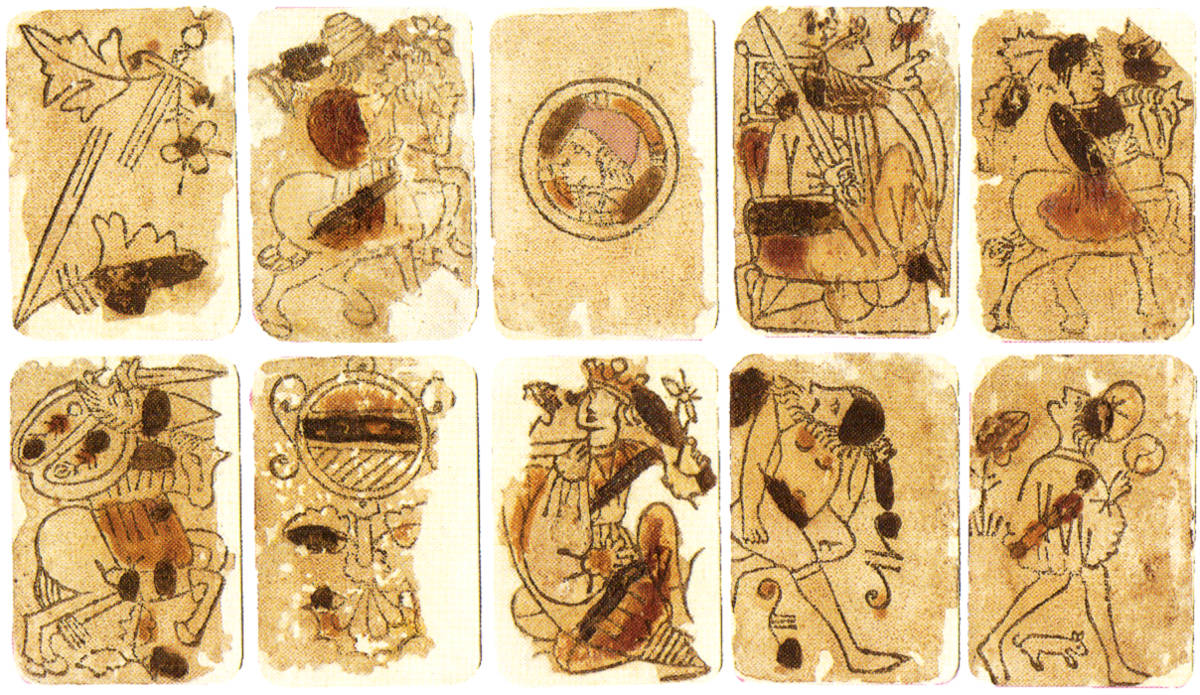
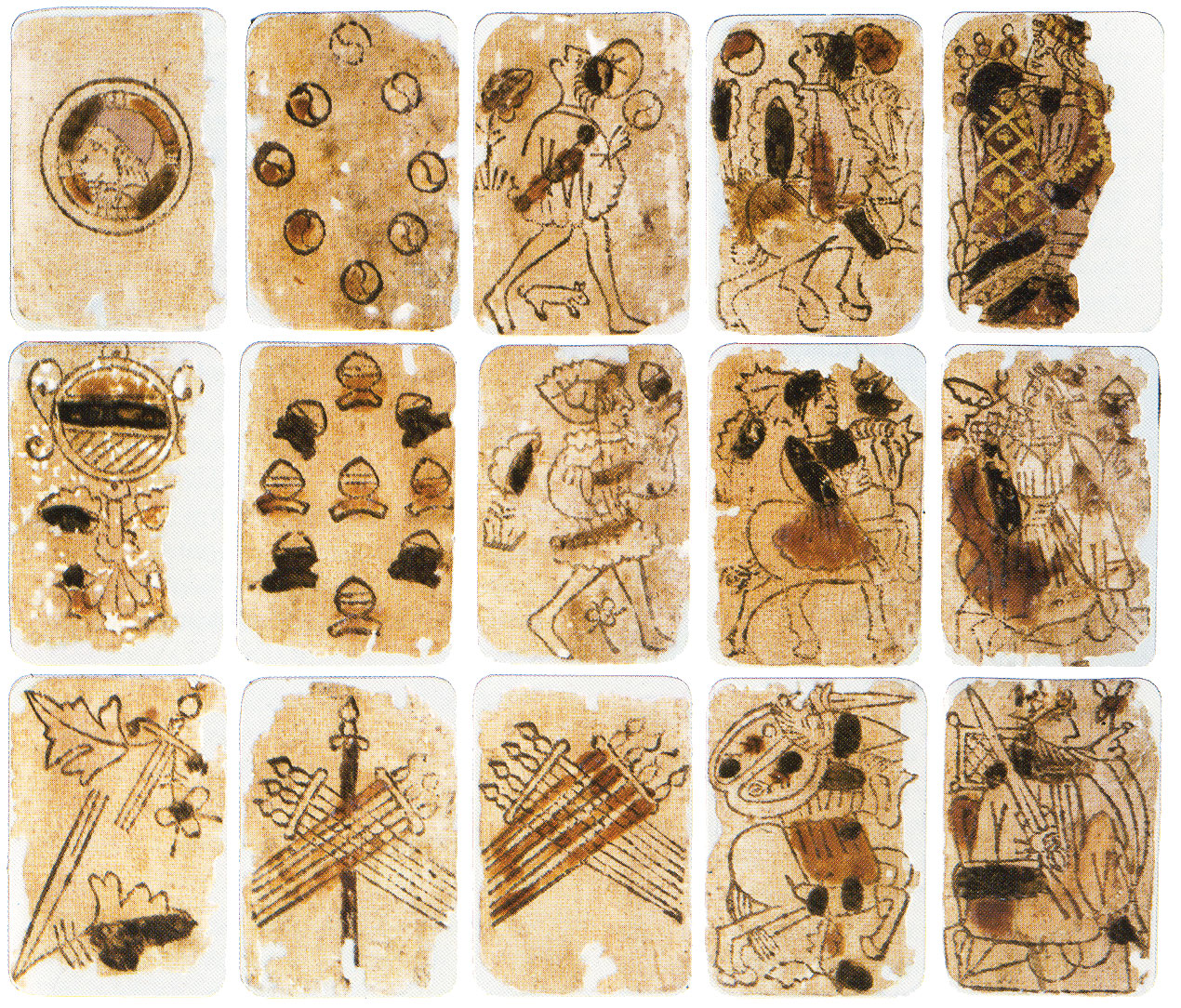
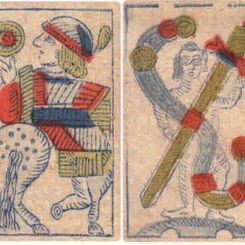
Above: cards from a primitive Latin suited pack, possibly of Catalan manufacture, dated by paper analysis as “early XV century”, which makes this one of the earliest known surviving packs of playing cards. There are Moorish influences in some of the cards: see the double-panelled Saracenic shield on the cavalier of swords (bottom row). As the pack is incomplete it is not possible to ascertain whether it ever contained 10s but we reckon that it would have been a 48-card pack for the reason already mentioned. Plain backs, 95x65 mm.
The cards show lingering evidence of a suit system derived from early Arabic cards originating from the Mamluk Sultanate, which in turn spread to various parts of Europe during the 15th century. It seems that the original 52-card format was adjusted to 48 cards for practical reasons when woodblock printing was adopted to mass-produce cards. The cavalier of swords holds a double-panelled Saracenic shield which was common in Muslim-occupied Spain at that time, with a kind of double tassel made of silk and feathers. Thus the artist was copying what s/he could see in real life.
Images on this page of cards in the Museo "Fournier" de Naipes de Alava (Diputación Foral de Alava, Cuchillería 54, 01001 Vitoria-Gasteiz, Spain) are taken from Agudo Ruiz (2000) and Suarez Alba (1991). Used with permission.
See Online Catalogue of the Museo Fournier de Naipes de Álava►
¹ Note on the term "morisca": The moriscos were Muslims in Spain who, after the Reconquista in 1492, were required to convert to Christianity in order to remain in the territory. They were called "moriscos" to differentiate them from "moros," which referred to Muslims from North Africa. This was part of an effort by the Catholic Monarchs and their successors to unify the country under Christianity, especially after the fall of Granada in 1492.
Before the Reconquista, the moriscos, then simply known as Muslims or "Andalusians," were part of the multi-cultural Islamic society in Al-Ándalus, governed by Muslims from the 8th to the 15th centuries. Muslims, Christians and Jews coexisted. Most Muslims in Al-Ándalus were farmers, artisans, and merchants, and they introduced techniques like irrigation systems, waterwheels, and the cultivation of fruits and vegetables such as citrus, rice and sugarcane.

By Simon Wintle
Spain • Member since February 01, 1996
I am the founder of The World of Playing Cards (est. 1996), a website dedicated to the history, artistry and cultural significance of playing cards and tarot. Over the years I have researched various areas of the subject, acquired and traded collections and contributed as a committee member of the IPCS and graphics editor of The Playing-Card journal. Having lived in Chile, England, Wales, and now Spain, these experiences have shaped my work and passion for playing cards. Amongst my achievements is producing a limited-edition replica of a 17th-century English pack using woodblocks and stencils—a labour of love. Today, the World of Playing Cards is a global collaborative project, with my son Adam serving as the technical driving force behind its development. His innovative efforts have helped shape the site into the thriving hub it is today. You are warmly invited to become a contributor and share your enthusiasm.

Activity for Baraja Morisca — Early XV century playing cards
Sign in to comment or save this article.

Related Articles
The archaic “Classic Madrid” Pattern
Centralisation, standardisation and consolidation of the Spanish card tradition.
La baraja de Almagro
De la chimenea al monumento nacional: la baraja de Almagro y el renacer del corral de comedias.
Ganjifa - Playing Cards from India
Indian playing cards, known as Ganjifa, feature intricate designs with twelve suits and are traditio...
Sevilla 1647 reproduction
Facsimile of Spanish-suited pack produced in Sevilla, Spain, 1647.
Dutch costume playing cards from an unknown maker
Another pack of Dutch costume playing cards c.1880.
History of Playing Cards explained in 5 Minutes
Video by Art of Impossible. In this video you will get a short overview of the most important histor...
Toledo, 1584
Archaic Spanish-suited deck with 48 cards made in Toledo in 1584.
Baraja Carlos IV by Félix Solesio, 1800
Baraja Carlos IV, Félix Solesio en la Real Fábrica de Macharaviaya, 1800.
70: Woodblock and stencil : the spade courts
This is a presentation in a more straight forward fashion of the work done by Paul Bostock and me in...
64: The descendants of the French regional patterns: 2
A continuation oF the development of the off-spring of the Paris patterns and a few examples of how ...
Trentine Pattern
Trentine Pattern
Pedro Varangot, 1786
Archaic Navarra pattern produced for the Pamplona General Hospital Monopoly by Pedro Varangot in 178...
Navarra Pattern, 1682
Navarra pattern produced for the Pamplona General Hospital Monopoly in 1682.
Navarra Pattern
Navarra Pattern produced for the Pamplona General Hospital Monopoly.
Navarra Pattern, 1793
Navarra pattern by an unknown cardmaker with initials I. I., 1793.
Anonymous Spanish Suited pack, c.1760
Anonymous archaic Spanish suited pack, c.1760.
1: Playing Cards and their History: An Introduction and some links to other sites
What was considered the first mention of playing cards in England is in 1463 when Edward I banned th...
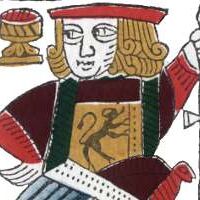
Navarra, XVII Century
Facsimile of 17th century Spanish-suited playing cards produced by Erregeak, Sormen S.A., Vitoria-Ga...
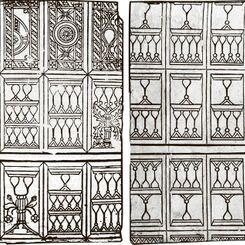
Moorish playing cards
These two uncoloured, uncut sheets of early Moorish playing cards were formerly preserved in the Ins...
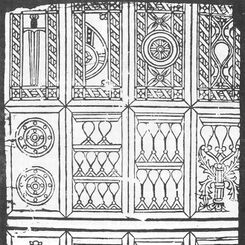
A Moorish Sheet of Playing Cards
This article was originally published in “The Playing-Card”, the Journal of the International Playin...
Most Popular
Our top articles from the past 60 days


Alannyë Daeris
19 November 2025, 09:47SavedSaved this article to Decks Históricos
Paola Benzoni
12 July 2026, 13:36SavedSaved this article to Mazzi