


P. Steinmann
Single-figure provincial Paris pattern cards with traditional names on the courts manufactured in Copenhagen by P. Steinmann, c.1820.
P. Steinmann, Copenhagen
(active 1798-1820)
Single-figure provincial Paris pattern playing cards with traditional names on the courts (except the Jack of Clubs) manufactured in Copenhagen by Pierre Steinmann in c.1820. French style playing cards were favoured in many European countries and several Danish manufacturers had been producing standard packs of this type since the 1750s or earlier. It is surprising that France, so haughty in elegance and fashion, should be associated with such grotesque playing cards!
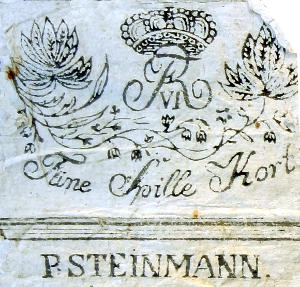
Right: detail from the wrapper showing the Royal Monogram of King Frederik VI →
The wrapper includes the official Royal Monogram of King Frederik VI of Denmark, who ruled 1808 to 1839, and the Ace of Diamonds carries the official Danish tax stamp showing three lions inside a crowned shield.
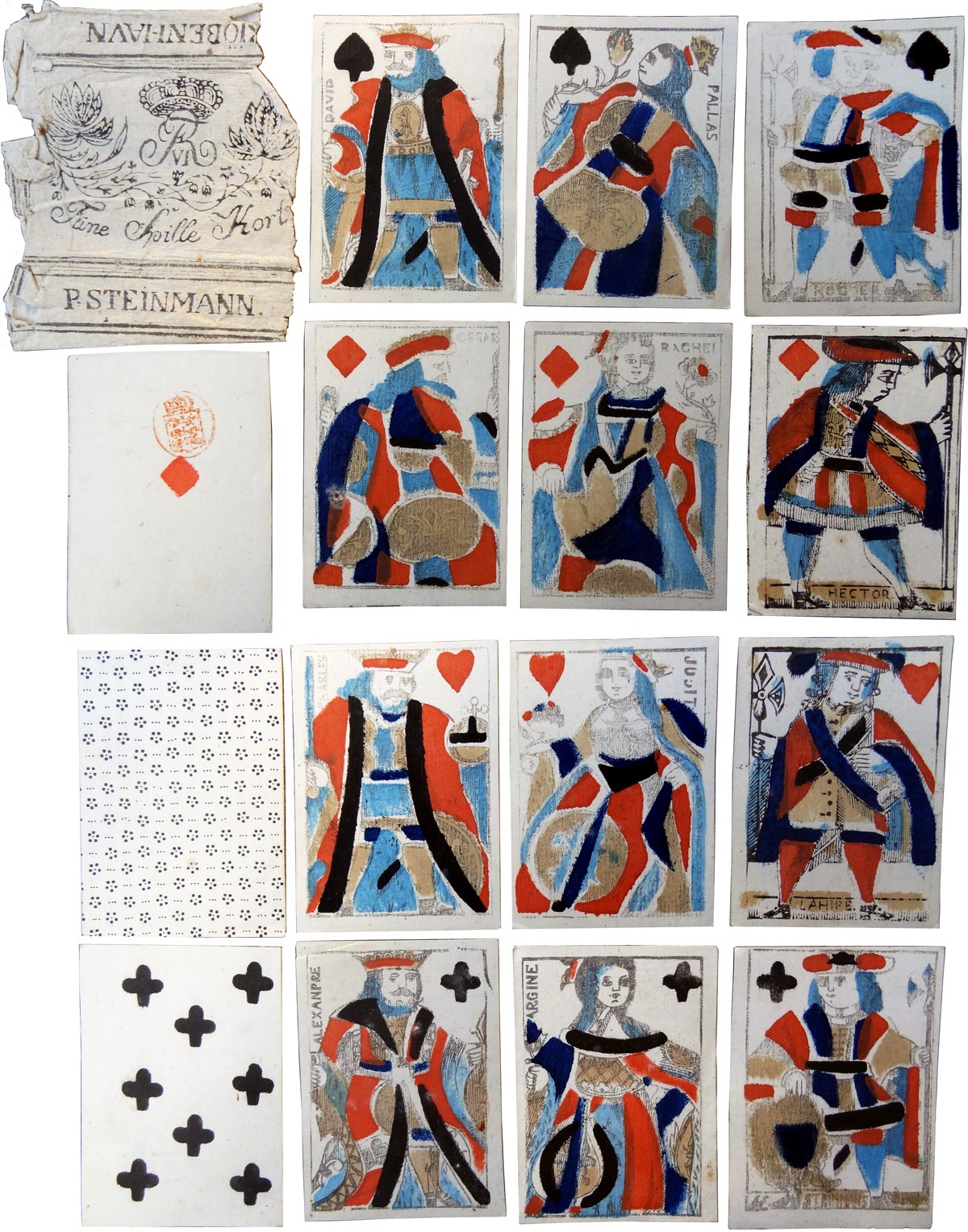
Above: cards in the French style manufactured by P. Steinmann, Copenhagen, c.1810-20. The manufacturer's name is visible on the Jack of clubs and the wrapper. Steinmann had a license for the manufacture of playing cards. The cards have been printed from woodcuts and hand-coloured using stencils in a slightly careless manner using two shades of blue, red, buff and black. The back design consists of a dot-pattern. Images courtesy Hans J. Hinrup.
Pierre Steinmann took over the playing card business of J.V. Dressler in 1797, producing packs until 1820 when the licence was given to Jacob Holmblad.

By Simon Wintle
Spain • Member since February 01, 1996
I am the founder of The World of Playing Cards (est. 1996), a website dedicated to the history, artistry and cultural significance of playing cards and tarot. Over the years I have researched various areas of the subject, acquired and traded collections and contributed as a committee member of the IPCS and graphics editor of The Playing-Card journal. Having lived in Chile, England, Wales, and now Spain, these experiences have shaped my work and passion for playing cards. Amongst my achievements is producing a limited-edition replica of a 17th-century English pack using woodblocks and stencils—a labour of love. Today, the World of Playing Cards is a global collaborative project, with my son Adam serving as the technical driving force behind its development. His innovative efforts have helped shape the site into the thriving hub it is today. You are warmly invited to become a contributor and share your enthusiasm.

Activity for P. Steinmann
Sign in to comment or save this article.

Related Articles
Warburg’s Danske
Warburg’s Danske playing cards published by Aktieselskabet Emil Jensen, København, 1944.
Warburg’s Skandinaviske Bridge Kort
“Warburg’s Skandinaviske Bridge Kort” published by Aktieselskabet Emil Jensen, København, c.1935.
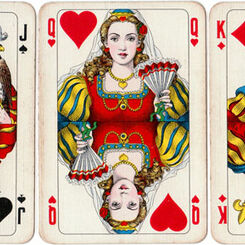
Standard Handa Pattern
Standard Danish playing cards made by Handa, Copenhagen.
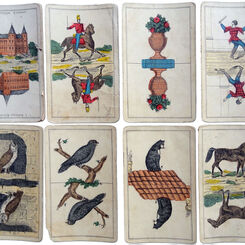
Gnav
cards from an early 'Gnav' game made by C.L.Keiblinger, Copenhagen c.1860
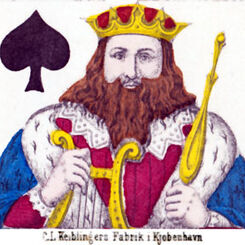
C.L.Keiblinger, Copenhagen 1852-85
C.L.Keiblinger, Copenhagen 1852-85
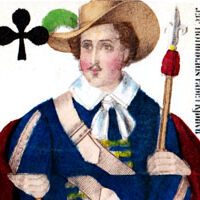
Jacob Holmblad c.1830
An amazing difference can be seen between the early and the later Jacob Holmblad packs, covering a t...
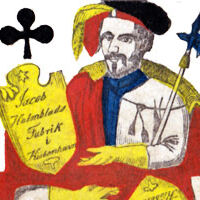
Jacob Holmblad, 1820s
The Q♥ has a butterfly net in which she has caught four hearts. Many of Holmblad's designs were repl...
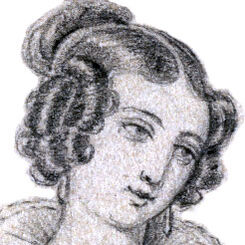
L. P. Holmblad, c.1845
Holmblad ordered his earlier designs to be re-drawn and updated. Comparison of packs from this era s...
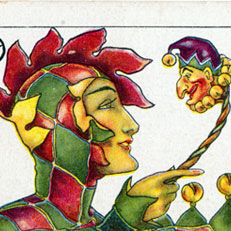
Warburg Luxus Bridgekort
“Luxus Bridgekort” was specially designed by Barbara MacDonald in a vibrant Art Deco style for Warbu...

Holmblads No. 121
Holmblads No. 121 made by John Waddington, England, for Denmark
Most Popular
Our top articles from the past 60 days


