


Salvador Dalí
Based on the standard French ‘Paris’ pattern, Dalí composed his playing card figures out of geometric shapes, like a surrealist tapestry, but retaining the traditional aspects of playing card design.
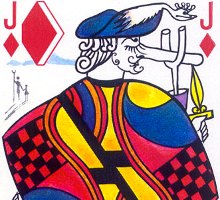
Salvador Dalí, Surrealist Playing Cards, 1967
Dalí created these designs for the Ace, King, Queen and Jack of each suit plus a Joker which were also produced as a series of limited edition art posters. Based on the standard French ‘Paris’ pattern, Dalí composed his playing card figures out of geometric shapes, like a surrealist tapestry, but retaining the traditional aspects of playing card design. Born in Figueras, Catalonia, northern Spain in 1904, Dalí became one of the most iconic painters of the 20th century. Dalí takes his place in a long line of artists who have created playing cards.
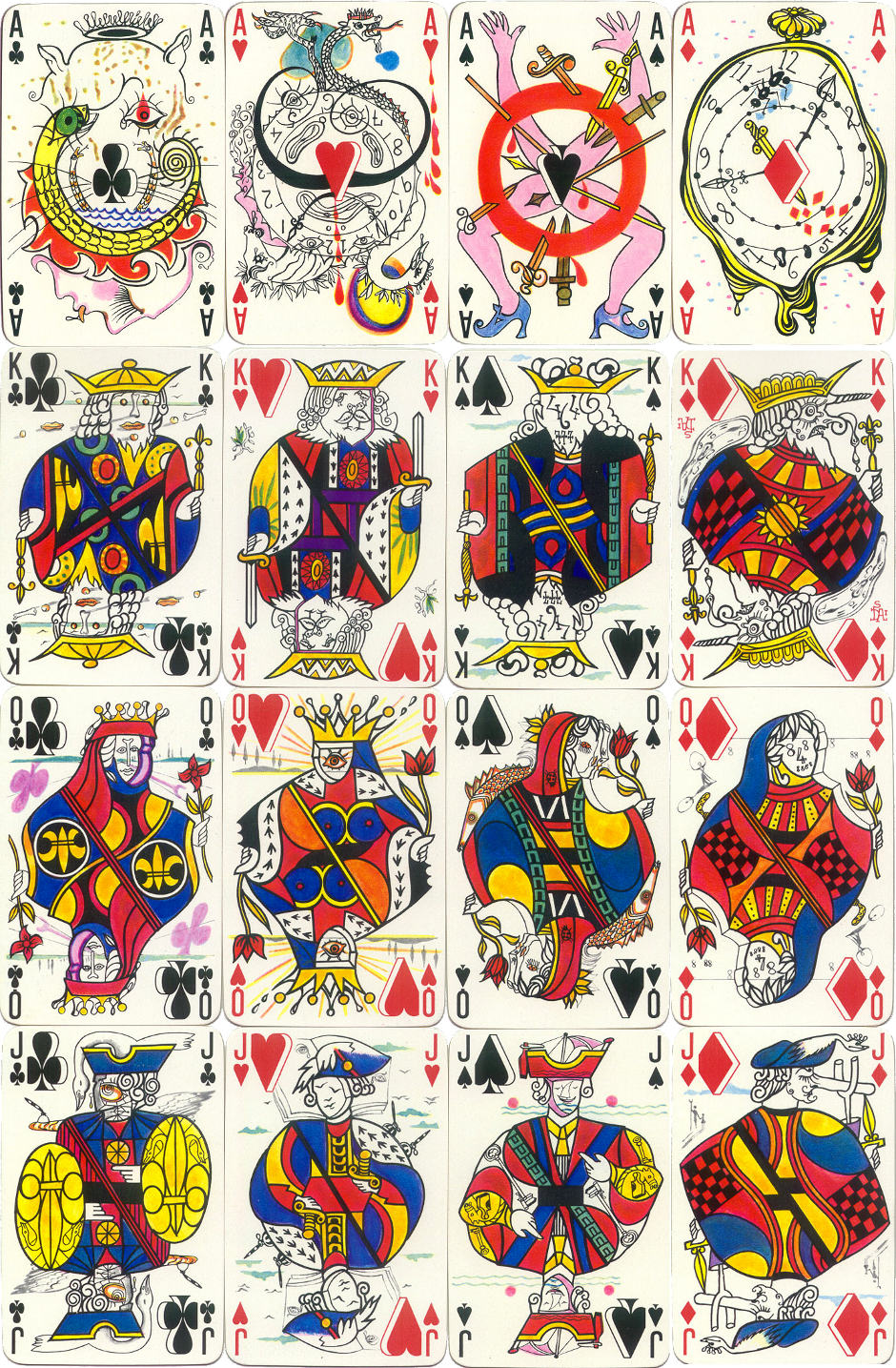
Above: playing cards designed by the famous Spanish artist Salvador Dalí (1904-1989), featuring many of Dalí's characteristic surrealist motifs such as melting clocks and supportive crutches. The court cards are based on the French 'Paris' pattern. The cards were printed by Draeger Frères, Paris, 1967. Images courtesy Barney Townshend.

By Barney Townshend
United Kingdom • Member since October 06, 2015
Retired Airline Pilot, interested in: Transformation Playing Cards, Karl Gerich and Elaine Lewis. Secretary of the EPCS. Treasurer of the IPCS.

Activity for Salvador Dalí
Sign in to comment or save this article.

Related Articles
Persian Courts
Encapsulation of Persia’s rich heritage as conceived by Spanish artist Violeta Monreal.

El Niño de las Pinturas
Forty-nine distinctive works by Spanish graffiti artist Raúl Ruiz.
Baraja Española de Pintores Murcianos
A Spanish-suited pack as conceived by 48 different artists from the region of Murcia.
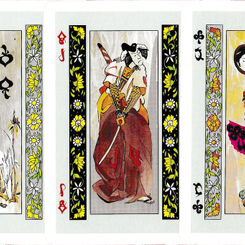
Secretos de Oriente
Secrets of the Far East playing cards featuring the designs of Violeta Monreal , Spain, c. 1991.
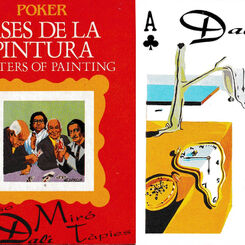
Ases de la pintura / Masters of painting
Ases de la pintura / Masters of painting playing cards made by Naipes Comas, Spain, c.1990.
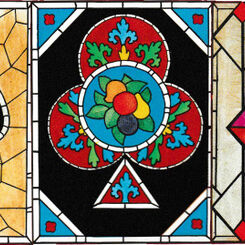
Crystal Time
Colourful and attractive designs by Violeta Monreal, inspired by stained glass through the ages.
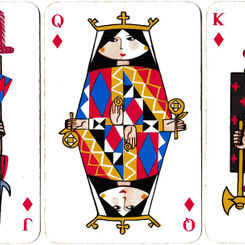
Loewe
Deck designed by J. L. Picardo for Loewe, 1959.
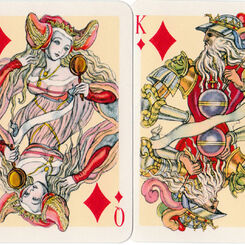
Romance Español
“Romance Español” designed by Carlos Sáenz de Tejada and published by Heraclio Fournier in various e...
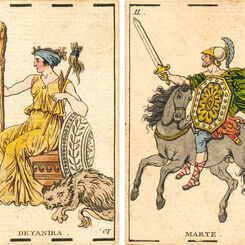
Baraja Mitológica
“Baraja Mitológica” was first published in Madrid in c.1815 by Josef Monjardín from engravings by Jo...
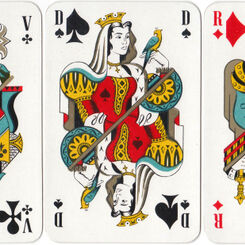
Jean Borin
‘Cartes de Luxe’ with artwork by Belgian artist and designer Jean Borin (1907-1997).
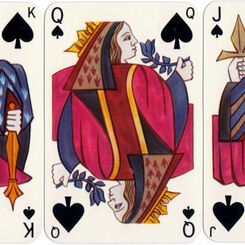
Classique
“Classique” by Draeger Frères, Paris, c.1949 with designs reminiscent of early French cards.
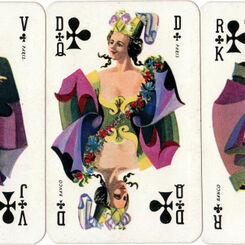
Banco for Air France, c.1952
Banco playing cards for Air France manufactured by Draeger Frères, c.1952.
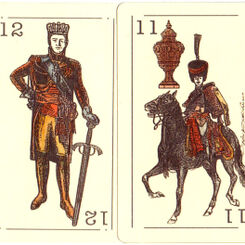
Baraja Asescoin 1998
Asescoin 1998 member’s pack designed by Josep Soriano.
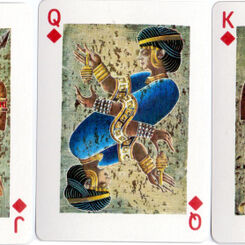
Ancient Civilisations
Ancient Civilisations playing cards designed by Celedonio Perellón, produced by Heraclio Fournier, ...
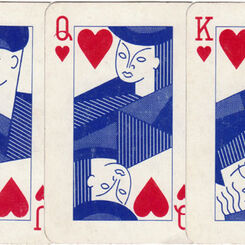
Blue Playing Cards
“Blue Playing Cards” by Piatnik, 1960s, inspired by the Cubism art movement in which objects are ana...
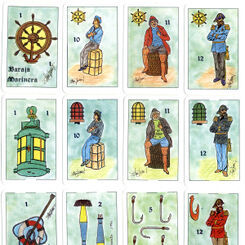
Baraja Marinera
‘Baraja Marinera’ designed by Francisco Javier San Juan, published by Asescoin (Madrid), 1995

Leonor Fini
The originality of Leonor Fini's work is evident in these playing card designs. The imagery of her p...
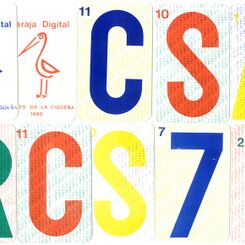
Baraja Digital
Baraja Digital by Naipes De La Cigüeña, 1990.
The History of Playing Cards
Playing cards appear in European records in the late 14th century, but their earlier history lies fu...
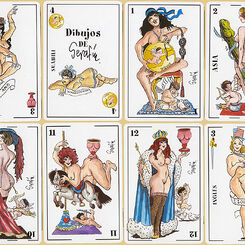
Baraja "Te Amo" cartoons by Serafín
Baraja 'Te Amo' con dibujos de Serafín en tirada de 500 ejemplares numerados, 48 naipes. Fabricado p...
Most Popular
Our top articles from the past 60 days


pia.stengard@gmail.com
07 June 2023, 08:06Dear Barney,
Thank you for great information about the Dali playing cards. I wonder where the best place is to sell two complete sets of the 1967 playing card deck? My grandmother was an an artdealer and bought these playing cards in Paris 1967 and one of the decks is in absolute mint condition with the original gift ribbon from Puiforcat intact. Best regards Pia Stengard (Sweden)
mixhead
27 January 2026, 19:09SavedSaved this article to mixhead's Collection