


Standard Swedish Pattern
Standard Swedish type playing cards manufactured by J.O. Öberg & Son, Eskilstuna, 1929.
Standard Swedish Cards
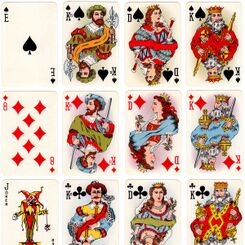
Standard Swedish type playing cards manufactured by J.O. Öberg & Son, Eskilstuna, 1929. Where Sweden had traditionally produced playing cards based on the French 'Paris' pattern, more recently these have been replaced by newer designs, as shown below, which were perfected by Öberg and have become the new 'standard' pattern used in Sweden. The Ace of Hearts has the manufacturer's stamp and a tax stamp. The indices E, Kn, D and K are usually seen on Scandinavian cards. The detail from the box (above right) shows a number of exhibition medals, the earliest of which is dated 1897.
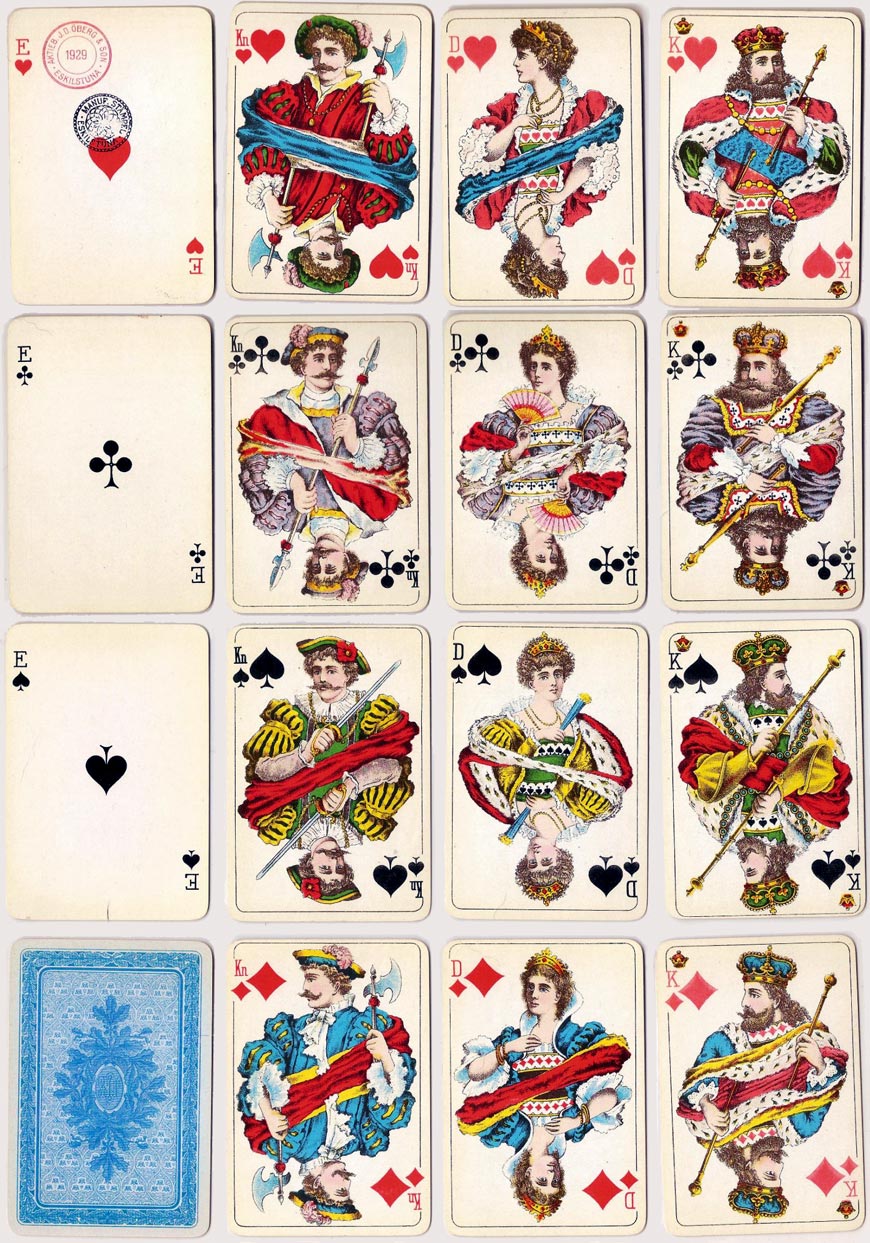
Above: Standard Swedish type playing cards manufactured by J.O. Öberg & Son, Eskilstuna, 1929. The court cards in each suit are colour-coordinated and the indices are: E, Kn, D and K.
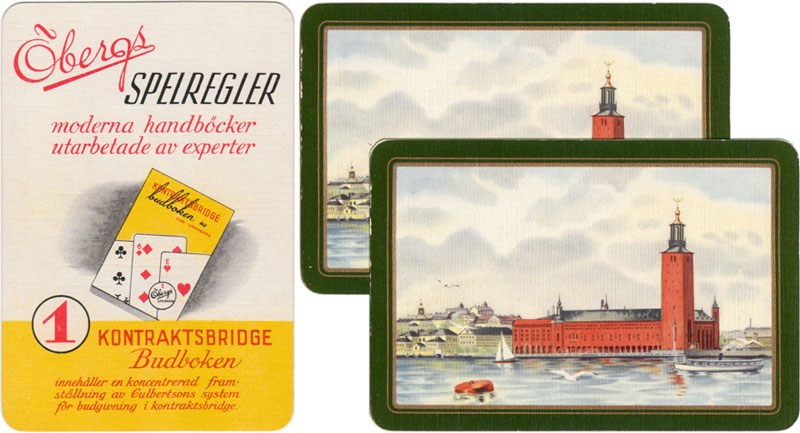
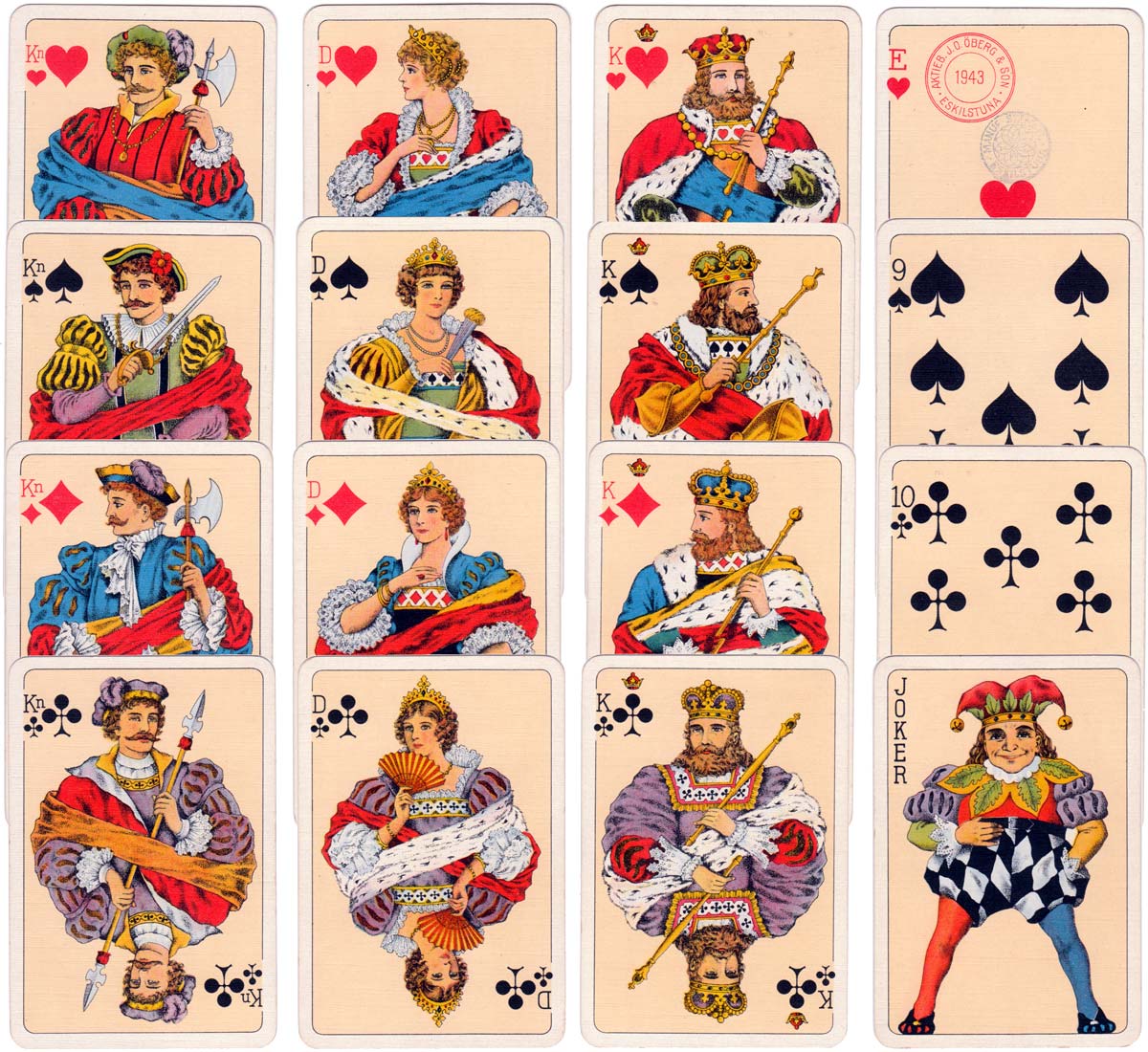
Above: Öberg & Son standard Swedish pattern, 1943.
Öbergs Spelkort Nr 390 Turist, 1956
A dual set of tourist playing cards by Öbergs, dated 1956. The two designs are entitled "Reindeer in Lappland" and "Midwinter".
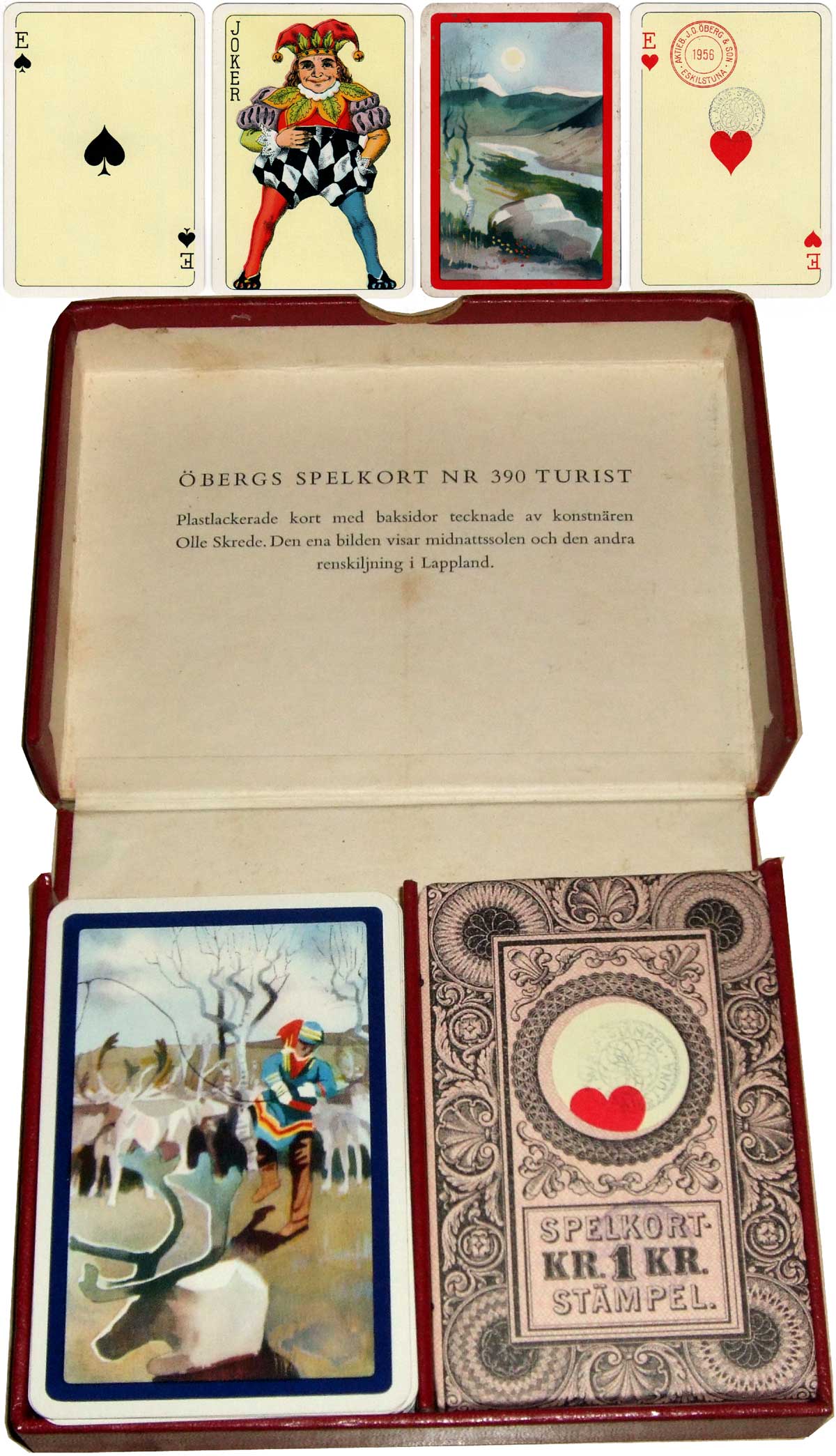
Above: Öbergs Spelkort Nr 390 Turist, 1956. Images courtesy Matt Probert.
Standard Swedish pattern by Heráclio Fournier S.A., Spain, 1986
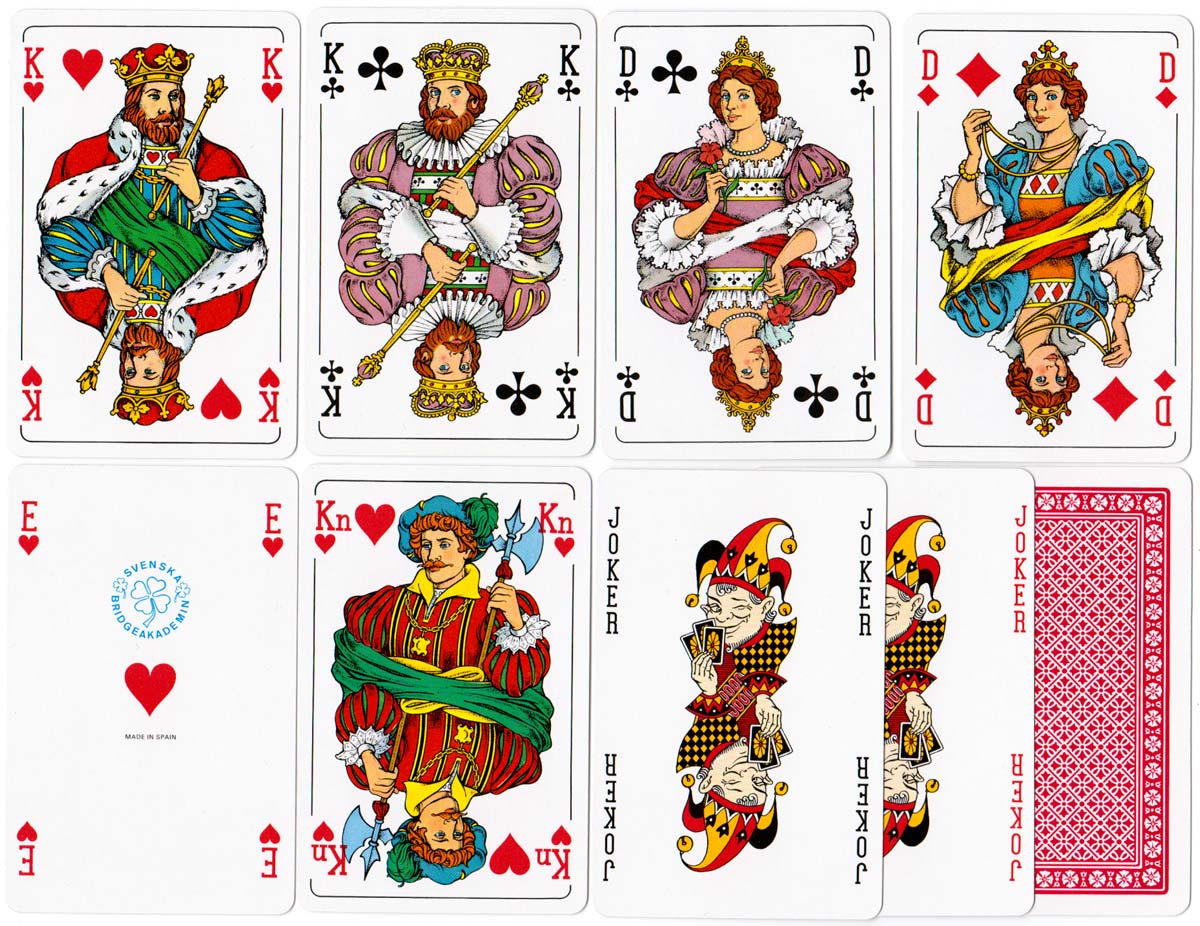
Above: Standard Swedish type playing cards manufactured for the Swedish market by Heráclio Fournier S.A., Spain, 1986.
Standard Swedish pattern by Ferd Piatnik & Sons, Vienna, 1997
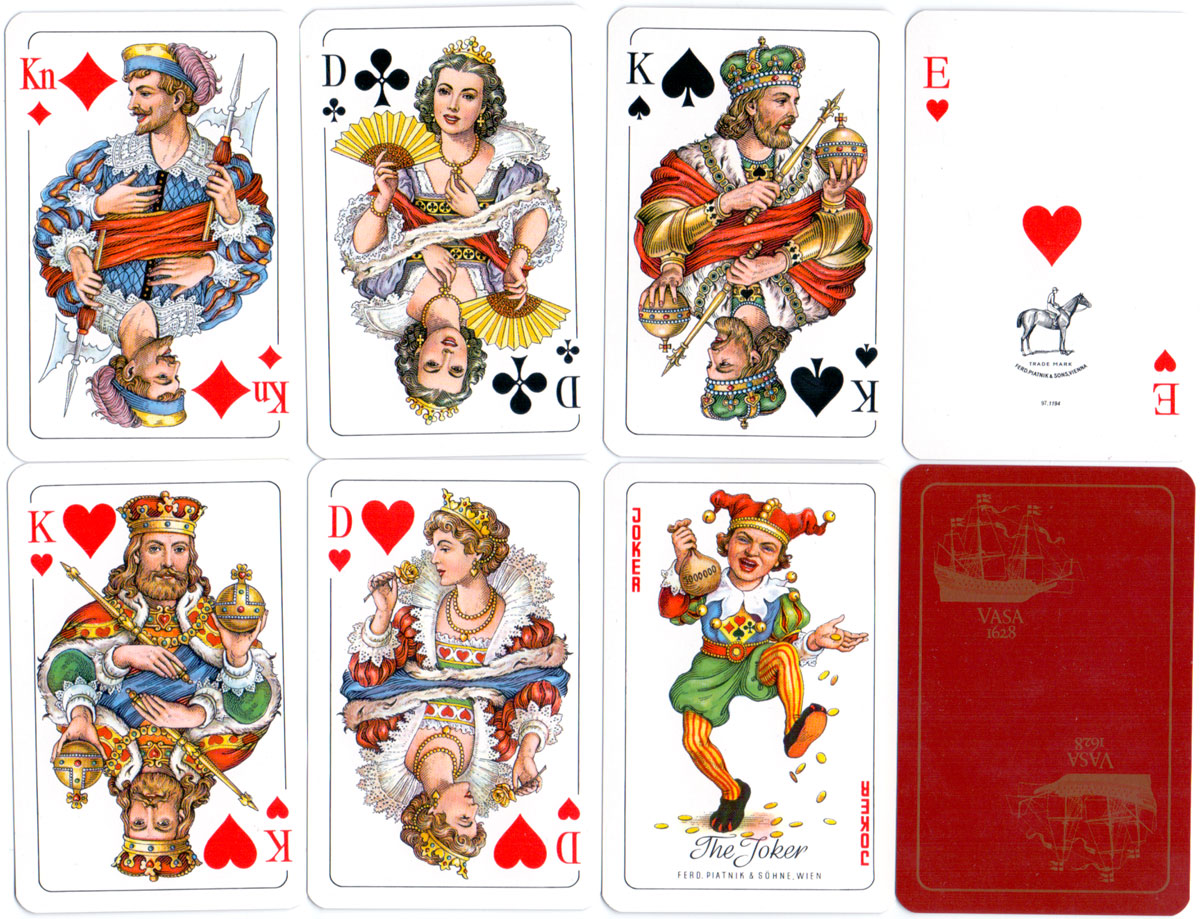
Above: Standard Swedish type playing cards manufactured for the Vasa Museum, Stockholm, Sweden by Ferd Piatnik & Sons, Vienna, 1997.
Swedish pattern by Carta Mundi
In this example of the Swedish pattern by Carta Mundi, the courts have been given a make-over, but keeping a traditional (conservative) appearance.
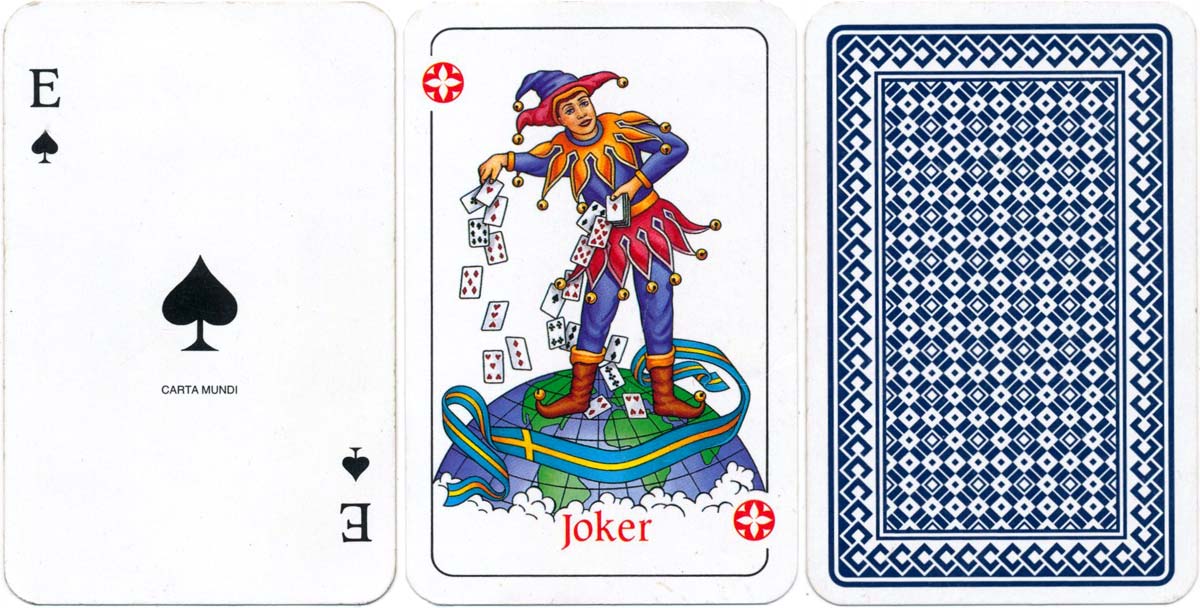
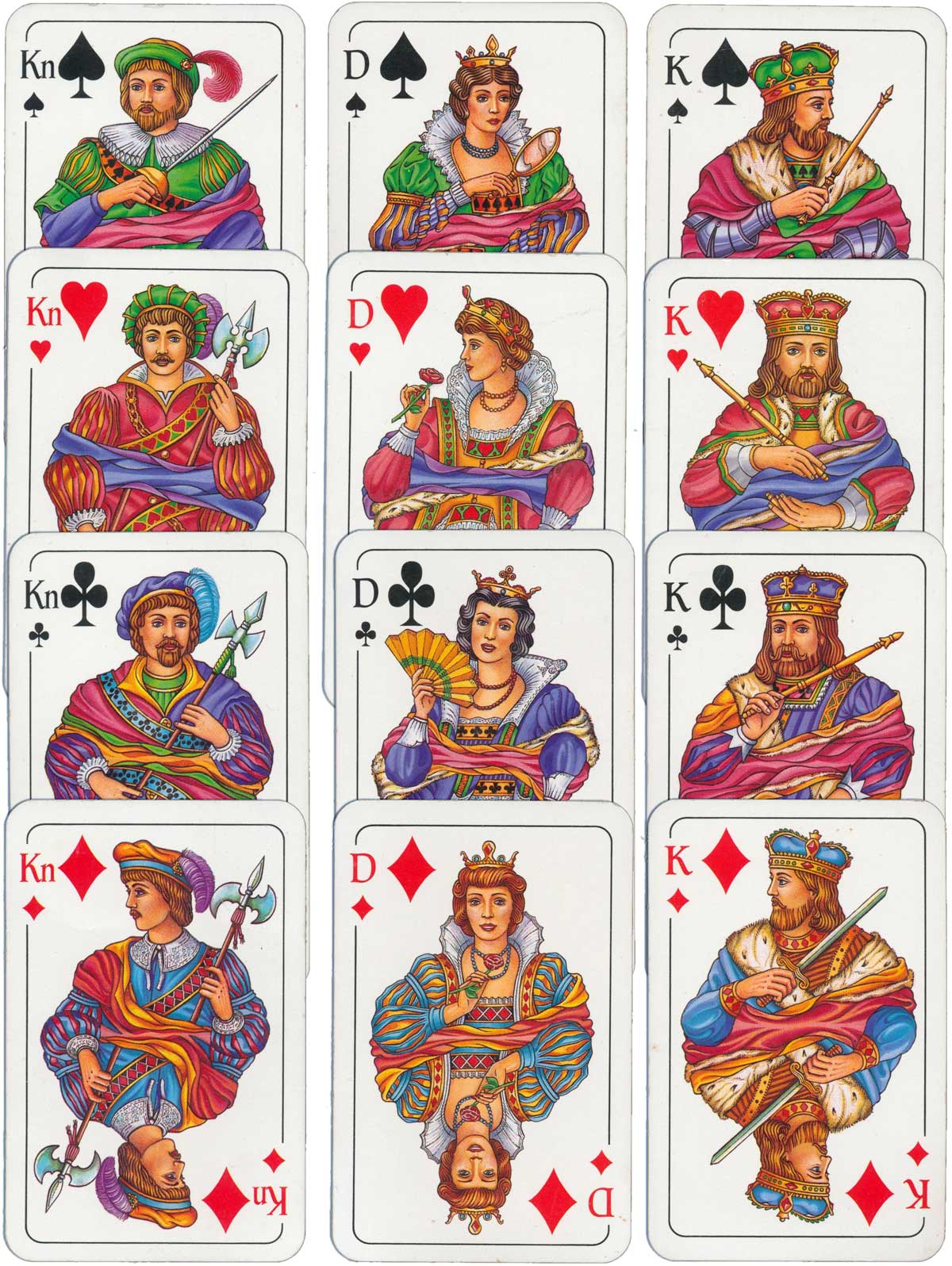
Above: Swedish pattern by Carta Mundi. Images courtesy Matt Probert.

By Rex Pitts (1940-2021)
United Kingdom • Member since January 30, 2009
Rex's main interest was in card games, because, he said, they were cheap and easy to get hold of in his early days of collecting. He is well known for his extensive knowledge of Pepys games and his book is on the bookshelves of many. His other interest was non-standard playing cards. He also had collections of sheet music, music CDs, models of London buses, London Transport timetables and maps and other objects that intrigued him.
Rex had a chequered career at school. He was expelled twice, on one occasion for smoking! Despite this he trained as a radio engineer and worked for the BBC in the World Service. Later he moved into sales and worked for a firm that made all kinds of packaging, a job he enjoyed until his retirement. He became an expert on boxes and would always investigate those that held his cards. He could always recognize a box made for Pepys, which were the same as those of Alf Cooke’s Universal Playing Card Company, who printed the card games. This interest changed into an ability to make and mend boxes, which he did with great dexterity. He loved this kind of handicraft work.
His dexterity of hand and eye soon led to his making card games of his own design. He spent hours and hours carefully cutting them out and colouring them by hand.

Activity for Standard Swedish Pattern
Sign in to comment or save this article.

Related Articles
Sweden playing cards
Named characters from Swedish history.
Romania playing cards
Romanian voivodes and their wives from the 15th and 16th centuries.
The Saab 900 Convertible playing cards
A flicker pack with different backs, advertising the Saab 900 Convertible motor car.
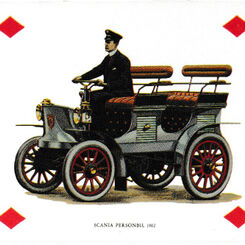
SCANIA 1891-1991
Centenary playing cards illustrating vintage trucks and buses produced by the Swedish company Scania...
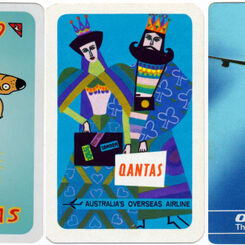
Qantas
Qantas Airways Limited is the flag carrier of Australia and is the world's third-oldest airline stil...
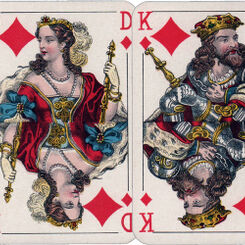
Piatnik No.97
Non-standard French-suited cards published by Ferd Piatnik & Sõhne, Vienna, c.1940s.
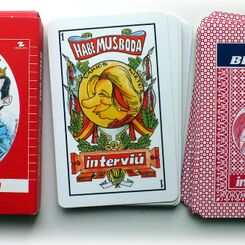
Habemus Boda, 2004
“Habemus Boda” deck celebrating the royal wedding of Prince Felipe and Princess Letizia of Spain wit...
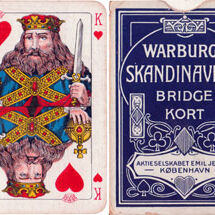
Warburg’s Skandinaviske Bridge Kort
“Warburg’s Skandinaviske Bridge Kort” published by Aktieselskabet Emil Jensen, København, c.1935.
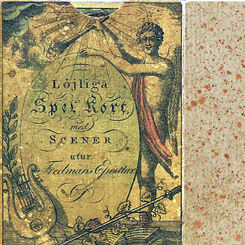
Löjliga Spel Kort
Facsimile edition of “Löjliga Spel Kort” (1825) illustrated playing cards from Sweden, showing scene...
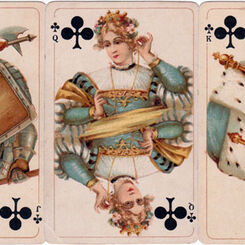
Jacob Bagges AB
Playing cards published by Jacob Bagges AB Stockholm, close copies of Dondorf designs.
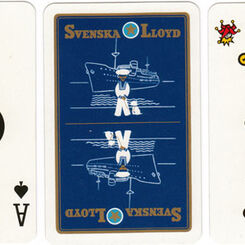
Öbergs ‘Svenska Lloyd’
‘Svenska Lloyd’ shipping company playing cards published by J.O. Öberg & Son, Eskilstuna, c.1955.
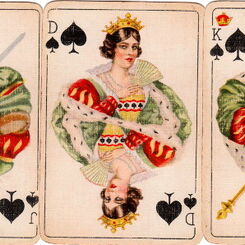
Åkerlund & Rausing
Swedish style pack by Åkerlund & Rausing, Stockholm, 1931-1937
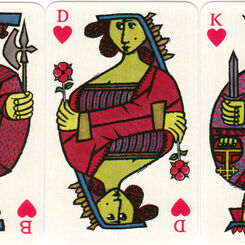
Öbergs ‘Comedia’
Öbergs “Comedia” playing cards designed by Stig Lindberg from Sweden, c.1958
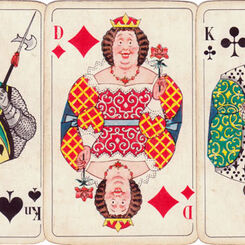
Four Centuries
“Four Centuries” playing cards by Esselte Öbergs with court cards depicted as caricatures from diffe...
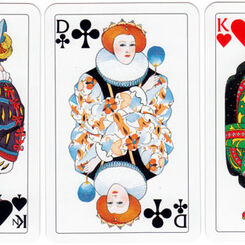
Offason “Beau”
Offason AB “Beau” playing cards designed by Åke Arenhill from Sweden, c.1990.
Vasa Dynasty
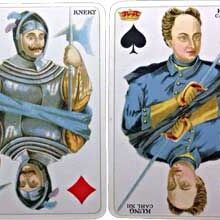
The House of Vasa was the royal house of Sweden 1523–1654 and subsequent rulers have emphasized thei...
Einar Nerman Patience
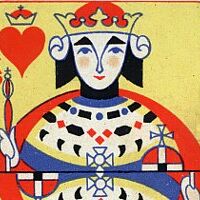
Einar Nerman (1888–1983) was a talented Swedish artist born in Norrköping who designed playing cards...
Piatnik Tarock
Deck of "Industrie und Glück" or "Rural Scenes" tarock cards manufactured by Ferd Piatnik & Söhne, V...
Piatnik & Sons for the“Estanco de Naipes del Perú”
Playing Cards made by Piatnik & Sons for the“Estanco de Naipes del Perú”, c.1960.
501 playing cards by Alf Cooke
“Five 'o One” playing cards, a version of the Dondorf Rhineland pattern, manufactured by Universal P...
Most Popular
Our top articles from the past 60 days


Stephen Scharber
01 April 2026, 23:17SavedSaved this article to Stephen Scharber's Collection