


Joseph Sürch, Engraver
Joseph Sürch, a prominent Viennese engraver, made significant contributions to card sheet engraving and is renowned for his work on various tarock decks.
Joseph Sürch (1811 - July 1877) was a prominent Viennese engraver whose work significantly contributed to the field of card sheet engraving. Born and raised in Vienna, Sürch trained as an engraver at the Akademie der bildenden Künste in Wien. He is featured as an artist in the 1880 edition of the Biographisches Lexikon des Kaiserthums Oesterreich (Biographical Encyclopedia of the Austrian Empire).

Above: the signature “Sürch / 1854” appears on the Cavalier of Hearts card from the Industrial und Glück Tarok deck.
From 1847 to 1849, Sürch worked for the influential Viennese fashion magazine Wiener Zeitschrift für Kunst, Literatur, Theater und Mode (Viennese Journal of Art, Literature, Theatre and Fashion). His graphic work, which includes common genre pictures, is not extensively documented and does not deviate significantly from the period average. Today, some of his works can occasionally be found in online stores.
Sürch also made his mark in the production of playing cards. In the 1850s, he worked with the card company of Joseph Glanz in Vienna. Many of his works are signed, making it possible to easily identify some of his engravings.
Industrie und Glück Tarok
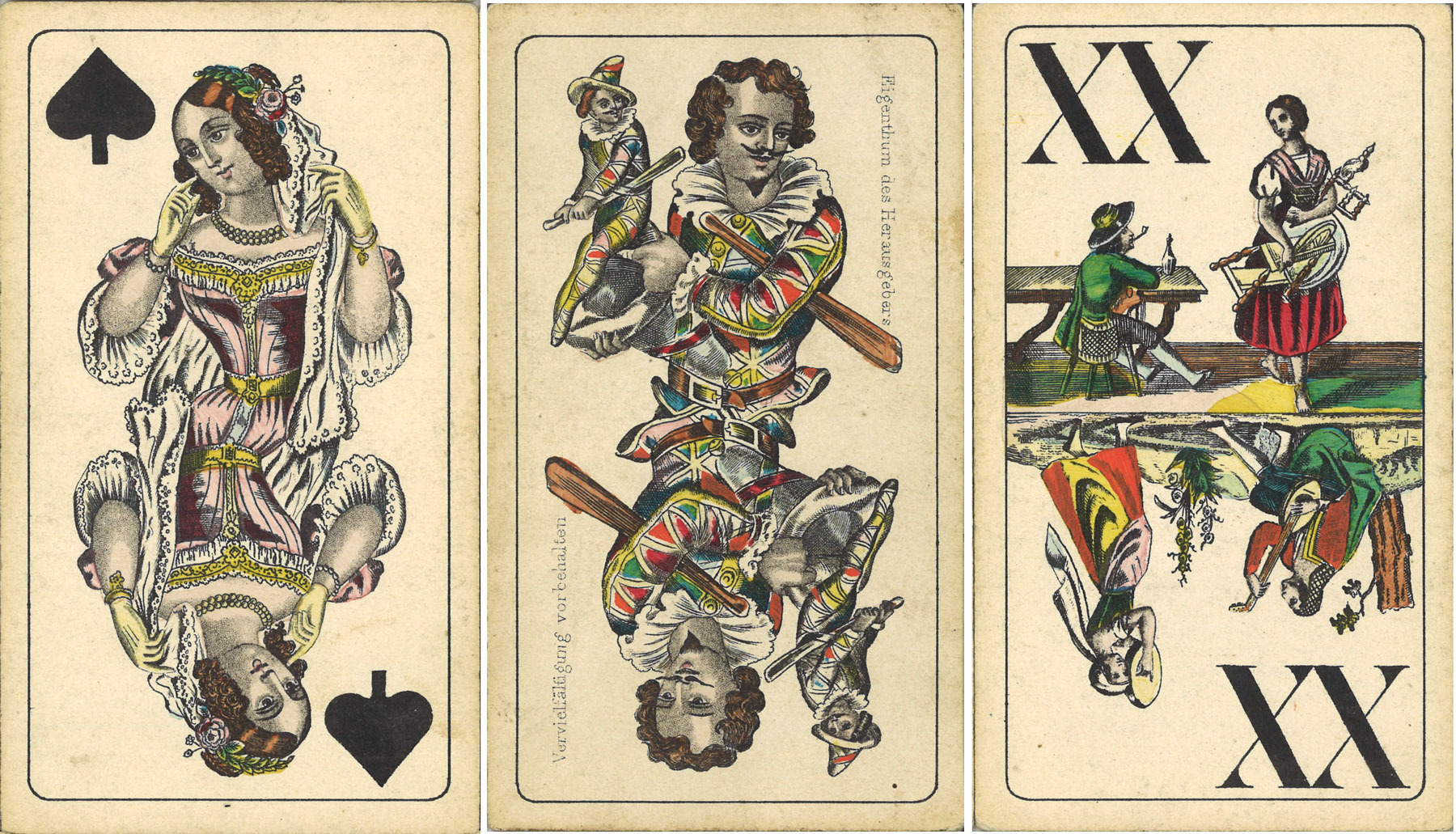
Above: Queen of Spades, the Fool and Card XX.
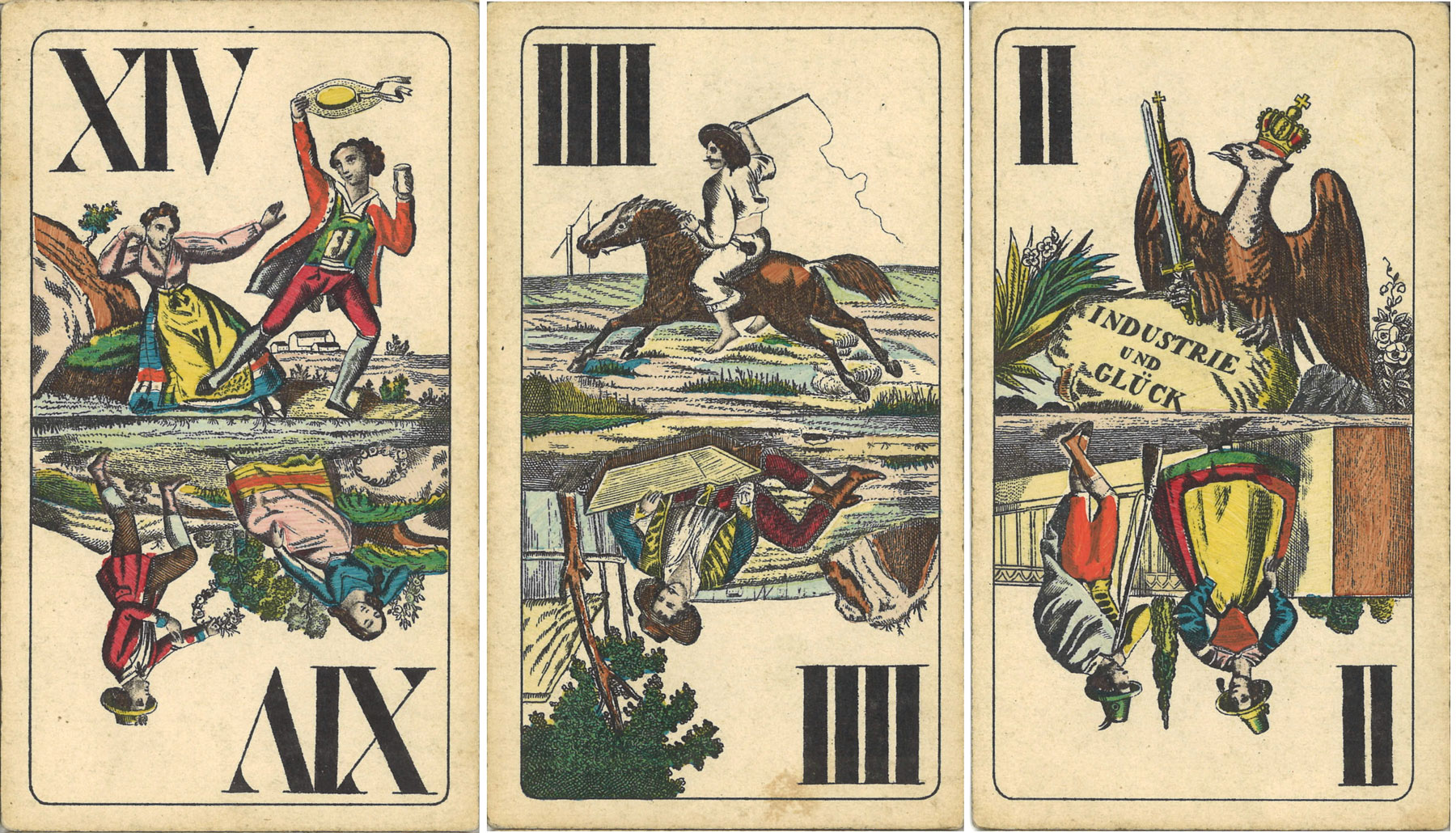
Above: Card XIV depicts a lively scene with a man and woman dancing, Card IIII features a rider on horseback, and Card II shows an eagle with a crown perched on a rock with the inscription “INDUSTRIE UND GLÜCK,” representing ingenuity and fortune.
This deck shows a developmental version of the Industrie und Glück deck with a custom composition of tarot card images.
AffenTarock
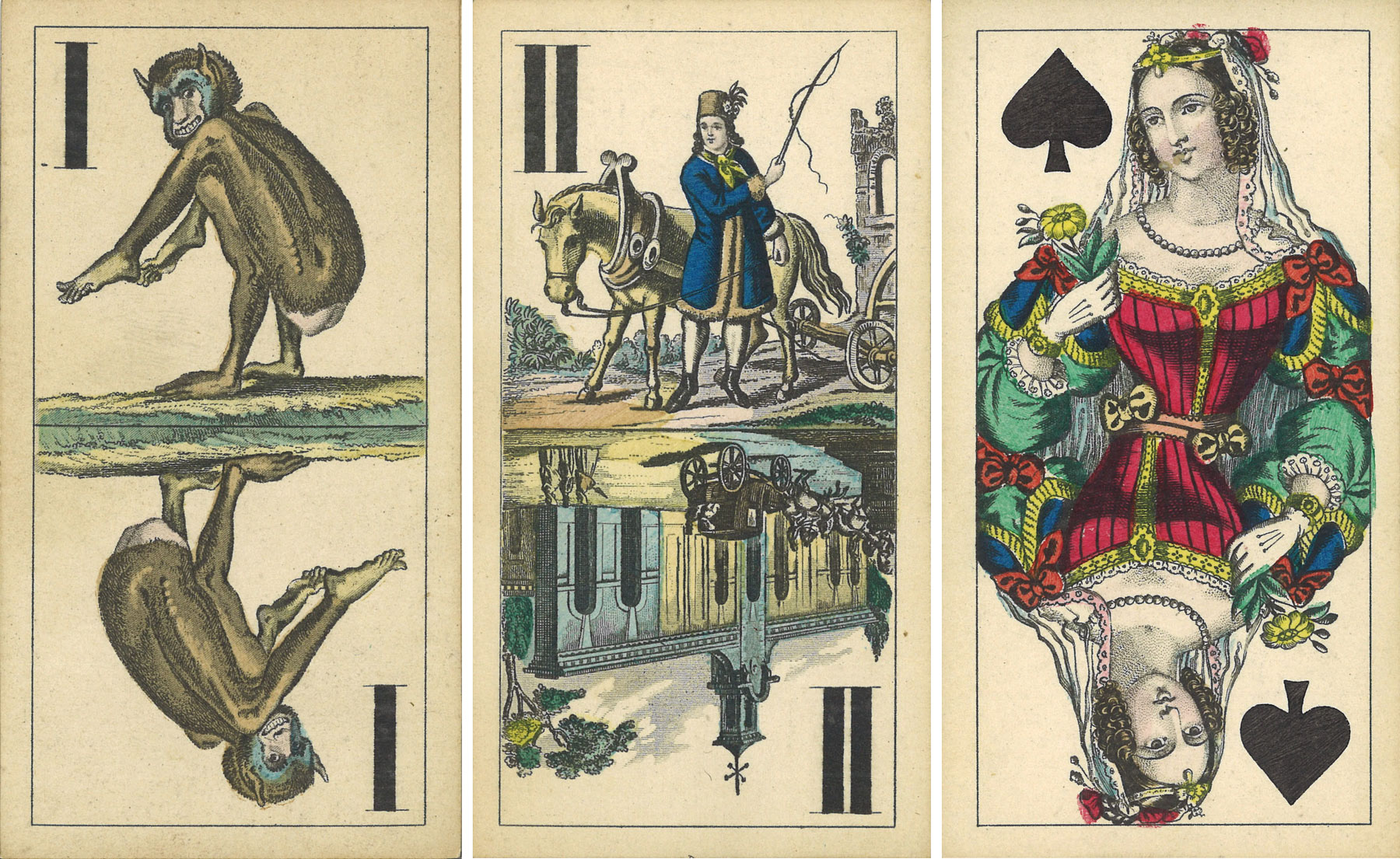
Above, left to right: Card I features a monkey, from which the AffenTarock deck gets its name; Card II depicts a traditional genre scene with a coachman and horse; the Queen of Spades shows a woman holding a flower.
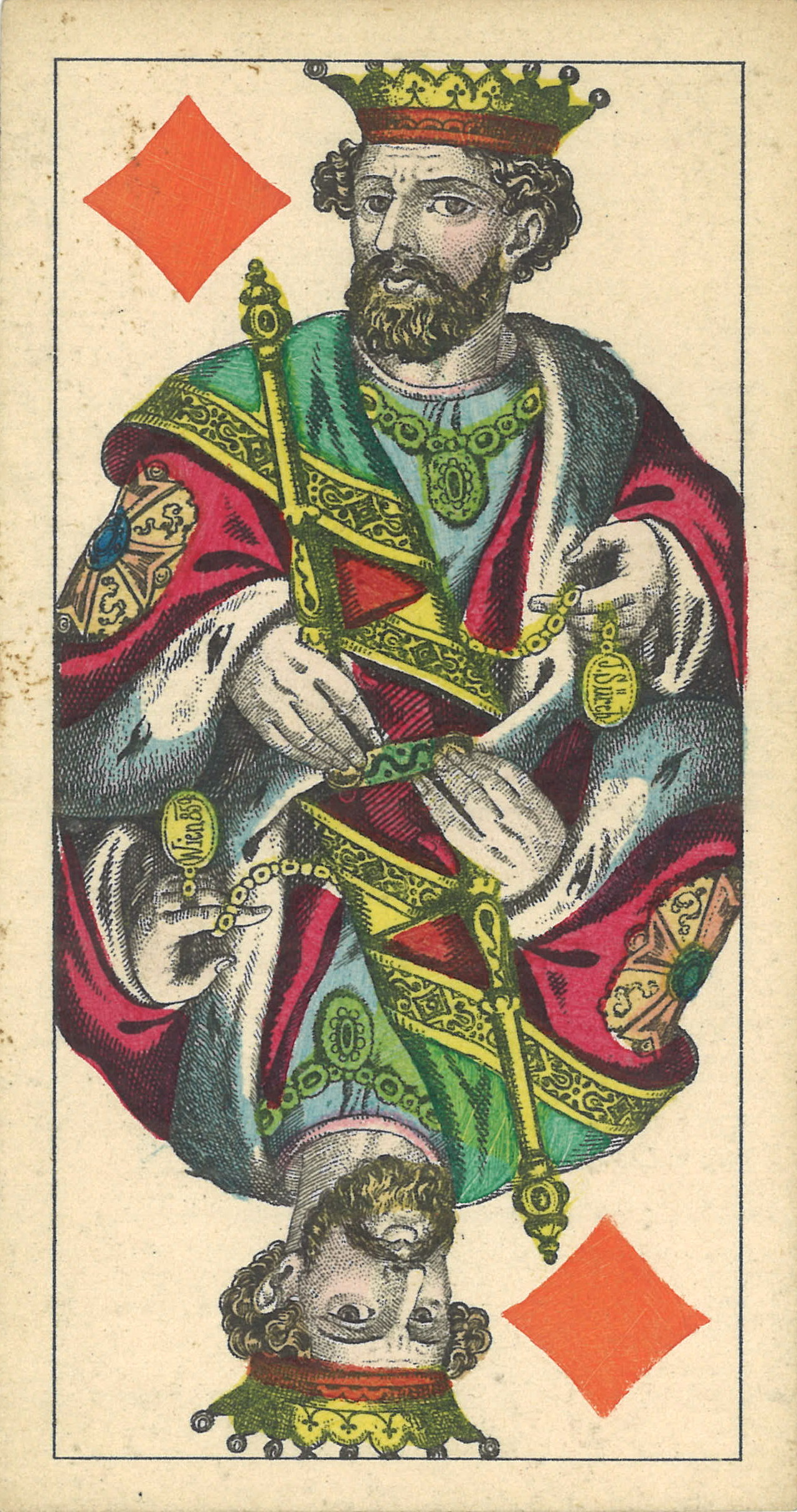
Above: "J. Sürch / Wien 879” displayed on the King of Diamonds card.
The name of this deck is derived from the German word “Affen” (monkey), inspired by the depiction on tarot card I. The tarot cards combine traditional genre scenes with vedutas of various buildings.
Wiener Veduten Tarock
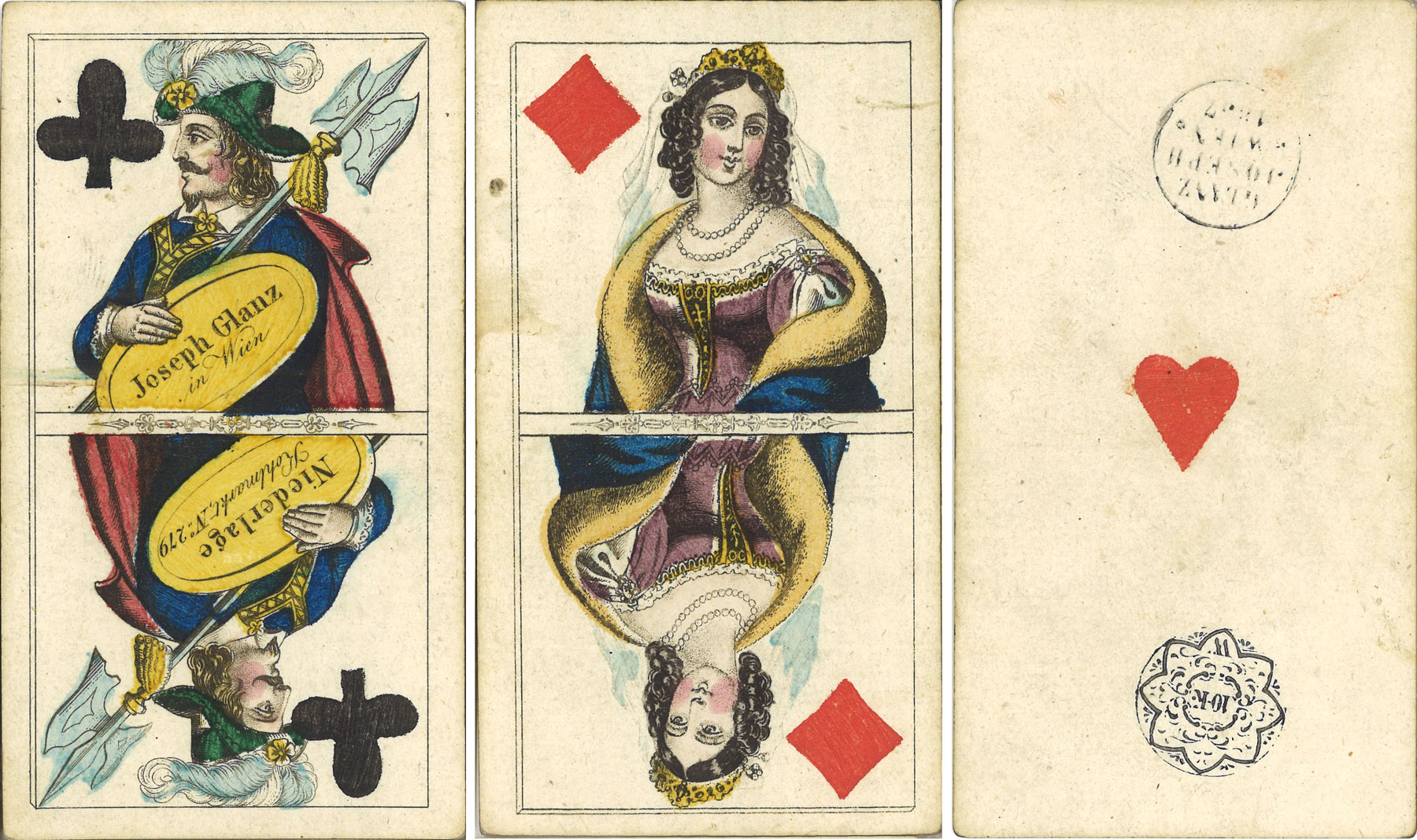
Above, left to right: the King of Clubs card signed by Joseph Glanz; the Queen of Diamonds card; the reverse side of a Hearts card showing the stamp and watermark.
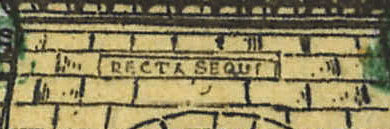
The Latin motto “Recta sequi” (Follow the right path) engraved on Card XVII from the Wiener Veduten Tarock deck.
Above: card XVII of the Wiener Veduten Tarock deck depicts the Tunel bei Baden with the motto “Recta sequi,” (Follow the right path) symbolizing the tunnel as a groundbreaking infrastructure project in the Austrian Empire.
In 1849, Joseph Glanz purchased the rival company Max Uffenheimer. As part of his product line, he built on their tarot card offerings with views and had Joseph Sürch engrave an updated version.


Above, left to right: Card XIV from the Wiener Veduten Tarock deck, and the signature “J. Sürch” appears on Card I, known as the pagat.
Despite any questions regarding the value of Joseph Sürch’s work as an artist, his contributions to card sheet engraving are unquestionable. The quality of Sürch’s engravings can be exemplified by a tarot card depicting the Tunel bei Baden motif. The card shows the first railway tunnel in the Austrian Empire, built in 1841 near the town of Gumpoldskirchen. At the mouth of the tunnel is the Latin motto Recta sequi, which Master Sürch also included on his card. The size of the letters is approximately 0.65 mm.
In 1974, 1985, and 1993, reprints of this deck were published by the Piatnik company. The first reprint was to commemorate its 150th anniversary, and subsequent reprints were part of the Edition Piatnik series.
A Small Note in Conclusion
In the December 2016 Cartorama catalog, an Industrie und Glück tarot deck by Johann Nejedly was offered for sale with the signature “Wien 1861 / J. Sürch sc” on card XIII and the Cavalier of Hearts.
References
- German Wikipedia on Joseph Sürch
- Biographisches Lexikon des Kaiserthums Oesterreich, vol. 40, p. 277
By Marek Brejcha
Czech Republic • Member since June 13, 2024
My relationship with cards grew from playing to collecting and transformed into publishing as well. I am part of the team at Counter Clockwise, a small company that publishes traditional card games.

Activity for Joseph Sürch, Engraver
Sign in to comment or save this article.

Related Articles
Warrior from Cattaro
A typology of Austrian Tarock documented through the evolution of one of its motifs.
Militar-Tarock No. 38
Non-standard tarock cards combining theatrical and military themes by Joseph Glanz.
Julius Berndl and his Austrian tarock
Josef Glanz's Tarock: a classic deck with artistic innovation by Julius Berndl.
Gigerl-Tarock by Joseph Glanz
Urban Dandy caricature deck from 19th century Vienna designed by Julius Berndl.
Patience by Joseph Glanz
A refined and distinctly European Patience pack by Joseph Glanz from Austria.
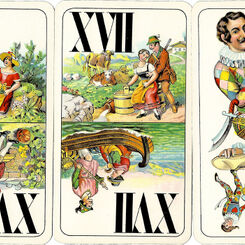
Tarock Nr. 71 by Ferd. Piatnik & Söhne
Special tarock deck for the Tyrolean game Droggn.
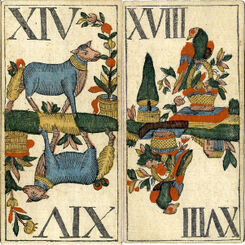
Animal Tarock by J. G. Pichler
Baroque tarock cards from the late 18th century.
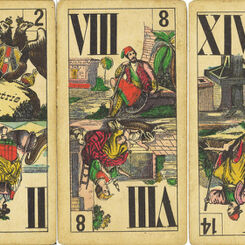
Johann Nejedly Tarok Cards
Johann Nejedly, a 19th-century Viennese card maker, produced Tarock cards featuring modern scenes th...
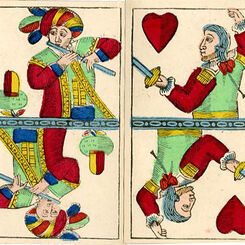
Double-ended German-suited pack by Josef Glanz, Vienna.
From the British Museum collection.
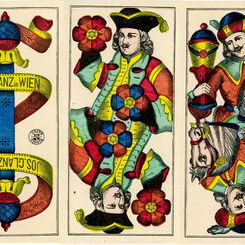
Trappola pack by Joseph Glanz
Double-ended Trappola pack by Joseph Glanz, Vienna, late 19th century.
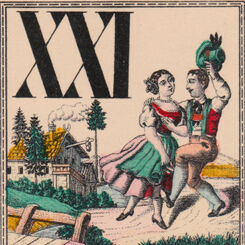
Tarok c.1900
Piatnik & Söhne “Industrie und Glück” Tarock c.1905-1910.
Jugendstil Tarock
‘Jugendstil Tarock’ was designed by Ditha Moser and first published by Albert Berger and Josef Glanz...
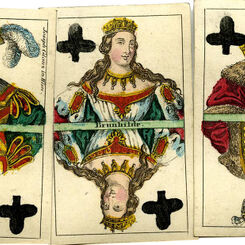
J. Glanz Historical playing cards
Historical Theatrical playing cards manufactured by J. Glanz, c.1860.
Mythological Tarock by Johann Herrl
French-suited Tarock deck made by Johann Herrl in Graz 1815.
Piatnik Tarock
Deck of "Industrie und Glück" or "Rural Scenes" tarock cards manufactured by Ferd Piatnik & Söhne, V...
Tarock Cards
The earliest Tarot decks originated in Italy in the fifteenth century, with Italian suit symbols. Ho...
Estel Tarok
J. Estel Tarok, 1820.
Pittner Tarok
Ferd Pittner, Tarok Cards
Joseph Glanz, 1862
Playing cards depicting Turkish and Greek rulers manufactured by Joseph Glanz, Vienna, Austria, 1862...
Adametz, Vienna
Cards from a 54-card "Austrian Tarock" or "Industrie und Glück Tarock" pack made by Franz Adametz of...
Most Popular
Our top articles from the past 60 days


