


Gigerl-Tarock by Joseph Glanz
Urban Dandy caricature deck from 19th century Vienna designed by Julius Berndl.
This atypical deck was created by graphic artist Julius Berndl around 1885 for the Josef Glanz card factory in Vienna. The deck of 54 cards corresponds in structure to the standard Austrian tarock, but the individual design offers caricatures of a popular type of the period, known as the gigerl, on the court and tarock cards. The social popularity of this character was reflected in literature, songs and plays of the time. The card manufacturer also joined the trend with this special deck. Caricatures drawn on single-ended cards show this urban dandy in various settings. The depictions often use contemporary drawings, described in Frank Nauhauser's insightful analysis in Talon magazine¹.
Gigerl
The term was used by Eduard Pötzl in 1884 and popularized in his newspaper articles. It refers to an extroverted member of the Viennese urban society of the time, a fashion enthusiast who uncritically accepts current fads, with a particular fondness for pointy shoes, ill-fitting clothes and eccentric movements. The word ‘gigerl’ is interpreted by K. Reisinger as a local Viennese term for roast chicken [hähnchen]. F Nauhauser, referring to E. Pötzl's account, proves the origin in the Middle High German dialect and in his article offers a number of contemporary cultural references to this term. A modern equivalent might be a flamboyant fashion victim or trend-chasing influencer—half-dandy, half-caricature.
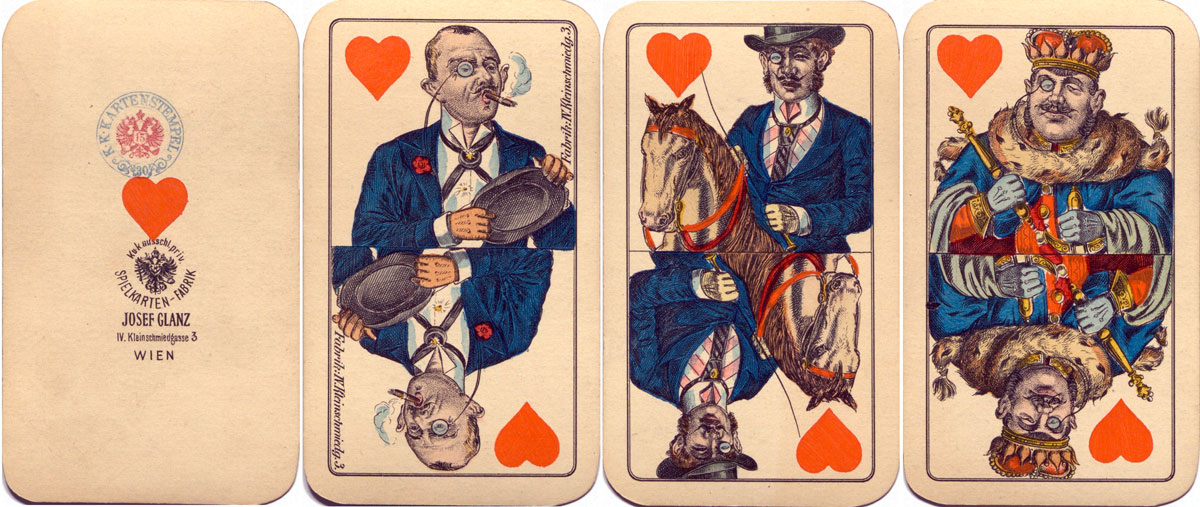
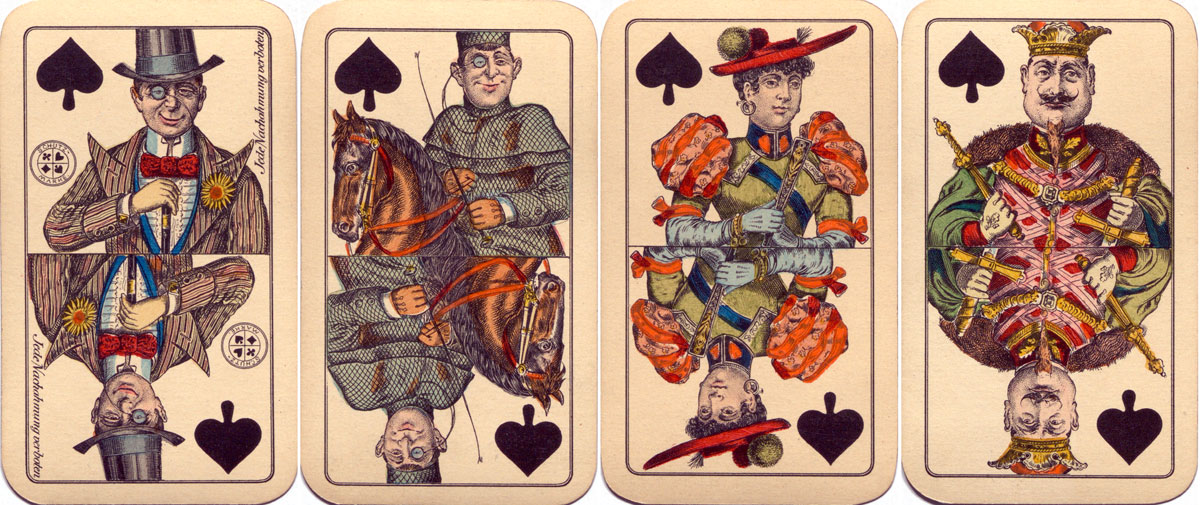
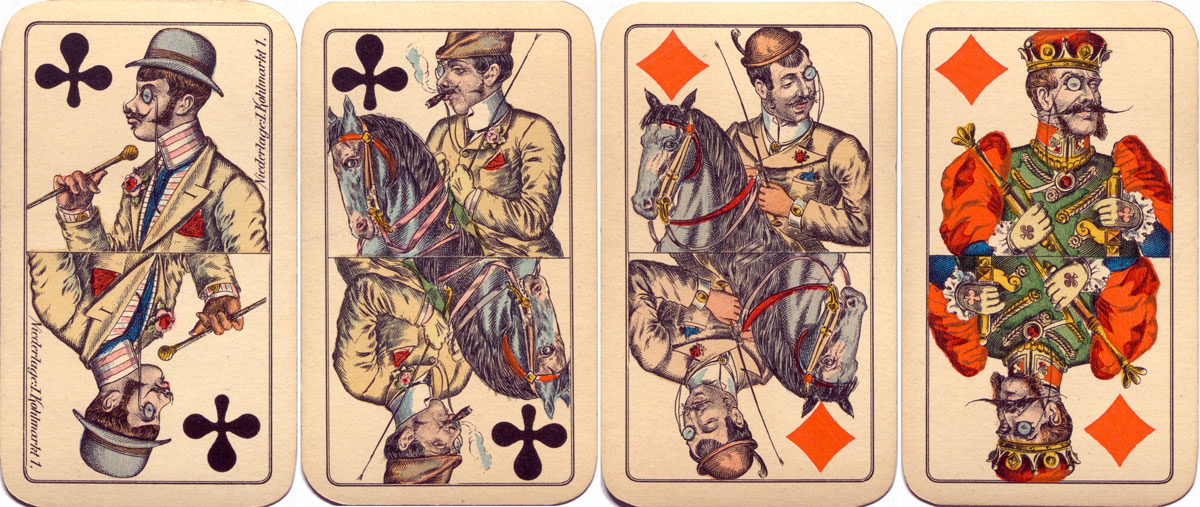
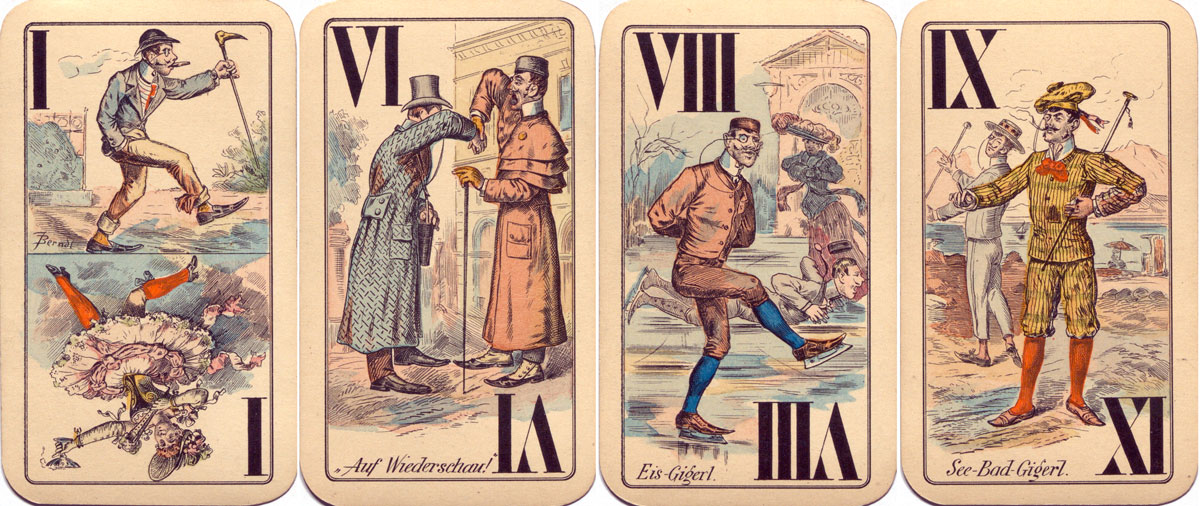
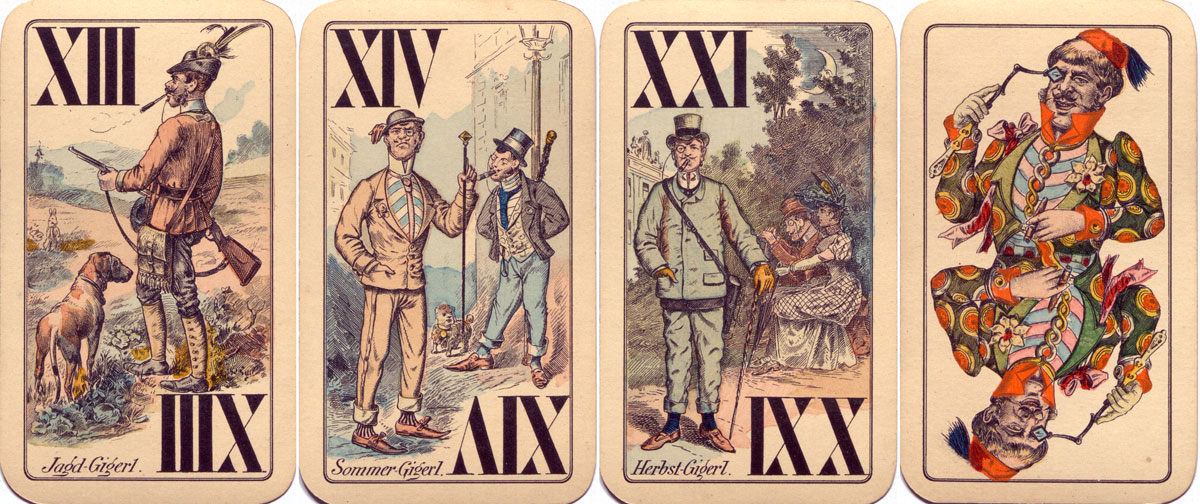
Above: Gigerl-Tarock caricature deck designed by Julius Berndl and manufactured by Joseph Glanz c.1885.
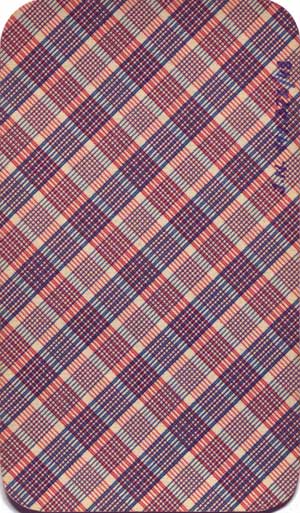
This set is preserved in the collection of the Vienna Museum². The cards, measuring 63 x 106 mm, are made by line lithography with stencil colouring. The ace of hearts has an Austrian 30 kreutzer tax stamp used between 1882-1899 . Berndl's signature is on tarock card no I.
Acknowledgement & References
I would like to thank Mr. Wolfgang Altfahrt for substantially supplementing the initial draft of this article.
- Frank Nauhauser : Gigerl Tarock in Talon Nr. 33 / 2024 in German online pp.178-192►
- Vienna Museum : Gigerl Tarock►
- Klaus Reisinger / Tarocke. Kulturgeschichte auf Kartenbildern, part II. pg. 418-419
By Marek Brejcha
Czech Republic • Member since June 13, 2024
My relationship with cards grew from playing to collecting and transformed into publishing as well. I am part of the team at Counter Clockwise, a small company that publishes traditional card games.

Activity for Gigerl-Tarock by Joseph Glanz
Sign in to comment or save this article.

Related Articles
Buffy the Vampire Slayer Tarot
A Buffy the Vampire Slayer tarot pack that replaces Swords with scythes and Wands with stakes.
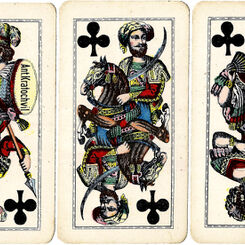
Tarock Cards by Antonín Kratochvíl
Excerpt from the catalog of a prominent Prague workshop.
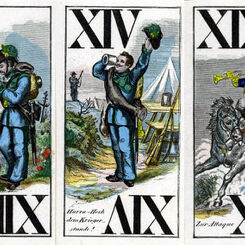
Militar-Tarock No. 38
Non-standard tarock cards combining theatrical and military themes by Joseph Glanz.
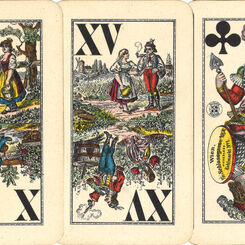
Julius Berndl and his Austrian tarock
Josef Glanz's Tarock: a classic deck with artistic innovation by Julius Berndl.
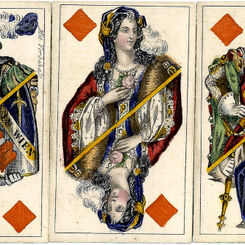
Patience by Joseph Glanz
A refined and distinctly European Patience pack by Joseph Glanz from Austria.
Animal Tarock by J. G. Pichler
Baroque tarock cards from the late 18th century.
Tarock Cards by NIL Spielkartenfabrik
A deck of tarock cards from the eastern end of the ending Austro-Hungarian Empire.
Joseph Sürch, Engraver
Joseph Sürch, a prominent Viennese engraver, made significant contributions to card sheet engraving ...
Double-ended German-suited pack by Josef Glanz, Vienna.
From the British Museum collection.
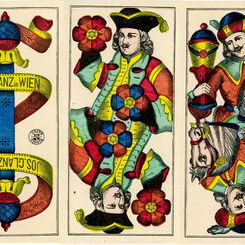
Trappola pack by Joseph Glanz
Double-ended Trappola pack by Joseph Glanz, Vienna, late 19th century.
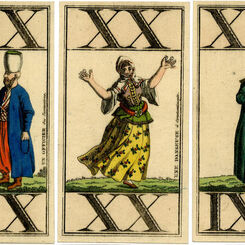
Costumes of Turkey Tarot
‘National Costumes of Turkey’ tarot by Industrie Comptoir, Leipzig, c.1800-1825.
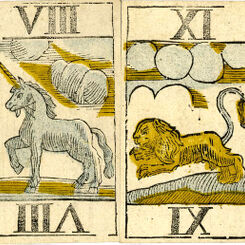
Animal Tarot by G. Larmoyer
Flemish Animal Tarot deck by G. Larmoyer, Liège, 1753.
Jugendstil Tarock
‘Jugendstil Tarock’ was designed by Ditha Moser and first published by Albert Berger and Josef Glanz...
J. Glanz Historical playing cards
Historical Theatrical playing cards manufactured by J. Glanz, c.1860.
Mythological Tarock by Johann Herrl
French-suited Tarock deck made by Johann Herrl in Graz 1815.
Piatnik Tarock
Deck of "Industrie und Glück" or "Rural Scenes" tarock cards manufactured by Ferd Piatnik & Söhne, V...
Estel Tarok
J. Estel Tarok, 1820.
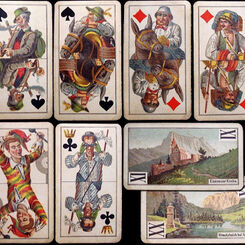
Pittner Tarok
Ferd Pittner, Tarok Cards
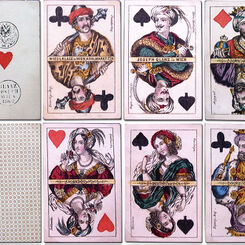
Joseph Glanz, 1862
Playing cards depicting Turkish and Greek rulers manufactured by Joseph Glanz, Vienna, Austria, 1862...
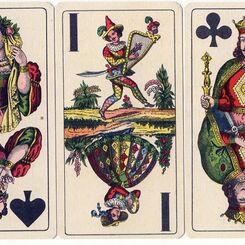
Adametz, Vienna
Cards from a 54-card "Austrian Tarock" or "Industrie und Glück Tarock" pack made by Franz Adametz of...
Most Popular
Our top articles from the past 60 days


