


Shakespeare by Piatnik
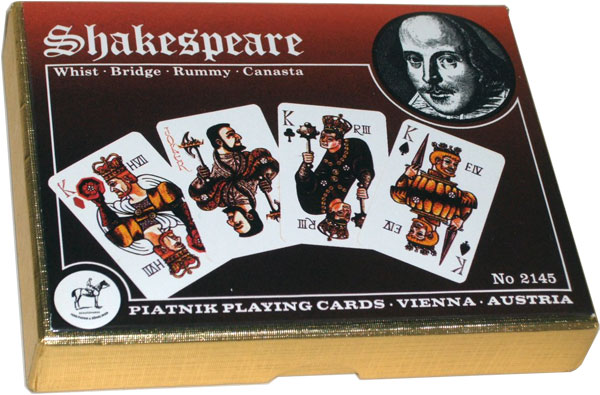
‘Shakespeare’ playing cards by Piatnik designed by the British actor Donald Burton.
The Shakespeare Cards have been produced by Piatnik as one of their suave dual-decks since 1967, confusingly under the numbers No 2145 and No 2445, sometimes with both code numbers being used within the same package!
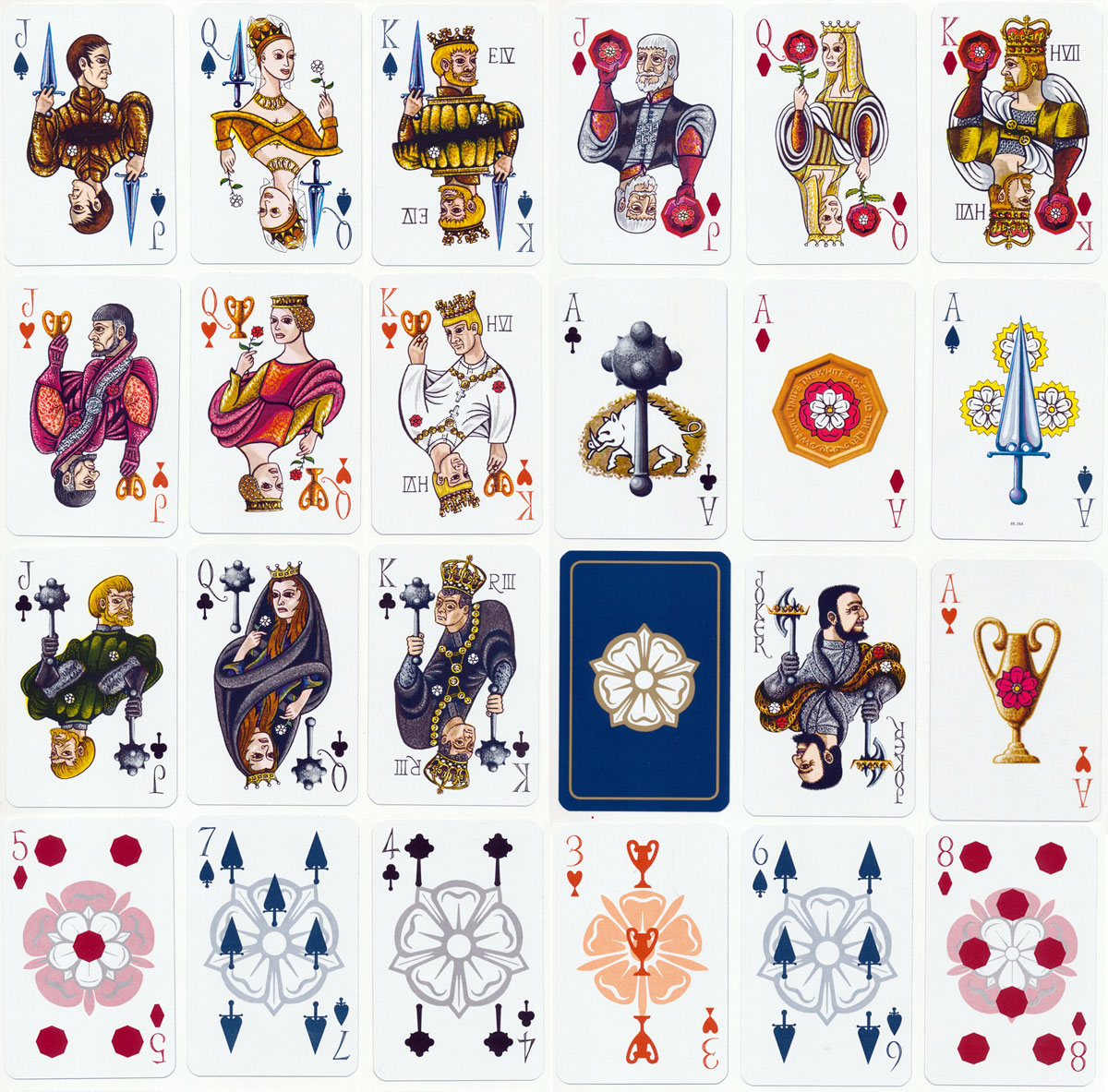
The cards were designed by the British actor Donald Burton based on his experiences in the historical series of plays known as “the Wars of the Roses” and performed by the Royal Shakespeare Company. The deck uses the suits of Swords, Batons, Cups and Coins designed in such a way as to be recognisable by their British equivalents of Spades, Clubs, Hearts and Diamonds respectively. Each court card represents a Shakespearean interpretation of a character from English history, such as the much misaligned Richard III who true to Shakespearean mythology is depicted as a tyrannical, and evil ‘crookback’.
The package includes a dual-language booklet in German and English describing the deck, suits and characters depicted on the court cards. A Royal Family Tree is also supplied charting the genealogy from Edward III through to Henry VIII.

By Matt Probert
United Kingdom • Member since March 02, 2012
I have adored playing cards since before I was seven years old, and was brought up on packs of Waddington's No 1. As a child I was fascinated by the pictures of the court cards.
Over the next fifty years I was seduced by the artwork in Piatnik's packs and became a collector of playing cards.
Seeking more information about various unidentified packs I discovered the World of Playing Cards website and became an enthusiastic contributor researching and documenting different packs of cards.
I describe my self as a playing card archaeologist, using detective work to identify and date obscure packs of cards discovered in old houses, flea markets and car boot sales.

Activity for Shakespeare by Piatnik
Sign in to comment or save this article.

Related Articles
Arik Brauer
An artist-led pack from Vienna’s Hilger Edition, with Arik Brauer’s fantasy imagery turned into card...
Vorarlberg Büschel Jasskarten
“Vorarlberg Büschel Jasskarten” designed by Austrian artist and typographer Konrad Hämmerle.
Cosmopolitan № 2121 playing cards
“Cosmopolitan” № 2121 playing cards designed by Russian artist Valeri Mishin, 1996
Piatnik No.97
Non-standard French-suited cards published by Ferd Piatnik & Sõhne, Vienna, c.1940s.
Vienna (ex-Lyon) pattern
‘Vienna pattern’ derived from archaic Lyon pattern by Ferd Piatnik & Söhne A.G., c.1926-1934.
Baroque No.2118
“Baroque” by Ferd Piatnik & Sons, Vienna, reflecting a bygone era of fashion.
48: Ferdinand Piatnik & Sons
Ferd. Piatnik produced a very large range of cards with many different standard and non-standard pat...
Popular No.257
Piatnik’s “Popular Playing Cards” No.257
Salzburger Pattern
Salzburger pattern by Ferd. Piatnik & Söhne, Vienna
Rococo No. 2130
Piatnik: Rococo No. 2130 playing cards designed by Prof. Kuno Hock, c.1975
Blue Playing Cards
“Blue Playing Cards” by Piatnik, 1960s, inspired by the Cubism art movement in which objects are ana...
France Royale Bridge
“France Royale” Bridge playing cards by Willy Mayrl depict historical characters from France’s royal...
Jugendstil Art Nouveau Bridge
“Jugendstil Art Nouveau” Bridge Nr.2136 published by Piatnik, 1980.
Vienna Melange
“Vienna Melange” Playing Cards by Piatnik with a historical feel representing the four races that ma...
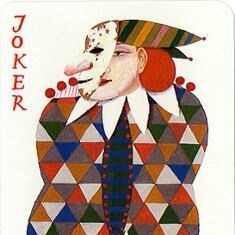
Karl Korab (Ed. Hilger)
Karl Korab was born in 1937 in Falkenstein (Lower Austria), the son of a forester. As a child he exp...
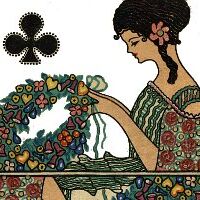
Waisenfond
Intended to attract donations on behalf of the Imperial Royal Austrian Military Widows’ and Orphans’...
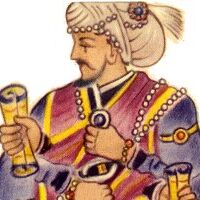
Cashmere
Bernhard Altmann is from the “The House of Cashmere” and these playing cards honour their best known...
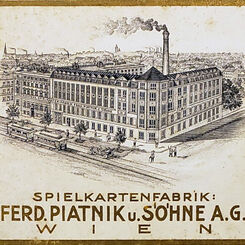
Ferd. Piatnik & Söhne
Ferdinand Piatnik was born in Ofen on October 14, 1819.
Piatnik Tarock
Deck of "Industrie und Glück" or "Rural Scenes" tarock cards manufactured by Ferd Piatnik & Söhne, V...
The History of Playing Cards
Playing cards appear in European records in the late 14th century, but their earlier history lies fu...
Most Popular
Our top articles from the past 60 days


Peter Burnett
19 November 2025, 09:47SavedSaved this article to Peter's Collection