


History and Evolution of Spades
History and Evolution of Spades
History and Evolution of Spades
The modern game of Spades became popular in the late 1940s, especially on college campuses.
A review of several card game reference sources revealed that Spades descended from Whist. Spades is also closely related to Bridge, Pinochle, Euchre and other similar skill games featuring partnership play, bidding and a trump suit.
George Coffin, the great Bridge author, traced the roots of Spades to the Mid-West. He determined that the game of Spades was introduced in Cincinnati, Ohio, sometime between 1937 and 1939. From there, it spread to other cities in the general region and eventually into the military. Spades was played extensively during World War II as it was a fast paced game, which could be interrupted at any time ? especially during battle conditions!
While Whist (especially Bid-Whist) and Euchre have enjoyed modest resurgence, Spades has continued a very steady growth and has become established nationally. It is now the number one partnership card game in the United States, and still reigns as the king of card games in Colleges!
The appeal of Spades is its relatively basic bidding system, opportunity for advanced play and very quick moving action. Many seasoned Bridge players became very proficient at Spades before graduating to their specialty.
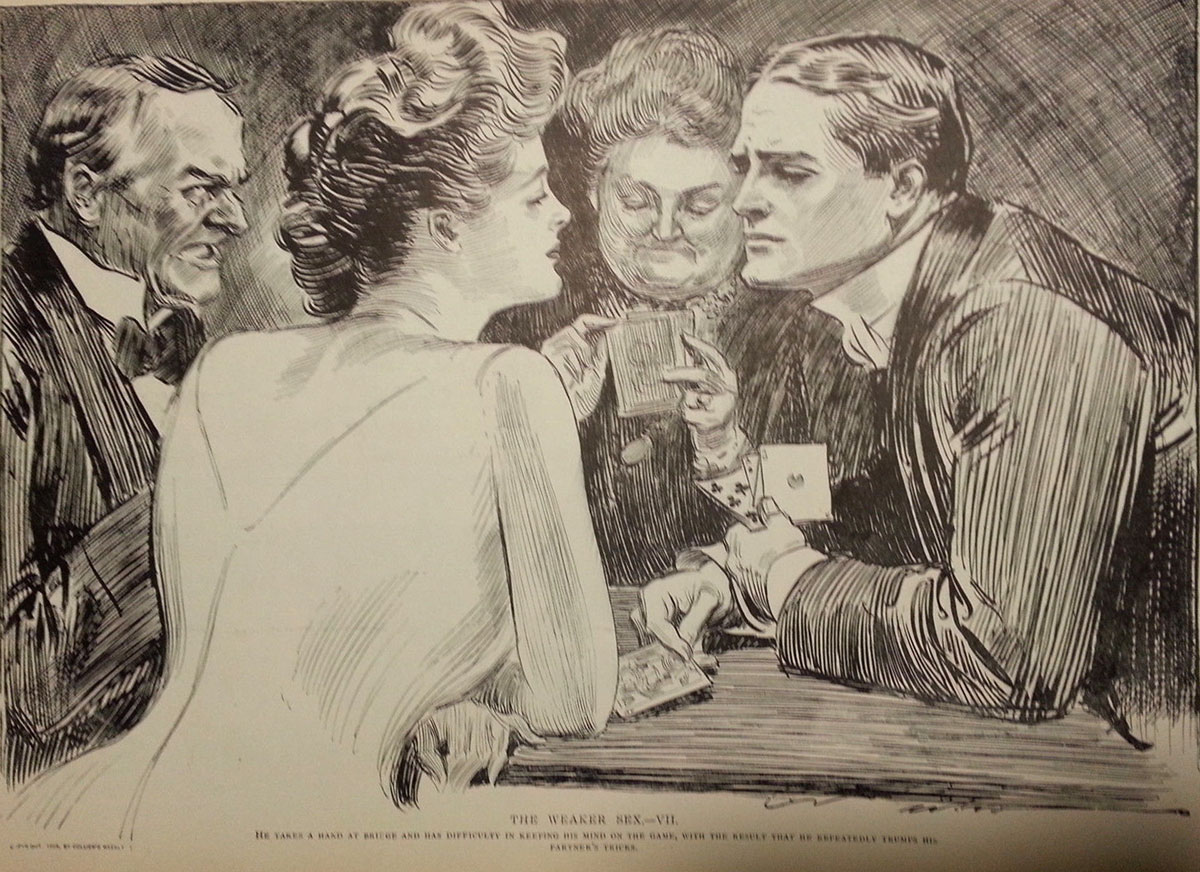
Spades is by far and away the most popular card game on the Internet, although some will argue a case for Poker and Black Jack. Since the latter two are individuals? contests of chance, one cannot consider the comparison to gambling games as valid, although it is impossible not to recognize these games as having a high skill factor.
The future growth of Spades is ensured as the Internet becomes more and more accessible.

By Simon Wintle
Spain • Member since February 01, 1996
I am the founder of The World of Playing Cards (est. 1996), a website dedicated to the history, artistry and cultural significance of playing cards and tarot. Over the years I have researched various areas of the subject, acquired and traded collections and contributed as a committee member of the IPCS and graphics editor of The Playing-Card journal. Having lived in Chile, England, Wales, and now Spain, these experiences have shaped my work and passion for playing cards. Amongst my achievements is producing a limited-edition replica of a 17th-century English pack using woodblocks and stencils—a labour of love. Today, the World of Playing Cards is a global collaborative project, with my son Adam serving as the technical driving force behind its development. His innovative efforts have helped shape the site into the thriving hub it is today. You are warmly invited to become a contributor and share your enthusiasm.

Activity for History and Evolution of Spades
Sign in to comment or save this article.

Related Articles

Playing Card Games Online
From Cribbage to Canasta: why old card games have found a new digital home.
Learning to play Cribbage
I learned to pay cribbage when I was very young, aged around six or seven.
The Paraphernalia of Card Play
Innovation and novelties in the accessories on the card table.
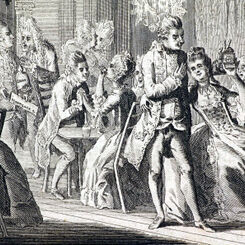
Cheating at Whist and Bridge
The Blackleg in the Drawing-Room: Cheating and the Victorian Gentleman.
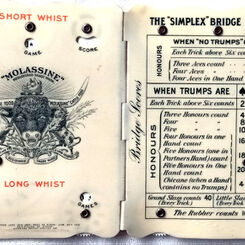
The Molassine Company and its link to Whist and Bridge
A savvy marketing strategy blending Victorian decorative design with Edwardian practicality.
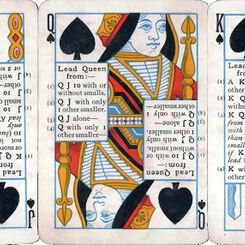
Scientific Whist
“Scientific Whist” : standard cards with instructions for play on the faces by Chas Goodall & Son, 1...
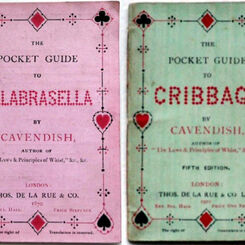
De La Rue Pocket Guides
The 19th Century saw the production, by all of the major companies, of pocket guides or “mini-books”...
A New Look at the Evolution of Whist Markers and Gaming Counters
This article aims to illustrate the evolution of whist and gaming counters from the 18th century to ...
Bridge Markers and bridge scoring methods
Bridge Markers and bridge scoring methods 1900-1930
The Personalities and Books which shaped the game of Whist, 1860-1900
All the books described here are from Tony Hall's own collection, put together over years because of...
Majority Calling and Value Bidding in Auction Bridge; a little bit of history
The centuries-old game of Whist mutated through various stages into Contract Bridge as we know it to...
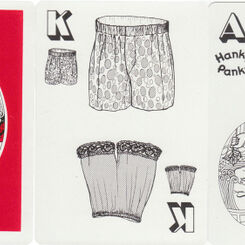
Hanky-Panky
Hanky-Panky poker card game, California, c.1975.
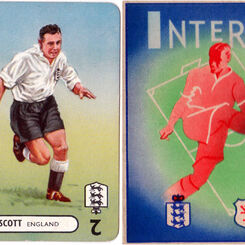
International Football Whist
International Football Whist published by Pepys Games, 1947.
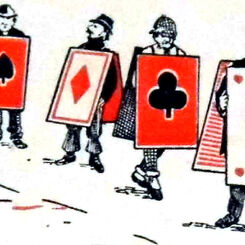
Progressive Whist Cards
There are references to “progressive whist” or “whist drives” during the 19th and early years of the...
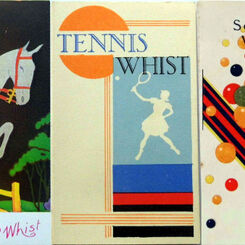
Progressive Whist Cards - page 3
There were various Sports and Sporting Whist themes... and tobacco advertising on score cards.
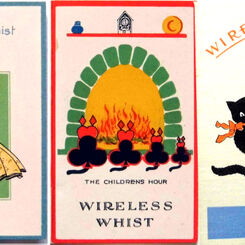
Progressive Whist Cards - page 2
Wireless Whist itself, in many forms...
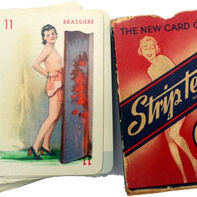
Strip Tease
‘Strip Tease’ card game featuring characters involved in the performance and subsequent prosecution ...
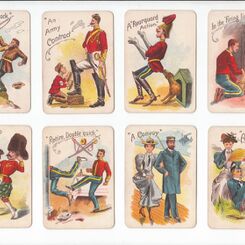
4: Some Card Games
Yet another strand of the playing card world is that of card games, packs of cards usually designed ...
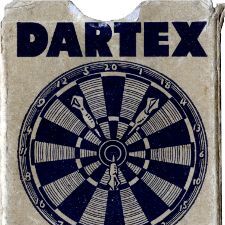
Dartex
Dartex, the Thrilling New Card Game of Skill (1938) based on the traditional pub game where darts ar...

History of Poker
The origin of Poker - arguably the most influential card game of all time - is actually quite unclea...
Most Popular
Our top articles from the past 60 days


