

Wilhelm Busch (1832-1908)
Wilhelm Busch was a German caricaturist and humourist. Many card games made in Germany use his characters.
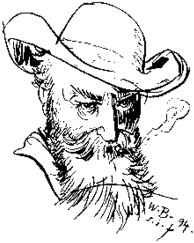
German card games from the collection of Rex Pitts
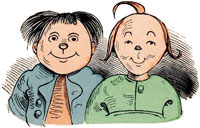
Wilhelm Busch was a German caricaturist and humourist who lived from 1832-1908 (during the aftermath of the unsuccessful revolutions of 1848-49). He was immensely famous in his own country and loved by all Germans due to his satirical “picture stories” in which he mocked the “Biedermeier bourgeoisie”. He is credited as the inventor of the comic strip and his cartoons and comic verse are as well known in Germany as Edward Lear’s cartoons and limericks are in England. Most famous of his characters are Max and Moritz, a couple of bumbling nitwits always in trouble. Their adventures continued from very early in Busch’s career to the very end. A later entrant was Fipps the Ape, also very popular. Many card games were produced in Germany using his characters and several are illustrated here. The Germans definitely do have a sense of humour! See: Wikipedia article →
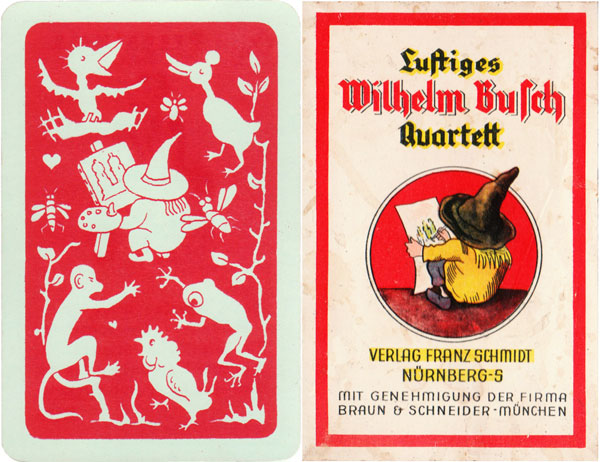
Above: “Lustiges Wilhelm Busch Quartett” card game published by Franz Schmidt Nuremberg, 1937.
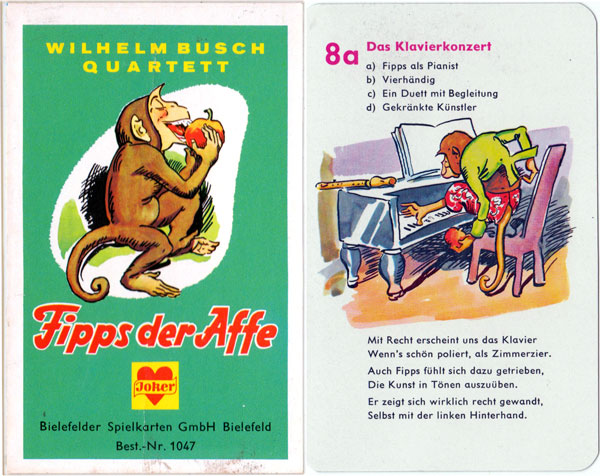
Above: “Fipps der Affe“ (Fipps the Ape) quartet game with cartoons by Wilhelm Busch published by Bielefelder Spielkarten GmbH, c.1960.
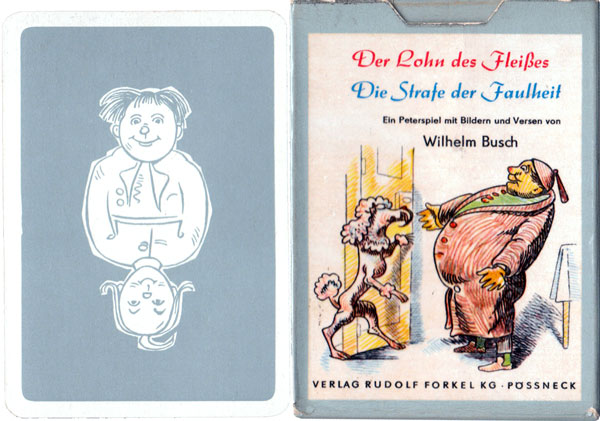
Above: “Der Lohn des Fleisses“ (The reward of diligence) card game coupled with “Die Strafe der Faulheit“ (The punishment of sloth) in verse and pictures, with cautionary tone.
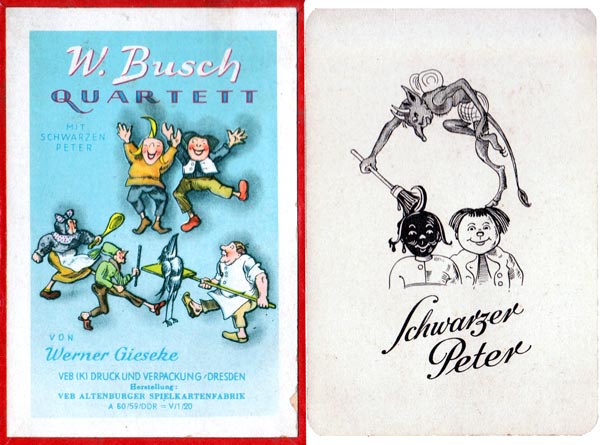
Above: “Schwarzer Peter Quartett” card game published by VEB Altenburger Spielkartenfabrik, c.1960.
REFERENCES
Gladwell, Joan Elizabeth: Wilhelm Busch: The Art of Letting Off Steam Through Symbolic Inversion, PhD thesis, Queen’s University, Kingston, Ontario, Canada, 2013
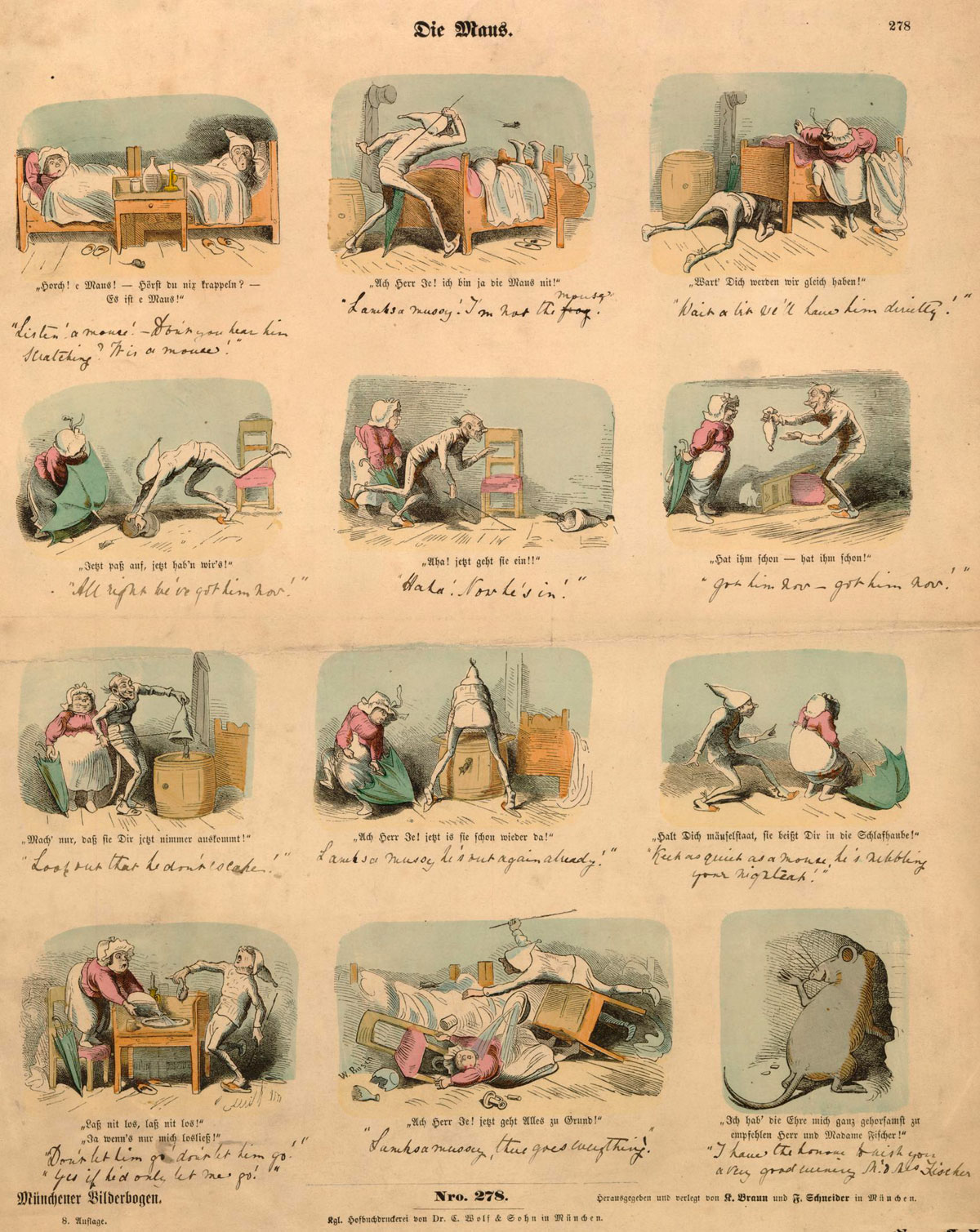
Above: Broadside 'Bilderbogen', with twelve scenes showing a married couple whose sleep is interrupted by a mischievous mouse; Munich Bilderbogen No. 278. 1860 is the date of the first edition; this impression (8th edition) is likely to be later. Print made by Wilhelm Busch, printed by Dr E Wolf & Sohn, published by Braun und Schneider (Munich). Hand-coloured woodcuts and letterpress; backed on canvas support. Below each image are one or two lines of rhyming text (and in manuscript in English). © The Trustees of the British Museum • Museum number 1991,0615.123►
Other German Comic Card Games
from the collection of Rex Pitts
Besides the range of children's card games published by B. Dondorf and J.W. Spear & Söhne which tended to be more educational, a number of comic games were produced by other German manufacturers with perhaps a preponderance of “Schwarzer Peter” games, where the main focus of the game is towards the last card, which might be a black cat, chimney sweep or homourous character:
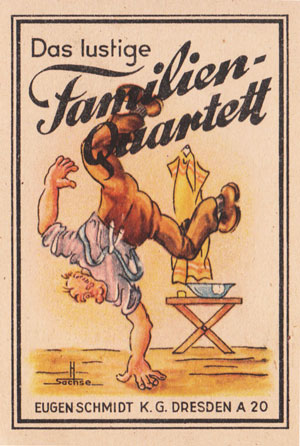
Above: “Das Lustige Familien-Quartett” humourous card game published by Eugen Schmidt K.G., Dresden, 1930s.
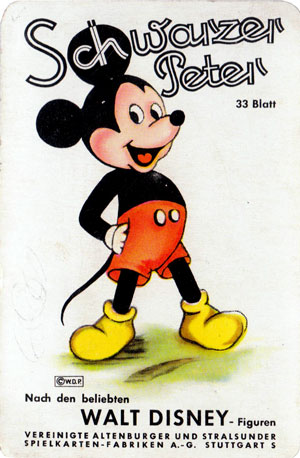
Above: Walt Disney “Schwarzer Peter” game published by Vereinigte Altenburger und Stralsunder Spielkarten-Fabriken A.G., Stuttgart.
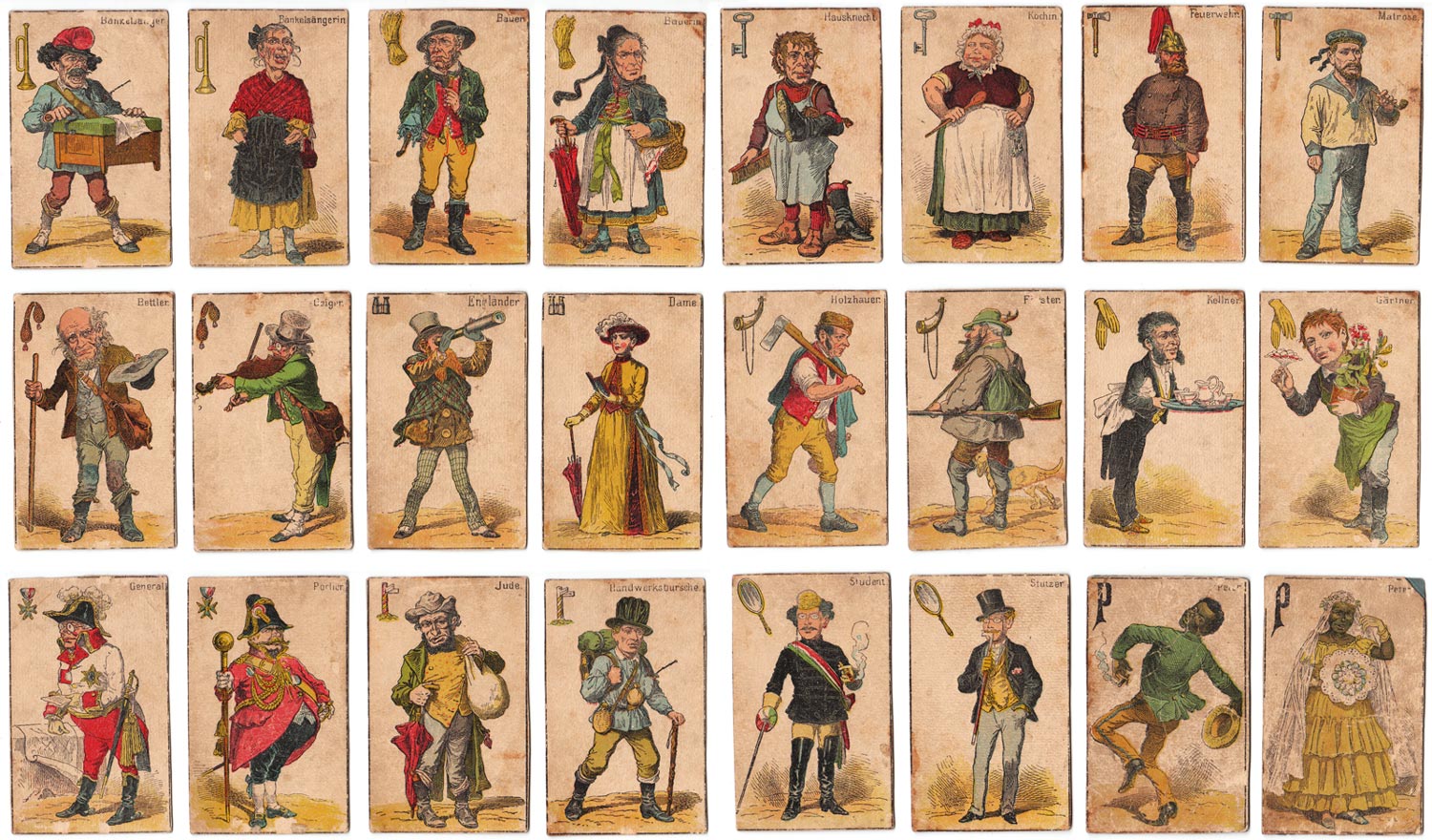
Above: “Schwarzer Peter” game published by Ensslin & Laiblin, Reutlingen (Stuttgart), c.1890s.
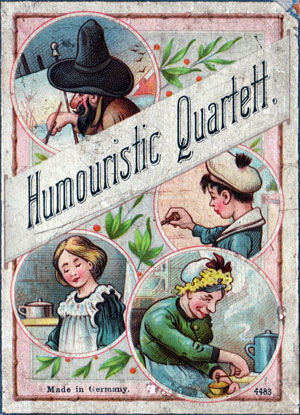
Above: “Humouristic Quartett” game made in Germany.
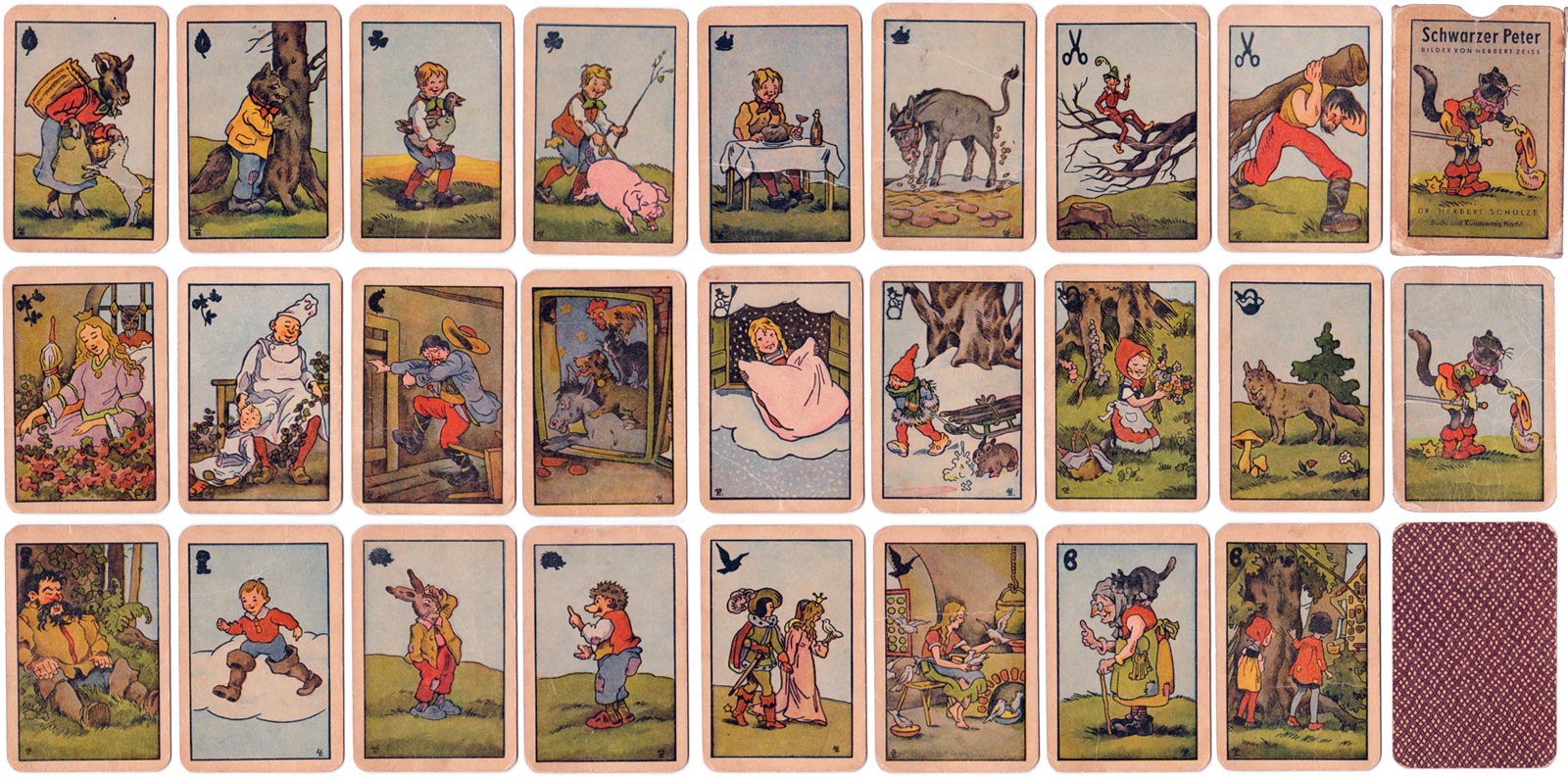
Above: “Schwarzer Peter” game published by Dr. Herbert Schulze Buch und Kunstverlag Nachf., artwork by Herbert Zeise.
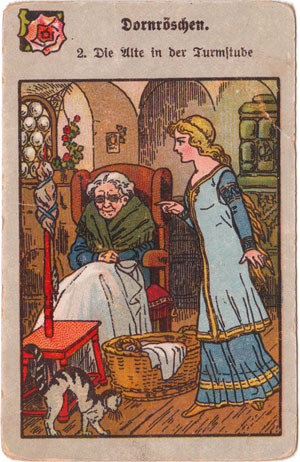
Above: Card game based on Grimms’ fairy tales.
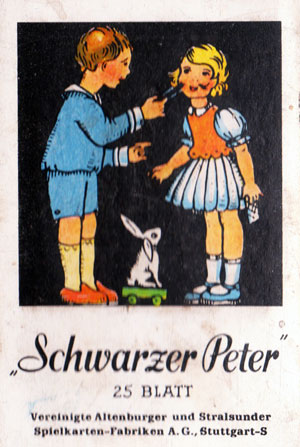
Above: “Schwarzer Peter” published by Vereinigte Altenburger und Stralsunder Spielkarten-Fabriken A.G., Stuttgart.
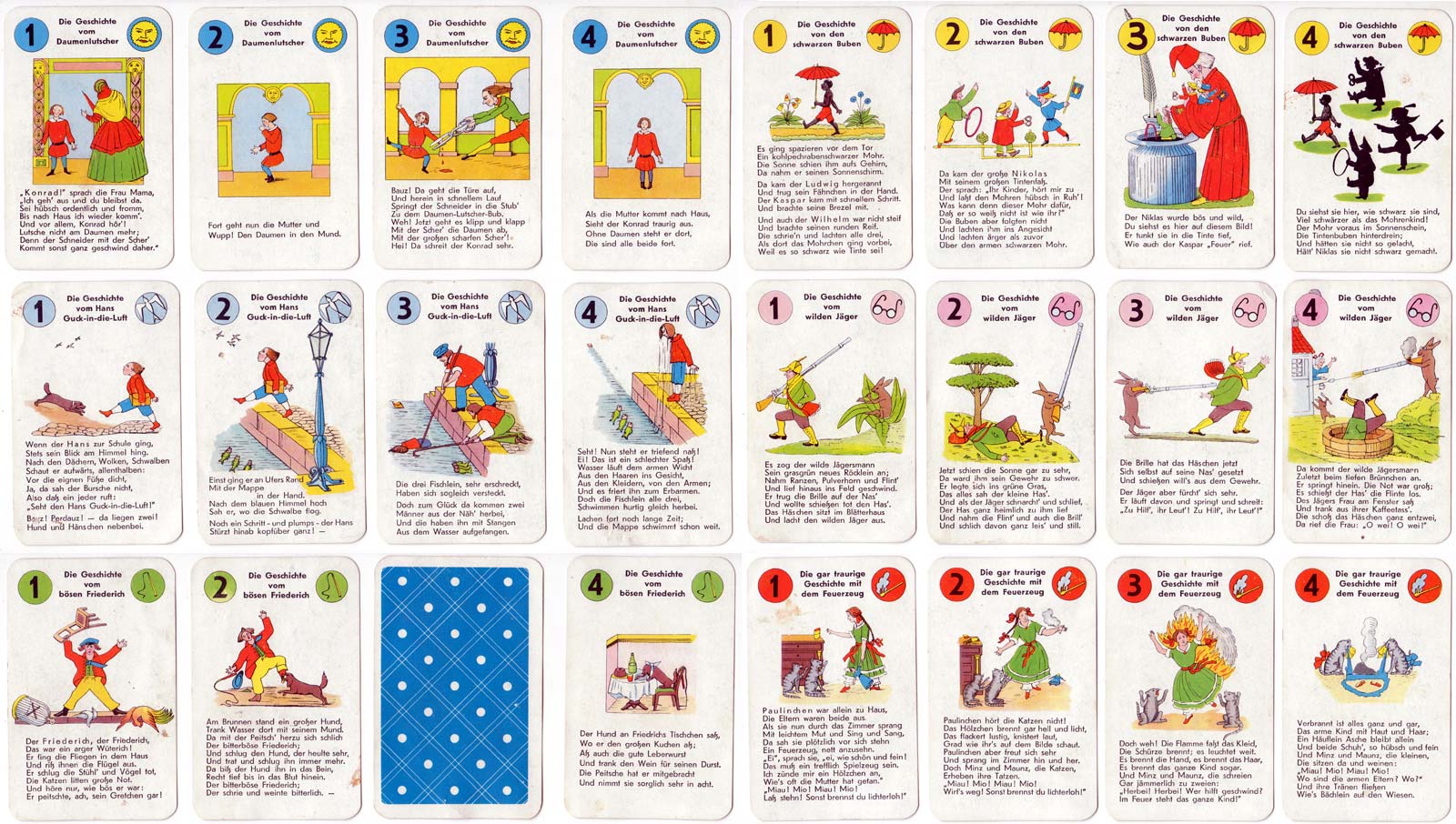
Above: “Struwwel-Peter Quartett” card game.
See also: Dondorf's Pierre l'Ebouriffé→

By Simon Wintle
Spain • Member since February 01, 1996 • Contact
I am the founder of The World of Playing Cards (est. 1996), a website dedicated to the history, artistry and cultural significance of playing cards and tarot. Over the years I have researched various areas of the subject, acquired and traded collections and contributed as a committee member of the IPCS and graphics editor of The Playing-Card journal. Having lived in Chile, England, Wales, and now Spain, these experiences have shaped my work and passion for playing cards. Amongst my achievements is producing a limited-edition replica of a 17th-century English pack using woodblocks and stencils—a labour of love. Today, the World of Playing Cards is a global collaborative project, with my son Adam serving as the technical driving force behind its development. His innovative efforts have helped shape the site into the thriving hub it is today. You are warmly invited to become a contributor and share your enthusiasm.

Leave a Reply

Your Name
Just now Your comment here. Your comment here. Your comment here. Your comment here. Your comment here. Your comment here. Your comment here. Your comment here. Your comment here. Your comment here. Your comment here. Your comment here. Your comment here. Your comment here. Your comment here. Your comment here. Your comment here. Your comment here. Your comment here. Your comment here. Your comment here. Your comment here. Your comment here. Your comment here. Your comment here. Your comment here. Your comment here. Your comment here. Your comment here. Your comment here. Your comment here. Your comment here.
Related Articles
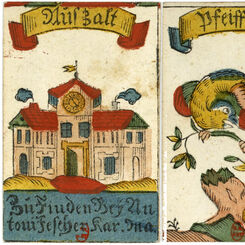
Vogelspiel
Vogelspiel, a German card game known as the “cuckoo game” also known as “Gnau”.
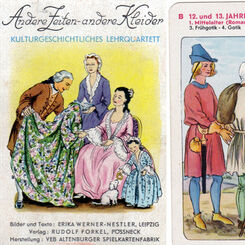
Andere Zeiten - Andere Kleider
‘History of fashion’ cultural quartet game designed by Erika Werner-Nestler, 1954.
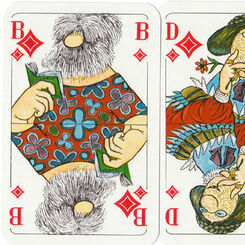
Loriot Rummy
Delightful comical deck designed by Loriot, the German cartoonist and comedian, 1973.
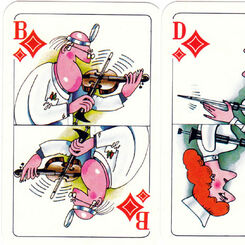
Capilettor
Capilettor cartoon playing cards published by ASS, Leinfelden, 1978.
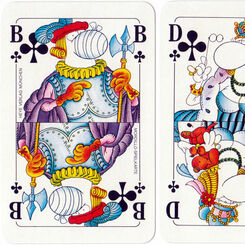
Mordillo Skat
Mordillo Skat designed by Guillermo Mordillo, c.1979
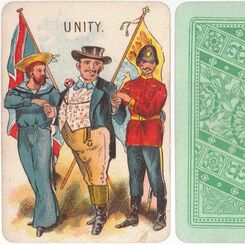
Oppenheimer und Sulzbacher
Card games produced in Germany by Oppenheimer und Sulzbacher.
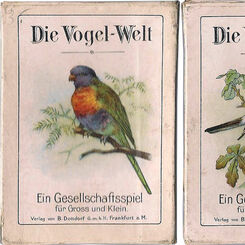
Die Vogel-Welt No. 351
Dondorf’s “Die Vogel-Welt” No. 351 quartet game, c.1905
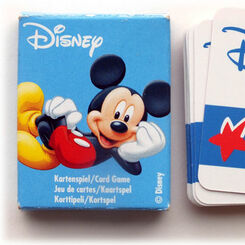
Miniature Disney deck
Mickey Mouse card game is part of a promotion for Rübezahl Schokoladen GmbH (Germany).
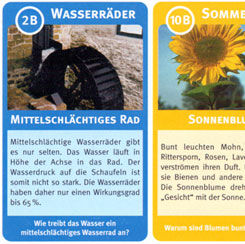
Klipp Klapp Karten
“Klipp Klapp Karten” printed by KZWP-Trefl (Poland) for Kindermuseum Oelde (Germany) in 2004
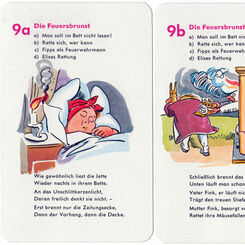
Fipps der Affe
“Fipps der Affe“ (Fipps the Ape) quartet game with cartoons by Wilhelm Busch published by Bielefelde...
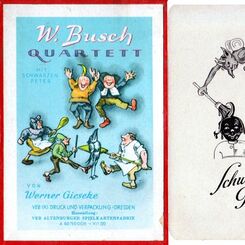
Schwarzer Peter Quartett
“Schwarzer Peter Quartett” game published by VEB Altenburger Spielkartenfabrik with cartoons by Wilh...
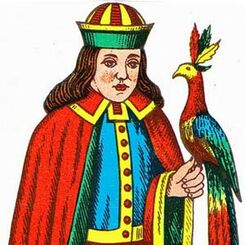
German Saxon Pattern
The German Saxon Pattern or “Schwerdter Karte”.

Bosco by A.S.S. for the Estanco de Naipes del Peru
‘Bosco’ Playing Cards manufactured by A.S.S. for the Estanco de Naipes del Peru, 1930s.

Bourgeois Tarot
Bourgeois Tarot by Vereinigte Altenburger und Stralsunder Spielkarten-Fabriken.

Prussian Pattern
Derived from Jagdkarten or Hunting cards with patriotic overtones and rural scenes as vignettes on t...

Lenormand Cartomancy
Mlle Lenormand Cartomancy deck made by Vereinigte Stralsunder Spielkartenfabriken, Stralsund, c.1890...
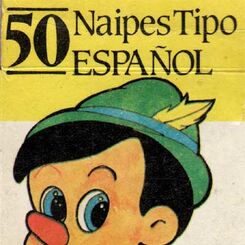
Pinocho
Pinocho children’s playing cards published by Editorial Gráfica Flores c.1975.
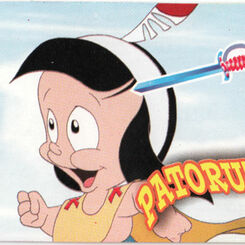
Patoruzito
Patoruzito children’s playing cards, Argentina, 2004.
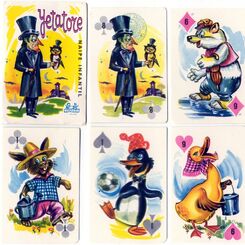
Juegos Victoria | Juguetes Royal
Juegos Victoria – Juguetes Royal – publishers of children’s card games in Argentina during the 1960s...

Simultané
Simple geometric forms with an inner life and poetry emanating from the richness of colour, the musi...
Most Popular
Our top articles from the past 60 days


