


German Saxon Pattern
The German Saxon Pattern or “Schwerdter Karte”.
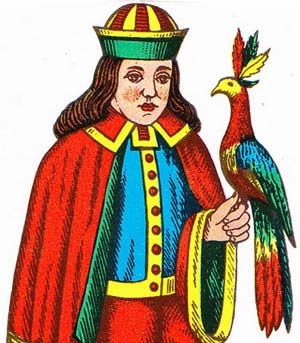
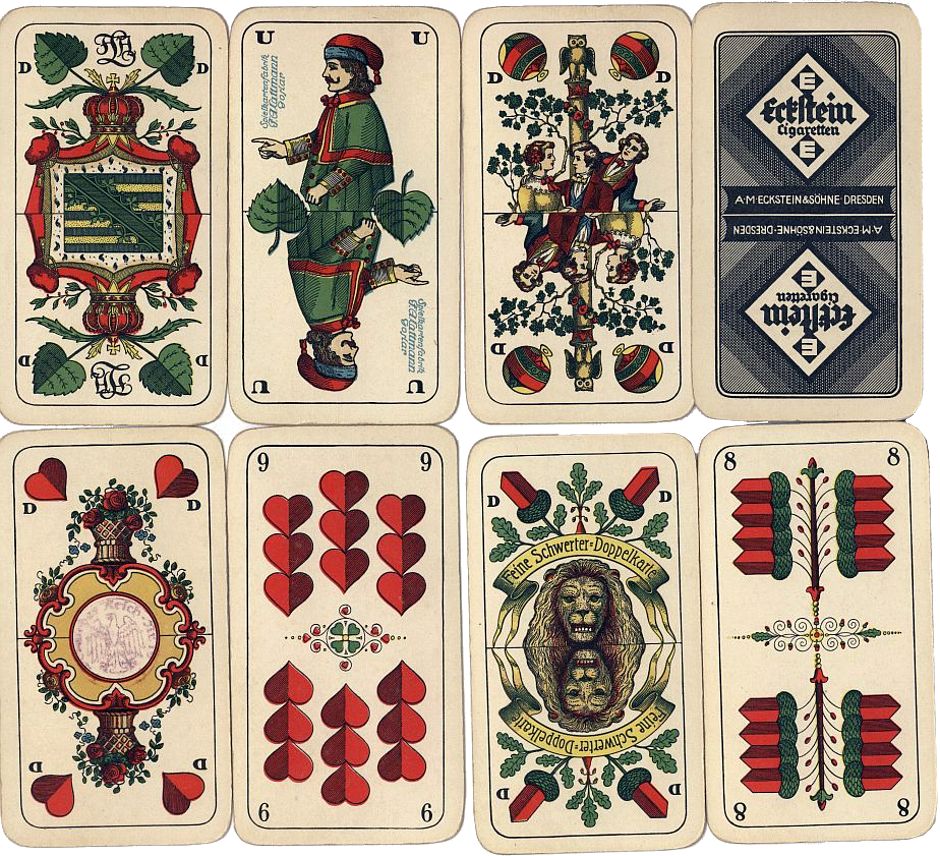
The designs for the Saxon pattern probably originated in the 18th century, making it one of the older German-suited patterns. The Saxony coat-of-arms appears on the daus of acorns (under a lion's head) and on the daus of leaves. The pack is usually described on the daus of acorns as “Schwerdter Karte” or “Schwerter Karte” referring to the crossed swords on the coats-of-arms. The four kings are seated on thrones, each one having two suit symbols. The upper and lower knaves are all civilian figures, and the unter of bells has a bird perched on his wrist. In earlier versions six of the knaves wear hats with upturned brims, but in later versions the costumes have changed style and the unter of bells and the ober of leaves have top hats. The daus of bells shows a loving couple about to be discovered by a third person and the number cards have small decorative vignettes at the bottom.
The pack usually has 32 cards and was used principally for the game of Piquet in the early 19th century. It is known in single-figure and double-ended versions.
Earlier designs
These cards are a reproduction of an original from 1832 and feature the knaves wearing hats with upturned brims rather than top hats. Also the tunics are simpler in style than later versions and there is no ground beneath the courts' feet.
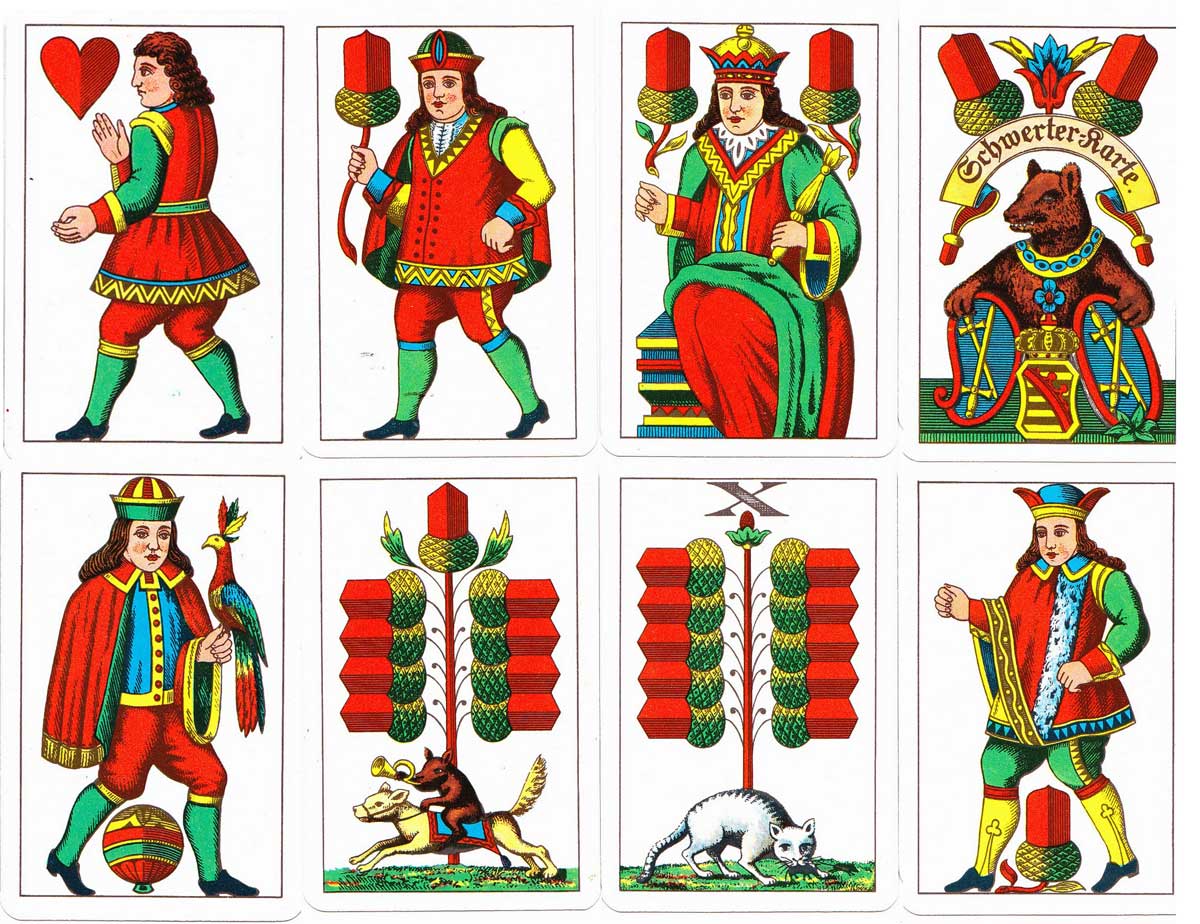
Above: cards from the Saxon pattern by VEB Altenburger Spielkartenfabrik, c.1986, reproducing an original design from 1832.
Later designs
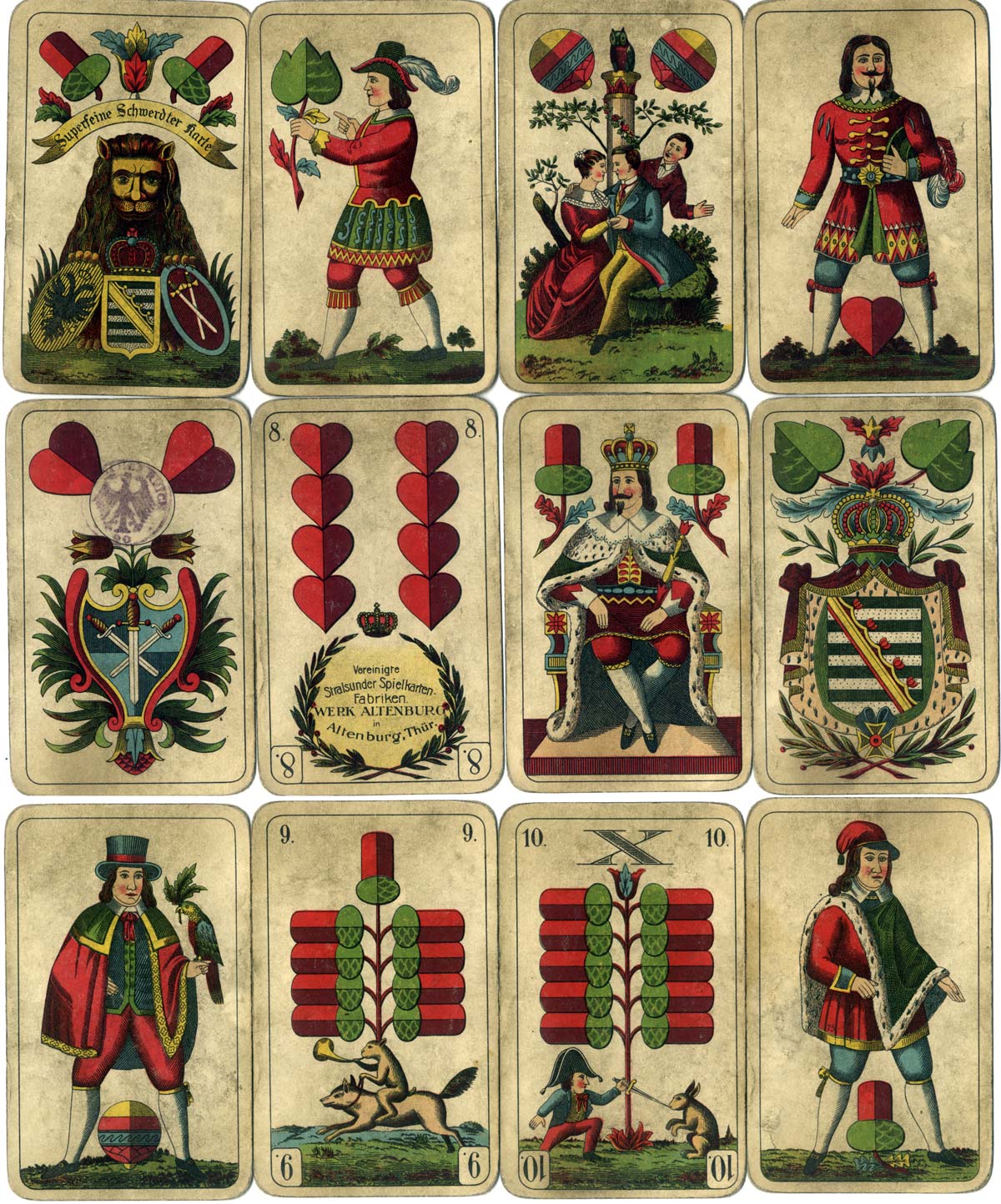
Above: "Superfeine Schwerdter Karte" single-ended Saxon pattern, WW1 tax stamp on 2H, manufactured by Vereinigte Stralsunder Fabriken, c.1920. Some of the vignettes on the numeral cards are variations from the tradition and also the court figures are shown standing on grassy ground. Note the top hats which have replaced the softer headwear.
Double-ended Version
In the double-ended versions, although more convenient, many charming features of the designs are lost.
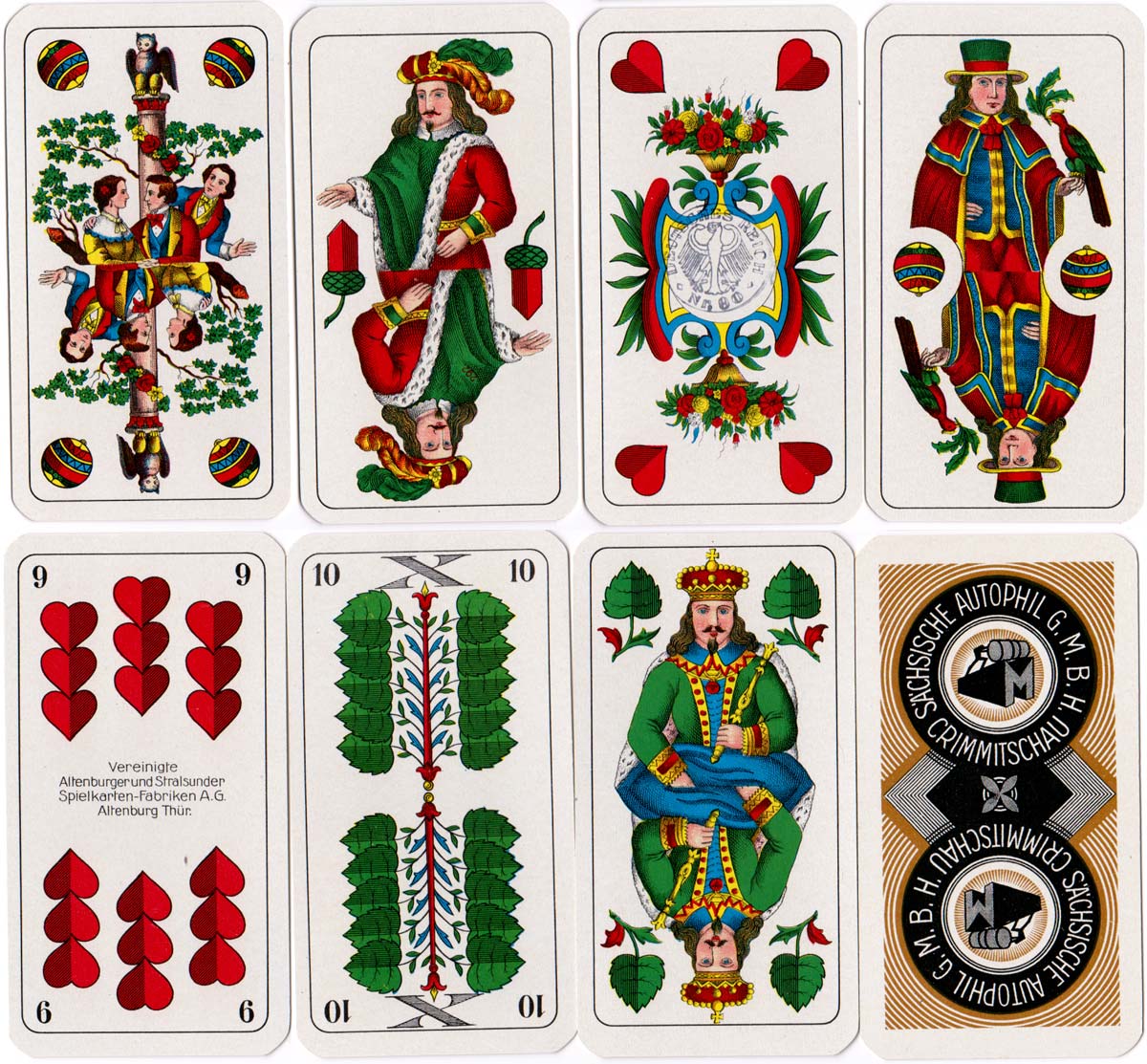
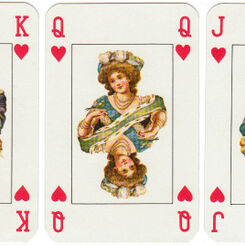
Above: cards from the double-ended Saxon pattern by Vereinigte Altenburger und Stralsunder Spielkarten-Fabriken A.G., 1932. 32 cards in box with advertising for Săchsische Autophil G.M.B.H. Crimmitschau.

By Simon Wintle
Spain • Member since February 01, 1996
I am the founder of The World of Playing Cards (est. 1996), a website dedicated to the history, artistry and cultural significance of playing cards and tarot. Over the years I have researched various areas of the subject, acquired and traded collections and contributed as a committee member of the IPCS and graphics editor of The Playing-Card journal. Having lived in Chile, England, Wales, and now Spain, these experiences have shaped my work and passion for playing cards. Amongst my achievements is producing a limited-edition replica of a 17th-century English pack using woodblocks and stencils—a labour of love. Today, the World of Playing Cards is a global collaborative project, with my son Adam serving as the technical driving force behind its development. His innovative efforts have helped shape the site into the thriving hub it is today. You are warmly invited to become a contributor and share your enthusiasm.

Activity for German Saxon Pattern
Sign in to comment or save this article.

Related Articles
Modern F.X. Schmid Bavarian Cards
From Plastic to Premium: The legendary F.X. Schmid Tarock & Schafkopf deck, reboxed, refreshed and r...
New Altenburg Skat cards – German DDR Pattern
Authentic Altenburger Skat cards with German suits (Acorns, Hearts, Leaves, Bells).
Postgeschichte
A celebration of different postal systems in Germany from 1630 to 1850, with designs by Volker Hartm...
Early German playing cards
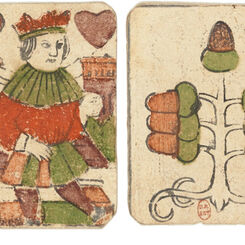
Some early examples of popular German playing cards from the XV and XVI centuries.
Spielkarten für Sammler
Cards on cards in celebration of playing-card collector Franz Braun’s 75th birthday.
Wicküler Skat
Publicity pack for the German brewery Wicküler with courts merrily drinking beer.
Deutsche Dampflokomotiven
German steam locomotives from the period 1892 to 1950.
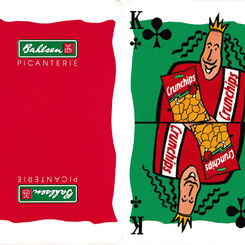
Bahlsen Skat
Publicity pack for a German food company, featuring some of their products.
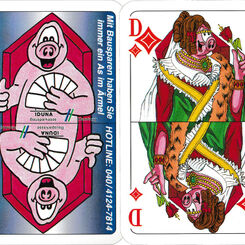
Iduna Skat
Advertising pack for a Hamburg building society featuring pigs in disguise.
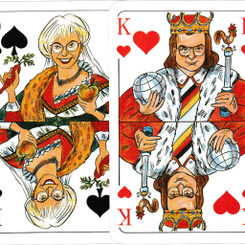
Münz-Spiel GmbH
Advertising playing cards for a data bureau depicting German politicians.
History of Playing Cards explained in 5 Minutes
Video by Art of Impossible. In this video you will get a short overview of the most important histor...
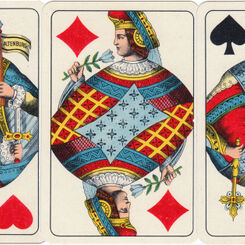
Kaffeehaus-Pikett
Kaffeehaus-Pikett featuring the old Viennese Large Crown pattern, made by ASS.
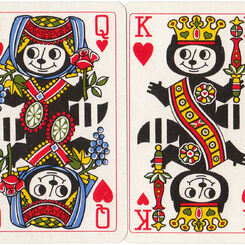
DSA Textil Berlin
Felix-Karte pack for Erste Deutsche Sack-Centrale / DSA Textil Berlin manufactured by VEB Altenburge...
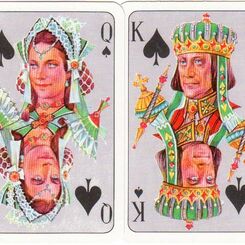
Porträt
“Porträt” designed by Walter Krauss, 1969
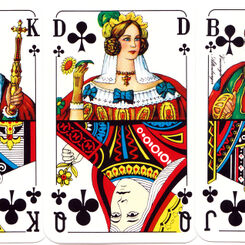
Skat Express
One end Berlin pattern the other standard English pattern
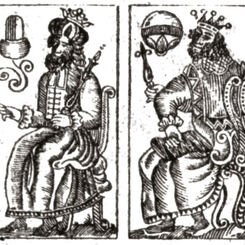
Old Bavarian pattern
Uncut sheets of playing cards of the Old Bavarian pattern by Michael Schatzberger, Passau, c.1780.
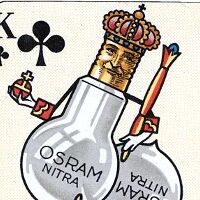
Osram Advertising Playing Cards
The court cards feature double-ended light-bulb people (the Kings are repeated in each suit) and the...
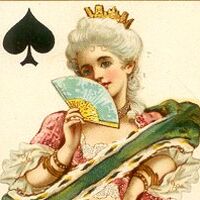
Baronesse Whist No.160
After the Second World War, the deck continued to be produced both by the VEB Altenburger Spielkar...
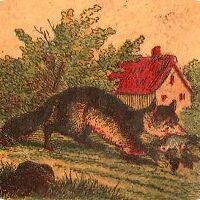
Lenormand Cartomancy
Mlle Lenormand Cartomancy deck made by Vereinigte Stralsunder Spielkartenfabriken, Stralsund, c.1890...
Jany Group
Deck issued to celebrate the Jany Group of Private Investors acquiring a controlling majority of Ver...
Most Popular
Our top articles from the past 60 days


Stephen Scharber
27 March 2026, 16:55SavedSaved this article to Stephen Scharber's Collection