


Artex for Turkey
Artex A/30 brand for Turkey, 1990s.
Artex A/30 brand for Turkey, 1990s, made by Játékkártyagyár és Nyomda, Budapest. These Belgian/Genoese type playing cards are based on the French Paris pattern produced by Grimaud in late 19th century, but with green replacing the usual blue. The pattern was used in casinos in Belgium, Spain & South America, and had also been extended into the Ottoman Empire, the Balkans and the Mediterranean from Algeria to Syria. It is also known in Turkey. It is gradually being replaced today by the Anglo-American pattern.
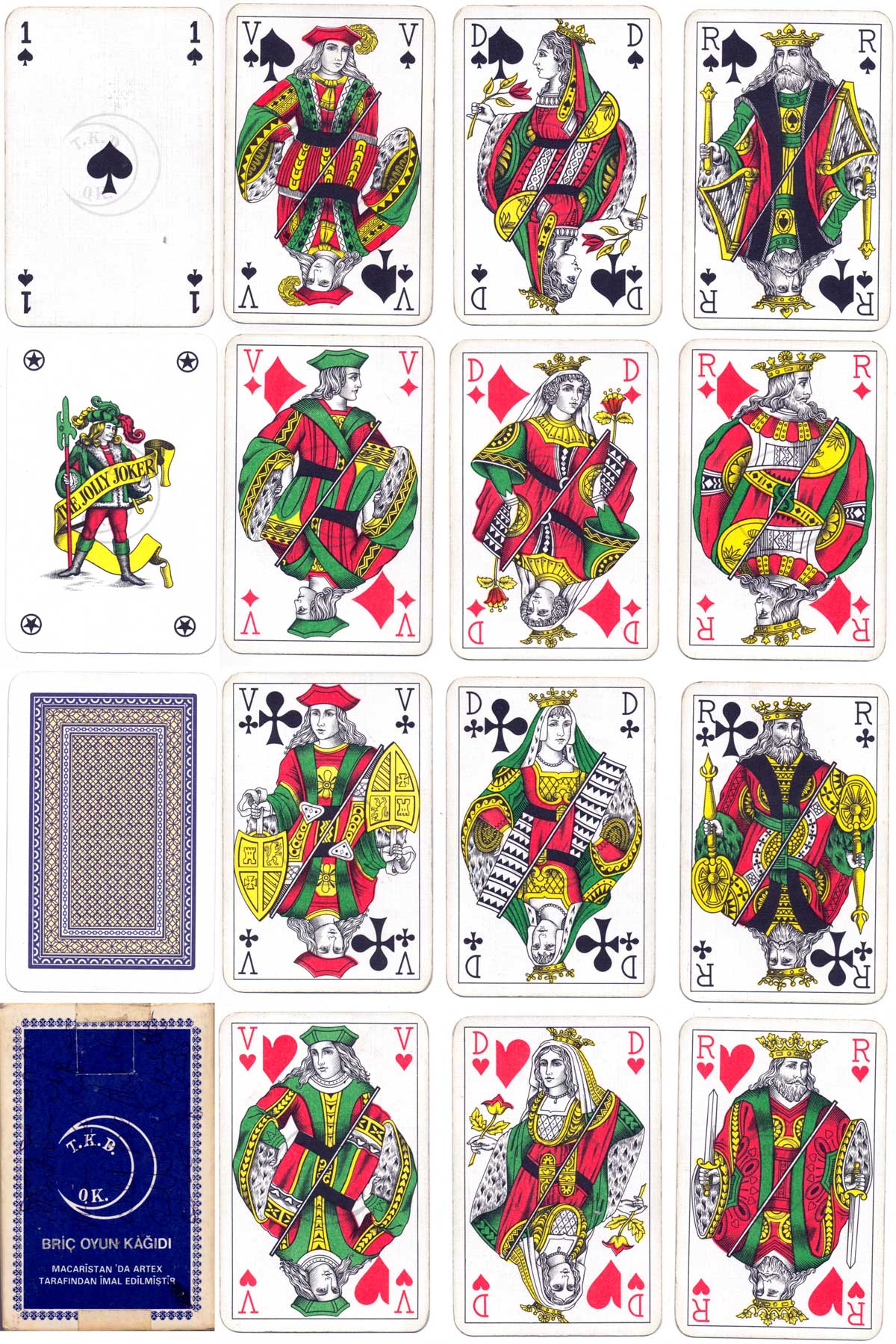
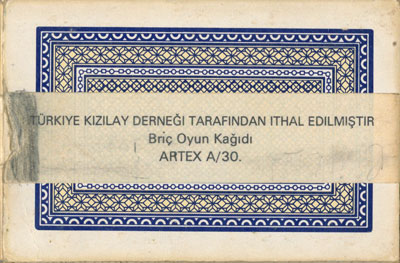
Above: the imprint inside a half moon on each card and the box reads T.K.B. - O.K. which presumably stands for the Turkish Playing Card Monopoly as printed on the box. Profits went to the Turkish Red Crescent, the counterpart of the Red Cross. The pack was purchased in Ankara in about 1992. 52 cards + 2 jokers + blank card in box with paper band around the box. Images courtesy Matt Probert.
Reference
Cremers, Filip: Belasting is Troef, Nationaal Museum van de Speelkaart, Turnhout, 1992, p.109.
Note from Konrad Hämmerle
Angora A/30 Playing Cards (Modern Genoese-Belgian Pattern)
This deck is now produced by Turkish company Angora Playing Cards, a manufacturer headquartered in Bursa with several sales offices across Turkey, including Ankara, Istanbul, and Izmir, using the same modern Genoese-Belgian pattern shown above. The court figures retain the familiar style of this pattern without any unique redrawing except that the indices have been changed to J, Q, K, A. The backs carry Angora’s characteristic ornamental design formerly used by Artex brand, as well as the same Joker. • See the box

Above: Angora A/30 Playing Cards (Modern Genoese-Belgian Pattern), manufactured by Angora Playing Cards, Bursa. 55 cards in tuckbox • www.angoraplayingcards.com.tr►
What makes this deck distinctive lies not in its pattern, but its material. Unlike the standard 350 g card stock used for most commercial playing cards, Angora produced these on very light 250 g paper. The matte, uncoated surface gives the cards a soft tactile quality but makes them prone to dirt and wear. In addition, the colours appear noticeably pale when printed on this softer stock, further diminishing the visual strength of the design.
Another feature is the absence of a black core within the card stock. This allows motifs to be faintly transparent when held against the light, an undesireable feature for playing cards. Altogether, these choices reflect rather questionable material decisions by Angora, resulting in a low-cost, budget product, departing significantly from industry standards. The tuck box retains a die-cut hole through which the ace symbol, and formerly also a tax stamp, is visible. Furthermore, the packaging bears the inscription “Cep Takvimi Hediyeli” (“with a calendar as a gift”), suggesting the inclusion of a 56th card displaying the months of the year. This feature allows the edition to be dated to 2021.
Author’s Note: my gymbuddy from Istanbul discovered this pack on a flea market in his hometown and brought it back for me. K.H

By Matt Probert
United Kingdom • Member since March 02, 2012
I have adored playing cards since before I was seven years old, and was brought up on packs of Waddington's No 1. As a child I was fascinated by the pictures of the court cards.
Over the next fifty years I was seduced by the artwork in Piatnik's packs and became a collector of playing cards.
Seeking more information about various unidentified packs I discovered the World of Playing Cards website and became an enthusiastic contributor researching and documenting different packs of cards.
I describe my self as a playing card archaeologist, using detective work to identify and date obscure packs of cards discovered in old houses, flea markets and car boot sales.

Activity for Artex for Turkey
Sign in to comment or save this article.

Related Articles

AKA M5 Motorway
Promotional playing cards for the Hungarian M5 Toll Motorway between Budapest and Röszk.
Le Roi bridge
Reprint of a Piatnik (Budapest) pack of 1927 with Hungarian historical figures and scenic aces.
Postabank 3
Caricatures of German personalities on a promotional pack for a Hungarian commercial bank.
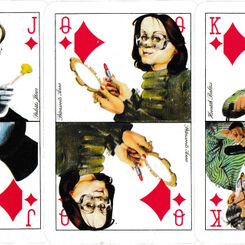
Postabank 1
Caricatures of Hungarian politicians on a promotional pack for a commercial bank.
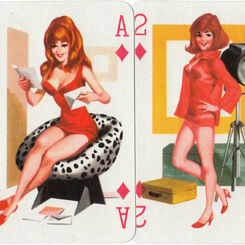
Römihártya
Römihártya pin-up deck from Hungary.
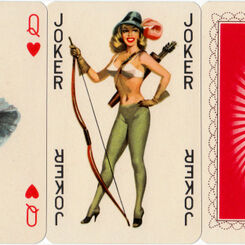
Römihártya Játékkartyagyár
Pin-up Rummy Playing Cards, made in Hungary, c.1970.
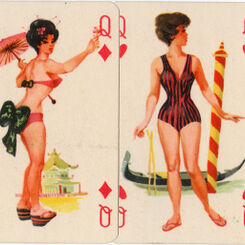
Römikártya 4
Bathing Beauties throughout the ages, published in Hungary, 1967.
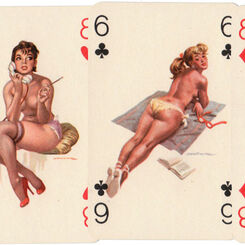
54 Pin-up Motivs
Hungarian pin-up deck illustrated by Imre Sebök, c.1960.
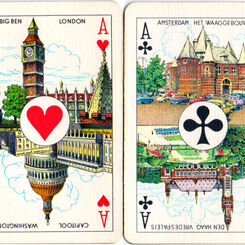
Ronia Genoese Pattern
‘Ronia’ Genoese Pattern made in Hungary for the Dutch market, c.1970
Magyar Kártya No.123
Luxus No.123 Hungarian seasons pattern manufactured in Hungary by the Playing-Card Factory and Print...
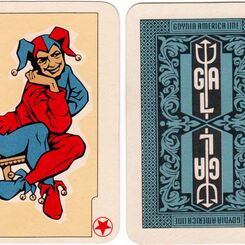
Gdynia-America Line
Non-standard playing cards produced by Artex (Budapest) for the Gdynia-America Line, Poland, c.1958....
Artex Quadrilato for Tunisia
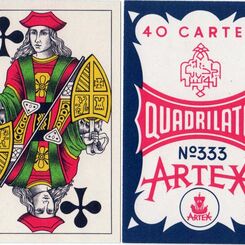
Artex Quadrilato No.333 for Tunisia
Artex No.111
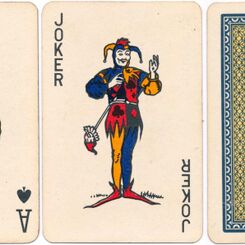
No.111 by Artex is a copy of Waddingtons standard designs, c1962.
Hungarian Seasons pattern
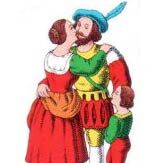
The Hungarian Seasons pattern. With the Hungarian deck you can play a lot of card games. Every villa...
Tungsram Playing Cards
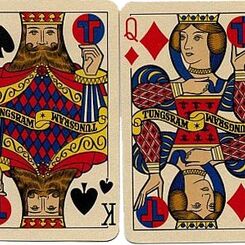
Tungsram Playing Cards, Art Deco playing cards from Hungary
Most Popular
Our top articles from the past 60 days


