


EduStack — Playing Cards for Math & Astronomy
EduStack is a team from India passionate about gaming and education that has created two sets of custom playing cards about Maths and Astronomy
EduStack is a team from India passionate about gaming and education that has created two sets of custom playing cards about Maths and Astronomy: “Math Stack” and “Star Stack”. The team leader, Sumat Nanda, with a background in physics, wishes to bring positive change to education. The designers are Diana Stanciulescu and Jessica Benjamin Purmeswar, from Romania and South Africa respectively. Other team members are Avijeet Prasad and Avinash Surendran.
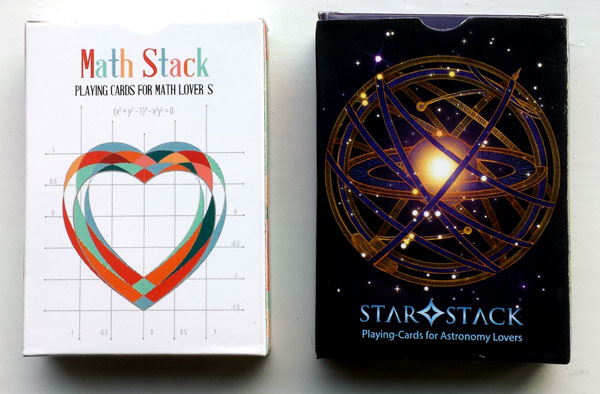
Above: “Math Stack” and “Star Stack” educational playing cards designed by Diana Stanciulescu and Jessica Benjamin Purmeswar, published by EduStack, Sumat Nanda, 52 Adan Bagh Extension, Dayal Bagh, AGRA 282005, India. More details: EduStack: Playing Cards for Math & Astronomy►
EduStack introduces astronomical constellations and mathematical constants in an engaging and intuitive manner, helping to demystify these concepts. The elegant and artistic illustrations of astronomical constellations and mathematical constants along with the useful information and interesting trivia make these cards an enjoyable way to become acquainted with important concepts in astronomy and mathematics. EduStack infuses learning into universally popular playing cards, creating an effective learning tool. The decks are manufactured to a high standard using quality black centred board.
Math Stack
Mathematical constants and equations represent more than just numbers and are inherent in the exquisite visual design of the playing cards.
“I always wanted to be a math genius. So when I was commissioned to design a deck of cards based on math constants I was so ready.” Diana Stanciulescu, Illustration.
Math Stack contains 54 cards (including 2 jokers), illustrating and explaining 36 important mathematical constants see more →
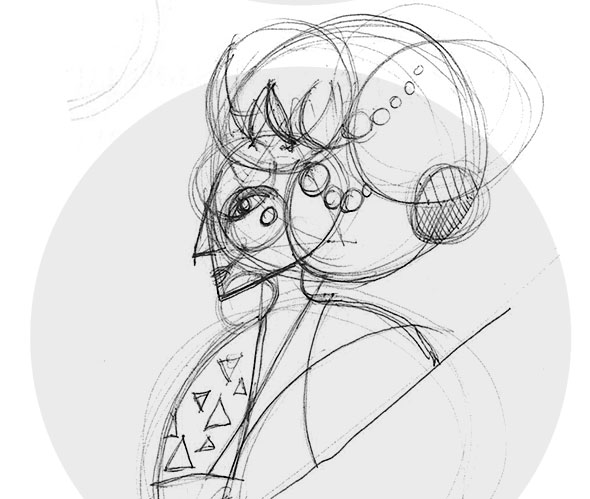
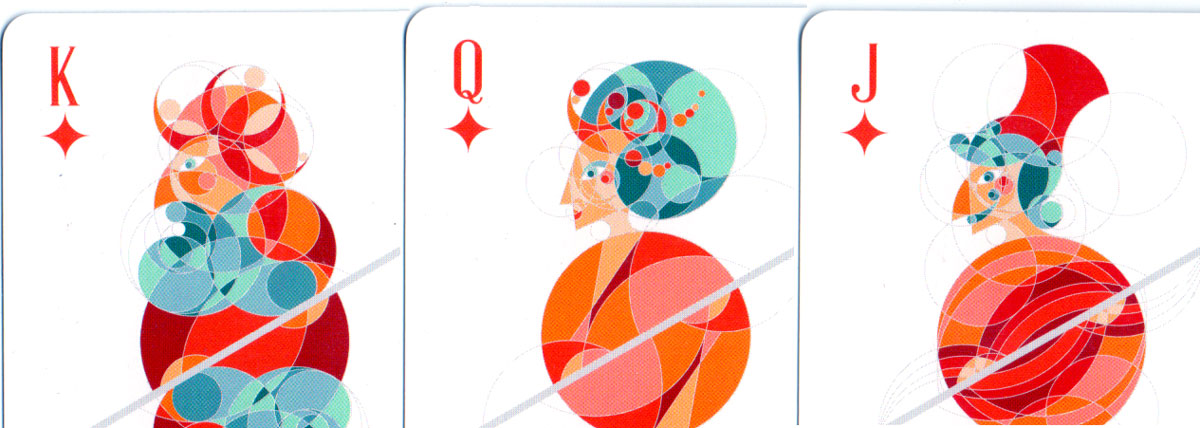
Above: three court cards from “Math Stack” educational playing cards designed by Diana Stanciulescu and published by EduStack, 2015 see more →
Star Stack
Stars in the night sky have long fascinated human beings, evoking a sense of awe and wonder. Being curious and pattern seeking, we built many images and stories around them that became part of our culture and folklore. We have learnt to carefully observe the motion of these stars in the night sky and express them in the language of mathematics, giving birth to the science of astronomy. Star Stack playing cards feature artistic illustrations of famous astronomers and astronomical constellations see more →
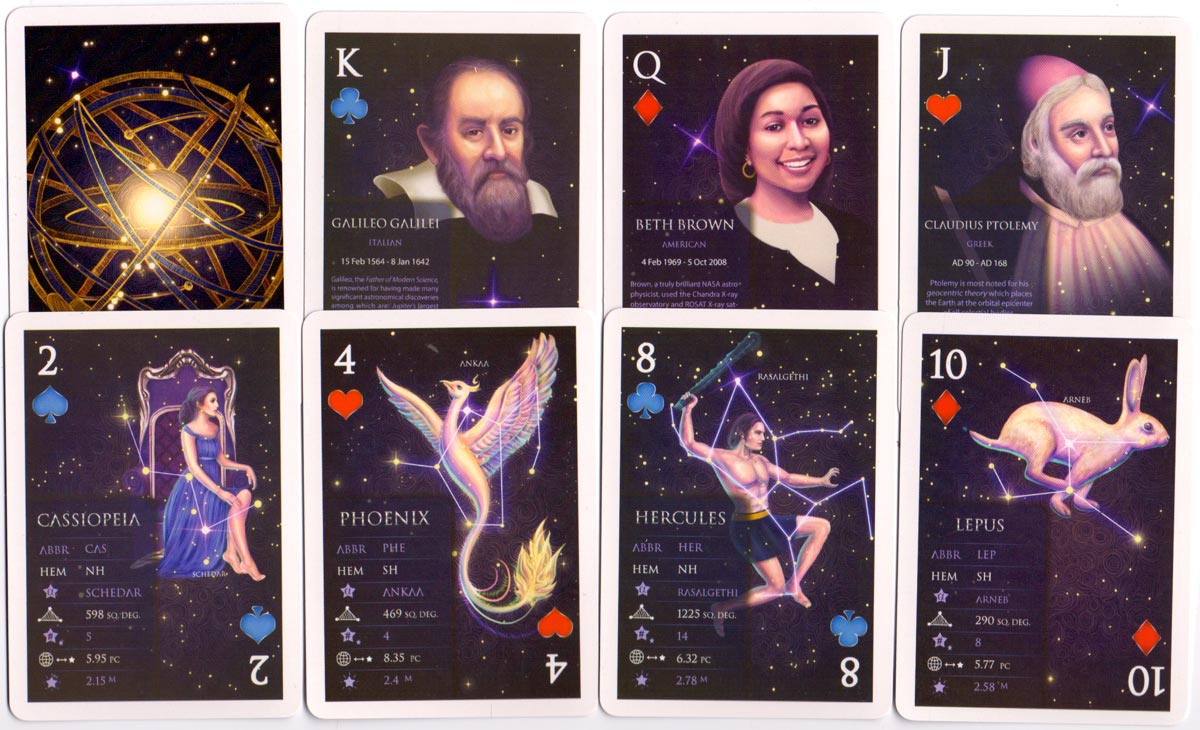
Above: cards from “Star Stack” educational playing cards designed by Jessica Benjamin Purmeswar and published by EduStack, 2015 see more →

By Simon Wintle
Spain • Member since February 01, 1996 • Contact
I am the founder of The World of Playing Cards (est. 1996), a website dedicated to the history, artistry and cultural significance of playing cards and tarot. Over the years I have researched various areas of the subject, acquired and traded collections and contributed as a committee member of the IPCS and graphics editor of The Playing-Card journal. Having lived in Chile, England, Wales, and now Spain, these experiences have shaped my work and passion for playing cards. Amongst my achievements is producing a limited-edition replica of a 17th-century English pack using woodblocks and stencils—a labour of love. Today, the World of Playing Cards is a global collaborative project, with my son Adam serving as the technical driving force behind its development. His innovative efforts have helped shape the site into the thriving hub it is today. You are warmly invited to become a contributor and share your enthusiasm.

Related Articles
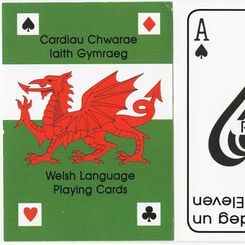
Welsh Language Playing Cards
Welsh Language Playing Cards designed by Richard Ruston-Burgess, made in Wales, 2020.
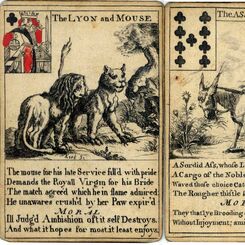
Aesop’s Fables
Aesop’s Fables playing cards by I. Kirk, c.1759.
Sam
SAM by J. Jaques & Son Ltd.

Guru Ganjifa
Sunish Chabba is working on an initiative to revive traditional Ganjifa, the card game most popular ...
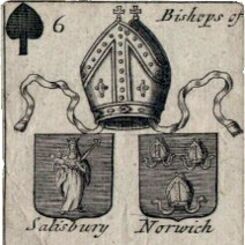
Arms of English Peers
The Arms of English Peers playing cards were first published in 1686. Heraldry, or a knowledge of th...

Bio-Pack
Bio-Pack flashcards produced for Thai biology students
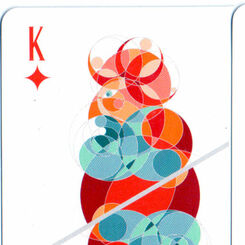
Math Stack
“Math Stack” playing cards designed by Diana Stanciulescu, illustrating and explaining 36 important ...
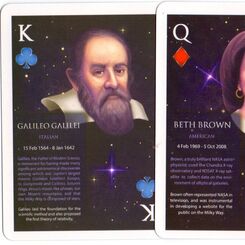
Star Stack
Star Stack playing cards feature illustrations of famous astronomers and important astronomical cons...

World Tour
World Tour Quiz Game published by Tactic Group for Finnair involves recognising flags from different...

Lingo Pix
Lingo Pix Tourist Picture Cards by TM Cards, India, 2006
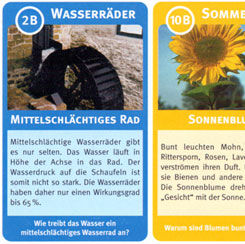
Klipp Klapp Karten
“Klipp Klapp Karten” printed by KZWP-Trefl (Poland) for Kindermuseum Oelde (Germany) in 2004
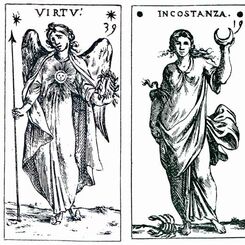
Mitelli ‘Gioco di Passatempo’
Il Gioco di Passatempo contains 40 figurative playing cards depicting moral virtues and vices, dated...

Quantum
Quantum playing cards designed by Catherine Geaney.
Chitrashala Press
Chitrashala Press produced some charming children's pictorial alphabet cards for early learning purp...
Charles Hodges
Charles Hodges produced engraved geographical and astronomical decks, London, c.1827-30.
Sum-it Card Game
‘Sum-it’ Card Game published by Sum-It Card Games Ltd. c.1935.
Mathematical Instruments
Mathematical Instruments playing cards forming an instrument maker's trade catalogue, Thomas Tuttell...

Paper and Cardboard
The manufacture of the pasteboard used for playing cards contains a number of interesting processes ...

Children's Card Games
Children's games are distinct from ordinary playing cards, the most obvious difference being the lac...
Swiss Mogul Cards, 1880-1890
English type 'Mogul' playing cards manufactured in Switzerland by John Müller for export to India, c...
Most Popular
Our top articles from the past 60 days


