


Romagnole pattern by Guglielmo Murari
Romagnole pattern by Guglielmo Murari c.1920
Romagnole pattern by Guglielmo Murari c.1920

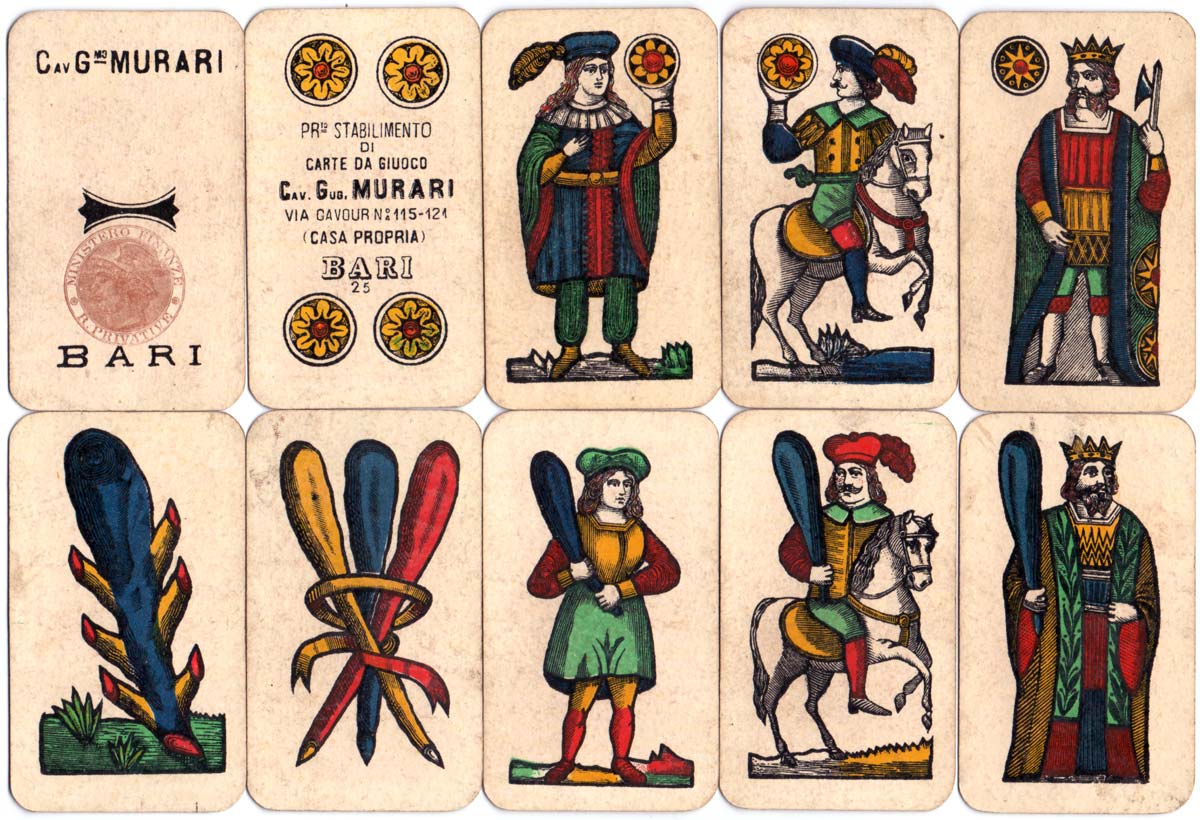
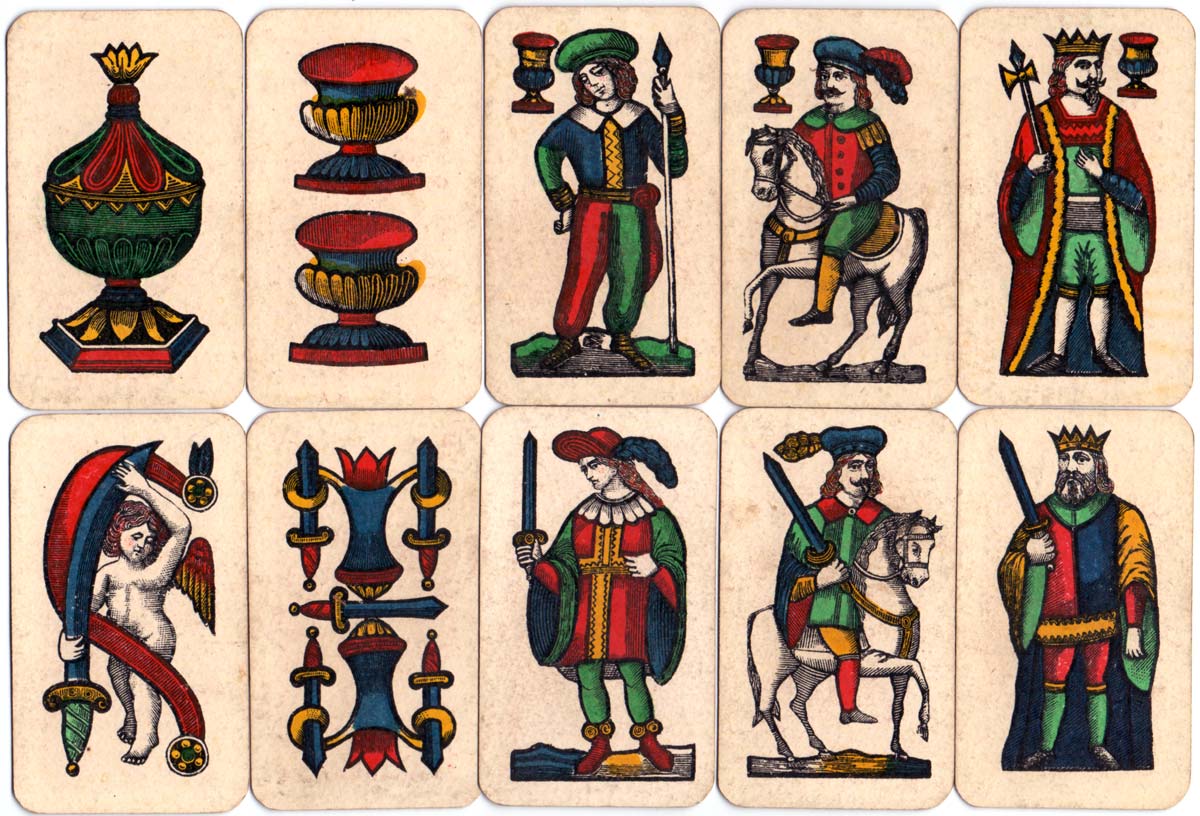
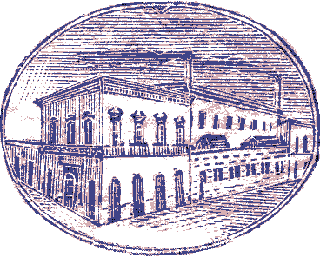
Above: cards from a Romagnole pattern 40 card pack made by Guglielmo Murari of Bari (c.1880-1929), in around 1920. The cards were originally wood engraved, but this example has been printed lithographically. The engraving of the factory is taken from the wrapper.
• See an earlier example with wrapper on the British Museum website: Museum number 1901,0110.5.1-40►
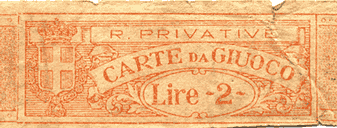
Right: 2 Lire tax band, which was affixed around the outer wrapper, with the legend 'R. Privative' which also appears on the tax stamp visible on the ace of coins.
The Romagnole pack - used in the Romagna region - has a similar composition to the Piacentine pack and an angel on the ace of swords. Cards displaying Spanish style occur in those parts of Italy formerly under Spanish influence, such as 'Napoletane', 'Piacentine', 'Romagnole', 'Sarde' and 'Sicilian' types.
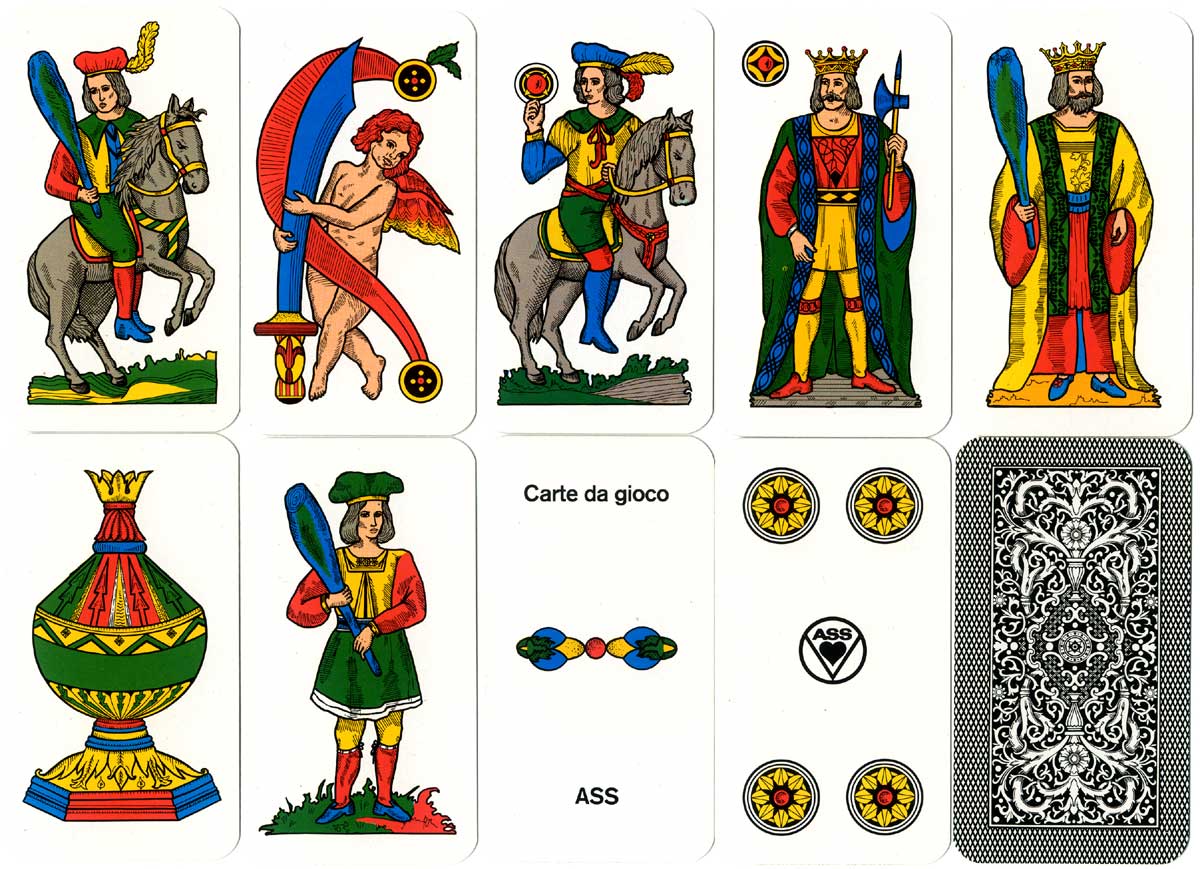
Above: Romagnole pattern cards made in Germany by A.S.S.

By Simon Wintle
Spain • Member since February 01, 1996
I am the founder of The World of Playing Cards (est. 1996), a website dedicated to the history, artistry and cultural significance of playing cards and tarot. Over the years I have researched various areas of the subject, acquired and traded collections and contributed as a committee member of the IPCS and graphics editor of The Playing-Card journal. Having lived in Chile, England, Wales, and now Spain, these experiences have shaped my work and passion for playing cards. Amongst my achievements is producing a limited-edition replica of a 17th-century English pack using woodblocks and stencils—a labour of love. Today, the World of Playing Cards is a global collaborative project, with my son Adam serving as the technical driving force behind its development. His innovative efforts have helped shape the site into the thriving hub it is today. You are warmly invited to become a contributor and share your enthusiasm.

Activity for Romagnole pattern by Guglielmo Murari
Sign in to comment or save this article.

Related Articles
Bolognese pattern
Standard Bolognese pattern pack by Murari of Bari.
Most Popular
Our top articles from the past 60 days


