


Epokha vozrozhdeniya (Age of Enlightenment)
Epokha vozrozhdeniya (Age of Enlightenment): this pack has effectively become the Russian standard.
This pack was designed by Adolf Iosifovich Charlemagne (1826-1901) but it is essentially a remake of the cards which were still used by the Russian card factories to produce the most mass-marketed cards in the 18th and the beginning of the 19th century (see here). The pack has also come to be known as “Atlas” (a name assigned to the cards with Charlemagne’s design). These playing cards were and are still the most popular ones throughout Russia, and have become de facto the standard Russian pack.
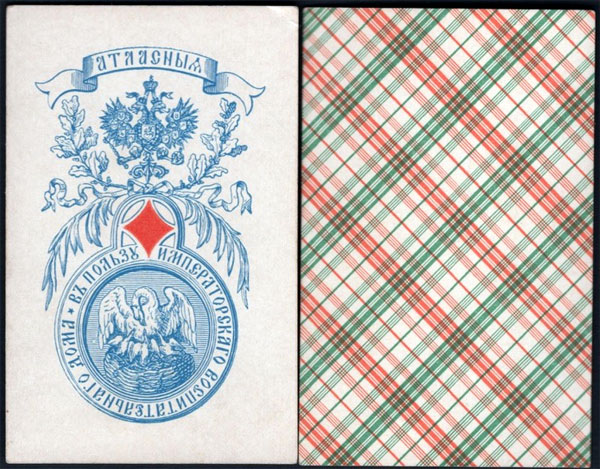
The name “Atlas” itself didn’t refer to any sketches or a particular card style, but to the technology of manufacturing. To make cards look better the paper they were printed on was firstly rubbed with talc powder with the help of special talc machines. Made on this type of paper, these cards were not affected by water, slid freely while shuffled, but were more expensive.
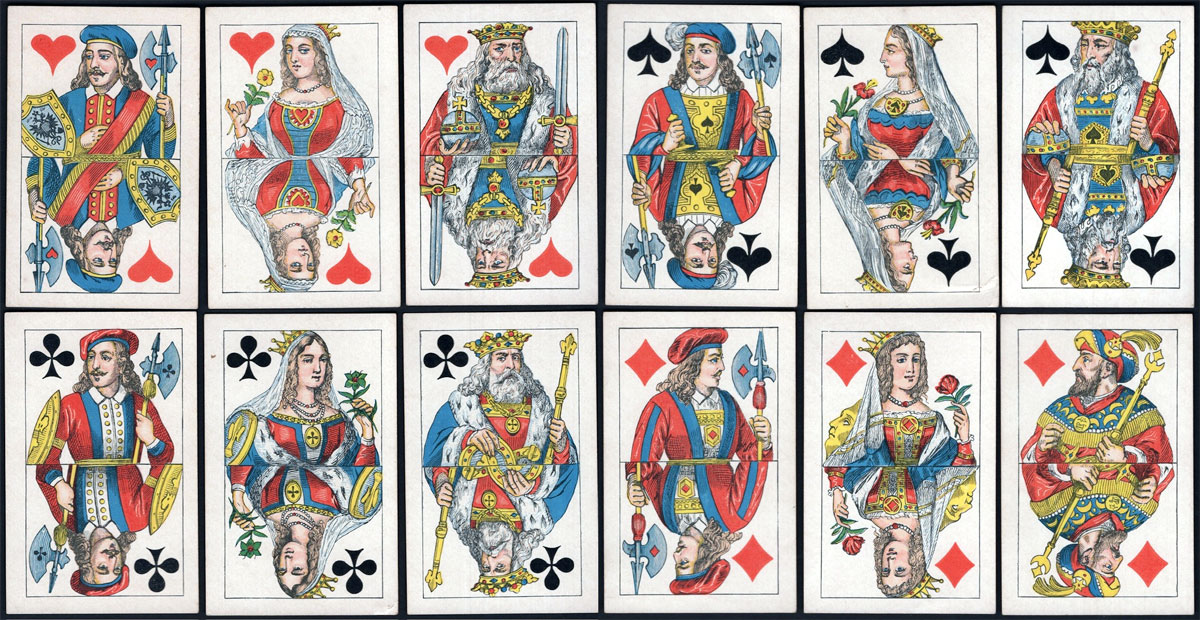
Above: cards with square corners and no indices designed by Adolf Iosifovich Charlemagne (1826-1901) and produced c.1862-1875 under the name "Epokha vozrozhdeniya". This would have been a high-quality pack (sort 1) with the tax stamp on the ace of diamonds. Often subsequently reproduced under the Soviets under the title "Atlassnye". Image courtesy Jon Randall.
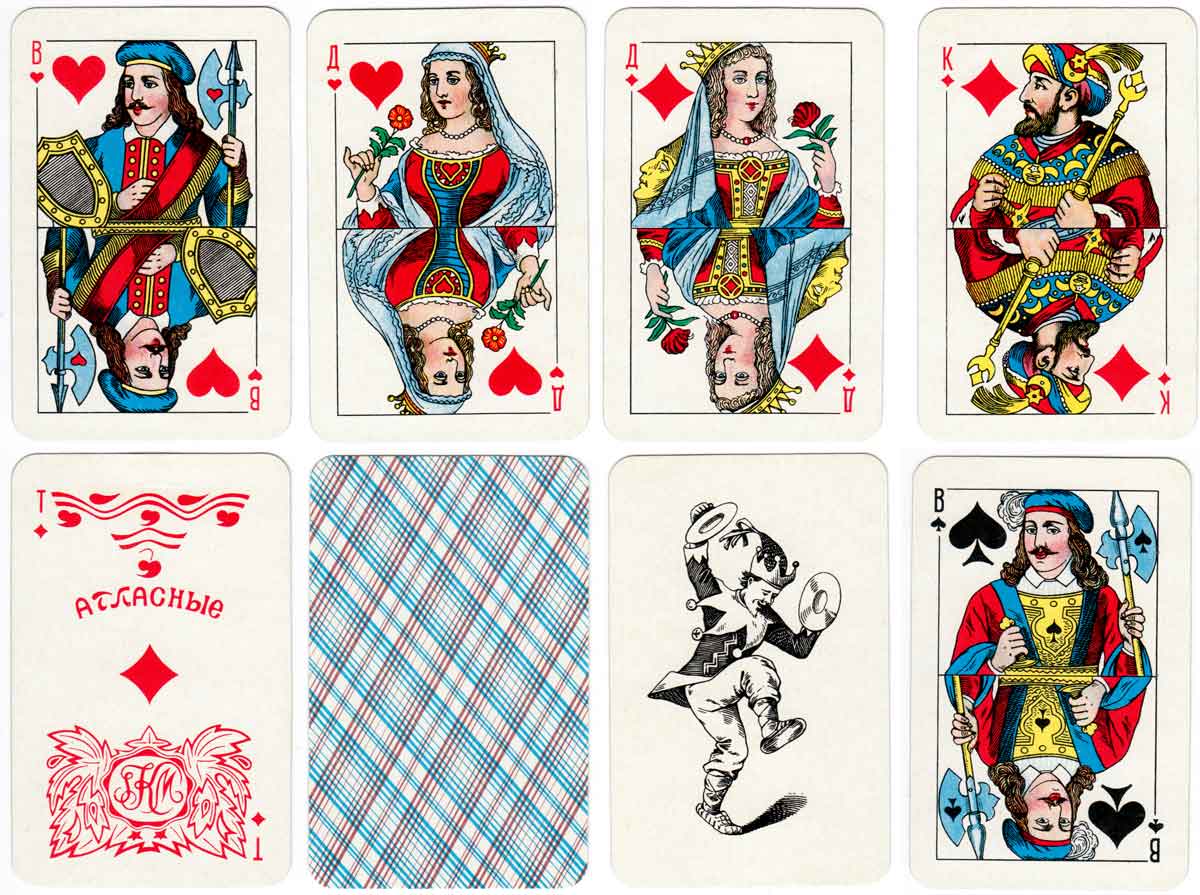
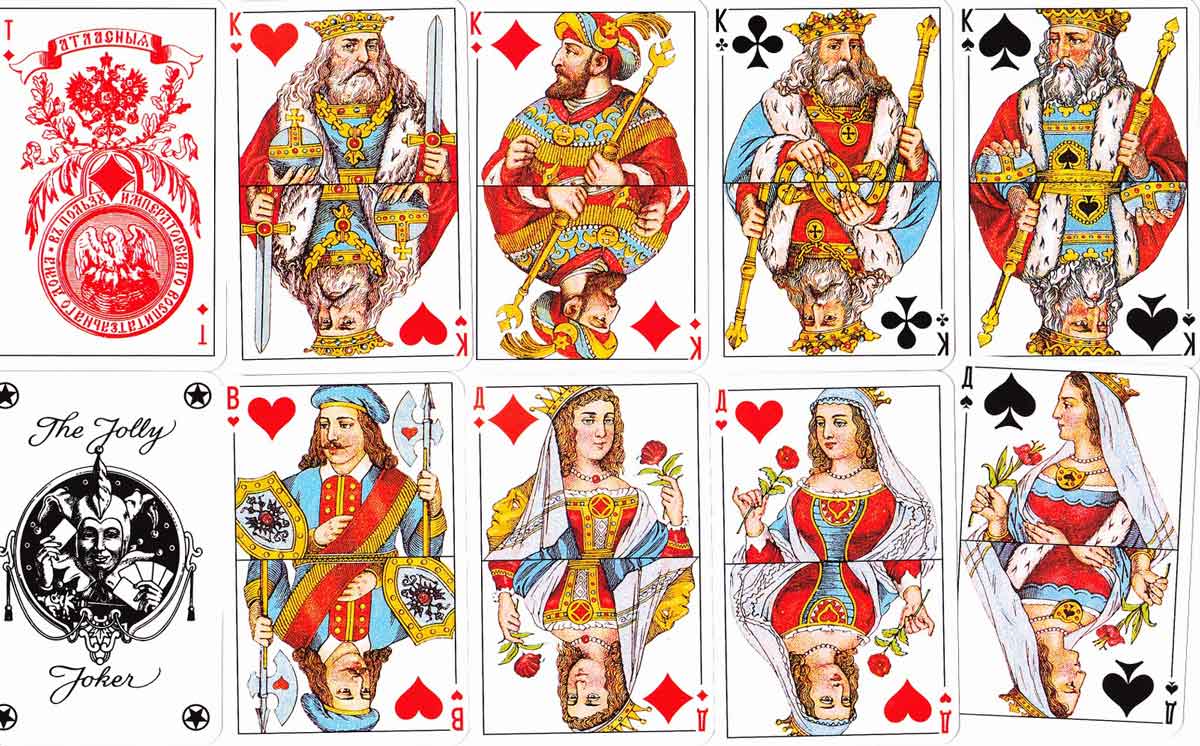
Above & below: cards from later Russian standard packs including the joker, with rounded corners and indices

By Rex Pitts (1940-2021)
United Kingdom • Member since January 30, 2009
Rex's main interest was in card games, because, he said, they were cheap and easy to get hold of in his early days of collecting. He is well known for his extensive knowledge of Pepys games and his book is on the bookshelves of many. His other interest was non-standard playing cards. He also had collections of sheet music, music CDs, models of London buses, London Transport timetables and maps and other objects that intrigued him.
Rex had a chequered career at school. He was expelled twice, on one occasion for smoking! Despite this he trained as a radio engineer and worked for the BBC in the World Service. Later he moved into sales and worked for a firm that made all kinds of packaging, a job he enjoyed until his retirement. He became an expert on boxes and would always investigate those that held his cards. He could always recognize a box made for Pepys, which were the same as those of Alf Cooke’s Universal Playing Card Company, who printed the card games. This interest changed into an ability to make and mend boxes, which he did with great dexterity. He loved this kind of handicraft work.
His dexterity of hand and eye soon led to his making card games of his own design. He spent hours and hours carefully cutting them out and colouring them by hand.

Activity for Epokha vozrozhdeniya (Age of Enlightenment)
Sign in to comment or save this article.

Related Articles
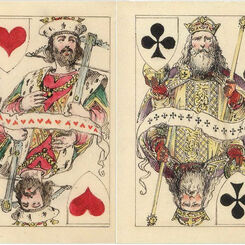
New Figures by A. I. Charlemagne, 1862
“Renaissance” playing card designed by A I Charlemagne 1862. but not published until 2018.
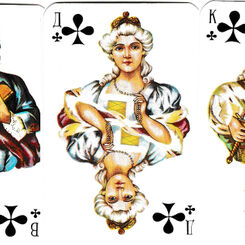
Rokoko
Rokoko (Rococo) reflecting the dress and culture of the first half of the 18th century.
Most Popular
Our top articles from the past 60 days


Ваня Козлов (Vanya Kozlov)
19 November 2025, 09:47SavedSaved this article to Ваня Козлов's Collection
Glo Lexa
28 April 2026, 00:44SavedSaved this article to Suit systems