


Trappola cards from Poland
Trappola cards published in Warsaw by J G Du Port during the 18th century.
Trappola, described by Cardano in his Liber de Ludo Aleae (1564), was a popular Venetian trick-taking game, although its popularity declined by the end of the century and spread elsewhere, carrying the Italian cards across Central Europe and leaving a deep imprint on gaming culture. It is notable for being one of the earliest known games where the ace ranks higher than the king, and it uses a specialised deck of cards which introduces a strategic depth to play.
The deck typically consists of 36 cards with Italian suits: swords, batons, cups, and coins. The court cards include the king, cavalier and foot soldier. In Trappola the threes, fours, fives and sixes are removed leaving a pack of 36 cards: A K C J 10 9 8 7 2 in each suit. This rather unusual composition, with certain cards omitted, suggests that it derived from an even earlier Italian pack (tarocco, trionfi, tarot). A closer look at the designs confirms this, although the example shown here is a relatively later version of the pattern.
This particular pack was produced in Poland, quite far from Italy! The ace of coins has two Polish inscriptions: “Fabrika Kart Kraiowa” (National Card Factory) and “J. G. Du Port Warsawie”. The ace of clubs bears two duty stamps, one Russian, the other Polish
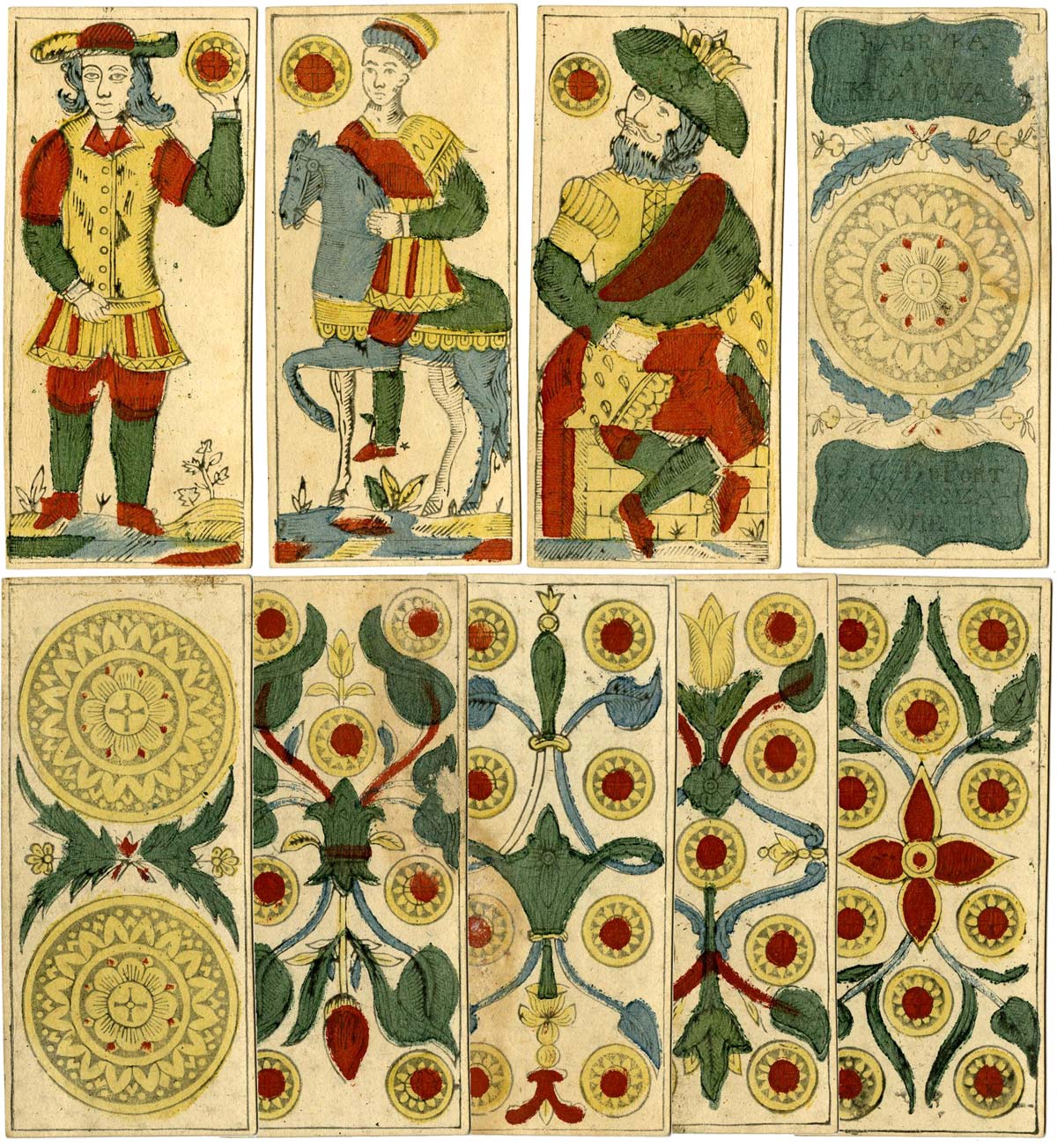
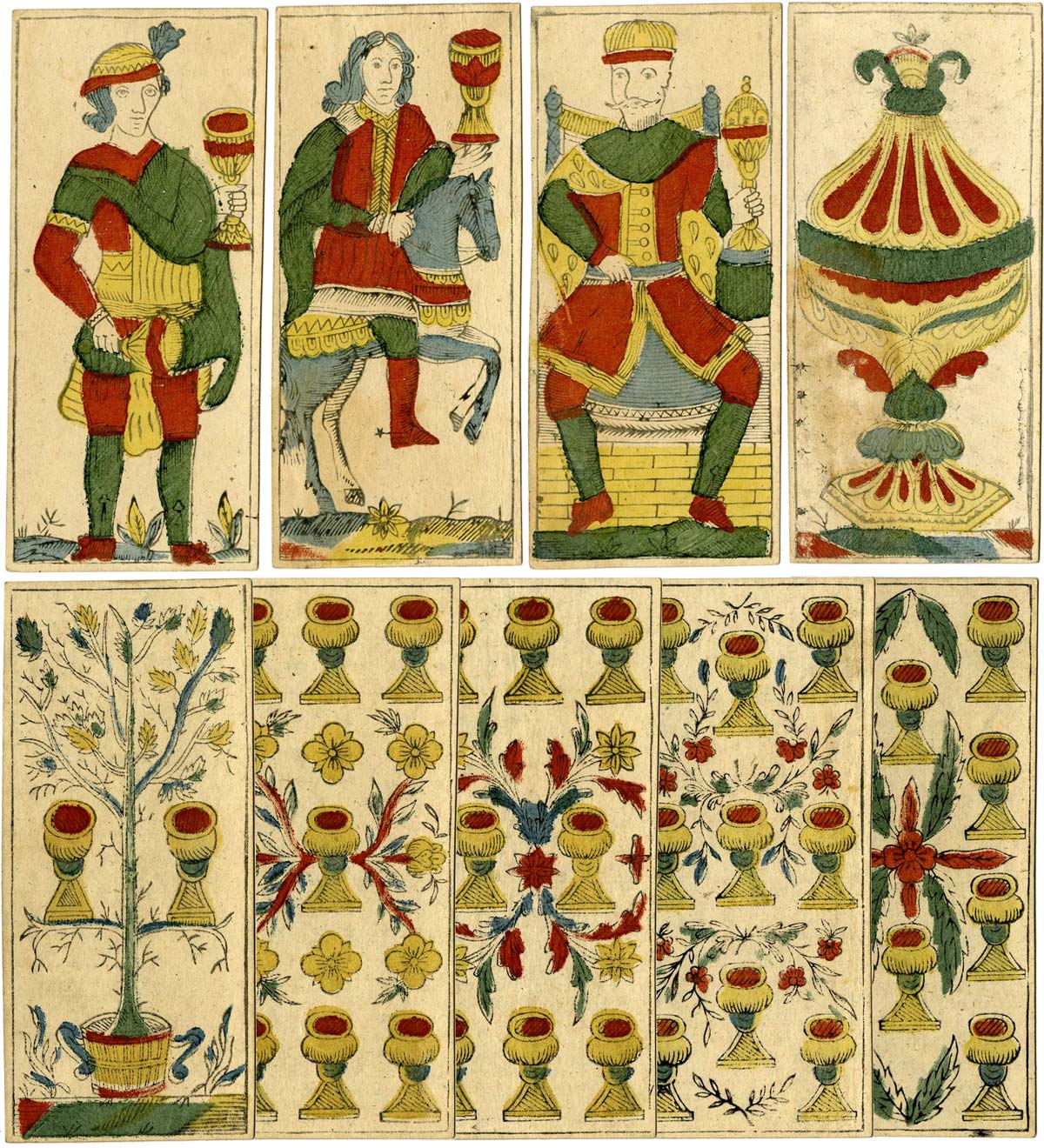
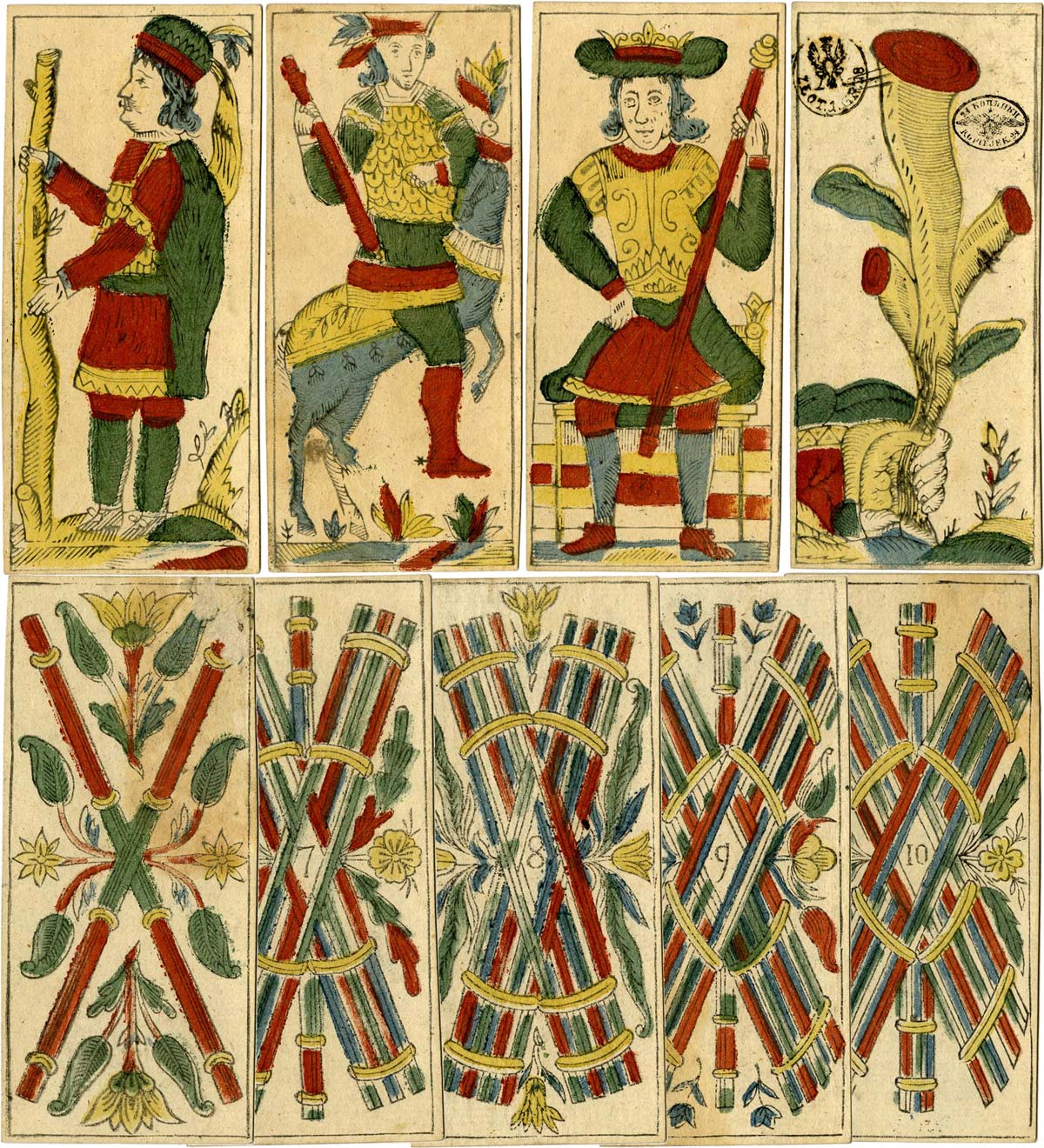
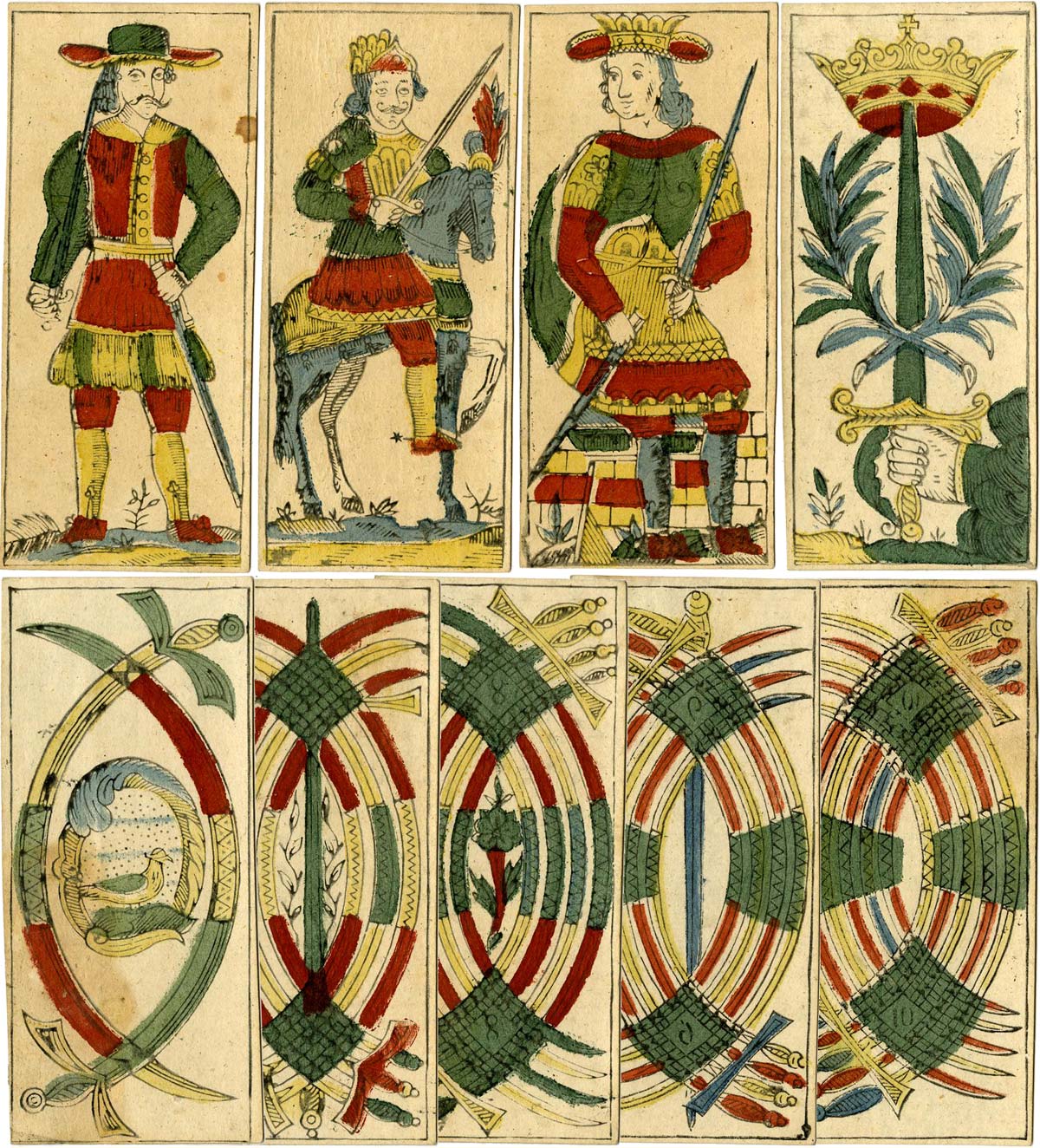
Above: Trappola cards published in Warsaw by J G Du Port, 18th century. 36 cards, hand-coloured woodcuts, backs printed with a pattern of black stars. © The Trustees of the British Museum • number 1896,0501.810.+►
The linguistic and cultural impact of Trappola is interesting and underscores the game’s historical significance. The name is Italian, the word meaning literally ‘a trick’, although corrupted in some German-speaking provinces into variations such as Trappolier, Trappulier or even Traplaczka in Poland. In Czechoslovakia they were known as Spady cards (Mann 1966, p.97) as well as various other names. Throughout the 17th to 19th centuries the game of Trappola spread via trade routes, military movements and cultural exchanges over a wide area stretching from Nürnberg and Leipzig, through Bohemia (now the Czech Republic) to Graz, Budapest, Wroclaw and Warsaw.
Further References
Dominic Winter Actioneers: Lot 491 Silesian Trappola, Franz Buchhold, Wratislaviae (Wroclaw), 1784►
IPCS: pattern sheet 40 Early Trappola►
Mann, Sylvia: Collecting Playing Cards, Arco Publications, 1966
Wikipedia: Trappola►
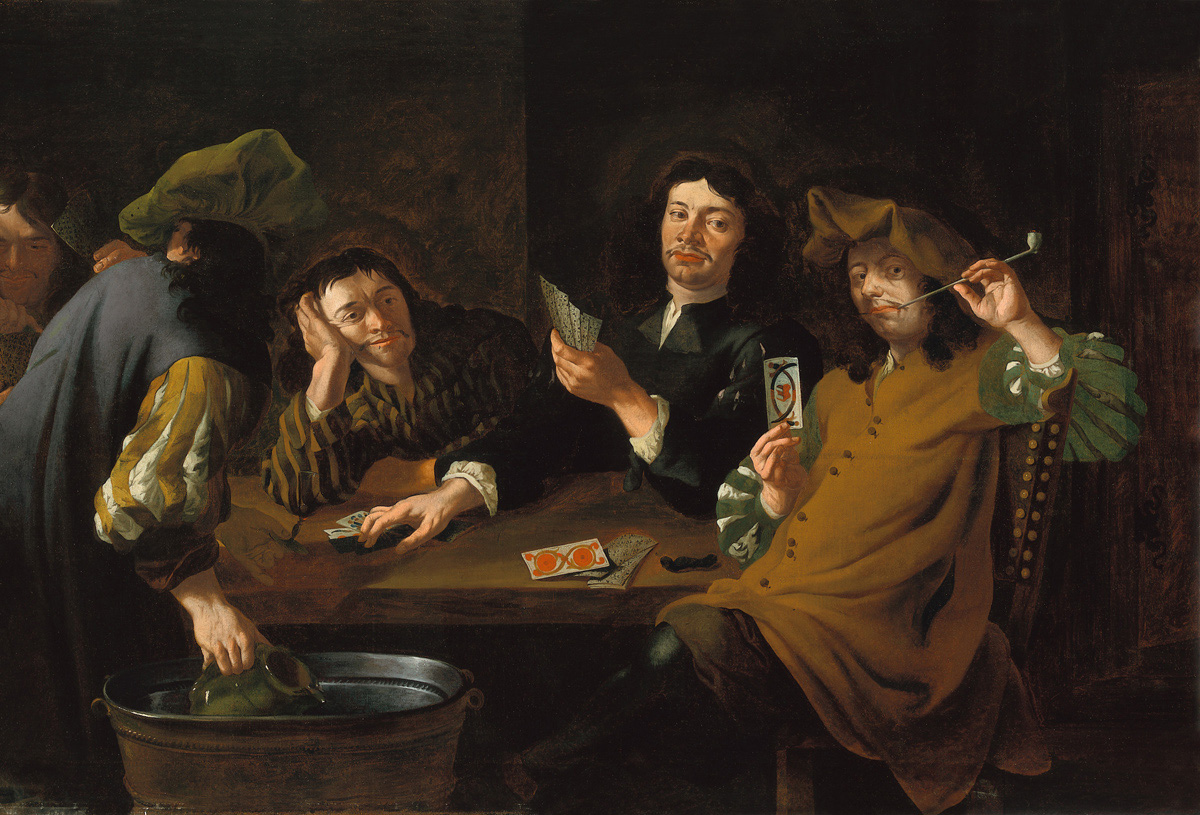
Above: detail from The Card Players II playing the Italian game of trappola, by the 17th-century Dutch artist Almanach in the collection of the National Gallery of Slovenia in Ljubljana.

By Simon Wintle
Spain • Member since February 01, 1996
I am the founder of The World of Playing Cards (est. 1996), a website dedicated to the history, artistry and cultural significance of playing cards and tarot. Over the years I have researched various areas of the subject, acquired and traded collections and contributed as a committee member of the IPCS and graphics editor of The Playing-Card journal. Having lived in Chile, England, Wales, and now Spain, these experiences have shaped my work and passion for playing cards. Amongst my achievements is producing a limited-edition replica of a 17th-century English pack using woodblocks and stencils—a labour of love. Today, the World of Playing Cards is a global collaborative project, with my son Adam serving as the technical driving force behind its development. His innovative efforts have helped shape the site into the thriving hub it is today. You are warmly invited to become a contributor and share your enthusiasm.

Activity for Trappola cards from Poland
Sign in to comment or save this article.

Related Articles
Most Popular
Our top articles from the past 60 days


