

José Martínez de Castro, page 2
The most noteworthy feature of its history is that this design has since been adopted for use in Sardinia, where it is now regarded as the standard local pattern.
José Martínez de Castro
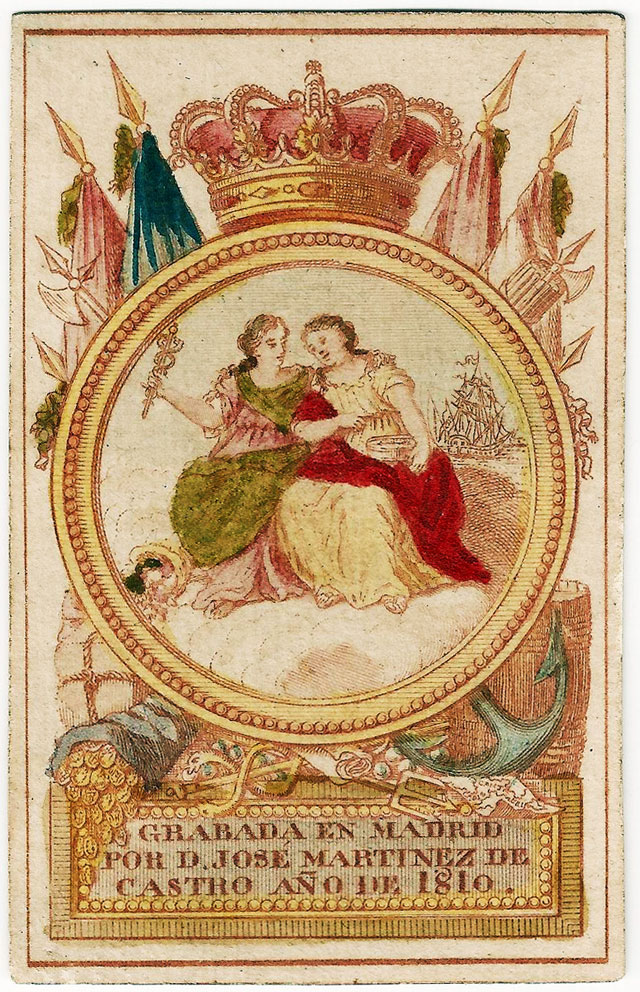 |
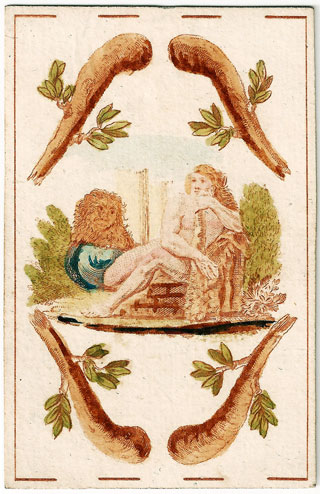
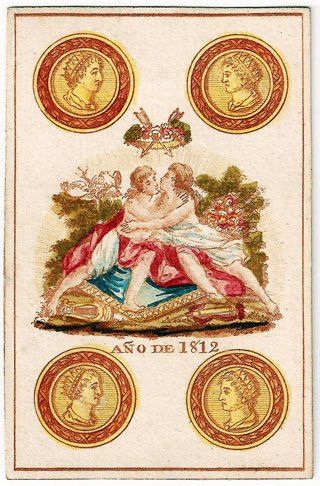
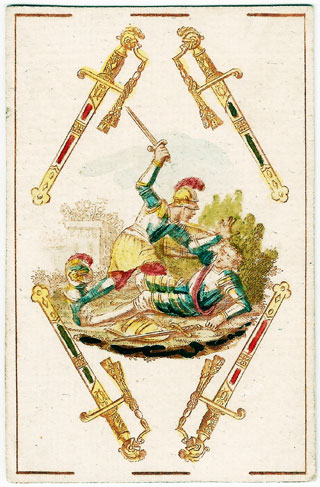
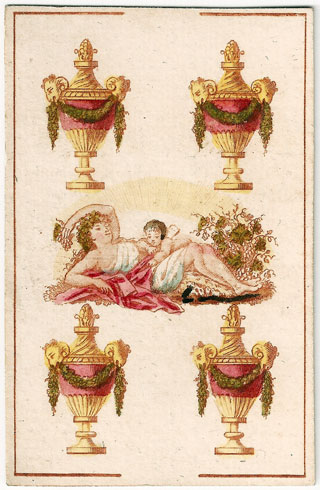
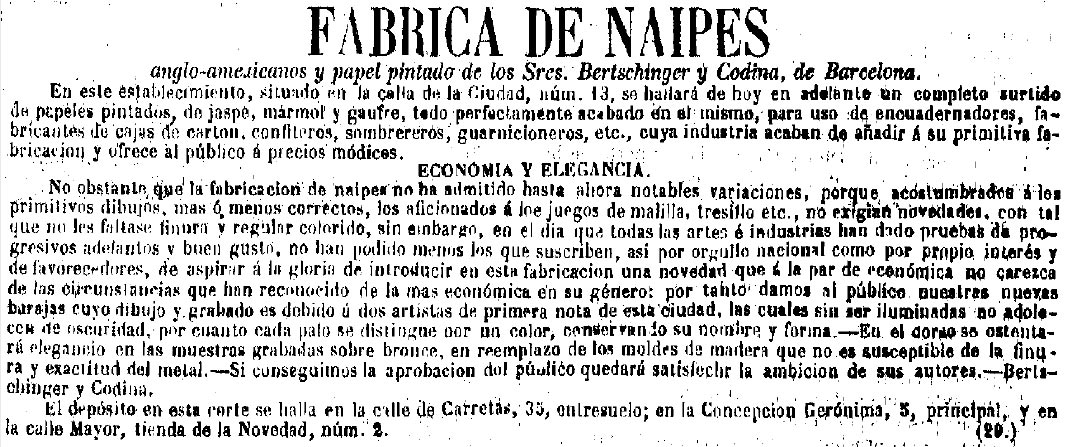
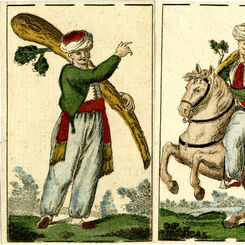
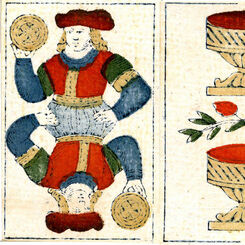
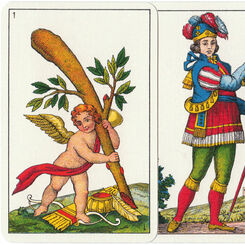
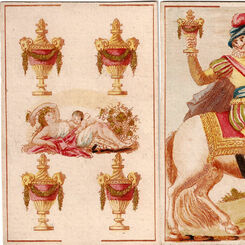
Cards from a deck etched on copper by José Martínez de Castro and first published by Clemente Roxas in Madrid in 1810. This example is from the second (censored) edition of 1812, in which extra drapery has been added to the miniature nude figures. Similar designs were used in the 1850s by Manuel Bertschinger y Codina and Sebastian Comas y Ricart, both from Barcelona. The designs have also been copied by Italian cardmakers in the 20th century. A facsimile was published by Heraclio Fournier (Vitoria, Spain) in 1977, titled Baraja Neoclasica. The most noteworthy feature of its history is that this design has since been adopted for use in Sardinia, where it is now regarded as the standard local pattern. Allowing for the limitations of present-day production methods, the Sardinian pack follows the Roxas original quite closely. |
 |
 |
 |
 |

By Simon Wintle
Spain • Member since February 01, 1996 • Contact
I am the founder of The World of Playing Cards (est. 1996), a website dedicated to the history, artistry and cultural significance of playing cards and tarot. Over the years I have researched various areas of the subject, acquired and traded collections and contributed as a committee member of the IPCS and graphics editor of The Playing-Card journal. Having lived in Chile, England, Wales, and now Spain, these experiences have shaped my work and passion for playing cards. Amongst my achievements is producing a limited-edition replica of a 17th-century English pack using woodblocks and stencils—a labour of love. Today, the World of Playing Cards is a global collaborative project, with my son Adam serving as the technical driving force behind its development. His innovative efforts have helped shape the site into the thriving hub it is today. You are warmly invited to become a contributor and share your enthusiasm.

Leave a Reply

Your Name
Just now Your comment here. Your comment here. Your comment here. Your comment here. Your comment here. Your comment here. Your comment here. Your comment here. Your comment here. Your comment here. Your comment here. Your comment here. Your comment here. Your comment here. Your comment here. Your comment here. Your comment here. Your comment here. Your comment here. Your comment here. Your comment here. Your comment here. Your comment here. Your comment here. Your comment here. Your comment here. Your comment here. Your comment here. Your comment here. Your comment here. Your comment here. Your comment here.
Related Articles
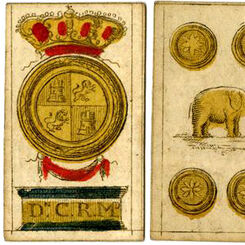
Miniature spanish-suited playing cards
Pack of 48 miniature spanish playing-cards published by C R.
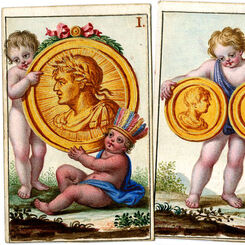
Amorcillos
‘Amorcillos’ (Cupids), a masterpiece from the golden age of Spanish playing cards by Clemente Roxas,...
Four Empires - Clemente Roxas
‘Four Empires’ playing cards produced by Clemente Roxas, c.1805.
Clemente Roxas double-ended Spanish pack
Double-ended Spanish-suited playing cards published by Clemente de Roxas in Madrid, 1814.
Sarde Pattern
Sarde pattern published by Modiano, c.1975, based on early XIX century Spanish model.
Baraja “Neoclásica”, Madrid, 1810
Baraja “Neoclásica” engraved by José Martínez de Castro, first published by Clemente Roxas, Madrid, ...
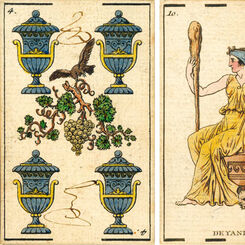
Baraja Mitológica
“Baraja Mitológica” was first published in Madrid in c.1815 by Josef Monjardín from engravings by Jo...
Hija de B Fournier
Having started out as Fournier Hermanos, Burgos in 1860, the company remained in the Fournier family...
Heraclio Fournier S.A.
Founded in 1868, today it is part of Cartamundi.
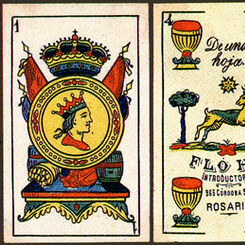
Fló Hermanos y Compañía, importers of playing-cards, Argentina, 1860-1910
Fló Hermanos y Compañía, importers of playing-cards, Argentina, 1860-1910.
Spanish Playing Cards ~ La Baraja Española
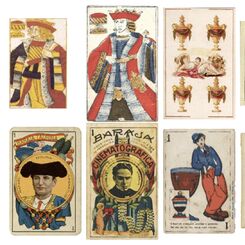
Spain has played a pivotal role in the history of playing cards in Europe and Latin America.
Naipes Finos No.21
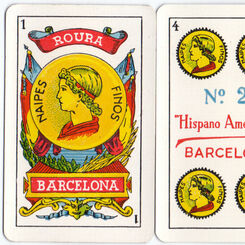
Naipes Finos No.21 "Hispano Americana", in the Castilian style, by Juan Roura, Barcelona, c.1940.
Simeon Durá 1871-1940
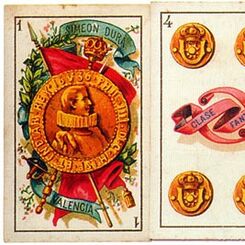
Simeon Durá of Valencia was one of Spain's most distinguished playing card manufacturers, flourishin...
Sebastian Comas y Ricart, Barcelona
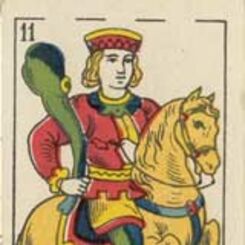
“El Ciervo” standard Catalan-type pack made in Barcelona by Sebastian Comas y Ricart, c.1905-10.
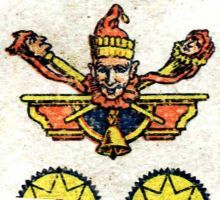
Moliner - Burgos
Cards from a "Nº 4" pack manufactured by Antonio Moliner, Burgos.
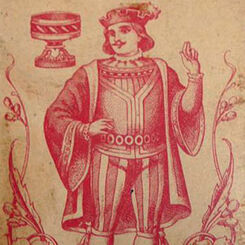
Naipes Comas
Naipes Comas 1797-1992.
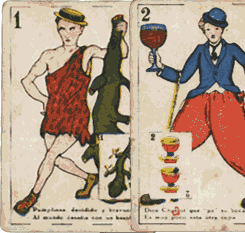
Baraja Artistas del Cine Mudo
Baraja Artistas del Cine Mudo, c.1926.
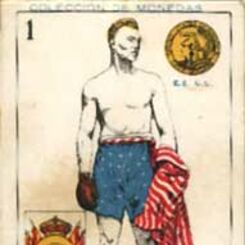
Baraja Boxeo
Baraja de Boxeo, c.1930.

Sardinian playing cards
Sardinian playing cards.
South German Engraver
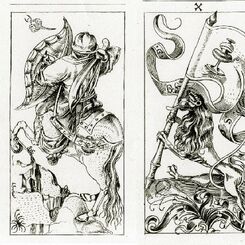
A pack of 52 cards with banner 10s, female 'Sotas', horsemen and kings, the pack was engraved in the...
Most Popular
Our top articles from the past 60 days


