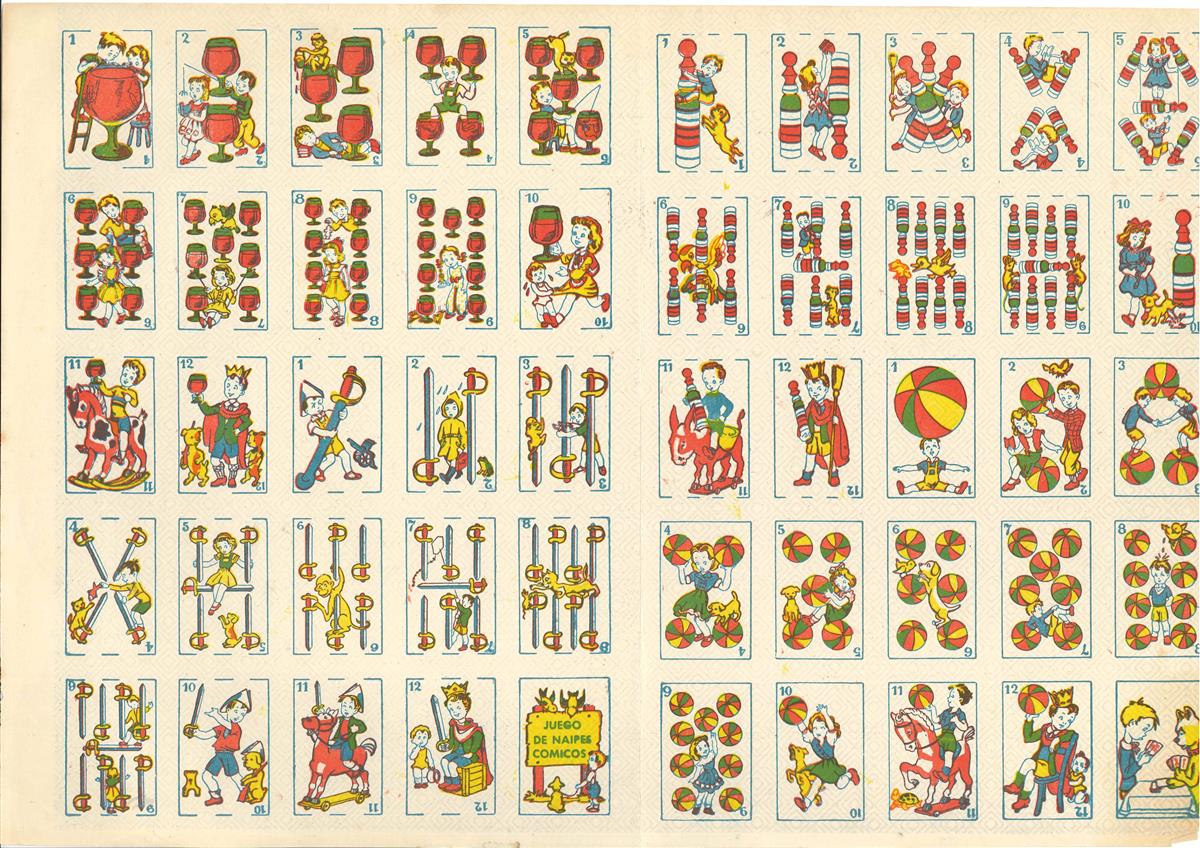
Litografías Industrias Madriguera
Pictorial trade cards were becoming popular throughout Europe so that tea, tobacco, chocolate or even beef extract were the commodities most associated with beautifully lithographed insert cards.
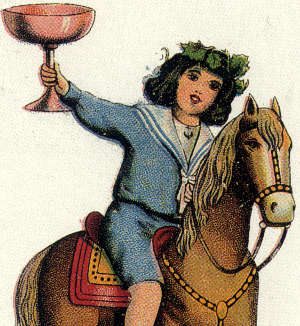
Litografías Industrias Madriguera, Barcelona, c.1896
Sets of playing cards or domino cards aimed at children became a new trend in Catalonia and Valencia during the 1870s designed to carry advertising slogans by chocolate companies on the fronts and/or reverse. Pictorial trade cards were becoming popular throughout Europe so that tea, tobacco, chocolate or even beef extract were the commodities most associated with beautifully lithographed and collectible insert cards. The quality and imagination of the designs reflects the cultural exuberance of those past times.
In this example, by Litografías Industrias Madriguera of Barcelona, suits were designed as skittles, balls, swords and sundae dishes around which groups of children are balancing or climbing. Ribbons or blank panels on the reverse incorporated references to the chocolate products (which in this edition have been removed).
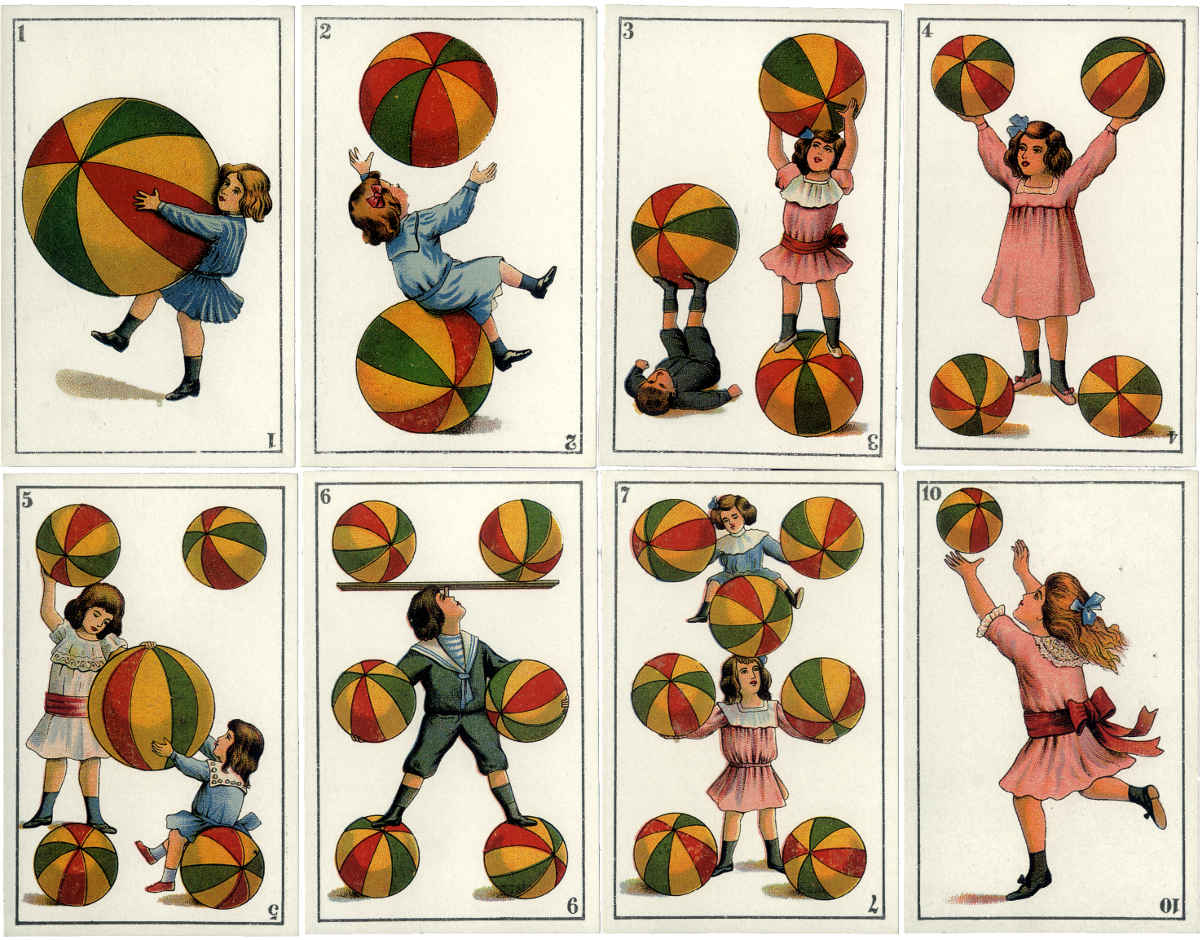
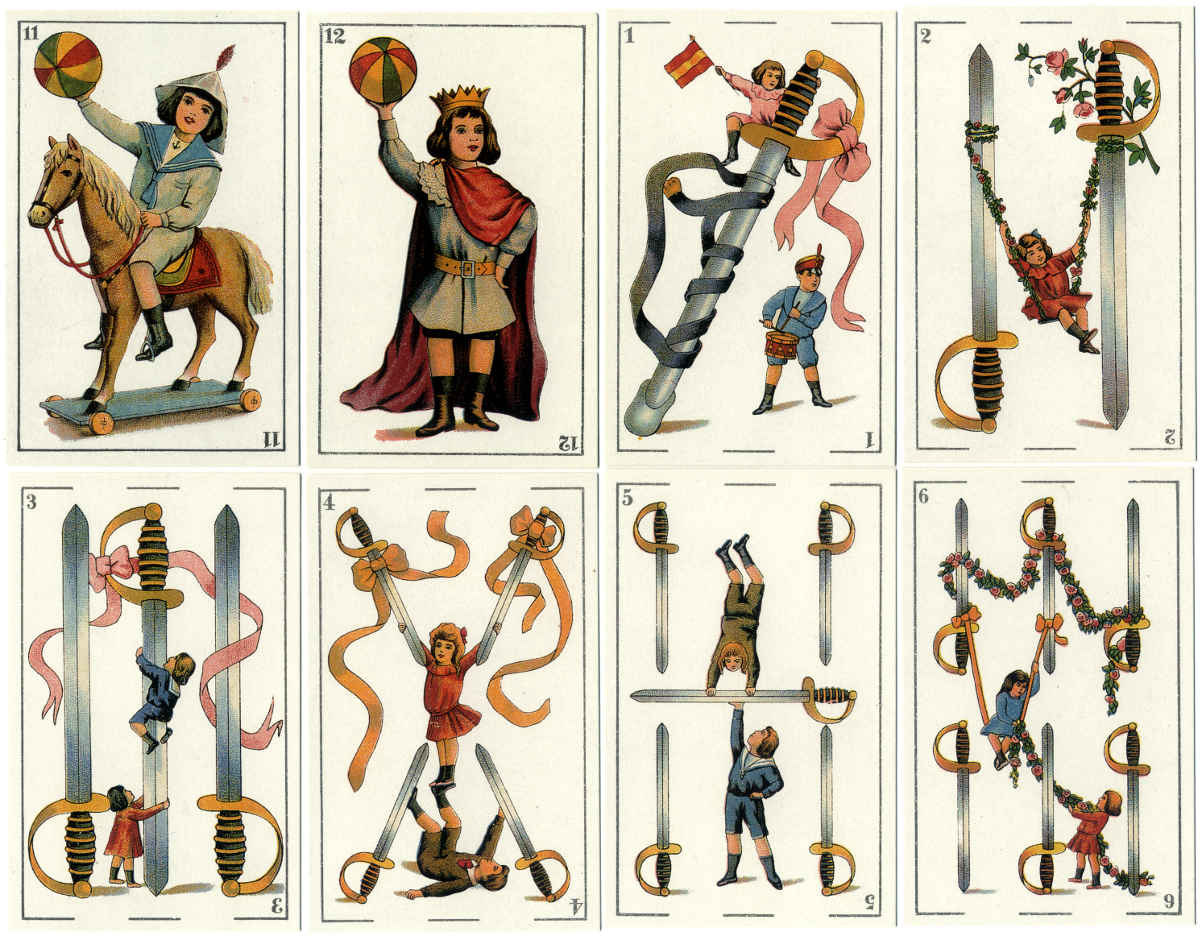
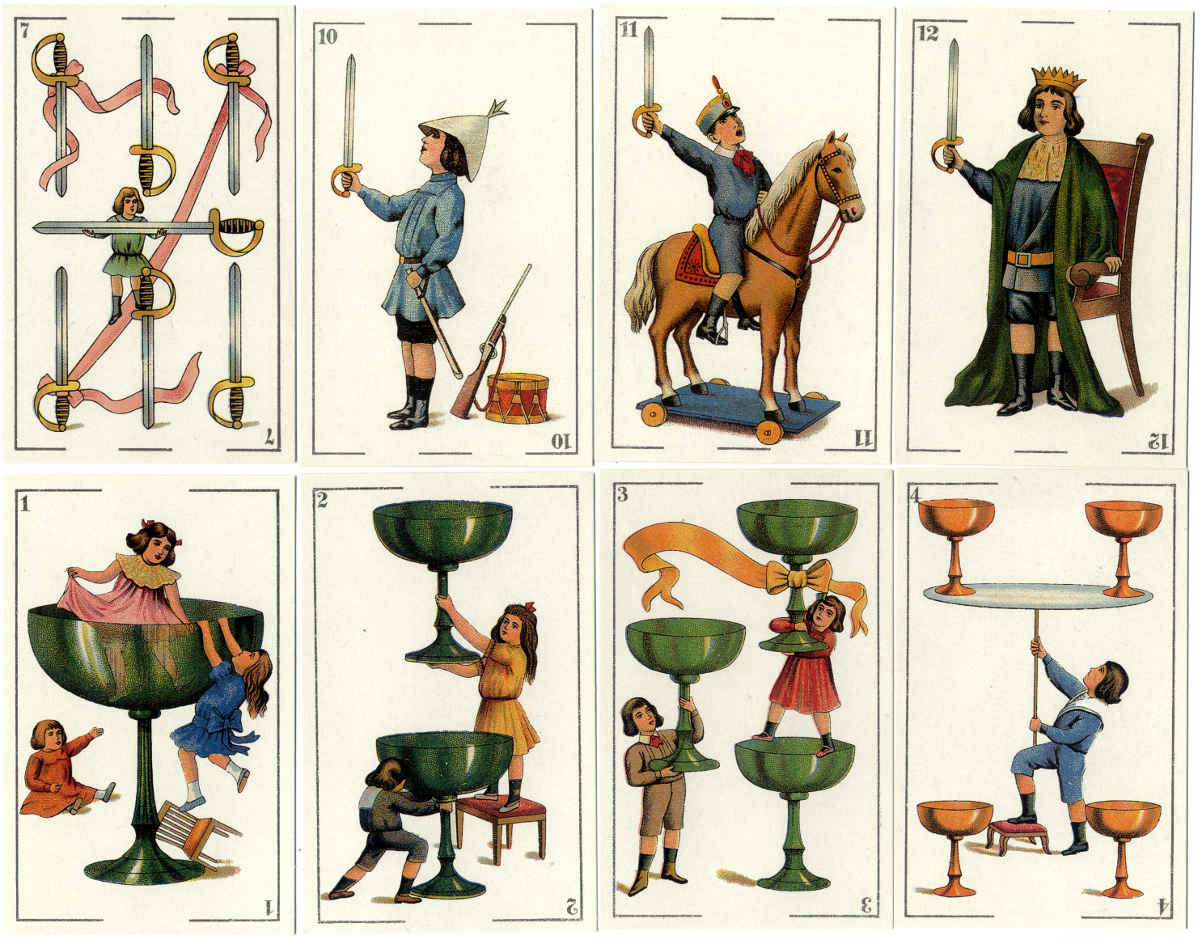
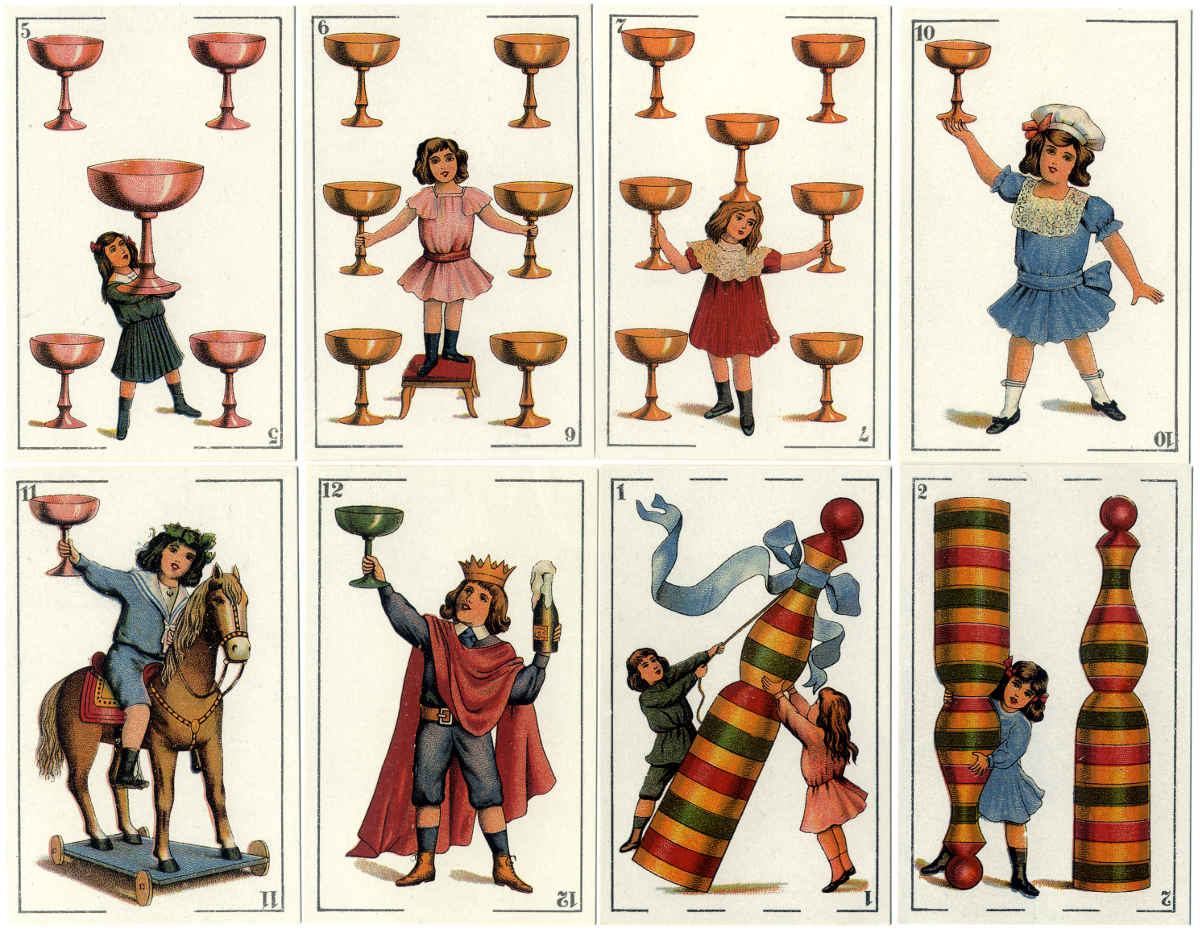
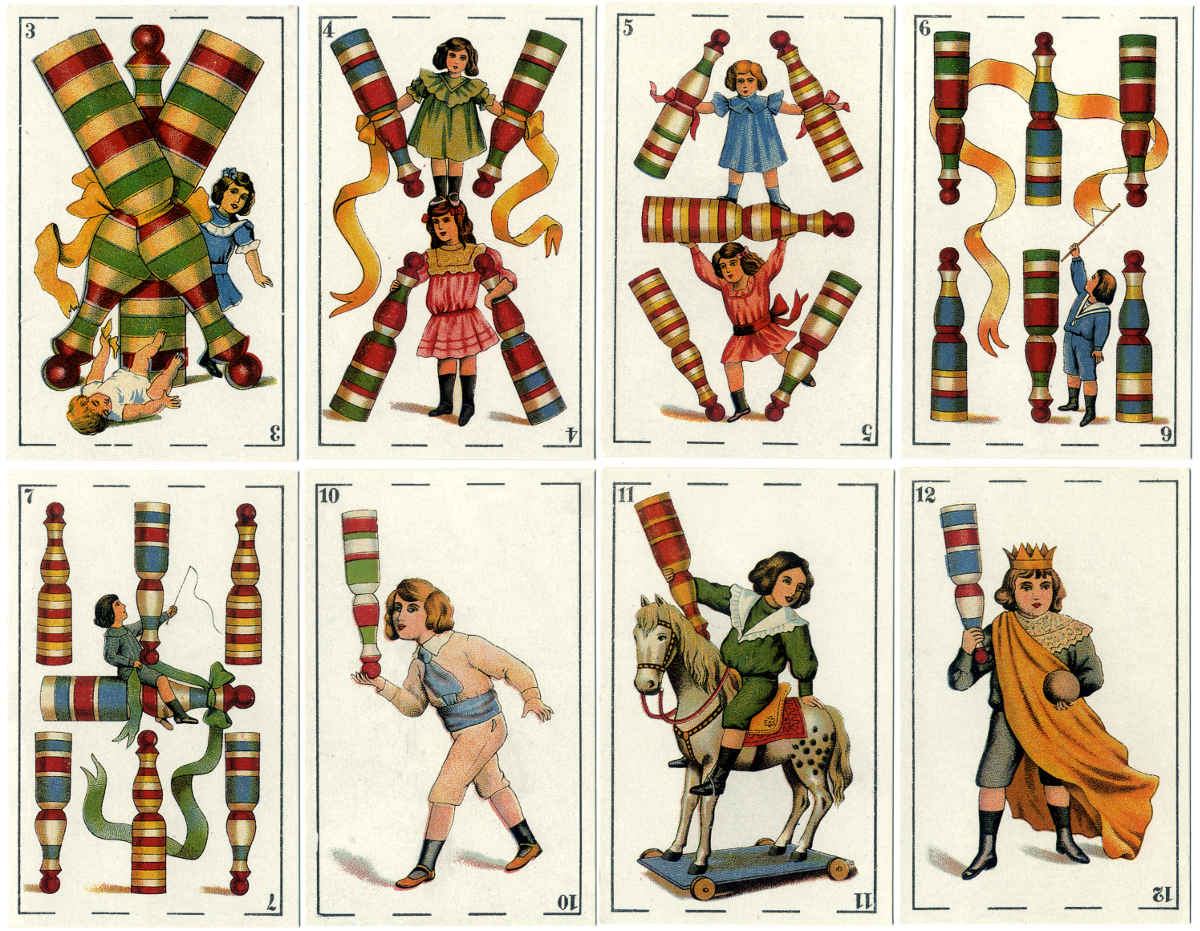
Above: cards from facsimile edition by El Sendero of 40 card version of a design originally published in c.1896 and re-issued in 1930s by Litografías Industrias Madriguera, Barcelona. 97x61mm.
See also: Naipes de "Don Quijote" by E. Pastor at Biblioteca Nacional de España • Juego de Naipes Comicos►
REFERENCES:
Denning, Trevor: The Playing-Cards of Spain, Cygnus Arts, London, 1996

By Simon Wintle
Spain • Member since February 01, 1996
I am the founder of The World of Playing Cards (est. 1996), a website dedicated to the history, artistry and cultural significance of playing cards and tarot. Over the years I have researched various areas of the subject, acquired and traded collections and contributed as a committee member of the IPCS and graphics editor of The Playing-Card journal. Having lived in Chile, England, Wales, and now Spain, these experiences have shaped my work and passion for playing cards. Amongst my achievements is producing a limited-edition replica of a 17th-century English pack using woodblocks and stencils—a labour of love. Today, the World of Playing Cards is a global collaborative project, with my son Adam serving as the technical driving force behind its development. His innovative efforts have helped shape the site into the thriving hub it is today. You are warmly invited to become a contributor and share your enthusiasm.

Activity for Litografías Industrias Madriguera
Sign in to comment or save this article.

Related Articles
Allegories and Myths
Semi-transformation playing cards from artist Violeta Monreal.
Le Geant, or Second Empire pack
Transformation cards issued during the Second Empire under Napoleon III.
Hand-drawn transformation cards, c1875
A complete set of hand-drawn transformation cards from c1875, using a standard De La Rue pack.
Le Ore playing cards
Caricatures of famous personalities from the late 1970s for the Italian magazine Le Ore.
El Jueves playing cards
Caricatures of 52 famous Spaniards for the satirical magazine “El Jueves”.
Amorcillos
‘Amorcillos’ (Cupids), a masterpiece from the golden age of Spanish playing cards by Clemente Roxas,...
Chocolate playing cards with scenes from World War 1
An extraordinary Spanish pack of chocolate advertising playing cards dating from 1920.
Suchard chocolate miniature playing cards
A miniature pack of playing cards advertising Suchard chocolate and cocoa made in the early 1900's. ...
Periquito y Tontín Dominoes
Periquito y Tontín Dominoes, featuring Feliz and Bonzo, 1920s.
Thackeray Transformation Cards
Transformation playing cards by William Makepeace Thackeray, 1876.
Hand-Painted Transformation, c.1800-20
An early 19th century set of hand-painted transformation playing cards depicting contemporary scenes...
Carl Arnold Transformation
Transformation playing cards designed by Carl Johann Arnold (1829-1916), the court artist for King F...
Domino Cinematográfico
“Domino Cinematográfico” published by Talleres Gráficos Irández, Barcelona, c.1925.
Bartlett Ackermann Transformation
Pictorial playing cards published by C. Bartlett, New York, 1833.
Regional Costumes
Spanish regional costumes and coats-of-arms; cute illustrations on each card, 1986.
Cigarette Cards and other ephemera
Cigarette Cards, Trade Cards, Miniature Playing Cards and other ephemera.
El Barco
El Barco playing cards designed by E. Pastor, Valencia, Spain, c.1895
South German Engraver
A pack of 52 cards with banner 10s, female 'Sotas', horsemen and kings, the pack was engraved in the...
Zoo Comics
ZOO COMICS animated playing cards made by Litografía Ferri, Valencia (Spain), first published in 196...
Spanish Historical Characters playing cards, c.1896
Cards from the Spanish Historical Characters playing cards set printed by Litografía Madriguera (Bar...
Most Popular
Our top articles from the past 60 days