


Antique Swiss Playing Cards, c.1530
The Swiss national suit system of shields, acorns, hawkbells and flowers originated sometime during the fifteenth century.
The Swiss national suit system of shields, acorns, hawkbells and flowers originated sometime during the fifteenth century. The playing cards shown here were originally made in Basel, c.1530. They were discovered inside a book cover and reproduced in 1998 to celebrate the 20th anniversary of Cartophilia Helvetica. A distinguishing feature is the "banner 10" cards, which are now more or less counted as an ace. The kings are seated. The same designs can be seen three hundred years later in the cards of David Hurter, c.1830.
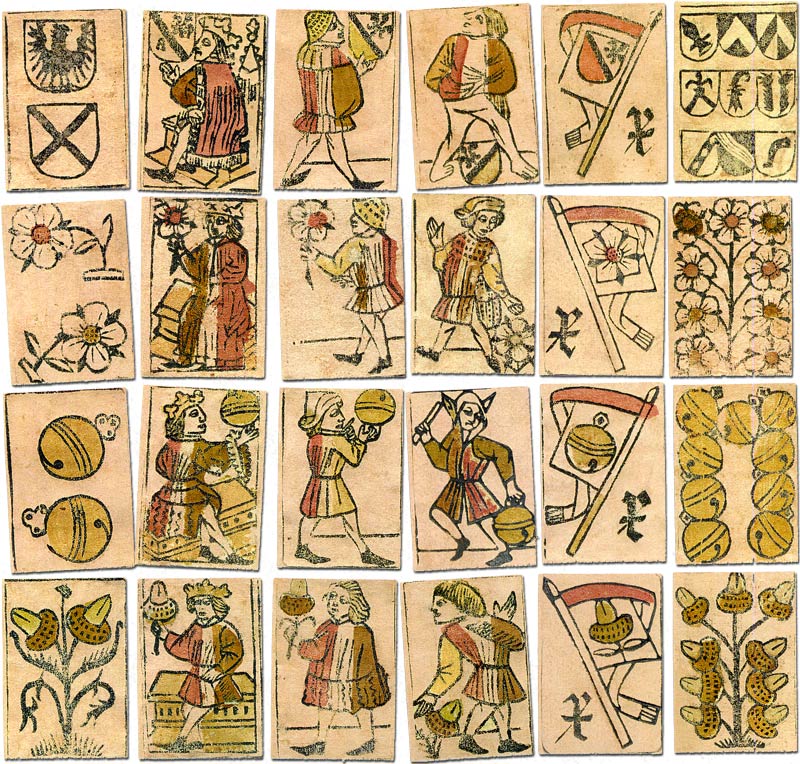
Above: cards from reprint by AGM Müller in 1998.
A second set of antique Swiss playing cards was discovered in May 2011 at Nidwaldner State Archives inside the covers of an old book during restoration. The cards were ‘reconstructed’ into a reproduction pack of 48 cards.
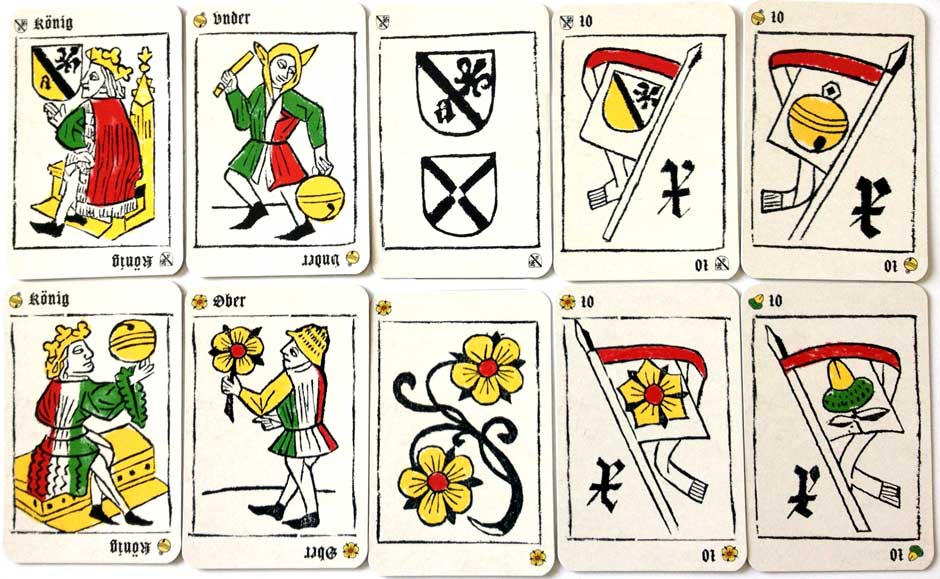
Above: cards from a reproduction by Druckerei Odermatt (www.dod.ch). Image courtesy Bert Kaspersma.

By Simon Wintle
Spain • Member since February 01, 1996
I am the founder of The World of Playing Cards (est. 1996), a website dedicated to the history, artistry and cultural significance of playing cards and tarot. Over the years I have researched various areas of the subject, acquired and traded collections and contributed as a committee member of the IPCS and graphics editor of The Playing-Card journal. Having lived in Chile, England, Wales, and now Spain, these experiences have shaped my work and passion for playing cards. Amongst my achievements is producing a limited-edition replica of a 17th-century English pack using woodblocks and stencils—a labour of love. Today, the World of Playing Cards is a global collaborative project, with my son Adam serving as the technical driving force behind its development. His innovative efforts have helped shape the site into the thriving hub it is today. You are warmly invited to become a contributor and share your enthusiasm.

Activity for Antique Swiss Playing Cards, c.1530
Sign in to comment or save this article.

Related Articles
The Dark Knight Joker Calling Cards
Joker “Calling Card” set issued in connection with the film The Dark Knight (2008).
Para Jass
Humorous court card designs by Léon Schnyder for the Swiss Paraplegics Association.
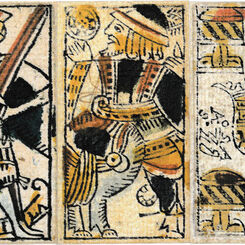
Sevilla 1647 reproduction
Facsimile of Spanish-suited pack produced in Sevilla, Spain, 1647.
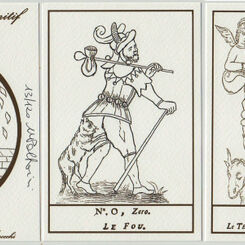
Le Monde Primitif Tarot
Facsimile edition produced by Morena Poltronieri & Ernesto Fazioli of Museo Internazionale dei Taroc...
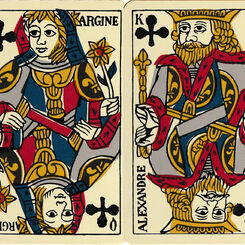
Bourbon Bridge
Attractive, woodcut-style courts adapted for modern play.
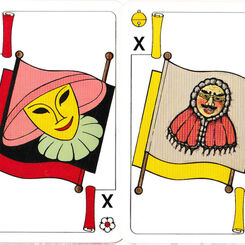
Schwyzer Fasnachts-Jass
Traditional carnival figures from the Swiss canton Schwyz, as interpreted by the artist Léon Schnyde...
Swiss Souvenir
55 different scenic photographic views of Switzerland.
Standard Swiss-German pattern (single-ended)
20th century version of a single-ended Swiss-German pattern pack for the game of Jass.
Mini Jass
Pocket-size cards with modern designs for playing the Swiss national card game, Jass.
La Compagnie de 1602
Characters from the annual festival held to commemorate the failed attempt to storm Geneva in 1602. ...
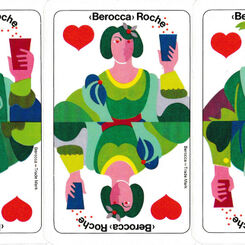
Roche
Advertising pack for the Swiss-based healthcare company.
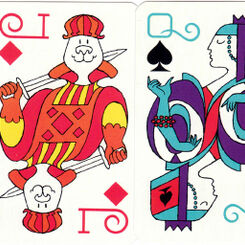
Investors Overseas Services
Investors Overseas Services, Ltd. (IOS) by A. G. Müller (Schaffhausen), c.1969.
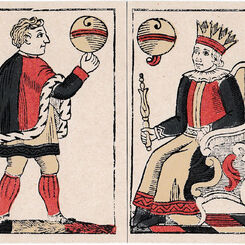
Johannes Müller c.1840
Facsimile edition of Swiss suited deck first published by Johannes Müller in c.1840.
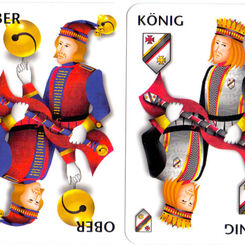
Modern Swiss-German Pattern
Modern Swiss-German Pattern by AGMüller, c.2000.
Jass Allemand
Egbert Moehsnang produced this contemporary Swiss-suited, double-ended pack, based on original XV ce...
Swiss Playing Cards
The Swiss national suit system of shields, acorns, hawk bells and flowers emerged sometime during th...
Mamluk Playing Cards
Nã'ib, the game of lieutenants... these cards are amongst the earliest Arabic playing cards ext...
Swiss Playing Cards by David Hurter, c.1830
David Hurter had begun to build up a playing card business in Schaffhausen during the late 18th cent...

David Hurter, Schaffhausen
David Hurter built up a playing card business in Schaffhausen during the 18th century.
The History of Playing Cards
Playing cards appear in European records in the late 14th century, but their earlier history lies fu...
Most Popular
Our top articles from the past 60 days


Ваня Козлов (Vanya Kozlov)
19 November 2025, 09:47SavedSaved this article to Ваня Козлов's Collection