


Iohann Christoph Hes Tarot c.1750
Facsimile of Tarot de Marseille by Iohann Christoph Hes, Augsburg, c.1750.
The game of tarot was introduced to German countries from France during the 17th and 18th centuries, in the form of the “Besançon Tarot” and “Marseille Tarot” with French inscriptions. A splendid facsimile of a Marseille style tarot by Iohann Christoph Hes, Augsburg, c.1750 is shown here.
The original cards are preserved in the British Museum, and have been reproduced faithfully in all details.
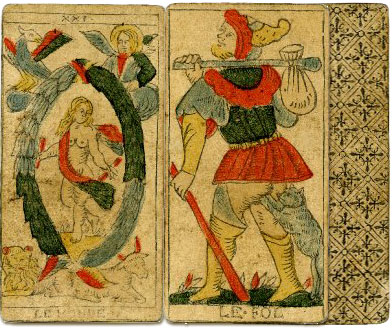
Right: two of the original cards © The Trustees of the British Museum
Museum number 1896,0501.191 online here►
The facsimile is printed on high quality card and presented in a beautifully designed box with informative booklet.
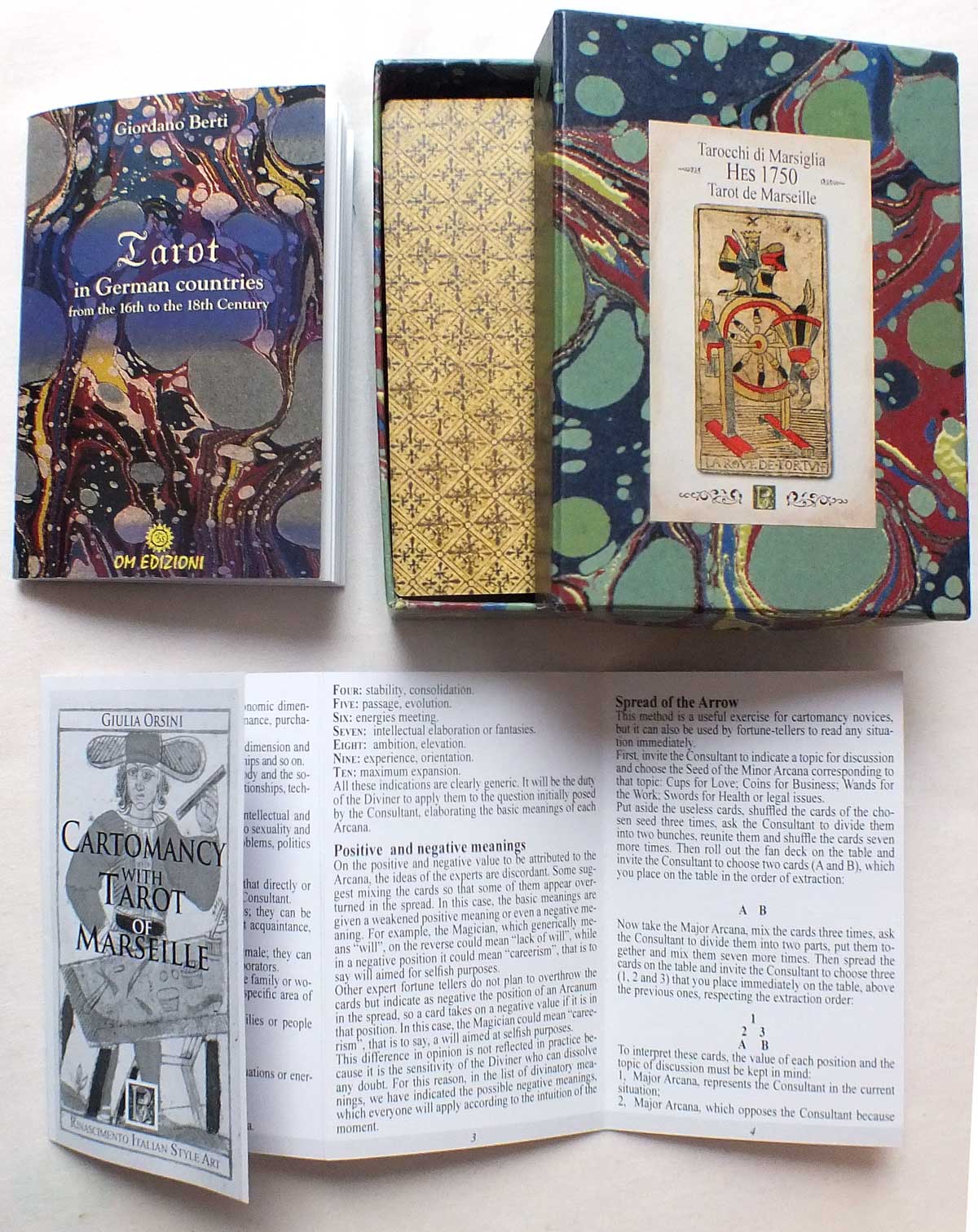
The Box and Booklets
The reproduction is printed in a limited edition of 900 copies, each one numbered and signed, accompanied by a booklet “Tarot in the German countries from the 16th to the 18th century” by Giordano Berti. In the booklet Berti reports new documentary evidence relating to the spread of Tarot in German regions (paintings, poems, handbook for tarot players, etc.). The deck comes in a fine box designed by Letizia Rivetti and includes a guide to cartomancy by Giulia Orsini.
The Facsimile Cards
The Hes Tarot has been reproduced with meticulous accuracy in all details including colours, dimensions and back of the cards, by Rinascimento Italian Style Art►
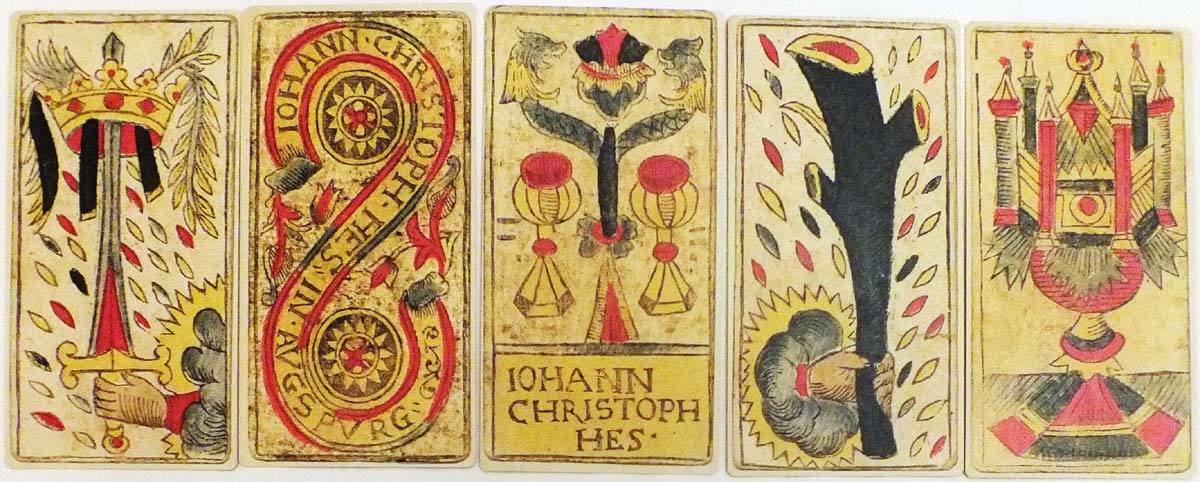
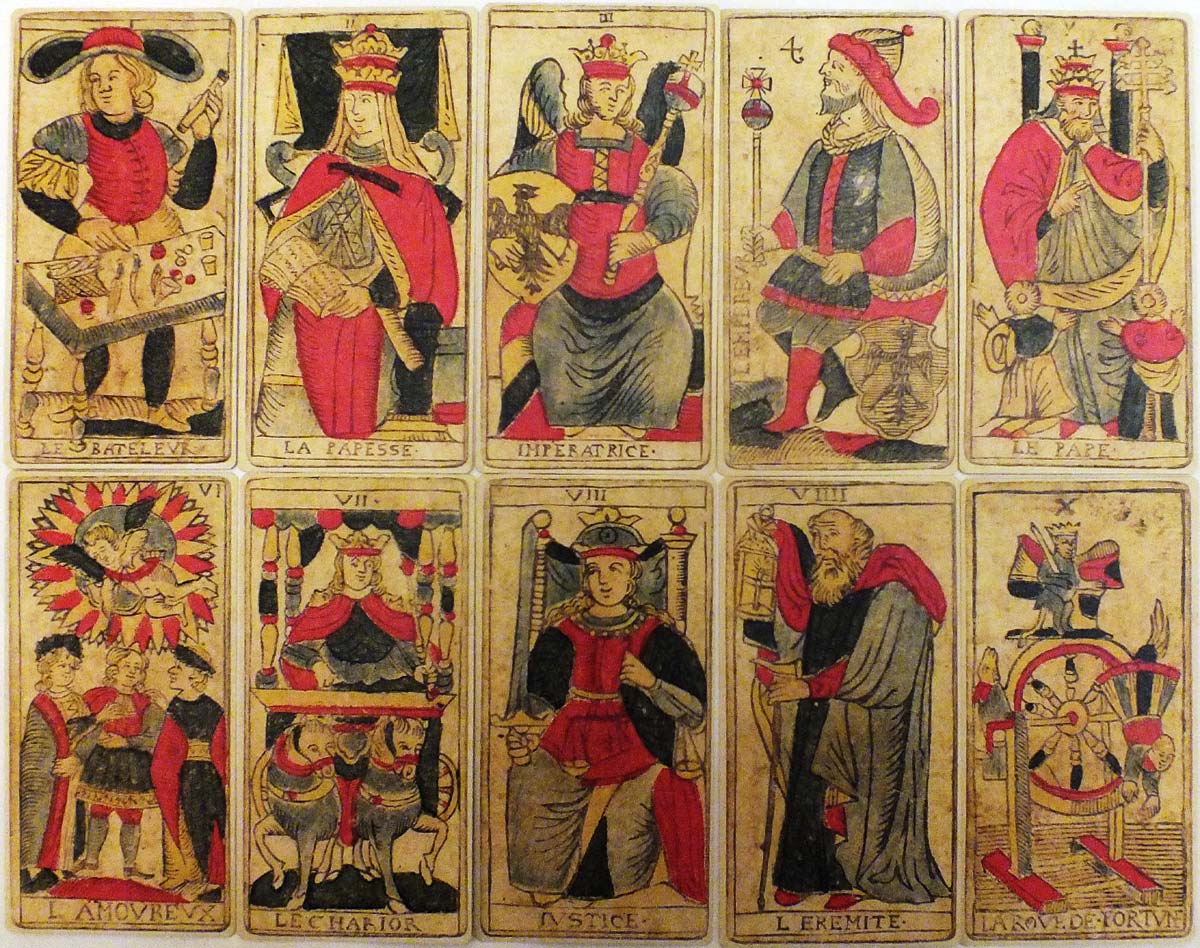
Above: the facsimile edition of a Marseille style Tarot by Iohann Christoph Hes, Augsburg, c.1750. 78 cards + extra warranty card + booklet + cartomancy leaflet in box. The booklet includes two appendices: "Map of the Tarot Factories in Europe in the 18th century", which shows the spread of these cards in the Germanic area, and "Mozart and the Tarot", which tells the great musician’s passion for this game.

By Simon Wintle
Spain • Member since February 01, 1996
I am the founder of The World of Playing Cards (est. 1996), a website dedicated to the history, artistry and cultural significance of playing cards and tarot. Over the years I have researched various areas of the subject, acquired and traded collections and contributed as a committee member of the IPCS and graphics editor of The Playing-Card journal. Having lived in Chile, England, Wales, and now Spain, these experiences have shaped my work and passion for playing cards. Amongst my achievements is producing a limited-edition replica of a 17th-century English pack using woodblocks and stencils—a labour of love. Today, the World of Playing Cards is a global collaborative project, with my son Adam serving as the technical driving force behind its development. His innovative efforts have helped shape the site into the thriving hub it is today. You are warmly invited to become a contributor and share your enthusiasm.

Activity for Iohann Christoph Hes Tarot c.1750
Sign in to comment or save this article.

Related Articles
The Somnia Tarot
Nicolas Bruno’s 2023 Illustrated Edition turns a photographic dream project into a Rider-Waite-Smith...
Engel-Tarot
Set of major arcana designed by Alois Hanslian depicting angels throughout.
Morgan-Greer Tarot
Based on the knowledge, wisdom and interpretation of Paul Foster Case and Arthur Edward Waite.
Early German playing cards
Some early examples of popular German playing cards from the XV and XVI centuries.
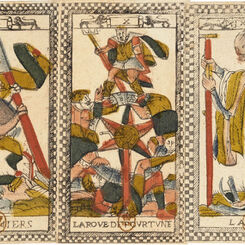
The Parisian Tarot
The “Parisian Tarot”, early 1600s, with imagery and design synthesizing several influences.
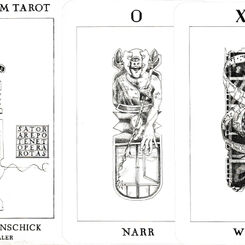
Bilder zum Tarot
Detailed pen and ink drawings of the major arcana by the German artist Helmut Wonschick.
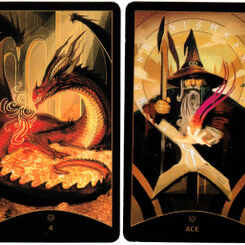
Dungeons and Dragons Tarot
This 78-card officially licensed Dungeons & Dragons (D&D) tarot deck offers a visually appealing var...
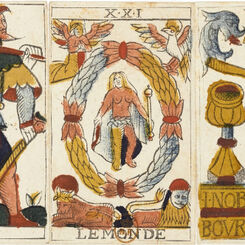
Jean Noblet Tarot de Marseille
Jean Noblet: the oldest known ‘Tarot de Marseille’ deck, Paris, c.1650.
72: The Ace of Spades
In standard English packs the Ace of Spades is associated with decorative designs. This is a histori...
History of Playing Cards explained in 5 Minutes
Video by Art of Impossible. In this video you will get a short overview of the most important histor...
Perspectives on the History of Tarot
From a Renaissance Card Game to a Medium of Spiritual Meaning and Identity.
Joseph Losch
French-suited pack with full-length courts by Joseph Losch, c.1800.
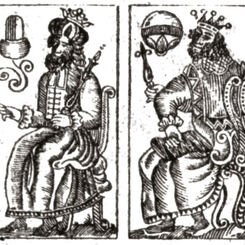
Old Bavarian pattern
Uncut sheets of playing cards of the Old Bavarian pattern by Michael Schatzberger, Passau, c.1780.
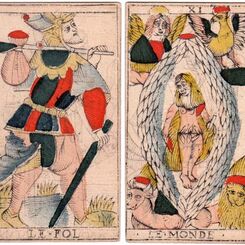
Charles Cheminade Tarot
Marseille Tarot cards by Charles Cheminade of Grenoble, France, early 18th century.
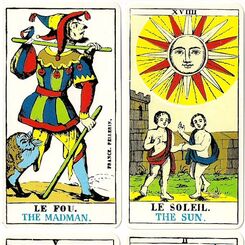
Épinal Tarot
The woodcuts were produced by Francois Georgin (1801-1863), a famous engraver during the Napoleonic ...
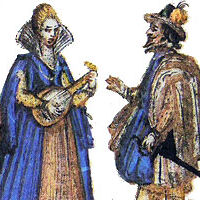
Das Kupferstichspiel des I.M.F. von 1617
Playing cards had been made as precious objects for wealthy clients since the late 14th century. The...
Verkehrte-Welt-Tarock
"Verkehrte-Welt-Tarock” (reverse world ?) manufactured by Christian Theodor Sutor (fl. 1823-1854), N...
Mamluk Playing Cards
Nã'ib, the game of lieutenants... these cards are amongst the earliest Arabic playing cards ext...
XV Century Italian Playing Cards
Cards from a pack of an early form of north Italian playing cards, with the swords back-to-back and ...
The History of Playing Cards
Playing cards appear in European records in the late 14th century, but their earlier history lies fu...
Most Popular
Our top articles from the past 60 days


