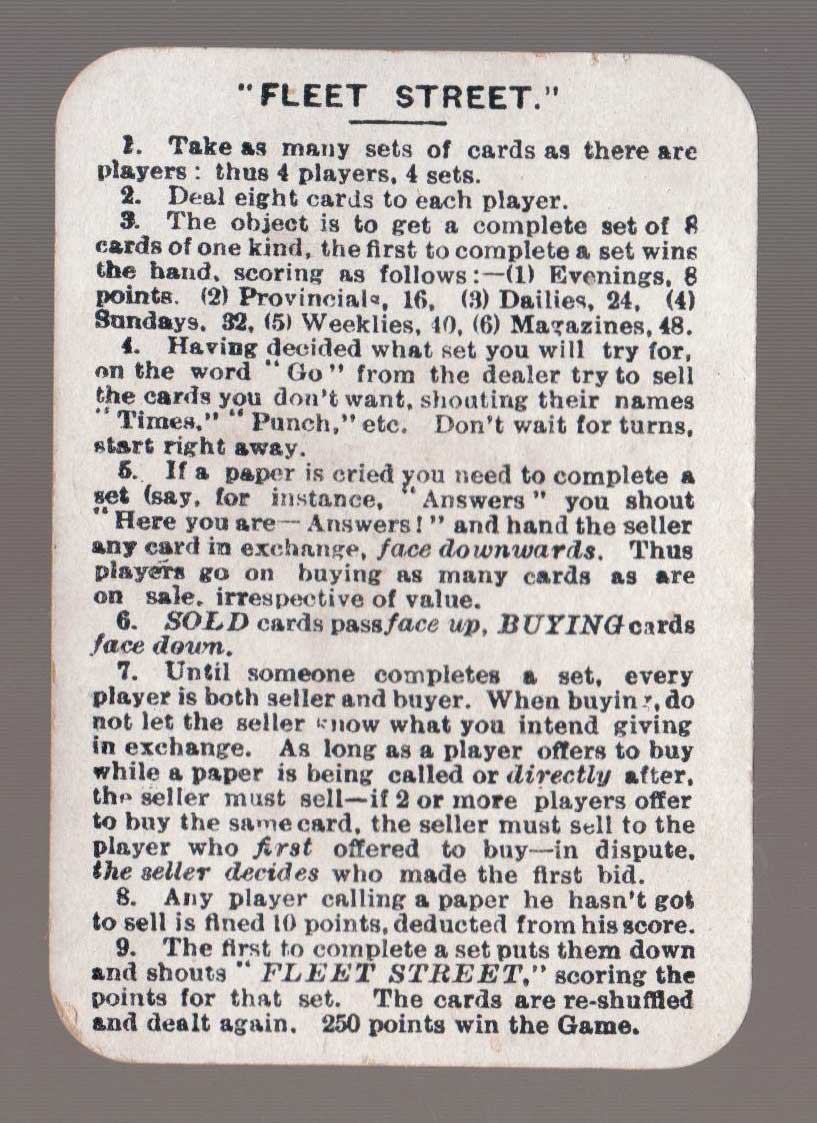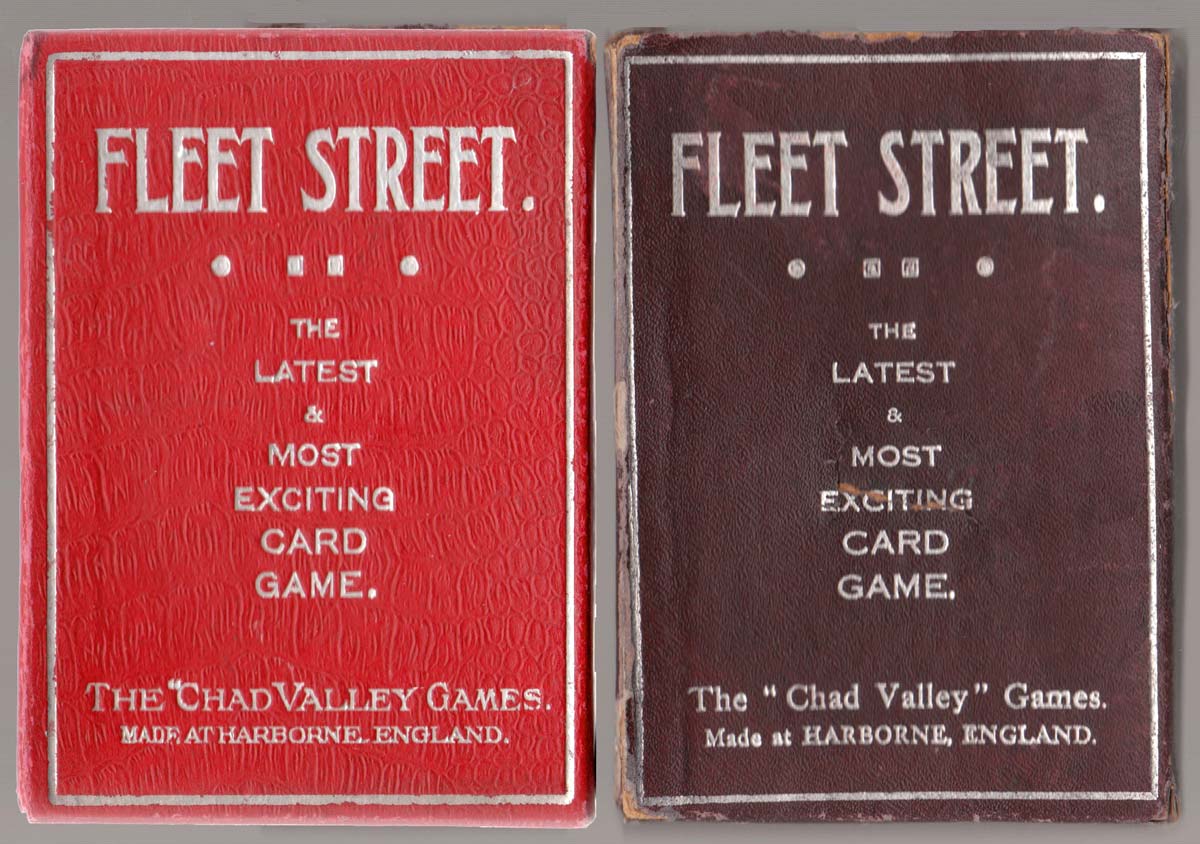


Fleet Street
“Fleet Street” card game published by Chad Valley Games, c.1923.
This popular card game probably sold very well when it was issued in around 1923 because there seem to still be plenty around today. I have been fascinated by the cards ever since my childhood as my parents had the game in the house when I was born. I spent many happy days laying out the cards and when I could read began to wonder what all the headlines were about. Most of the cards picture the newspapers’ billboards, but the magazines and some of the weeklies show the front covers of the publications. Chad Valley issued a second edition, I don’t know when, with just three changes to the cards and a new back design in yellow and red very similar to the back design for their Sparx card game but with a fan of Fleet Street cards and the name printed in a central circle. The reason for the change is hard to determine read full article →
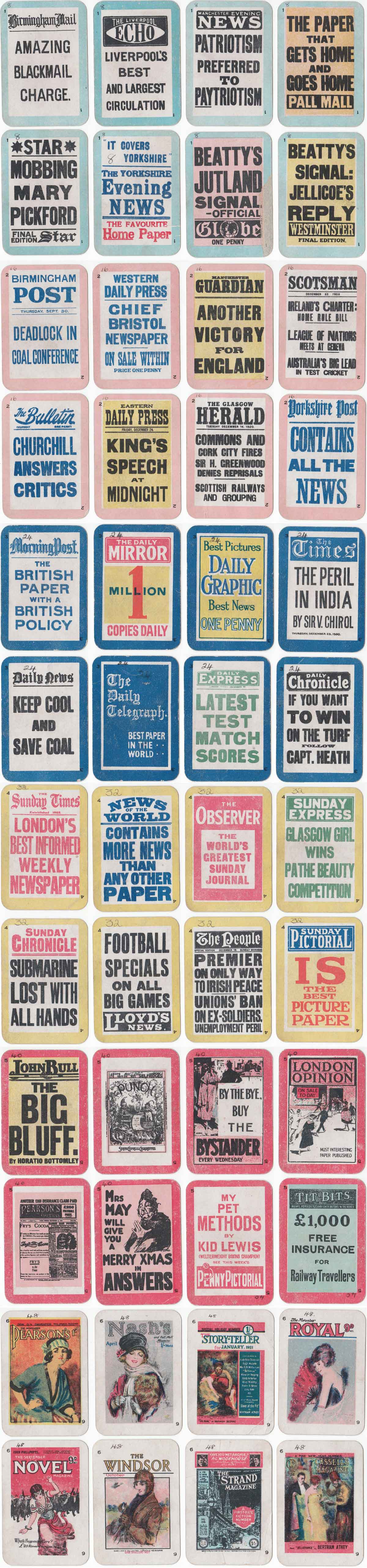
Above: “Fleet Street” card game published by Chad Valley Games, c.1923.

By Rex Pitts (1940-2021)
United Kingdom • Member since January 30, 2009
Rex's main interest was in card games, because, he said, they were cheap and easy to get hold of in his early days of collecting. He is well known for his extensive knowledge of Pepys games and his book is on the bookshelves of many. His other interest was non-standard playing cards. He also had collections of sheet music, music CDs, models of London buses, London Transport timetables and maps and other objects that intrigued him.
Rex had a chequered career at school. He was expelled twice, on one occasion for smoking! Despite this he trained as a radio engineer and worked for the BBC in the World Service. Later he moved into sales and worked for a firm that made all kinds of packaging, a job he enjoyed until his retirement. He became an expert on boxes and would always investigate those that held his cards. He could always recognize a box made for Pepys, which were the same as those of Alf Cooke’s Universal Playing Card Company, who printed the card games. This interest changed into an ability to make and mend boxes, which he did with great dexterity. He loved this kind of handicraft work.
His dexterity of hand and eye soon led to his making card games of his own design. He spent hours and hours carefully cutting them out and colouring them by hand.

Activity for Fleet Street
Sign in to comment or save this article.

Related Articles
Learning to play Cribbage
I learned to pay cribbage when I was very young, aged around six or seven.
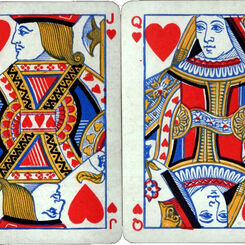
Heartsette by Herbert Fitch & Co, 1893
A glimpse into a busy print and design office in late Victorian London.
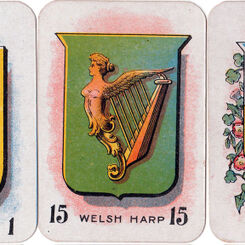
Blaze
“Blaze” was introduced just before Johnson Bros changed their name to Chad Valley Ltd, c.1920.
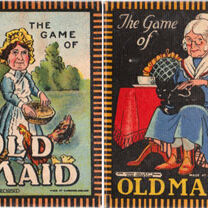
The Game of “Old Maid”
Two different editions of “The Game of Old Maid” by the Chad Valley Games Co.
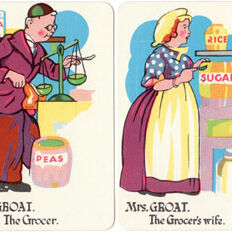
Happy Families, c.1950
Chad Valley “Happy Families” card game, c.1950.
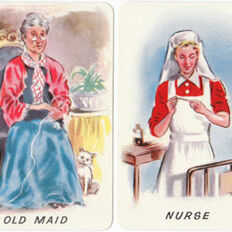
Old Maid
“Old Maid” card game manufactured by Chad Valley Co Ltd, mid-1950s.
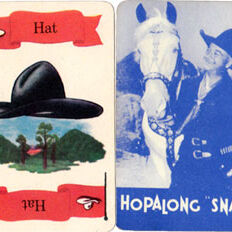
Hopalong Snap
‘Hopalong Cassidy Snap’ published by Chad Valley, 1950s.
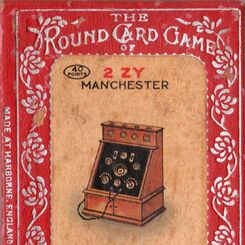
Sparx
‘Sparx’ card game, or ‘Listening In’, published by Chad Valley Games, c.1925.
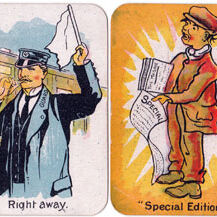
Special Edition Snap 1912
Chad Valley Special Edition ‘Snap’ card game, 1912.
Golden Egg
Chad Valley “Golden Egg” card game.
Strip Tease
‘Strip Tease’ card game featuring characters involved in the performance and subsequent prosecution ...
Cheers & Tears
Cheers & Tears by John Waddington Ltd, 1963.
Animal Snap
The full set of this 'Snap' card game is believed to have 9 characters in sets of four, making a tot...

Card Games for Kids
Card Games for Kids by Hamlyn 2004.
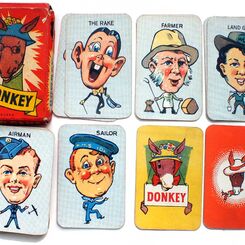
Clifford ‘Donkey’ card game
Clifford ‘Donkey’ card game, c.1948.
Dartex
Dartex, the Thrilling New Card Game of Skill (1938) based on the traditional pub game where darts ar...
London Post
Jaques' The London Post Card Game, c.1895.
Entente Cordiale
Jaques' The Entente Cordiale Card Game, c.1905.
Thomas Creswick
Thomas Creswick was a paper-maker and wholesale stationer. Playing cards were produced from c.1820 o...
Collecting English Playing Cards & Games
The History of English Playing Cards dates probably from the mid 15th century, the first documentary...
Most Popular
Our top articles from the past 60 days