

Lawrence & Cohen
Lawrence & Cohen were successors to Lawrence, Cohen & Co.
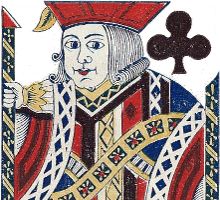
Lawrence & Cohen were successors to Lawrence, Cohen & Co.. During the relatively short period that Lawrence & Cohen decks were produced with the William Street address (c.1860-1873) both single and double-ended courts were manufactured. The court card designs closely resemble those of some British manufacturers, especially De la Rue, and a certain amount of copying went on between Belgian, English and American manufacturers. The company was merged into The New York Consolidated Card Company in 1871.
The Lawrence & Cohen illuminated deck was issued in 1863. It was a beautiful deck and a fine example of craftsmanship but it stood in stark contrast to the horror of the Battle of Gettysburg that was fought that year with the loss of American lives from both the North and the South totalling in the tens of thousands in just one day.
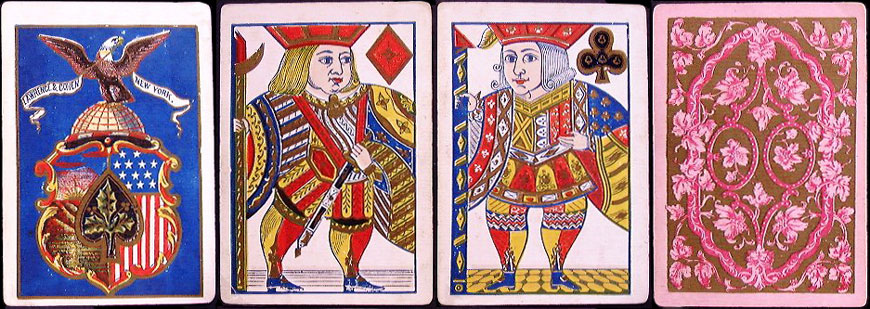
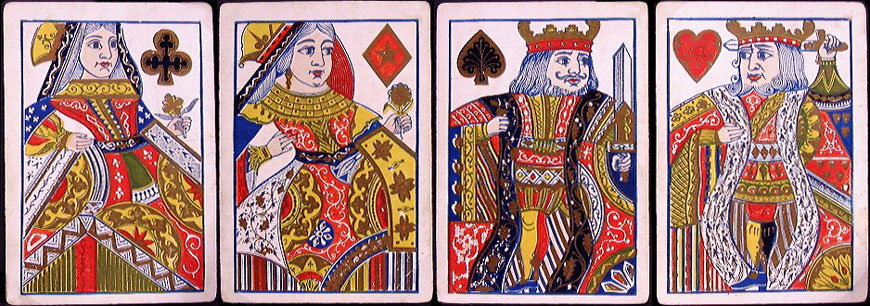
Above: 'Superfine Florigated Playing Cards', a richly illuminated deck produced by Lawrence & Cohen, c.1863, with gold added to the colour scheme.
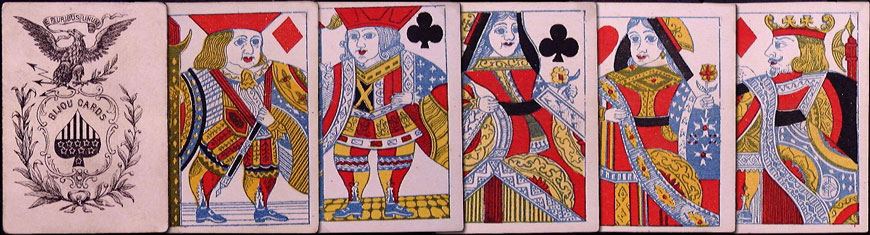
Above: Bijou Cards, a patience size deck with one-way courts very similar to the above example, made by Lawrence & Cohen, c.1860.
In the double-ended versions, although more convenient, many charming features of the designs are lost.
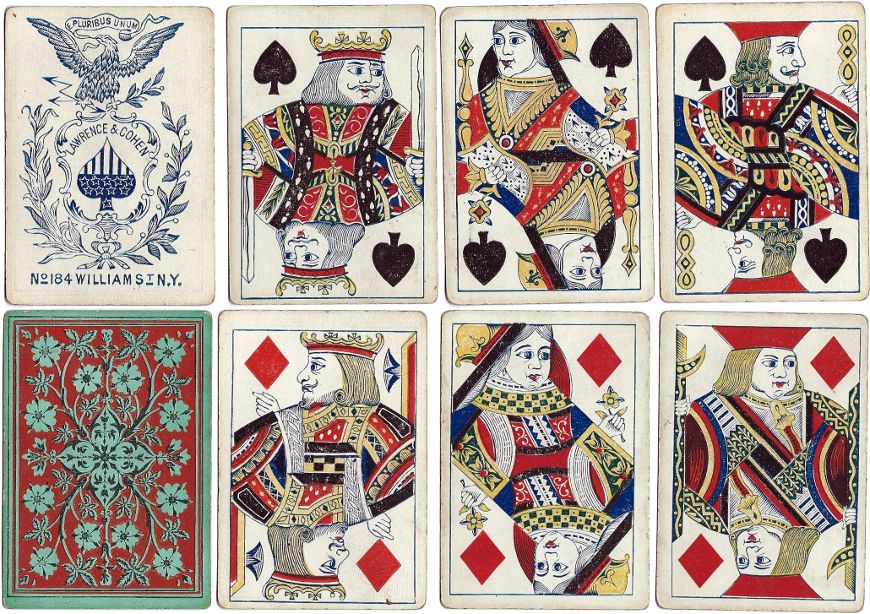
Above: Double-ended Bézique cards made by Lawrence & Cohen, 184 William Street, New York, c.1863. Image courtesy Mark Hayward.
Lawrence & Cohen decided to hire Owen Jones, the English playing card designer who produced back designs for De La Rue (London), to design new backs. The De La Rue Ace of Spades was also adapted for use by Lawrence & Cohen, but the crown was soon to be replaced by an eagle.
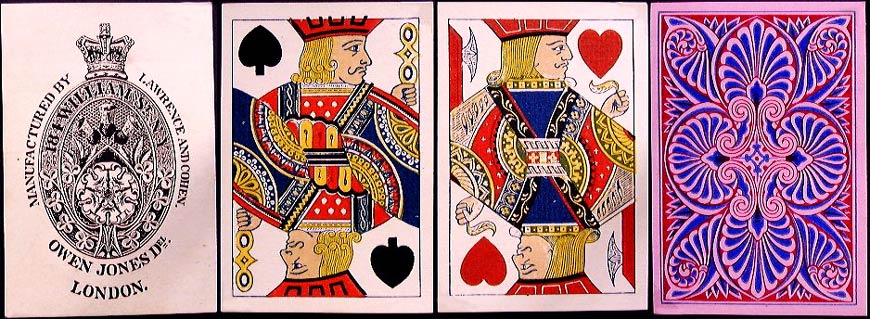
Above: deck with back design and ace of spades designed by Owen Jones, made by Lawrence & Cohen, c.1865. more →
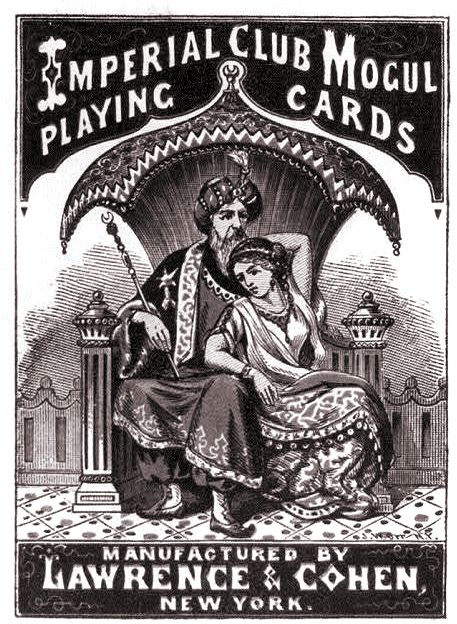
Right: Lawrence & Cohen advert for Imperial Club Mogul Playing Cards with near East imagery, c.1868.
Lawrence & Cohen merged into The New York Consolidated Card Company in 1871.
REFERENCES
Dawson, Tom & Judy: The Hochman Encyclopedia of American Playing Cards, U.S. Games Systems Inc., 2000
Lodge, Ken: The Standard English Pattern (second revised and enlarged edition), Bungay, Suffolk, 2010
Starling, Rod: Shuffling Along with History, in 'Clear the Decks', the Newsletter for 52 Plus Joker (edited by Judy Dawson), September 2010

By Simon Wintle
Spain • Member since February 01, 1996 • Contact
I am the founder of The World of Playing Cards (est. 1996), a website dedicated to the history, artistry and cultural significance of playing cards and tarot. Over the years I have researched various areas of the subject, acquired and traded collections and contributed as a committee member of the IPCS and graphics editor of The Playing-Card journal. Having lived in Chile, England, Wales, and now Spain, these experiences have shaped my work and passion for playing cards. Amongst my achievements is producing a limited-edition replica of a 17th-century English pack using woodblocks and stencils—a labour of love. Today, the World of Playing Cards is a global collaborative project, with my son Adam serving as the technical driving force behind its development. His innovative efforts have helped shape the site into the thriving hub it is today. You are warmly invited to become a contributor and share your enthusiasm.

Leave a Reply

Your Name
Just now Your comment here. Your comment here. Your comment here. Your comment here. Your comment here. Your comment here. Your comment here. Your comment here. Your comment here. Your comment here. Your comment here. Your comment here. Your comment here. Your comment here. Your comment here. Your comment here. Your comment here. Your comment here. Your comment here. Your comment here. Your comment here. Your comment here. Your comment here. Your comment here. Your comment here. Your comment here. Your comment here. Your comment here. Your comment here. Your comment here. Your comment here. Your comment here.
Related Articles

Mediaeval Playing Cards
Finely executed late 19th century pack from the USA featuring courts in medieval costume.
Romeo and Juliet
Unbranded ‘Romeo and Juliet’ backs by Russell Playing Card Company, c.1911.

The Lumberjacks
2nd edition of Lumberjacks designed by Vadim Smolenskiy and manufactured by U.S.P.C.C.
No.500 Playing Cards
No.500 Playing Cards published by U.S.P.C.C., c.1910
De Luxe No.142
A wide size version of De Luxe No.142 had been published in c.1920, with a similar Ace of Spades and...
Lighthouse No.922
“Lighthouse No.922” playing cards were introduced in c.1920.
Triton No.42
There have been at least three different versions of the Triton deck, with different Jokers, differe...
Jumbo Bridge 88
Cards with jumbo indices were introduced in 1895, and were given the subtitle '88'.
The United States Playing Card Company
Over the years the pressures of competition and other market forces have led to many smaller manufac...
Royal Playing Cards, 1890s
Royal Playing Cards, 1890s
Lewis I. Cohen
Lewis I. Cohen made his first deck of cards in 1832. In 1835 Mr Cohen invented a new machine to prin...
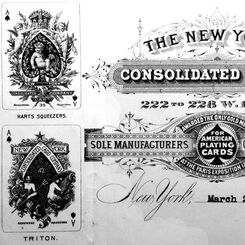
New York Consolidated Card Company
The New York Consolidated Card Company was formed in 1871 by the merging of Lawrence & Cohen, Samuel...
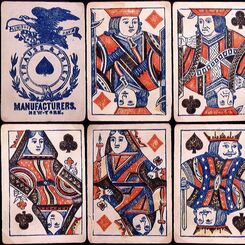
Strauss & Trier, c.1860
Strauss & Trier, New York, c.1860.
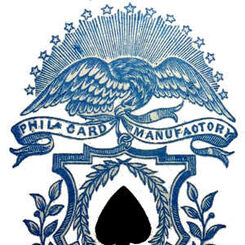
Samuel Hart, 1846-1871
Samuel Hart was a prolific manufacturer of playing cards who commenced business sometime around 1845...
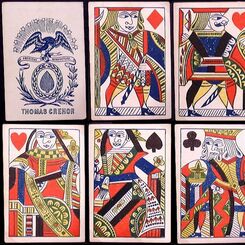
Thomas Crehore copy, c.1850
Thomas Crehore copy, c.1850.
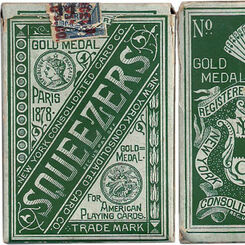
Squeezers No.35
By 1877 the New York Consolidated Card Co's "Squeezers" were a great success on account of the indic...
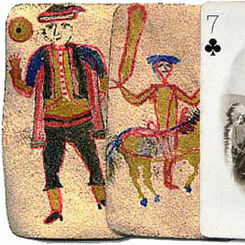
U. S. A.
The manufacture of playing cards in America only began during the second half of the 18th century, a...
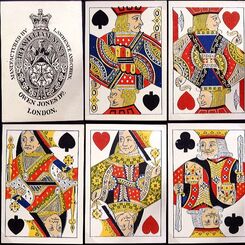
Lawrence & Cohen, New York
Lawrence & Cohen decided to hire Owen Jones, the English playing card designer who produced back des...
Bonnie Blue’s Rummy Cards
Bonnie Blue’s Rummy Cards.

4 Seasons Playing Cards
Colours of the Four Seasons - Playing Card Art Deck
Most Popular
Our top articles from the past 60 days


