


Georg Kapfler
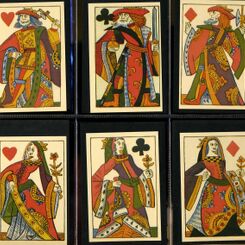
Antique deck of old Bohemian playing cards of the German type manufactured by Georg Kapfler and dated 1611.
Archaic German-suited playing cards manufactured by Georg Kapfler and dated 1611. The kings are seated on thrones while the upper and lower valets are standing. The designs are related to the so-called ‘Stukeley’ type cards from Nuremberg which were widely copied since the mid-15th century and are ancestors of several later patterns. Aces have been dropped and the two, or deuce, is the highest card, decorated with a shield or other device.
The two of acorns has a small shield or escutcheon (beneath the unicorn) bearing crossed hammers, suggesting mining or a miners’ guild (possibly the two of hearts had the same motif, now missing). The eight of hearts also has an impaled shield (divided into two equal parts by a straight line from the top to bottom) with crossed swords on the right-hand side and what look like Hungarian Árpád stripes on the left. Playing cards like these were being used during the 16th century silver rush by mine workers gambling during their spare time, on both sides of the Czech / German border.
From the collection of Pavel Langer.
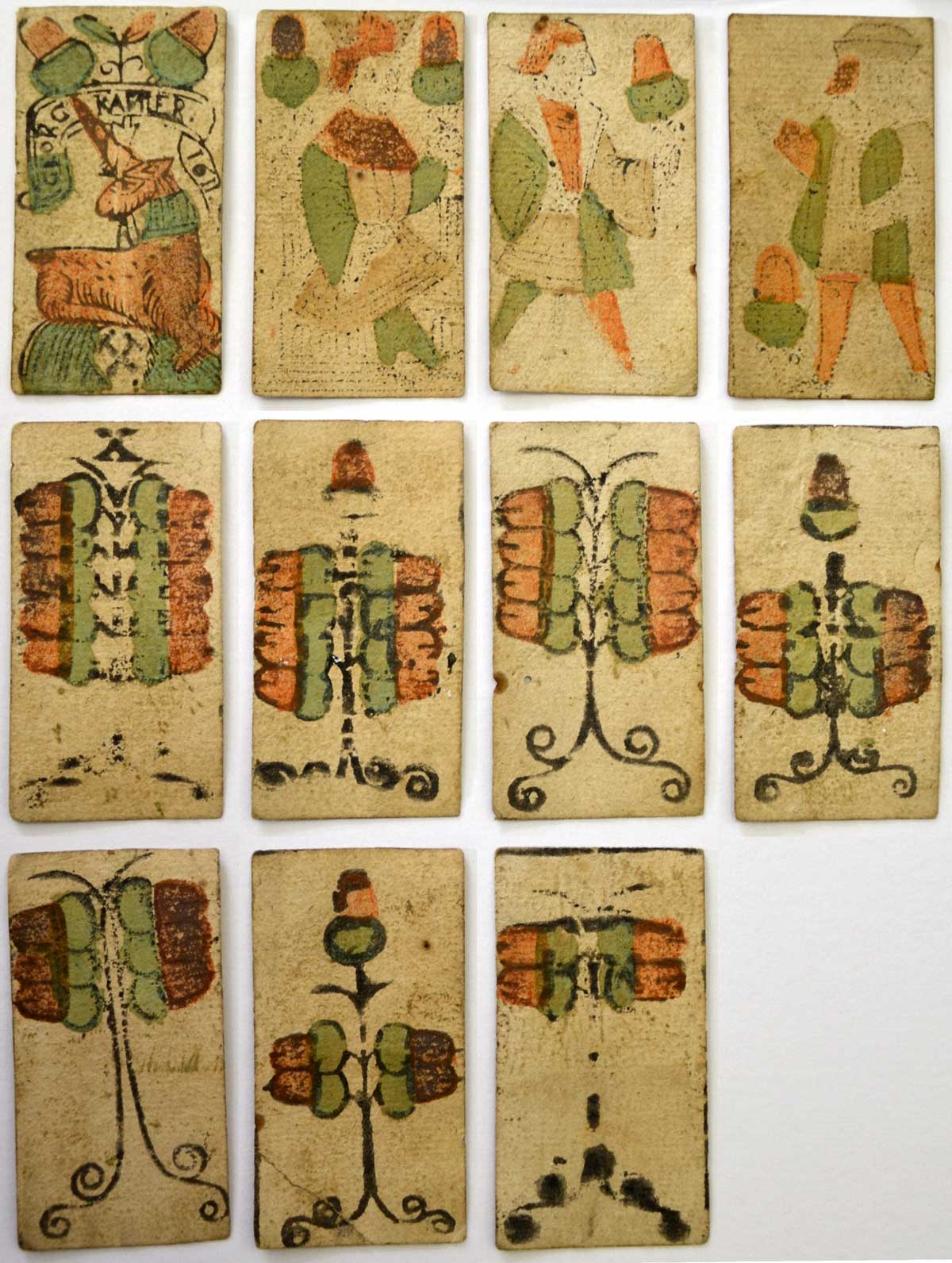
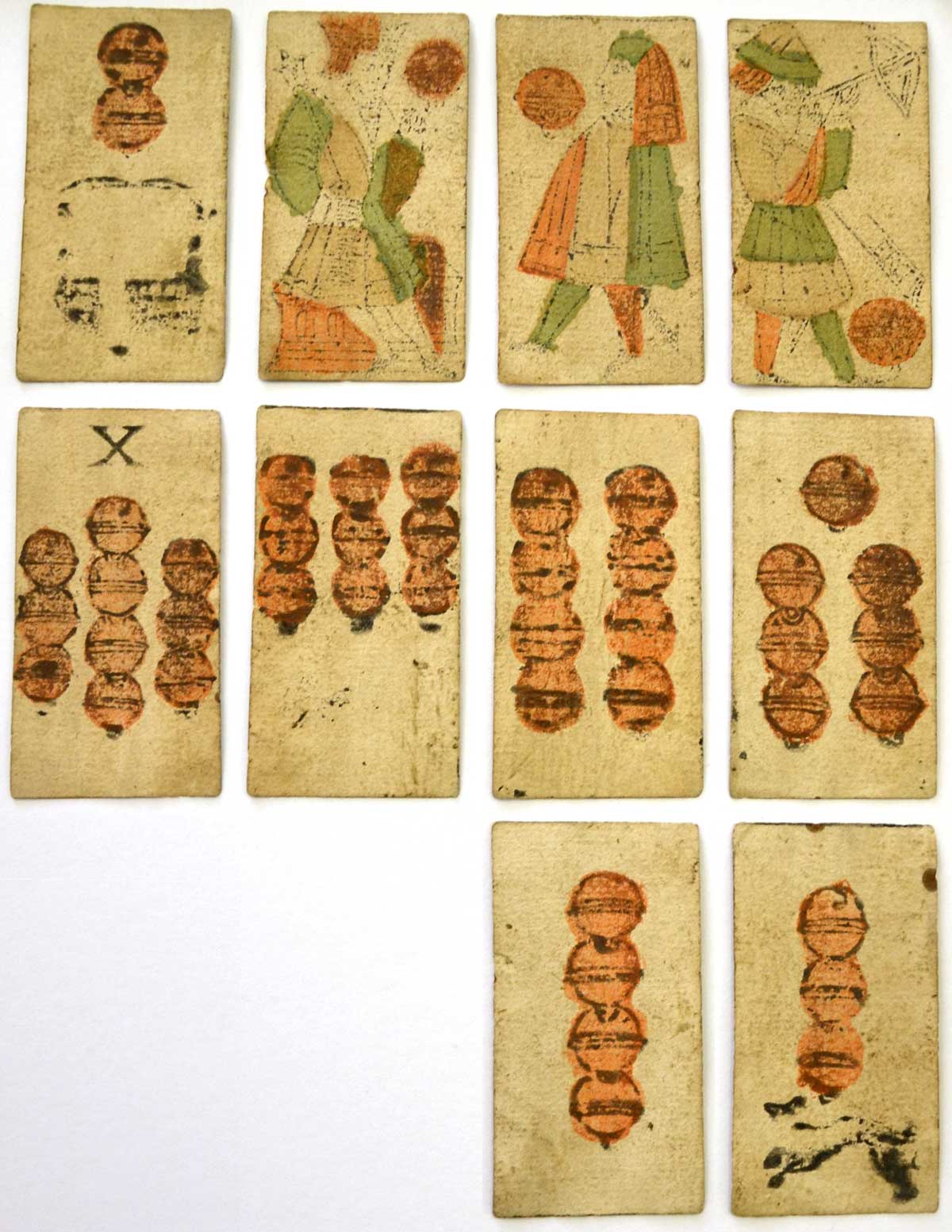
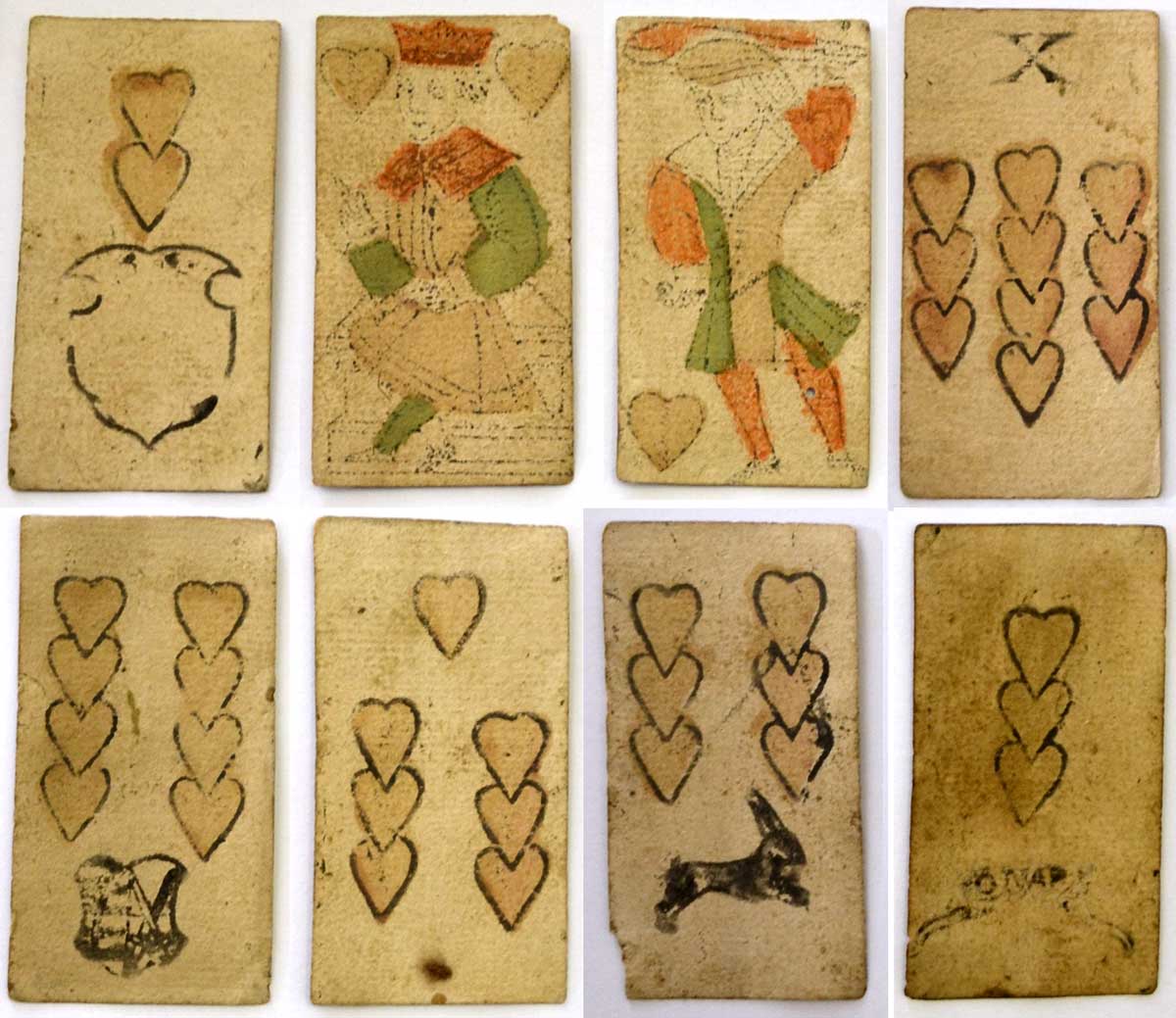
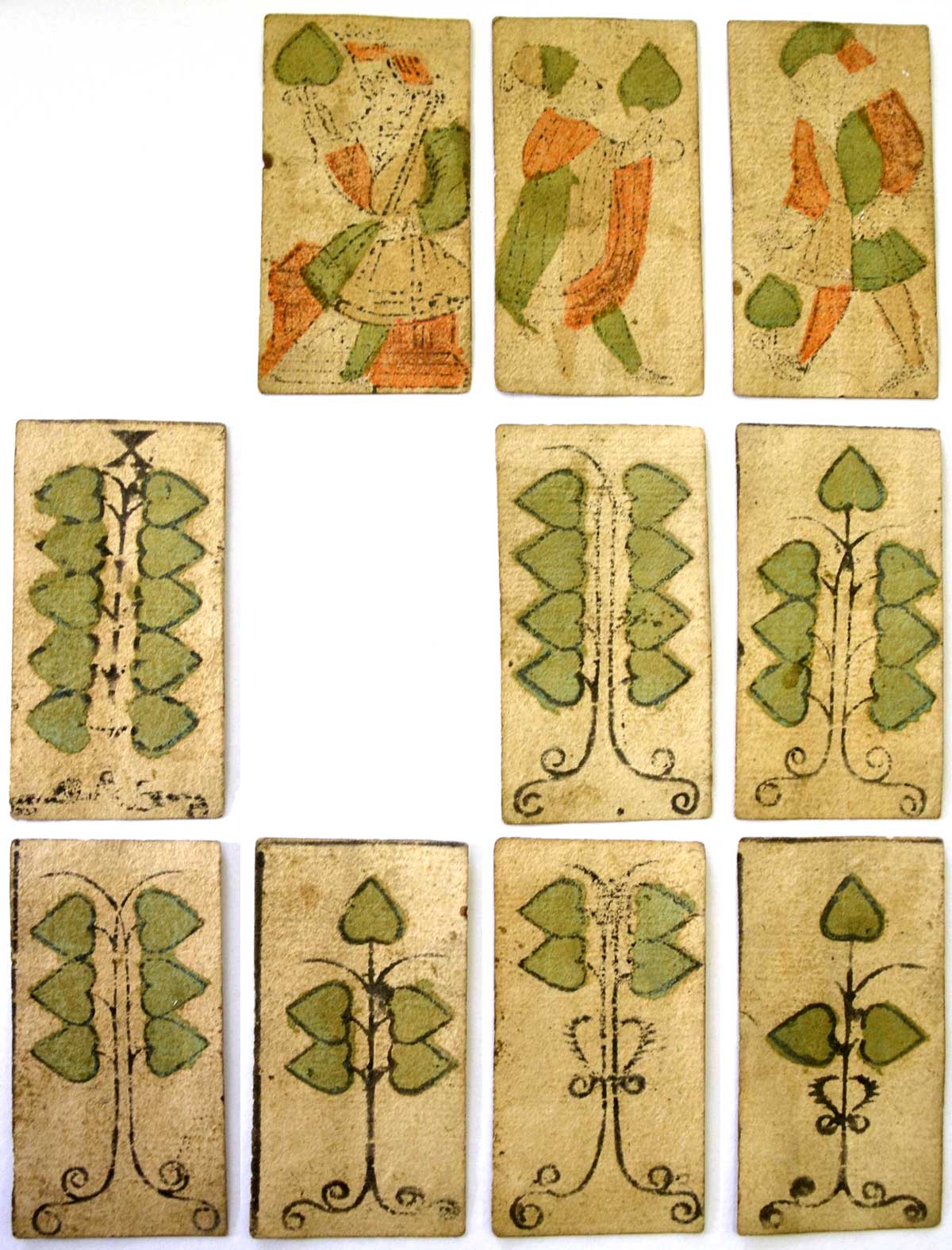
Above: antique deck of primitive Bohemian playing cards of the German type manufactured by Georg Kapfler and dated 1611. Red and green hand colouring on woodcut outlines printed onto pasteboard. Total 48 cards (8 cards missing). Images courtesy Pavel Langer.
Details of restoration
Use Google Translation►Hrací karty, celkový počet 40 listů (8 listů chybí), jsou ve velmi dobrém stavu. Bylo na nich měřeno pH papírové podložky a odebrán vzorek papíru na zkoumání vlákninového složení. Nebylo nutné přistupovat k žádnému restaurátorskému zásahu. Karty byly pouze mechanicky očištěny pomocí jemného štětce a gumy. Vzhledem k nízkým hodnotám pH papírové podložky, 5,2, jsem přistoupila k odkyselení formou sendviče. (Mezi filtrační papíry, které byly předtím odkyseleny postřikem MMMK – Methoximagneziummethylkarbonát, jsem vložila jednotlivé listy karet a nechala takto proložené po dobu 2 týdnů). pH se tímto způsobem zvedlo na hodnoty 5,9.
Hrací karty byly uloženy a zároveň adjustovány pomocí tvrdých podložek – lepenek s neutrálním pH. Samotné hrací karty byly z estetických důvodů adjustovány pomocí restaurátorské papírové lepicí pásky, kterou je možné snadno odstranit bez poškození originálu. Do lepenky jsem vyřezala okýnka pro jednotlivé listy hracích karet a adjustovala hrací karty. Po celé adjustaci jsem hrací karty ještě překryla folií s UV ochranou. Vzhledem k požadavku na vystavení a charakteru materiálu. Celá pasparta se tedy skládala celkem ze čtyř částí. Zadní část pasparty, samotné hrací karty, folie s UV ochranou a lepenka s vyřezanými okny. Zadní a přední část pasparty je spojena samolepícím plátnem.
Restaurátorské a adjustační práce: BcA. Michaela Caranová (Středočeské muzeum v Roztokách u Prahy)
REFERENCES
Hoffmann, Detlef: The Playing Card, an illustrated history, Edition Leipzig, 1973
Sobota, Jan: The background and history of a deck of late Gothic playing cards, The Yale University Library Gazette, vol. 67, no. 1/2, 1992, pp. 27–31., www.jstor.org/stable/40859636

By Simon Wintle
Spain • Member since February 01, 1996
I am the founder of The World of Playing Cards (est. 1996), a website dedicated to the history, artistry and cultural significance of playing cards and tarot. Over the years I have researched various areas of the subject, acquired and traded collections and contributed as a committee member of the IPCS and graphics editor of The Playing-Card journal. Having lived in Chile, England, Wales, and now Spain, these experiences have shaped my work and passion for playing cards. Amongst my achievements is producing a limited-edition replica of a 17th-century English pack using woodblocks and stencils—a labour of love. Today, the World of Playing Cards is a global collaborative project, with my son Adam serving as the technical driving force behind its development. His innovative efforts have helped shape the site into the thriving hub it is today. You are warmly invited to become a contributor and share your enthusiasm.

Activity for Georg Kapfler
Sign in to comment or save this article.

Related Articles
La baraja de Almagro
De la chimenea al monumento nacional: la baraja de Almagro y el renacer del corral de comedias.
History of Tarot and Playing Cards: Timeline & Origins
An alternative history of tarot and playing cards – from Mamluk Egypt to the invention of tarot in R...
VEB Kombinat Kali
Advertising pack depicting old means of salt production, with designs by Hannelore Heise.
Borna Skat
Publicity pack for the Saxon town of Borna, with designs by Andreas Wachter.
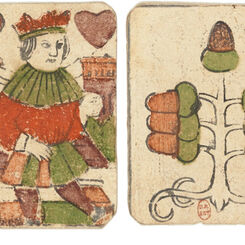
Early German playing cards
Some early examples of popular German playing cards from the XV and XVI centuries.
History of Playing Cards explained in 5 Minutes
Video by Art of Impossible. In this video you will get a short overview of the most important histor...
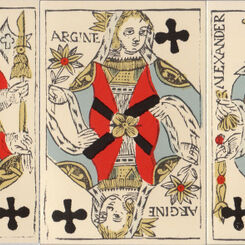
“Deck with French suits”
A facsimile of an early 19th century French-suited deck from the collection of F.X. Schmid.
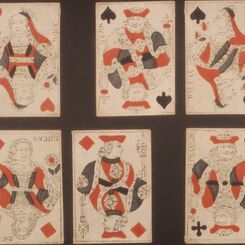
64: The descendants of the French regional patterns: 2
A continuation oF the development of the off-spring of the Paris patterns and a few examples of how ...
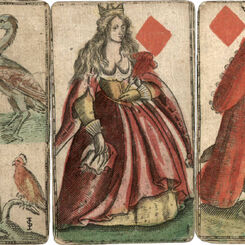
XVII Century Engraved Animal Cards
Anonymous French-suited German engraved cards c1610 to 1650.
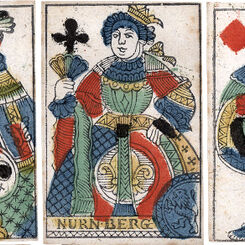
I. Schenck, Nuremberg
I. Schenck, Nuremberg, late XVIIIth century
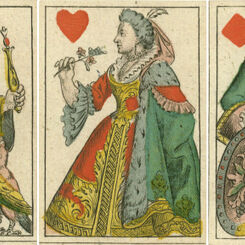
Joseph Losch
French-suited pack with full-length courts by Joseph Losch, c.1800.
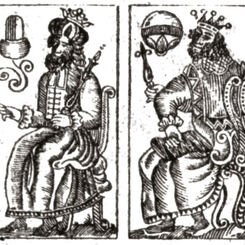
Old Bavarian pattern
Uncut sheets of playing cards of the Old Bavarian pattern by Michael Schatzberger, Passau, c.1780.
Cotta Transformation playing cards
In 1804, J.G. Cotta, a publisher and bookseller in Tübingen, Germany, produced the first set of tran...
Bohemian Pattern
The Bohemian Pattern, sometimes called the Prager Pattern, has roots in the 16th century.
Suicide King
The King of Hearts, holding a sword behind his head, is sometimes nicknamed the “Suicide King”. He c...
Das Kupferstichspiel des I.M.F. von 1617
Playing cards had been made as precious objects for wealthy clients since the late 14th century. The...
1: Playing Cards and their History: An Introduction and some links to other sites
What was considered the first mention of playing cards in England is in 1463 when Edward I banned th...
Bergmannskarte
Bergmannskarte, manufactured by Industrie Comptoir, Leipzig, c.1816.
Playing cards in the Upper Rhine region
Documentary evidence suggests that card playing established itself in Italy in 1376, and then spread...
The History of Playing Cards
Playing cards appear in European records in the late 14th century, but their earlier history lies fu...
Most Popular
Our top articles from the past 60 days


