

Pigmy Playing Cards
Pigmy Miniature Playing Cards
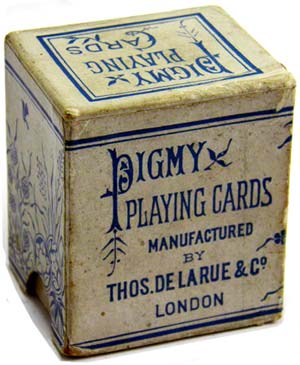
Pigmy miniature playing cards manufactured by Thomas De la Rue, c.1890. The deck has square corners and plain blue backs. The "Dexter indexes" are interesting in that the suit-signs in the corners bear a number in white upon them; the 2s and 3s have had their pips moved to accomodate this scheme. The corners of the Aces bear the outline of the respective suit, in which is the word ‘ace’. There is no marking of any sort on the Ace of Spades. The suit signs on the courts bear the letters ‘Kg’ on a King, ‘Qn’ on a Queen, and a ‘Kn’ (shorthand for "Knave") on a Jack. The original Dexter indices placed inside the corner pips had several variants: ‘Kn’ or ‘J’ for Jack; two arrangements of Aces, twos and threes; and ‘1’ or ‘ace’ on the Aces. This type of index was introduced in around 1878 and continued until c.1890. There are no jokers in this edition. The cards measure 3 x 4.5 cms.
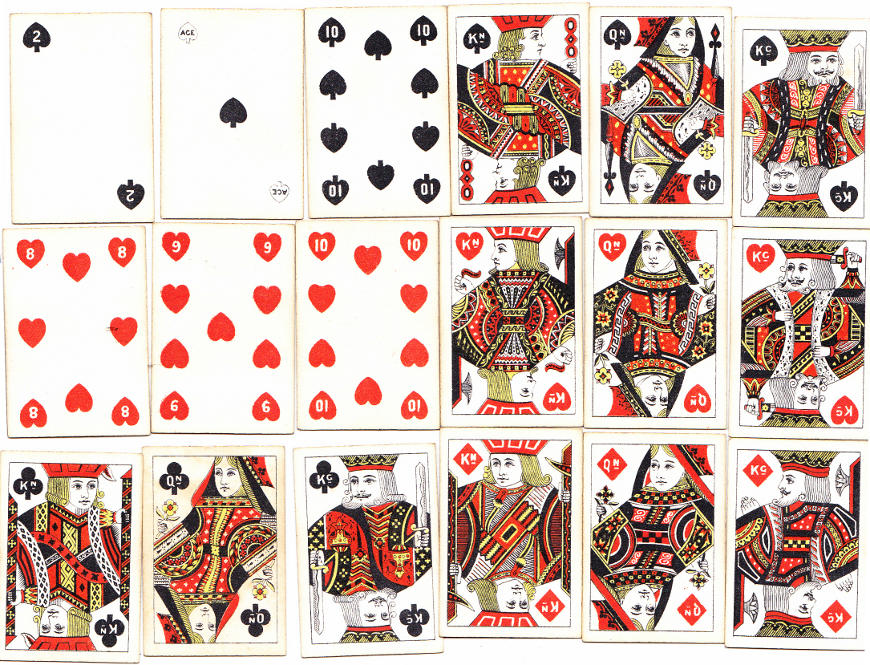
Above: 'Pigmy' miniature double-ended playing cards with 'Dexter' indices manufactured by Thomas De la Rue, c.1890. Images courtesy Anthony Lee.
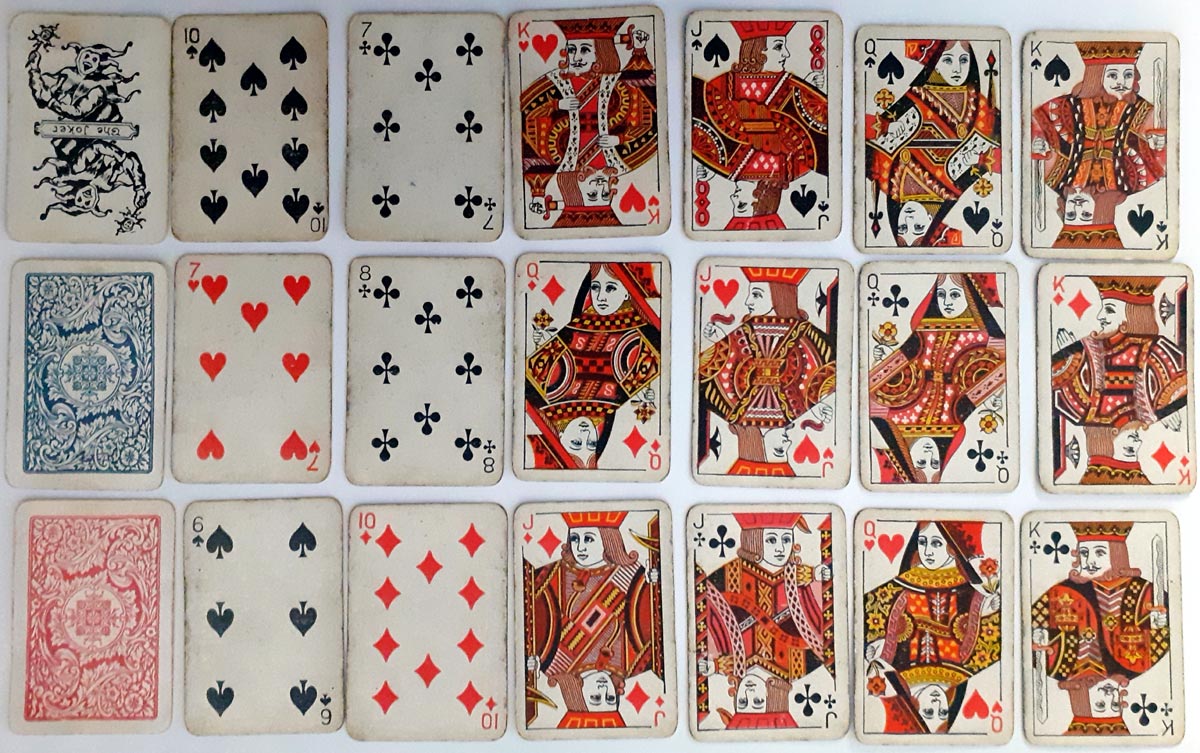
Above: 'Pigmy' miniature playing cards with standard indices manufactured by Thomas De la Rue, c.1900. Image courtesy Peter Hepworth.
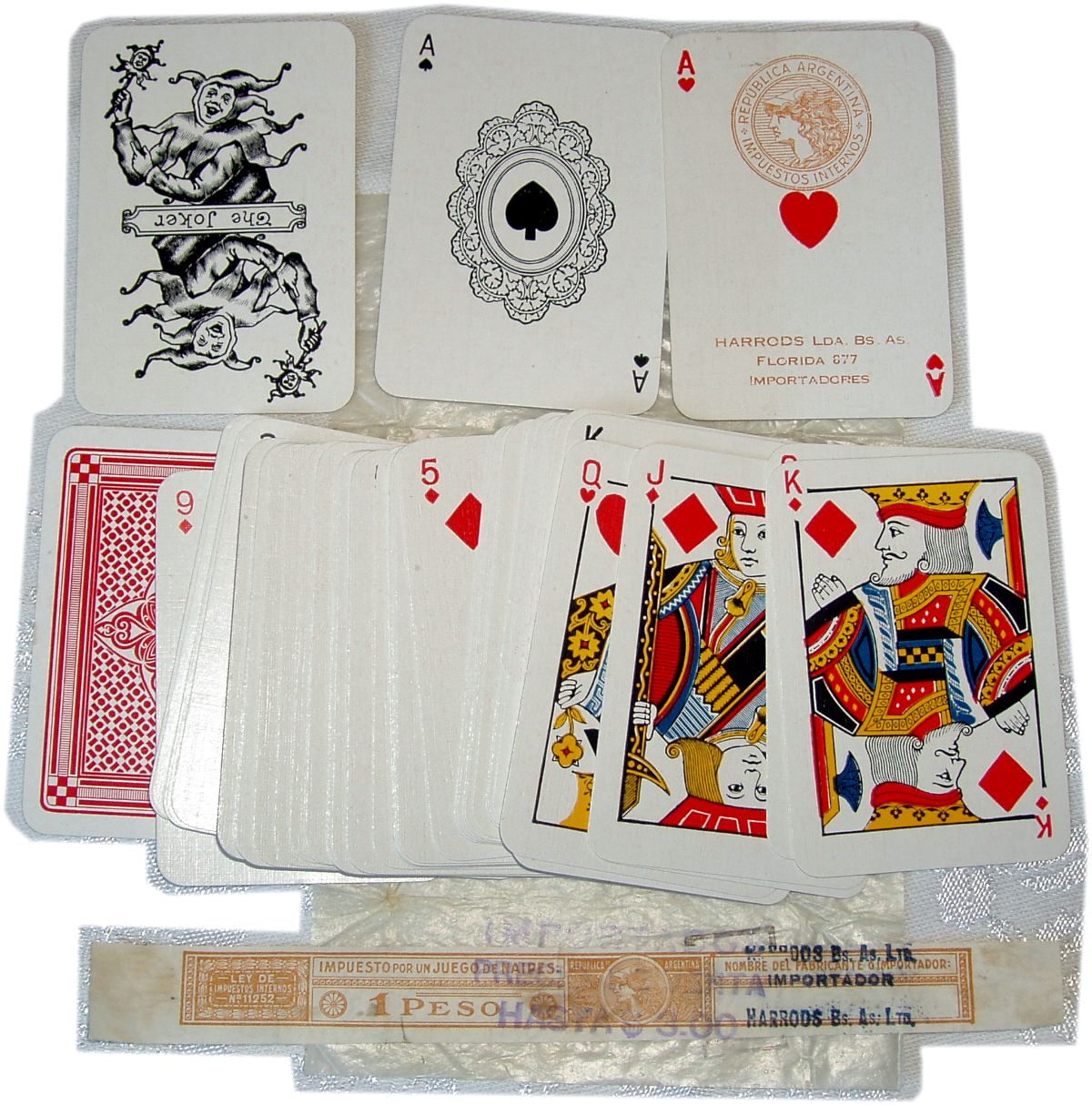
See also: De la Rue patience cards exported to Harrods Ltd, Buenos Aires

By Simon Wintle
Spain • Member since February 01, 1996
I am the founder of The World of Playing Cards (est. 1996), a website dedicated to the history, artistry and cultural significance of playing cards and tarot. Over the years I have researched various areas of the subject, acquired and traded collections and contributed as a committee member of the IPCS and graphics editor of The Playing-Card journal. Having lived in Chile, England, Wales, and now Spain, these experiences have shaped my work and passion for playing cards. Amongst my achievements is producing a limited-edition replica of a 17th-century English pack using woodblocks and stencils—a labour of love. Today, the World of Playing Cards is a global collaborative project, with my son Adam serving as the technical driving force behind its development. His innovative efforts have helped shape the site into the thriving hub it is today. You are warmly invited to become a contributor and share your enthusiasm.

Activity for Pigmy Playing Cards
Sign in to comment or save this article.

Related Articles
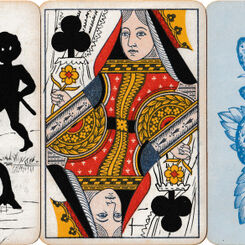
Hand-drawn transformation cards, c1875
A complete set of hand-drawn transformation cards from c1875, using a standard De La Rue pack.
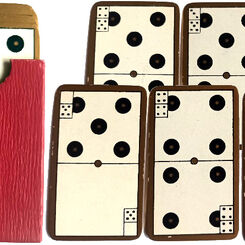
Miniature Card Dominoes
A miniature set of Goodall domino cards (5.9 x 3.5 cms) still in perfect condition.
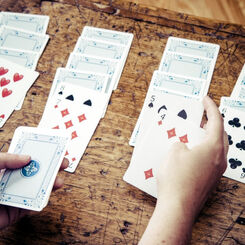
The Origin of Patience Games in English
Jessel’s Bibliography of works in English on Playing Cards and Gaming describes “The first book on P...
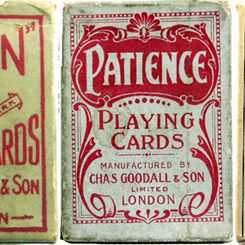
Patience Cards and their Boxes
Patience Cards and their Boxes by Tony Hall.
Spider Solitaire
Spider Solitaire is a free web site offering new versions of the classic solitaire card game
Barribal patience
Waddington’s Patience Cards from the Barribal Series, c.1929.
Prince of Wales National Relief Fund 1914
A two-pack patience set produced by Thomas De la Rue on behalf of the Prince of Wales National Relie...
Pneumatic c.1960-1965
De la Rue were producing Pneumatic cards with the “special graining for ease of handling” as late as...
Rufford Playing Cards
Rufford playing cards is one of several brand names used by Boots for their stationery department, a...
Goodall & Son’s Patience & Miniature packs
Goodall & Son’s Patience & Miniature packs came in various styles of box and back design, c.1890-193...
41: A Guide to Dating Playing Cards
Dating is a particularly tricky but very interesting problem to tackle and there are many pitfalls. ...
Draughts League Medals
Arthur Charles Prince worked for De la Rue as a playing card cutter and later was promoted to superv...
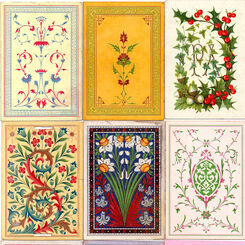
14: Back Designs
A few examples of the many interesting back designs.
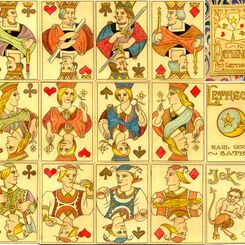
Lettische Patience
Karl enjoyed experimenting with design and production and this work was published in 1994 as a 32-ca...
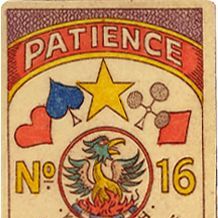
Karl Gerich No.16: “Patience Indien”
Karl Gerich's “Patience Indien No.16”, published in 1991, is adapted from Grimaud's “Whist Indienne”...

Patience No.21
‘Patience No.21’ is a 52-card miniature deck with double-ended courts and a Joker holding a fan of c...
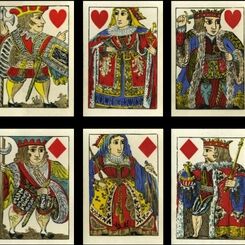
5: De La Rue
In December 1831 Thomas de la Rue was granted his patent for printing playing cards by letterpress.
Minnie Patience
Minnie Patience. The backs show images of Mickey & Minnie mouse dancing together.

De La Rue Continental
During the latter part of the nineteenth century De La Rue produced two special packs of cards for t...

De La Rue
De La Rue introduced letter-press printing into playing card production and his patent was granted i...
Most Popular
Our top articles from the past 60 days