Conjuring and Magic
The art of mystifying people is very old indeed. The first conjurers were priests who obtained power over simple minds by performing magical tricks which appeared to have a supernatural origin.
Conjuring & Magic Cards
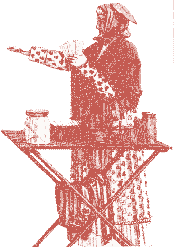
The first magicians were those who attained a special knowledge of healing and poisonous herbs; or perhaps the magi were the priestly caste of ancient Persia and the wise men who visited the infant Jesus have been translated using the Graeco-Latin term ‘Magi’. The art of mystifying people is very old indeed. The first conjurers were priests who obtained power over simple minds by performing magical tricks which appeared to have a supernatural origin. Elizabeth I enjoyed watching card tricks and in 1602 paid an Italian magician 200 crowns for performing tricks such as “telling of any card that is thought, or changing one card from another though it be held by any man never so hard under his hand”.
Conjuring with playing cards gradually became popular as a form of entertainment. A professional magician today will admit that their tricks are based upon illusion and sleight of hand, or to be more correct: “Magicians also use psychology, misdirection, lateral thinking and down-right skulduggery!” (Thanks to Justin Monehen, Magic Consultant, Marvin’s Magic).
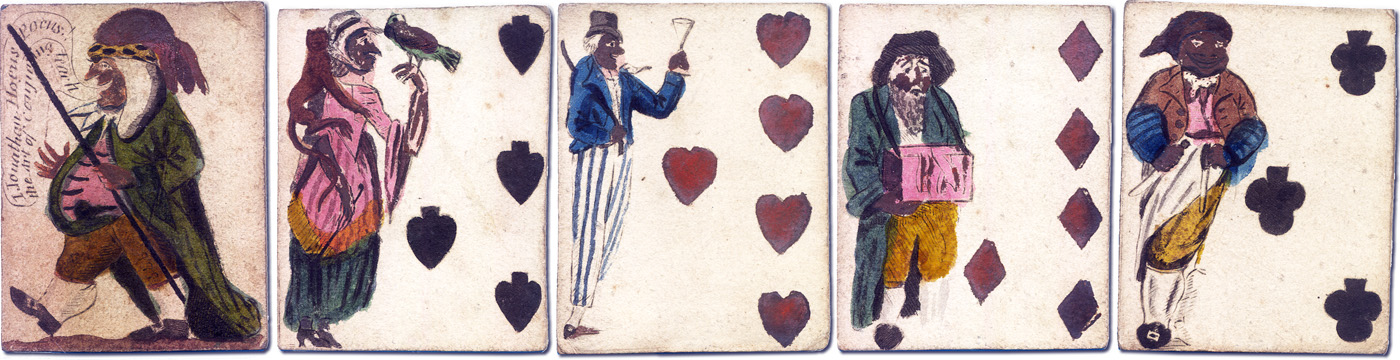
Above: five hand-painted conjuring cards, probably late 18th century. The first card reads "I Jonathan Hocus Pocus the art of conjuring teach.” Conjuring in those days consisted of a variety of simple magic tricks (“To Pass Balls Through Cups”), astonishing feats (“To Cook An Omelet In A Hat”), and macabre pranks (“How to Cut Your Arm Off, Without Hurt or Danger”).
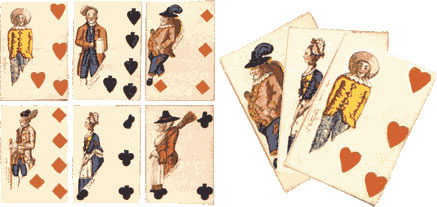
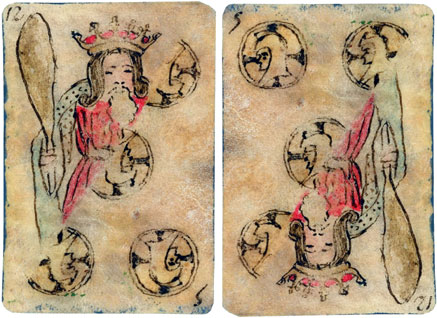
Conjurer’s cards were often divided diagonally, so that one half of each card shows a figure, whilst the opposite half appears like a normal pip card. The cards shown above left were designed by W. Tringham in London (1772). The instruction card reads: "Instructions for useing the Cards. The Method of showing them is by keeping ye first card (which is a conjuror) allways at the front & turning the others Upside down, which will discover either figures or pips…" By a mixture of false shuffling and sleight of hand, the cards can be fanned out and made to appear to change from figures to pips. The right-hand card is 18th century Spanish, ink on parchment, courtesy Biblioteca Nacional de España.
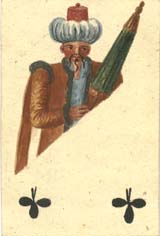
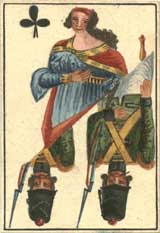
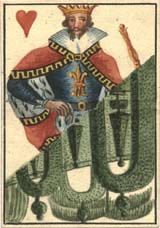
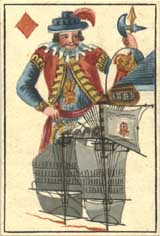
Above: special magic pack for conjurers, made in Portugal, c.1850.
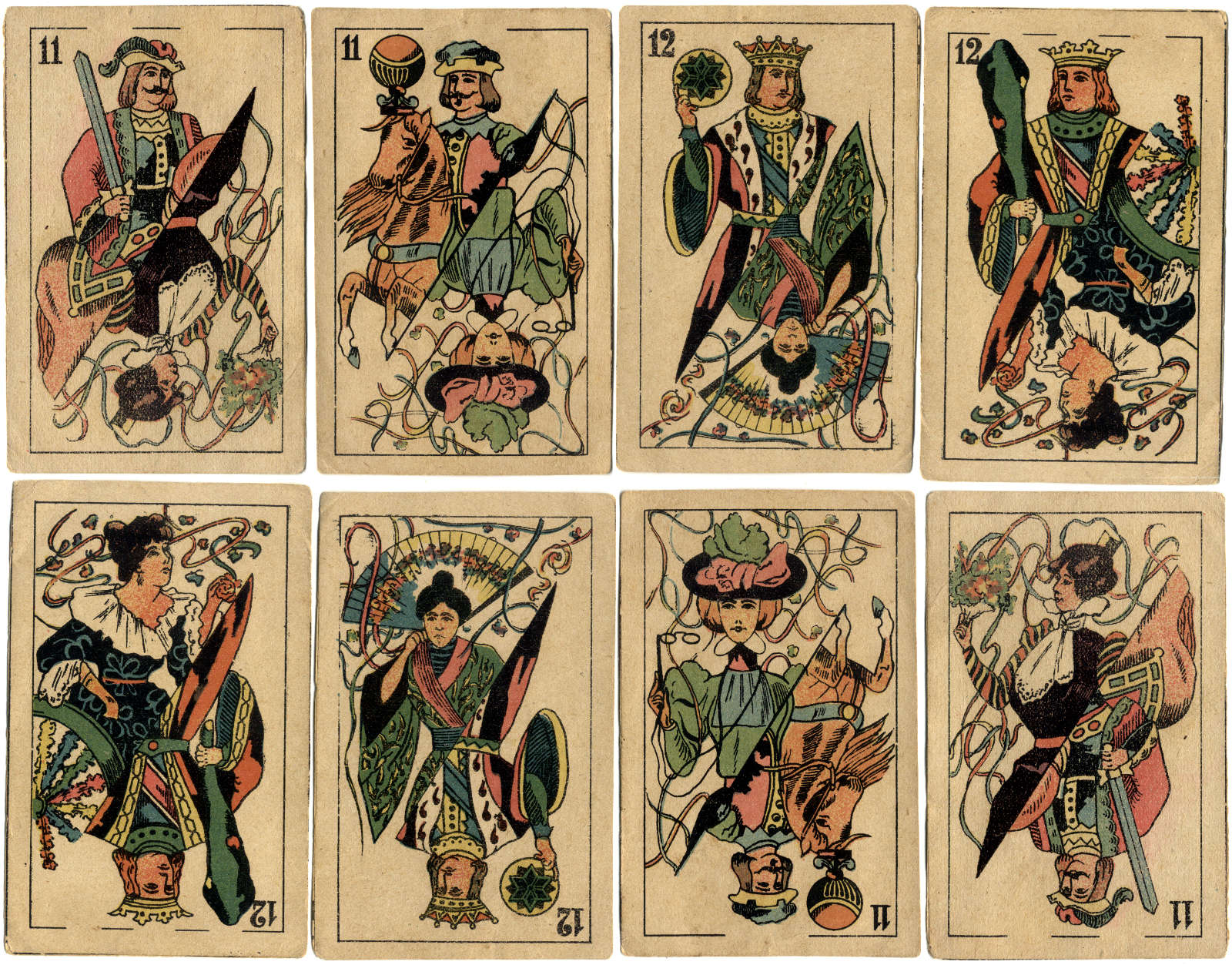
Above: double-ended Spanish-suited / Art-Nouveau conjuring cards, unknown manufacturer, c.1890. (Click to see reverse)
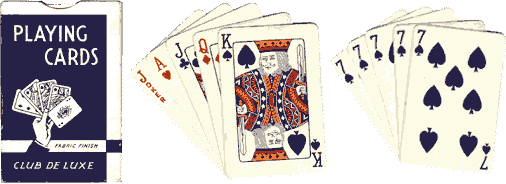
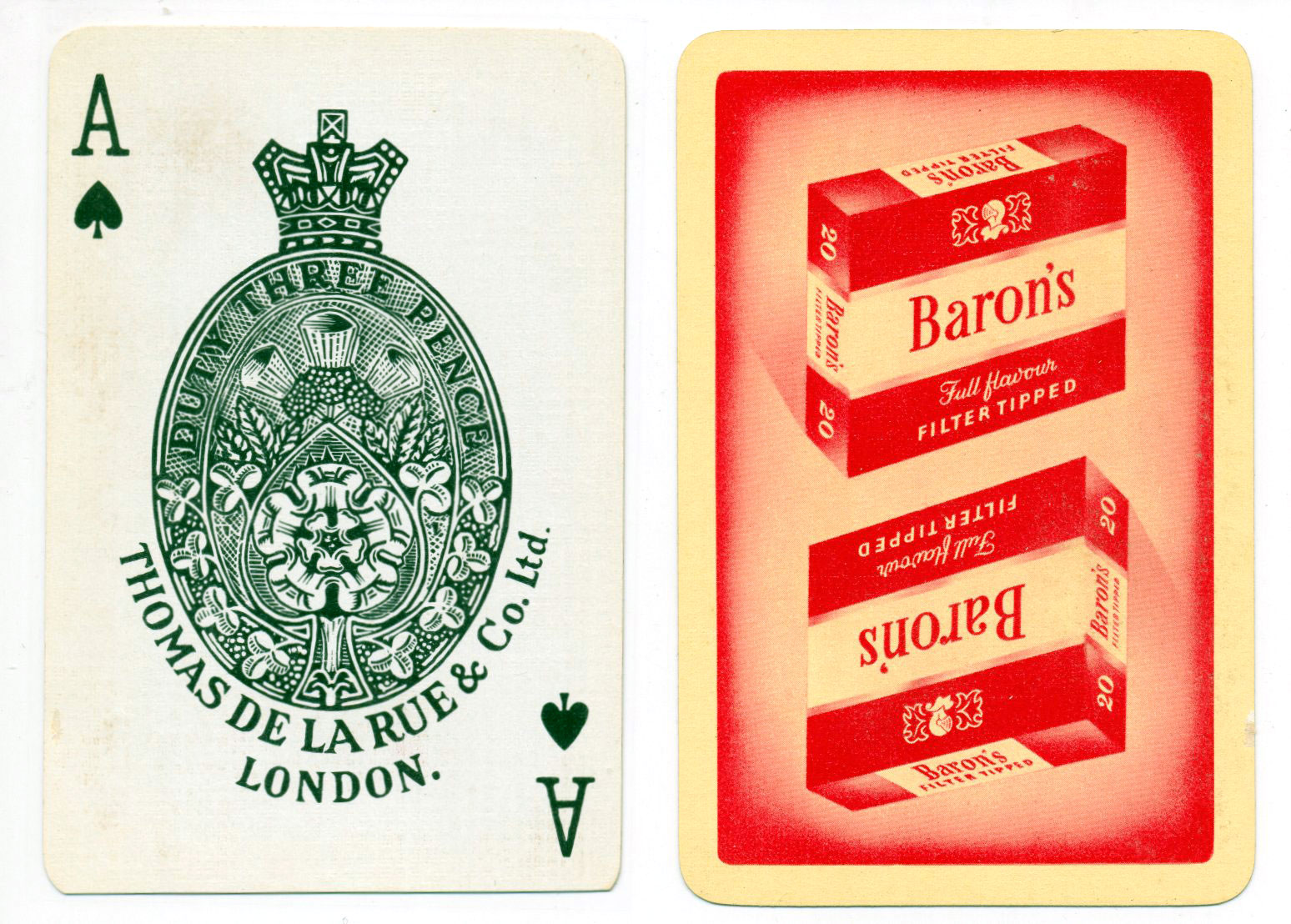
Left: Magician’s playing cards, made by Alf Cooke Limited (Universal Playing Card Co.), Leeds & London, c.1955. The pack comprises 48 cards, plus 1 joker: 24 cards are normal cards, and 24 cards are identical sevens of spades, slightly shorter in height, so that various card tricks can be performed by clever shuffling and flicking of the card corners. Reverse: blue pattern. see more →
According to Keith Bennett (www.kbmagic.com) it "was not made as a trick pack by Alf Cooke, but would have been made into a trick pack by a magic dealer. Alf Cooke did however supply cards in two fractionally different sizes at one point in order to facilitate the manufacture of trick packs; they also made cards with backs on both sides as well as faces on both sides and partly blank cards".
See also: similar pack made by De la Rue, 1950s. The deck has 26 aces of spades and 26 normal cards. Look closely at the bottom of the Ace of Spades and note where it is trimmed.
“Monotone” Playing Cards, c.1952
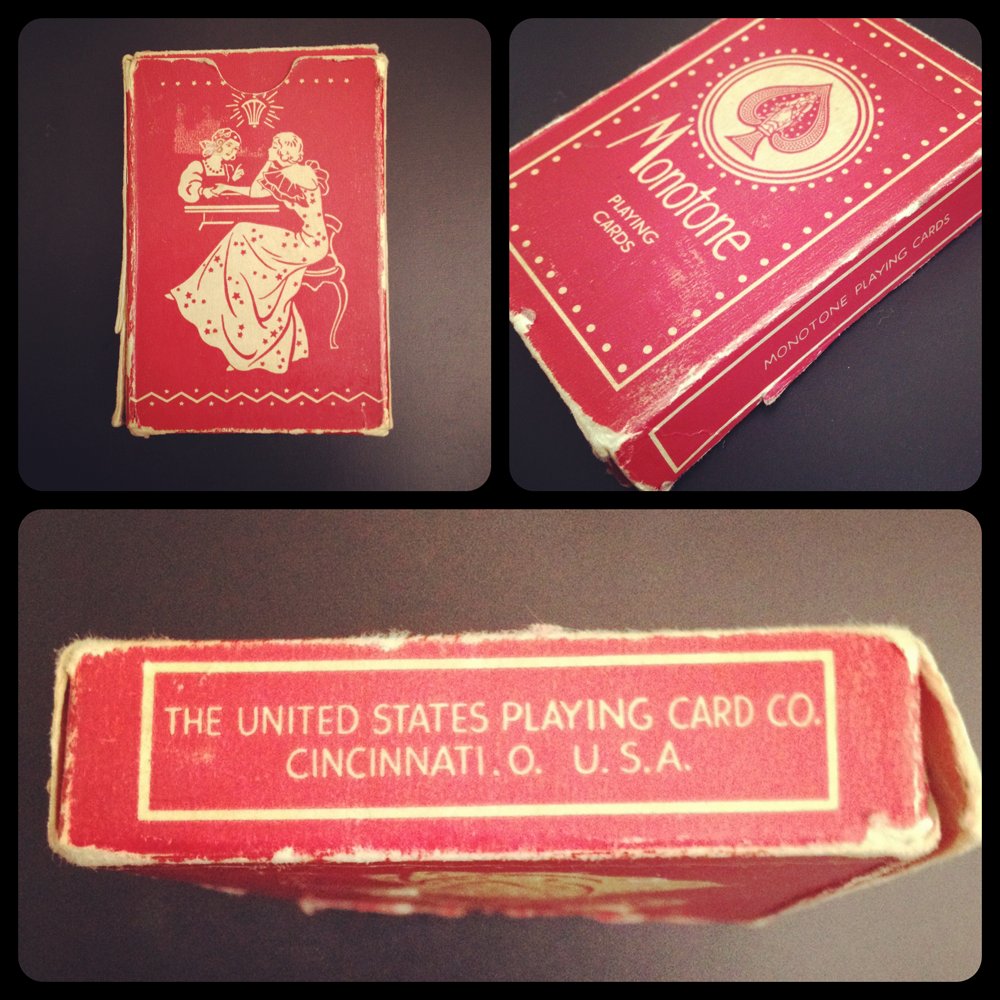
The deck contains 48 ordinary playing cards, 24 of which are the King of Clubs cut slightly shorter than the rest of the deck, specially for performing magic tricks, as in the example above.
The box reads “The United States Playing Card Co. Cincinnati, O. U.S.A.” (Click box to zoom).
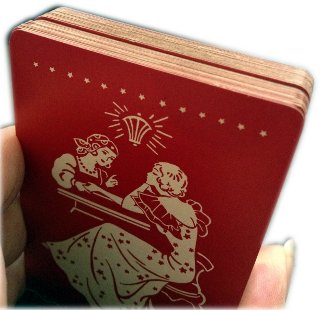
The image on the back of the box and the back of the cards is a scene with a fortune teller and a client in red/cream. The teller appears to be reading the client’s palm.
Images by kind permission Rebecca Strang.
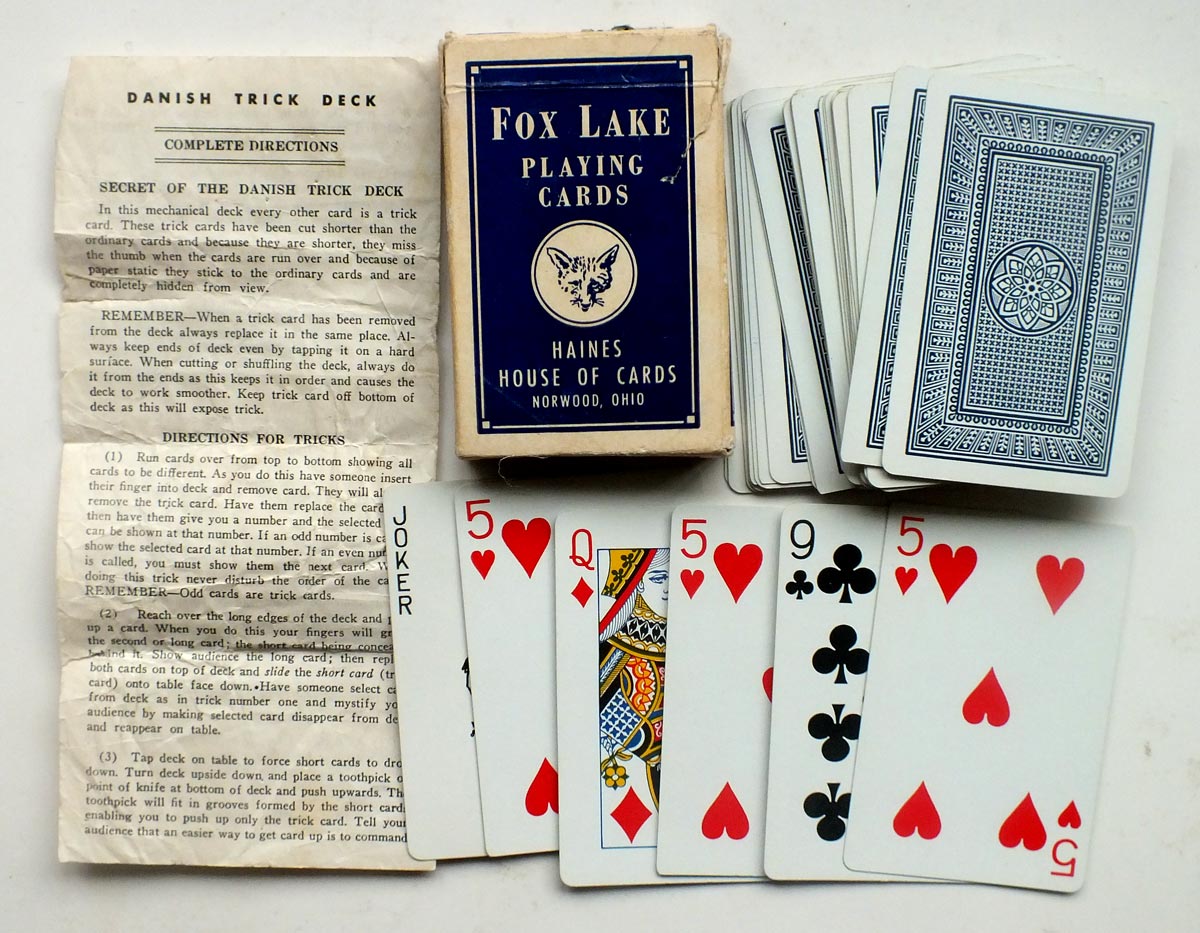
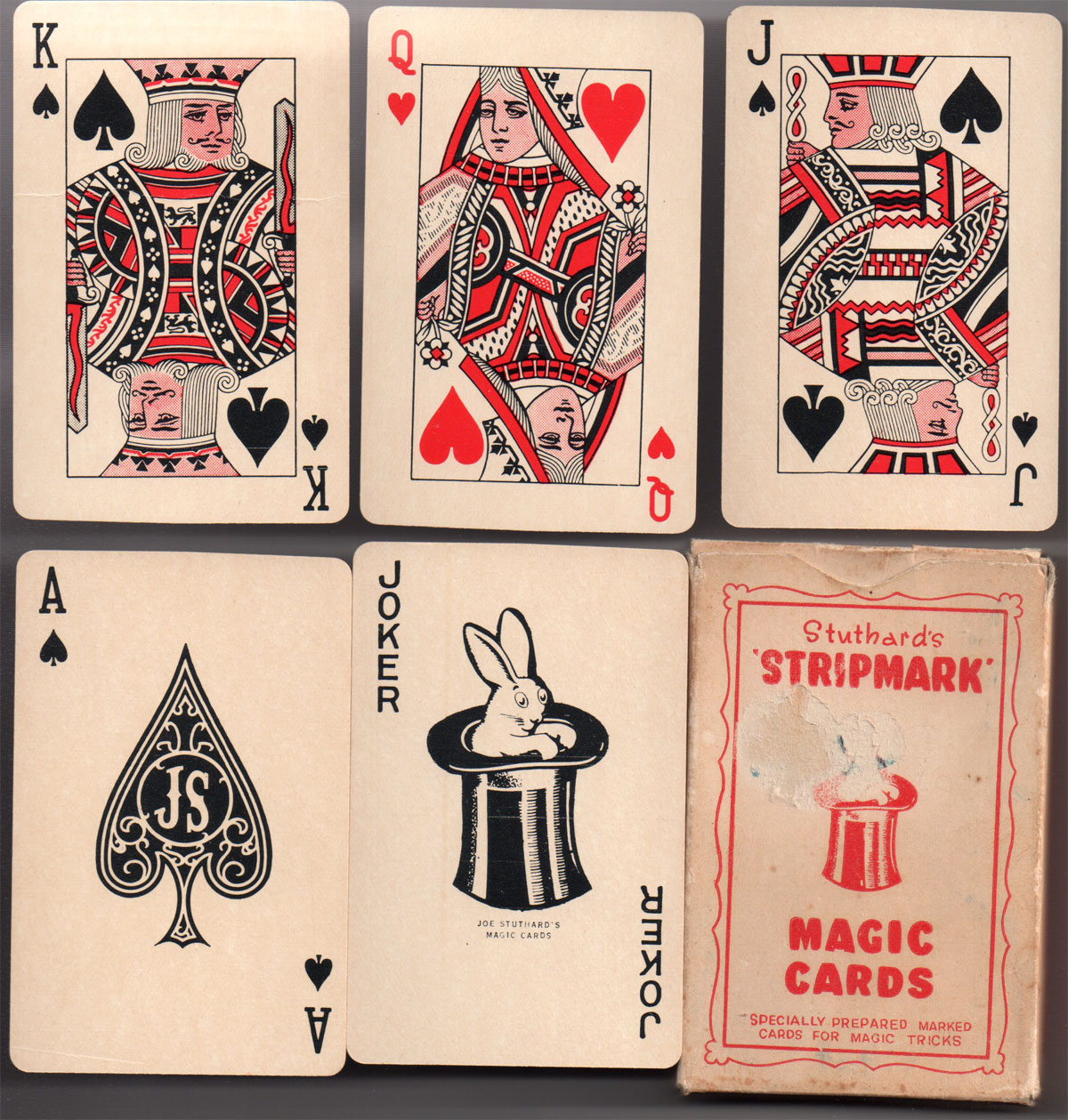
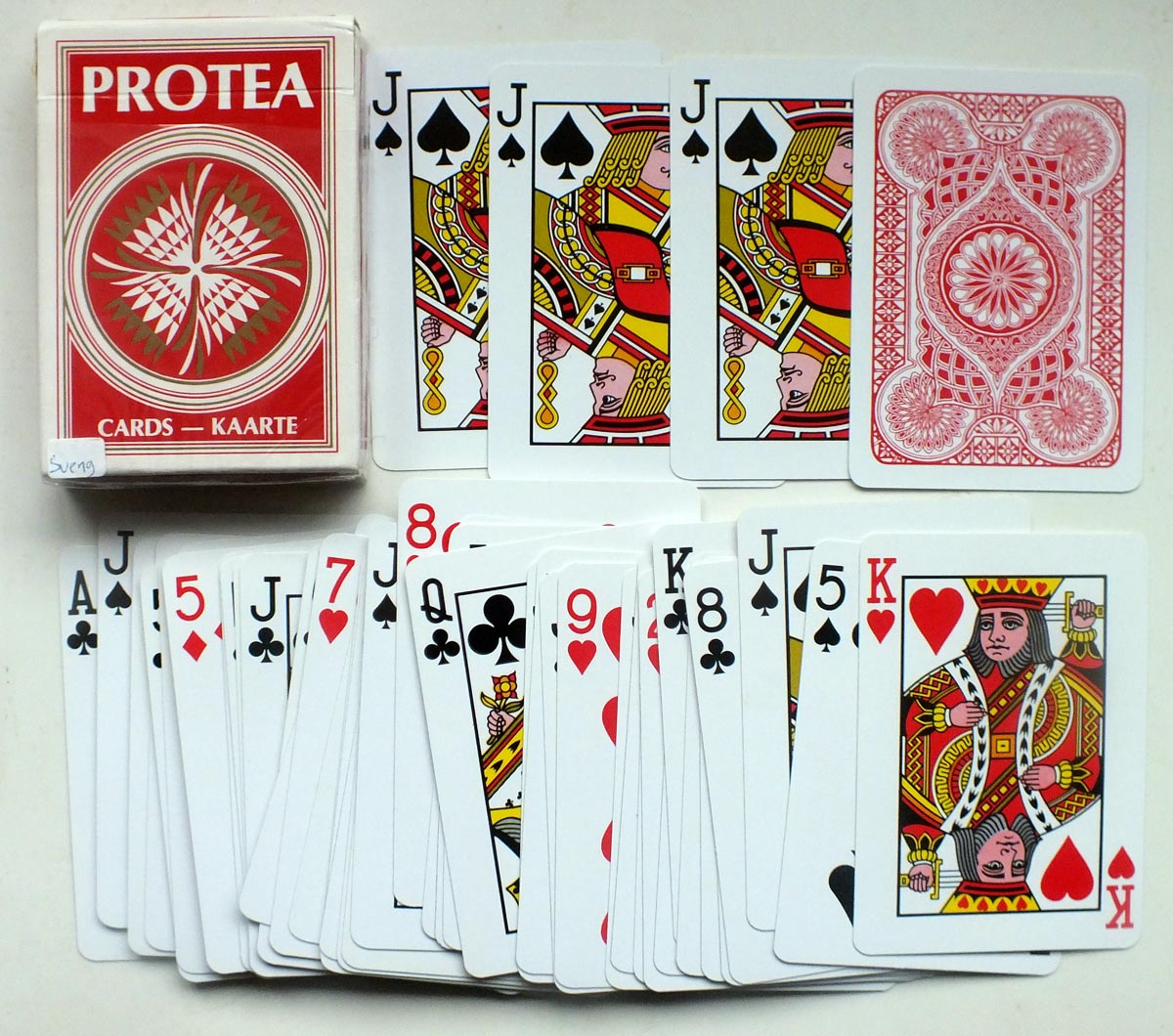
See also: Fox Lake 'Svengali' deck, c.1960 • Studhard’s “Stripmark” Magic playing cards • Ridley’s Magic Cards, 2011 • Protea ‘Svengali’ trick cards →
Hanky Panky Magic Cards
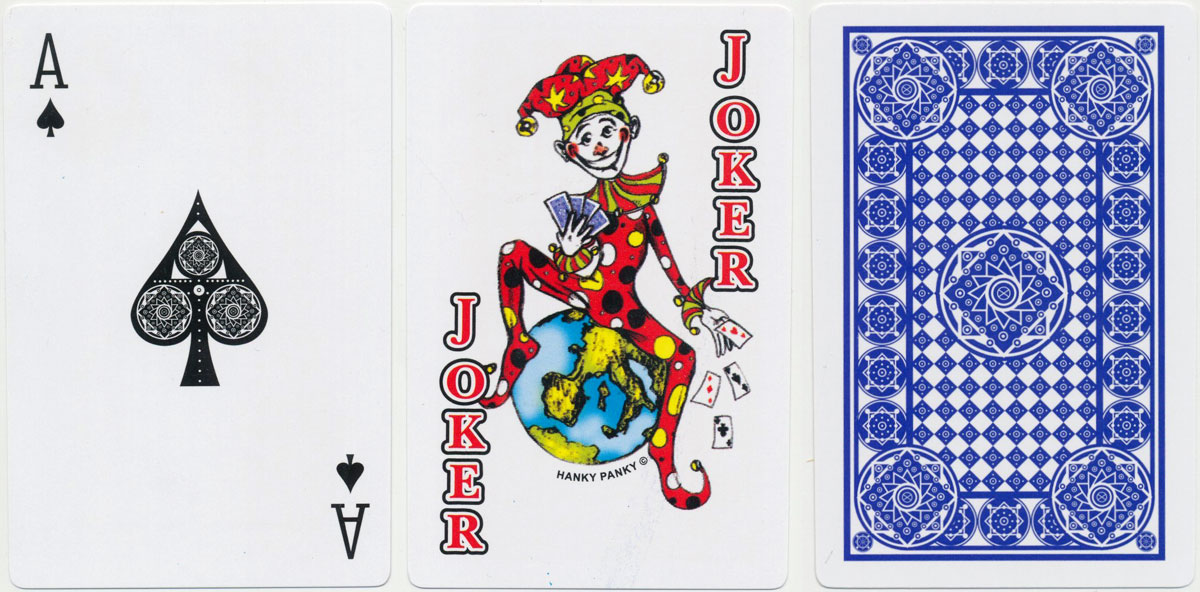
Above: ‘Secret Magic Cards’ with marked backs published by Hanky Panky Toys Thailand Ltd, 2006 see more →
Harry Potter Magic Cards
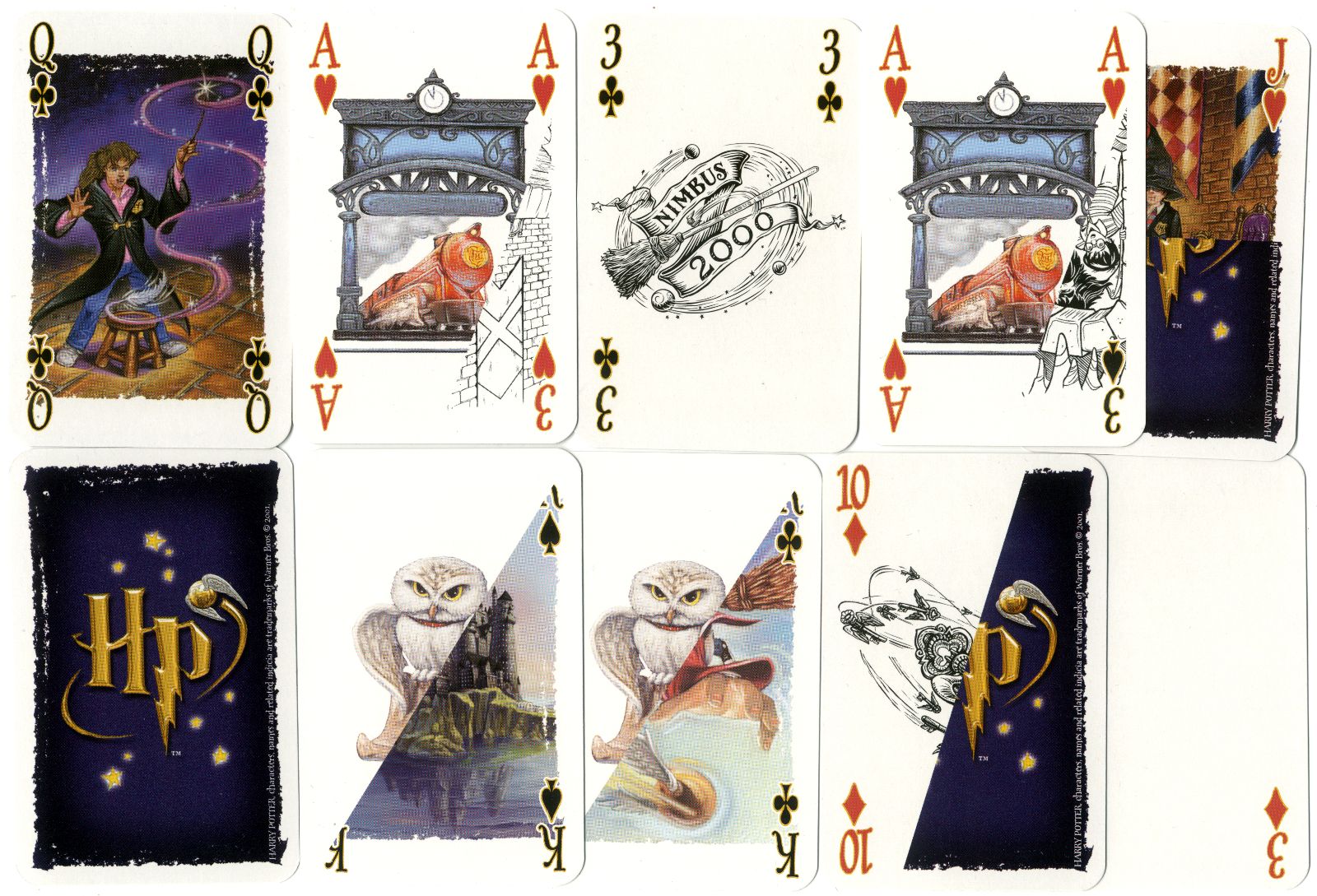
Above: 'Harry Potter' Playing Cards for Magic Tricks, made in Belgium by Carta Mundi. The set includes an instruction booklet describing 12 different card tricks which can be performed using these cards. All images (c) Warner Bros.
Sharks magic deck for Drummond Money-Coutts
Sharks was a "limited edition" (short production run, available at very few outlets) magician's pack produced for DMC of England. The pack is of high quality linen finish card with two identical jokers, a blank faced card and a double-backed card presumably as extra props for card magic. The king of diamonds is also rather custom!
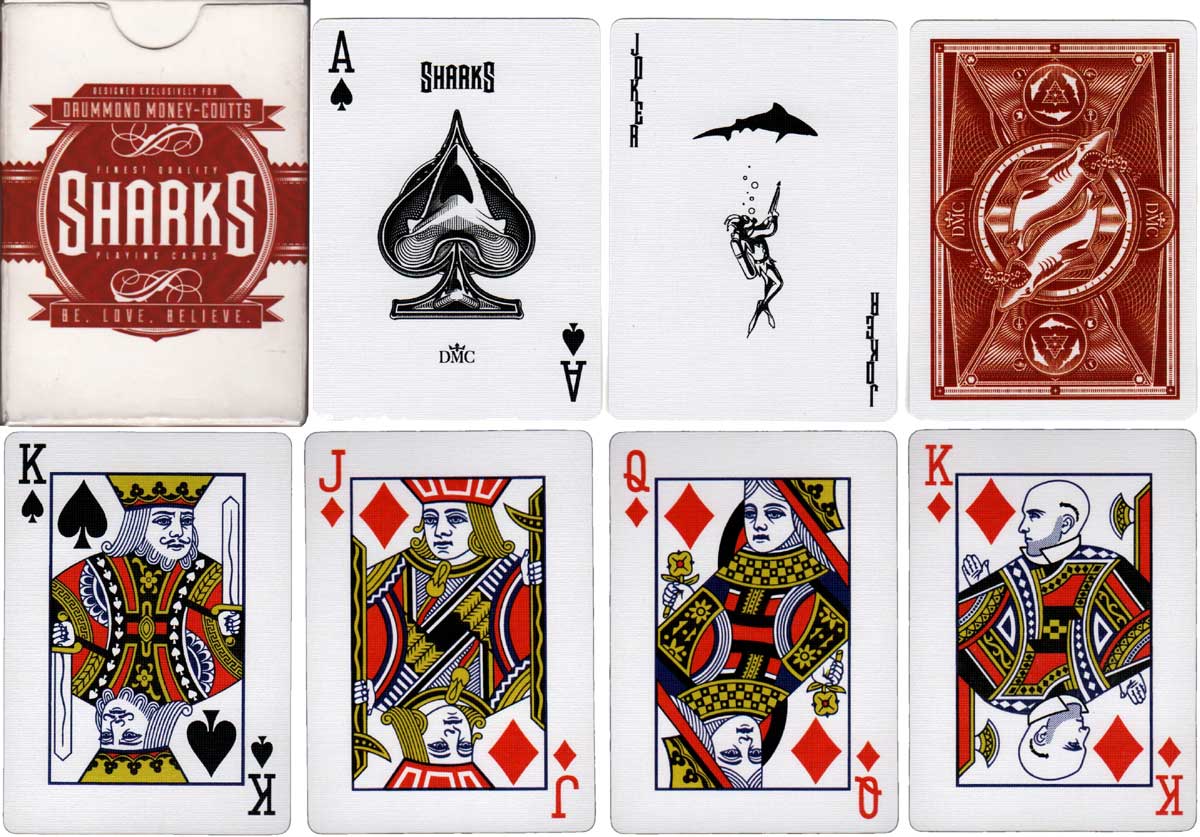
Above: Sharks magic deck for Drummond Money-Coutts. Image courtesy Matt Probert.
Gamagic Catalogue of Magic Card Tricks, c.1940
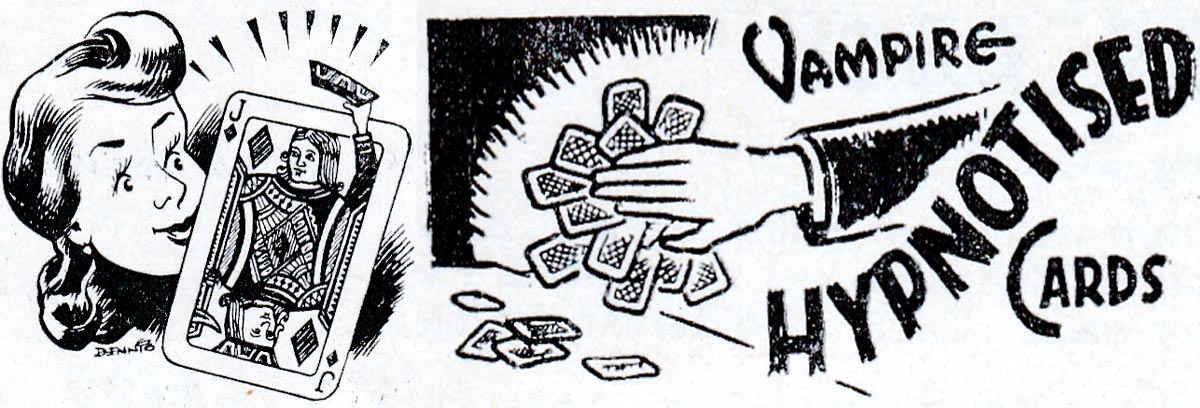
Above: Gamagic Catalogue of Magic Card Tricks, c.1940 more →
NOTES
In the Italian Renaissance an early magic book saw the light. The work of Franciscan friar Luca Pacioli (1445-1517) ‘De viribus quantitatis’ (On the power of numbers, c.1496-1508), contains the first reference to card games, as well as instructions to carry out juggling, swallowing fire, dipping hands in molten lead or making coins dance.
Luca Pacioli, 'De viribus quantitatis', (c. 1496-1508), manuscript contained in codex no. 250 of the University Library of Bologna. It consists of three parts: «I Delle forze numerali cioè i aritmetica. II Della virtù e forza linearale et geometrica. III De documenti morali utilissimi». Mainly mathematical in content, it also includes a series of sleight of hand games. As Gilberto Govi points out in Saggio delle opere di Leonardo da Vinci, Milan, 1872, p. 22, the magic games that Luca Pacioli cites in his manuscript, are largely Leonardo's inventions.

By Simon Wintle
Spain • Member since February 01, 1996 • Contact
I am the founder of The World of Playing Cards (est. 1996), a website dedicated to the history, artistry and cultural significance of playing cards and tarot. Over the years I have researched various areas of the subject, acquired and traded collections and contributed as a committee member of the IPCS and graphics editor of The Playing-Card journal. Having lived in Chile, England, Wales, and now Spain, these experiences have shaped my work and passion for playing cards. Amongst my achievements is producing a limited-edition replica of a 17th-century English pack using woodblocks and stencils—a labour of love. Today, the World of Playing Cards is a global collaborative project, with my son Adam serving as the technical driving force behind its development. His innovative efforts have helped shape the site into the thriving hub it is today. You are warmly invited to become a contributor and share your enthusiasm.

Related Articles
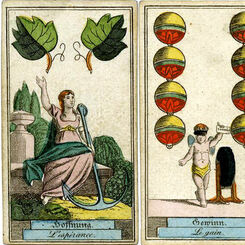
Cartomancy deck by Johann Ernst Backofen
German-suited Cartomancy deck published by Johann Ernst Backofen, Nürnberg.
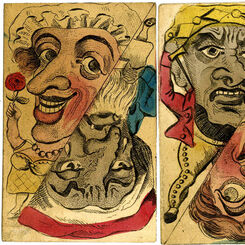
Jonathan Hocus Pocus
Two sets of conjuring cards published by G. Martin, 6 Great St Thomas Apostle, London, early 19th ce...
Geomancy and playing cards - a match meant to be
Playing cards are made of dualities...
Playing Cards and Calendars
In this video Ana Cortez examines the relationship between ordinary playing cards and the calendar. ...
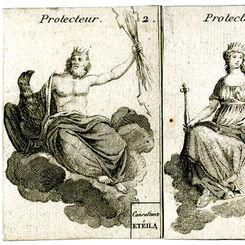
Nouvel Eteila ou le petit nécromancien
“Nouvel Eteila ou le petit nécromancien” cartomancy cards from France, late 18th century.
Cartomancy, Oracle and Divination Cards
Playing cards are used for fortune-telling, predicting the future or even as a psychological adjunct...
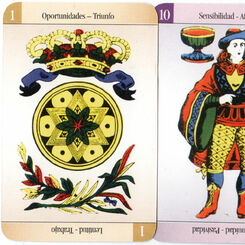
El Oráculo de la Bruja
“El Oráculo de la Bruja” fortune-telling cards, 2003.
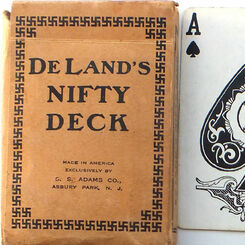
De Land’s Nifty playing cards
De Land’s Nifty playing cards published by S. S. Adams Co, c.1930.
Fortune Telling playing cards
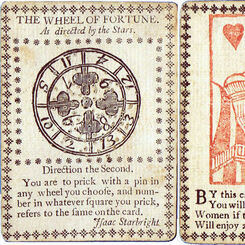
English Fortune Telling cards probably published c.1770.
Cartas Gitanas
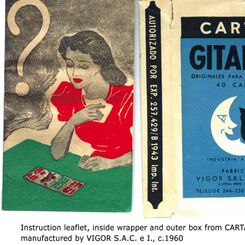
The designs of these fortune-telling cards are largely taken from nineteenth century Austrian "Rural...
Naipes Tu Destino Cartomancy Cards
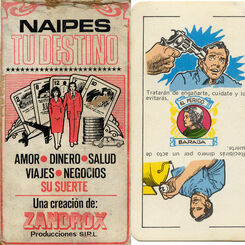
“Naipes Tu Destino” Cartomancy Cards from Peru will ease any stress in your interpersonal relationsh...
Fanning the Playing Cards
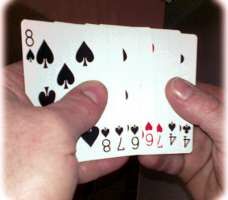
The manner of holding the cards in the hand is related to a player’s needs to view his/her hand in a...
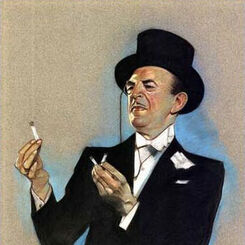
The Cardini Playing Cards
Richard Valentine Pitchford, better known as Cardini, is one of that select band of performers who b...
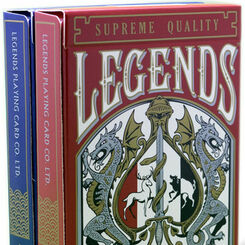
Legends Playing Cards
Legends Playing Card Company (founded 2013) aspires to print the highest quality playing cards and p...
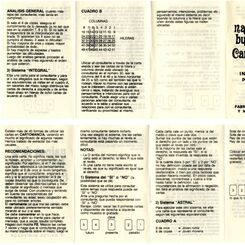
Buena Suerte Cartomancy leaflet
Buena Suerte Cartomancy leaflet.
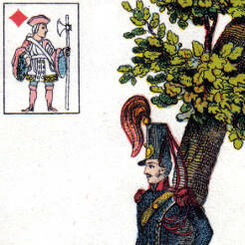
Livre du Destin
Livre du Destin or Book of Fate, printed by B.P.Grimaud, Paris, c.1900.
Baraja de Amor
Hijos de José Garcia Taboadela was a book-seller who also published this charming pack of lovers' fo...
The 72 Names Cards
The 72 Names Cards based on the Kabbalistic "72 Names of God" and the metaphysical artwork of Orna B...
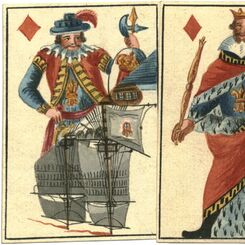
Portuguese Conjuring Playing Cards
Portuguese Conjuring Playing Cards, c.1850.
Picture Show — Zodiac Fortune Telling Cards
Zodiac Celebrities fortune-telling cards presented with 'Picture Show' magazine, 1930. The cards wer...
Most Popular
Our top articles from the past 60 days